

Assisted Lying Glutes Stretch vs Assisted Lying Gluteus And Piriformis Stretch: Complete Comparison
Assisted Lying Glutes Stretch vs Assisted Lying Gluteus And Piriformis Stretch — two simple, beginner-friendly stretches that target the glutes and upper-legs. If you want clearer guidance on which to add to your warm-up, cool-down, or mobility routine, you’re in the right place. I’ll compare muscle activation, equipment needs, ease of learning, injury risk, and practical cues so you can pick the right move for your goals. Expect specific technique pointers, biomechanics-based reasoning, and short practice recommendations you can apply in your next session.
Exercise Comparison
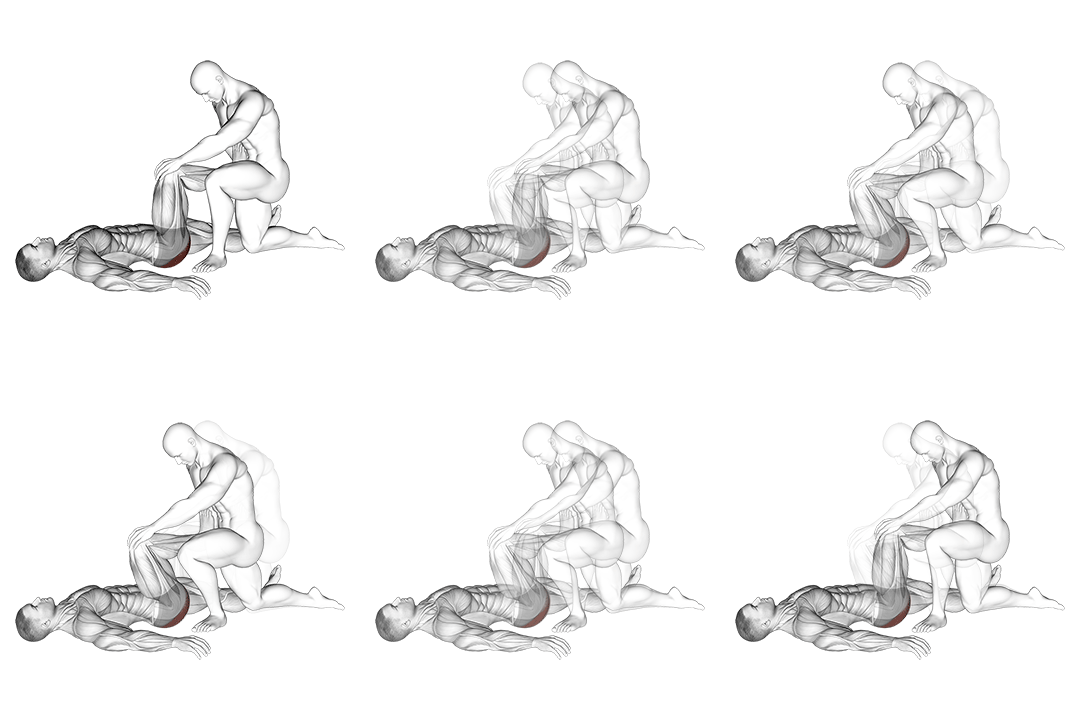
Assisted Lying Glutes Stretch
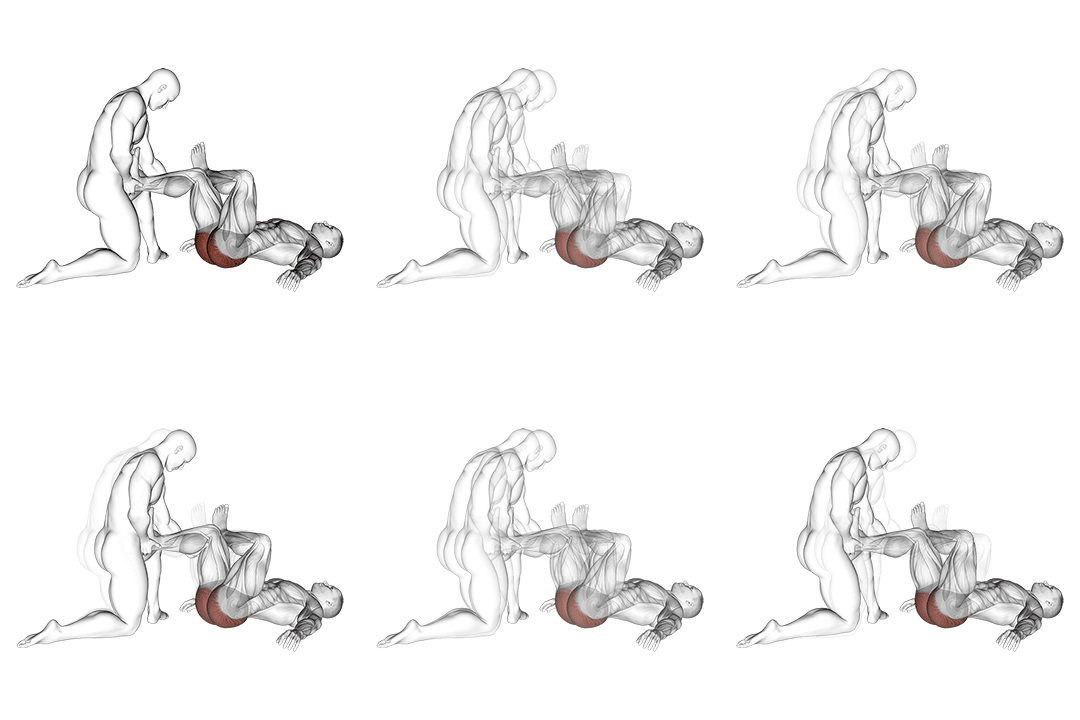
Assisted Lying Gluteus And Piriformis Stretch
Head-to-Head Comparison
| Attribute | Assisted Lying Glutes Stretch | Assisted Lying Gluteus And Piriformis Stretch |
|---|---|---|
| Target Muscle |
Glutes
|
Glutes
|
| Body Part |
Upper-legs
|
Upper-legs
|
| Equipment |
Band
|
Other
|
| Difficulty |
Beginner
|
Beginner
|
| Movement Type |
Isolation
|
Isolation
|
| Secondary Muscles |
1
|
1
|
Secondary Muscles Activated
Assisted Lying Glutes Stretch
Assisted Lying Gluteus And Piriformis Stretch
Visual Comparison
Overview
Assisted Lying Glutes Stretch vs Assisted Lying Gluteus And Piriformis Stretch — two simple, beginner-friendly stretches that target the glutes and upper-legs. If you want clearer guidance on which to add to your warm-up, cool-down, or mobility routine, you’re in the right place. I’ll compare muscle activation, equipment needs, ease of learning, injury risk, and practical cues so you can pick the right move for your goals. Expect specific technique pointers, biomechanics-based reasoning, and short practice recommendations you can apply in your next session.
Key Differences
- Equipment differs: Assisted Lying Glutes Stretch uses Band, while Assisted Lying Gluteus And Piriformis Stretch requires Other.
Pros & Cons
Assisted Lying Glutes Stretch
+ Pros
- Provides a strong longitudinal pull that stretches gluteus maximus and hamstrings simultaneously
- Band allows graded tension for progressive overload of flexibility
- Easy to target specific hip angles (60°, 80°, 100°) for different fibers
- Good for warm-ups where you want controlled, consistent stretch stimulus
− Cons
- Requires a band and correct anchoring technique
- Potential for overpull and hamstring strain if tension is too high
- Less targeted for deep external rotators like the piriformis
Assisted Lying Gluteus And Piriformis Stretch
+ Pros
- Minimal equipment — can be done anywhere using your hands or a towel
- More targeted tension on piriformis and deep external rotators
- Lower setup complexity, easier for beginners to self-adjust
- Less longitudinal hamstring stretch, which may be preferable if hamstrings are sensitive
− Cons
- Fewer easy progression options compared with band resistance
- Can irritate the sciatic region if you push into end-range internal rotation
- Less consistent tension compared with a band, making dosing harder
When Each Exercise Wins
Although both are stretches, the band-assisted version allows you to pair active isometric contractions (5–10 s) into the stretch and control tension to create mild mechanical stimulus. That progressive tension better supports adjunctive muscle growth than a passive piriformis hold alone.
The band version can be integrated with loaded or resisted movements and used for eccentric control cues at specific hip angles, offering better carryover to strengthening drills than a purely passive piriformis stretch.
It’s simpler to perform with no band setup and lower technique demand; you can immediately feel the target area and self-regulate intensity, so beginners learn correct hip-knee positioning faster.
Requires minimal or no equipment and takes little space, making it ideal for travel or home routines. The band version is useful at home too, but the piriformis variant wins for universal accessibility.
Frequently Asked Questions
Can I do both Assisted Lying Glutes Stretch and Assisted Lying Gluteus And Piriformis Stretch in the same workout?
Yes. Start with 30–60 second passive piriformis holds to relieve deep rotator tension, then follow with 2–3 band-assisted stretches per side to load the glute-max and hamstrings. This sequence uses neural relaxation first, then controlled length-tension work.
Which exercise is better for beginners?
The Assisted Lying Gluteus And Piriformis Stretch is easier for beginners because it needs minimal setup and you can self-adjust intensity with your hands. Use it to learn hip kinematics before progressing to band-assisted variations.
How do the muscle activation patterns differ?
The band-assisted stretch applies a longitudinal force vector that tensions glute-max and hamstrings more broadly, while the piriformis stretch applies a cross-body external rotation vector that selectively tensions deep rotators and gluteus medius/minimus. Both are primarily passive stretch activation rather than concentric contraction.
Can Assisted Lying Gluteus And Piriformis Stretch replace Assisted Lying Glutes Stretch?
It can replace it when your goal is deep rotator release or when you lack equipment. However, if you want graded tension, progression, or more hamstring involvement, the band-assisted stretch remains the better option.
Expert Verdict
Use the Assisted Lying Glutes Stretch when you want controlled, graded tension and the option to combine passive stretch with brief isometric contractions to influence muscle length-tension and adjunctive strength. It’s the better pick if you own bands and want progression (change tension or hip angle between 60°–110°). Choose the Assisted Lying Gluteus And Piriformis Stretch when you need a quick, equipment-free option that targets deep external rotators and relieves localized piriformis tightness. For general mobility, alternate both: piriformis-focused work for neural/deep-glute release and band-assisted holds for broader posterior-chain lengthening and functional carryover.
Also Compare
More comparisons with Assisted Lying Glutes Stretch
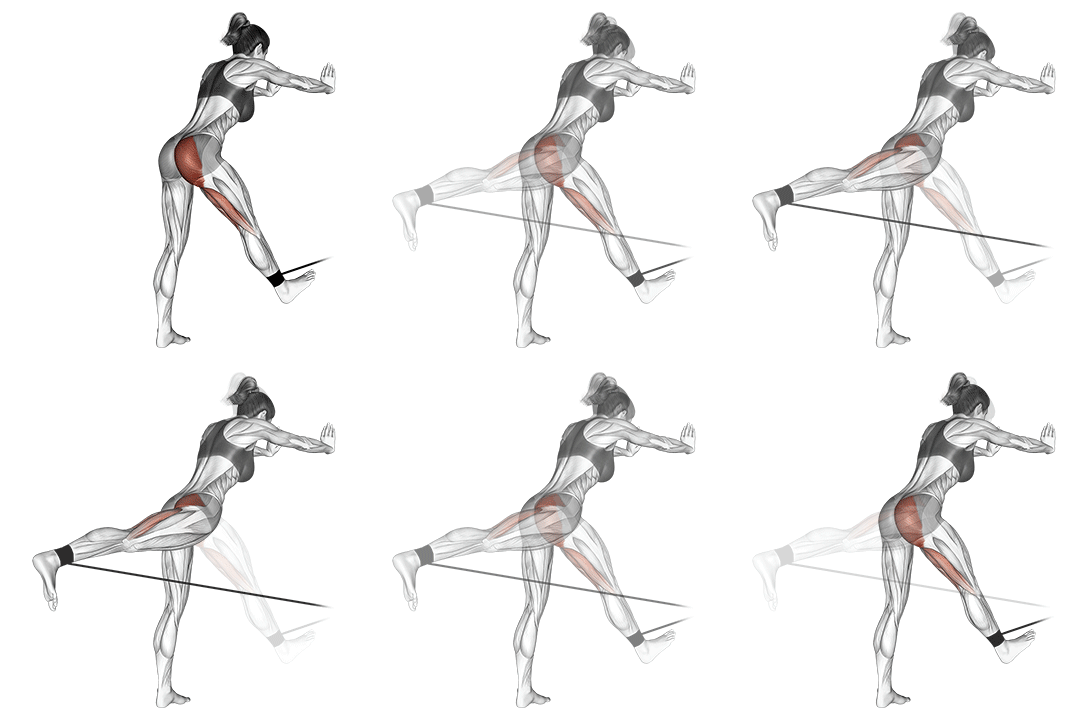
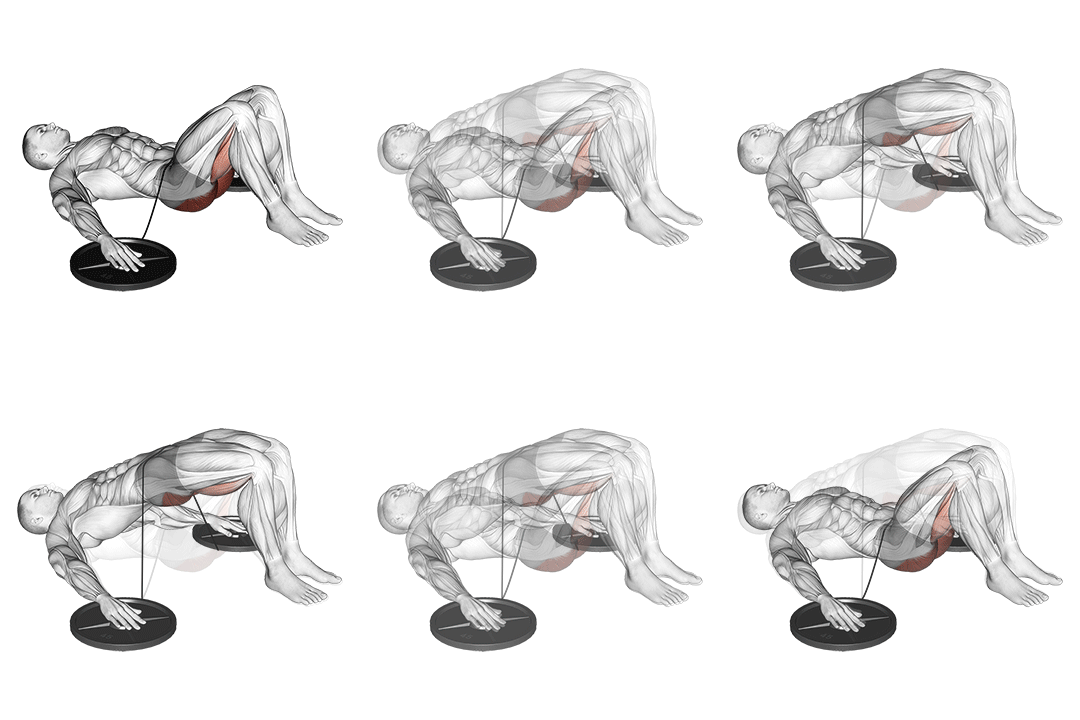
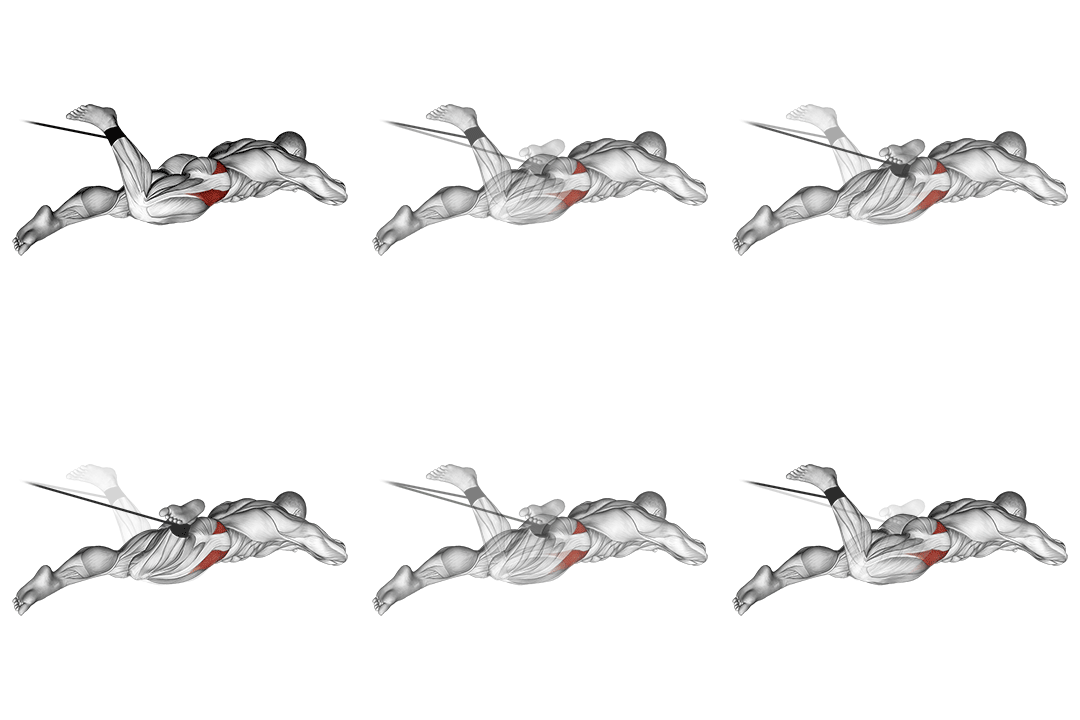
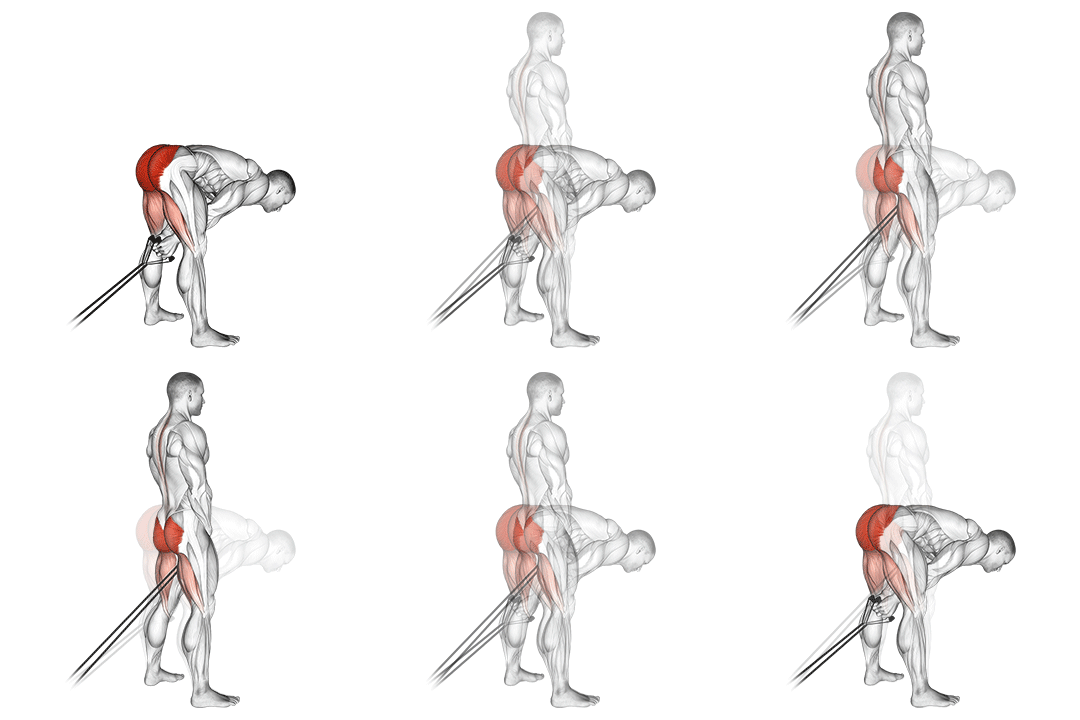
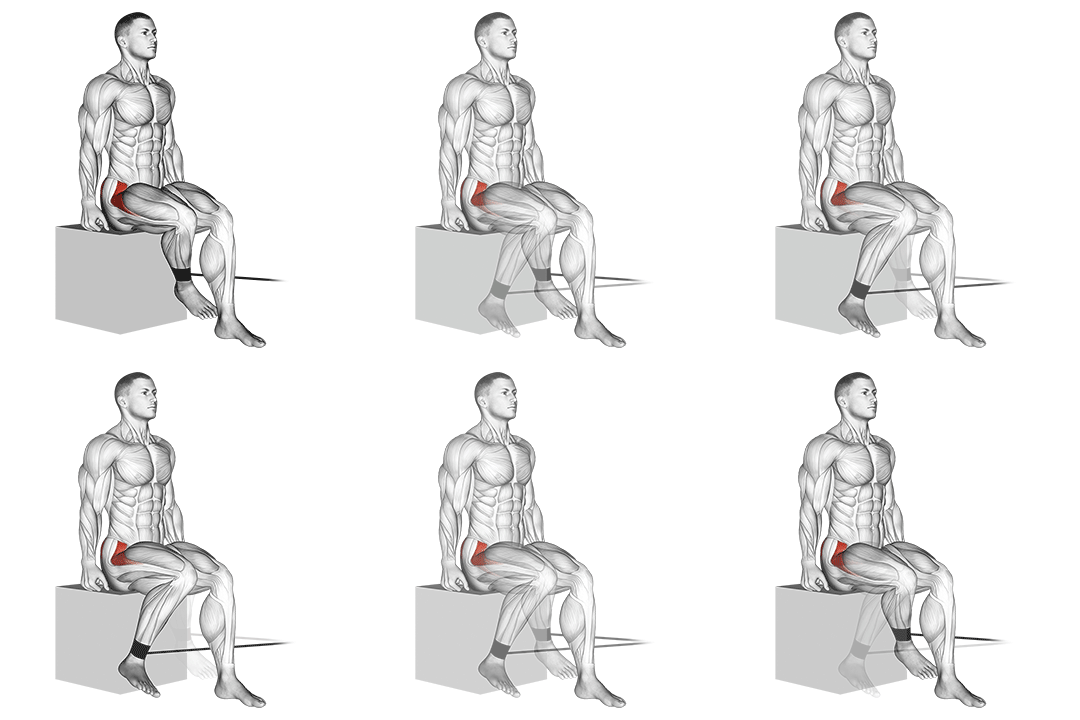
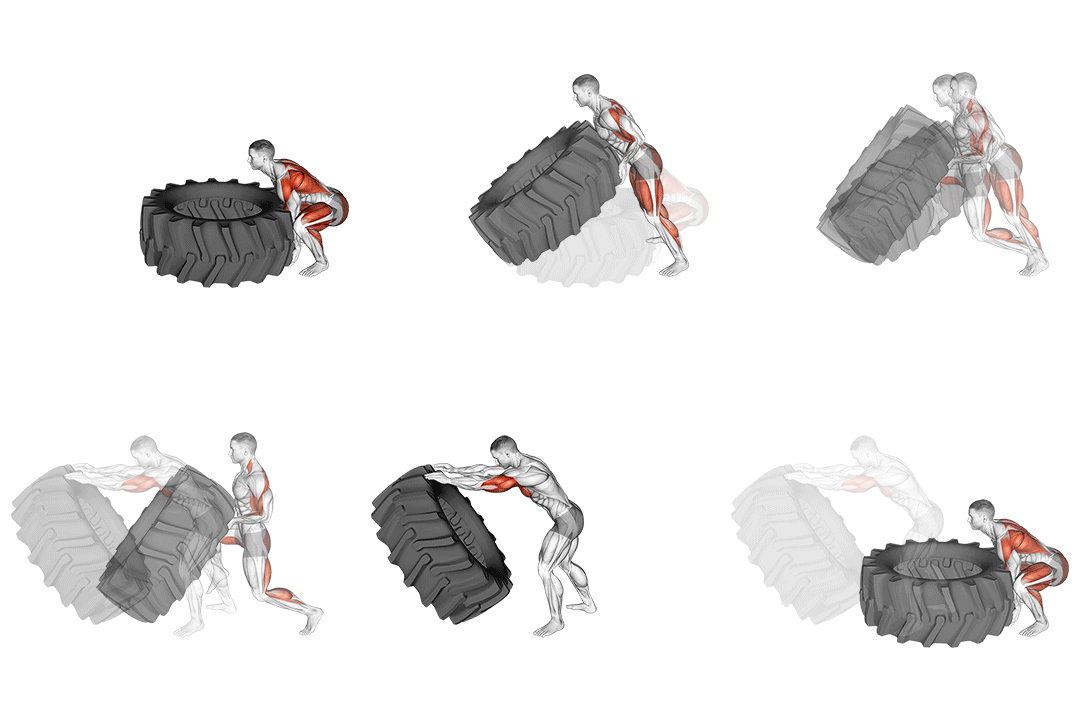
More comparisons with Assisted Lying Gluteus And Piriformis Stretch
Compare More Exercises
Use our free comparison tool to analyze any two exercises head-to-head.
Compare Exercises