

Assisted Parallel Close Grip Pull-up vs Assisted Pull-up: Complete Comparison Guide
Assisted Parallel Close Grip Pull-up vs Assisted Pull-up — if you want stronger lats and better vertical pulling, you need to pick the right assisted variation. This guide addresses which exercise better targets the lats, how the biceps and forearms get involved, equipment needs, and clear progressions. I’ll cover biomechanics, technique cues, rep ranges (6–12 for hypertrophy, 3–6 for strength), and when to program each move so you can choose the version that fits your goals and shoulder health.
Exercise Comparison
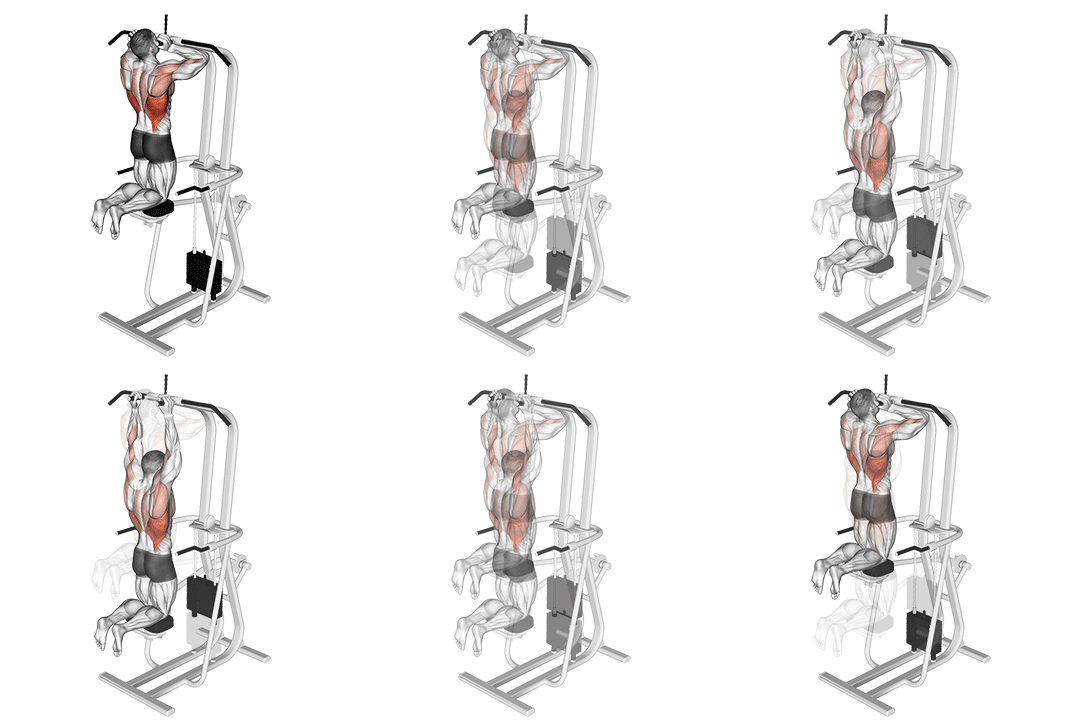
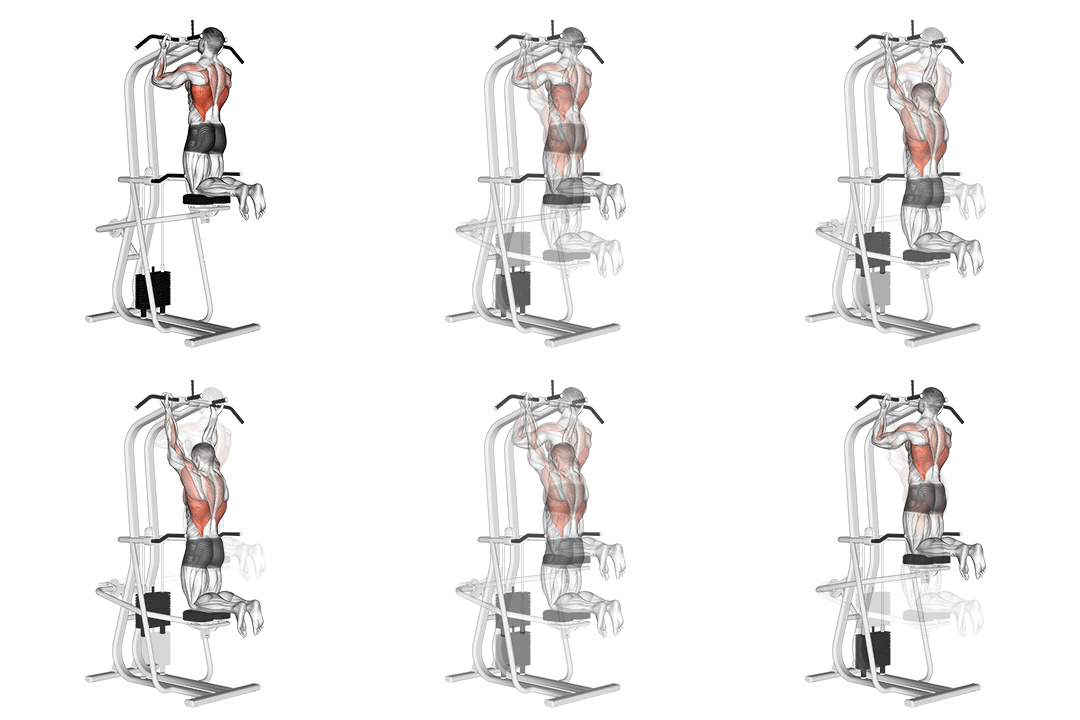
Assisted Parallel Close Grip Pull-up
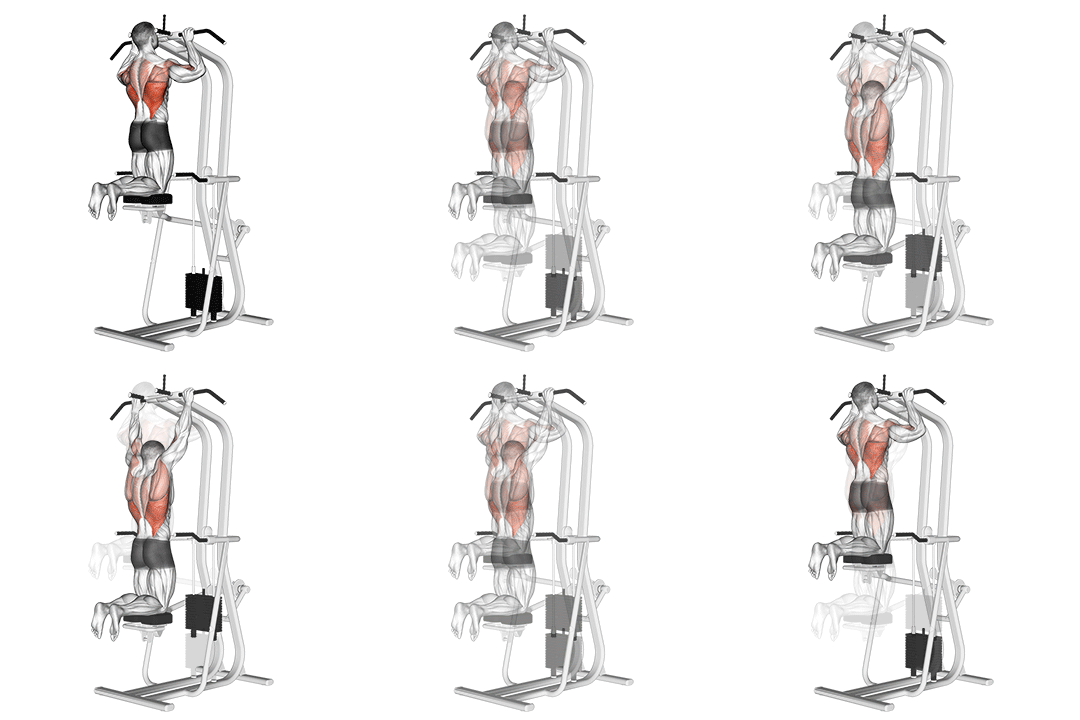
Assisted Pull-up
Head-to-Head Comparison
| Attribute | Assisted Parallel Close Grip Pull-up | Assisted Pull-up |
|---|---|---|
| Target Muscle |
Lats
|
Lats
|
| Body Part |
Back
|
Back
|
| Equipment |
Lever
|
Lever
|
| Difficulty |
Beginner
|
Beginner
|
| Movement Type |
Compound
|
Compound
|
| Secondary Muscles |
2
|
2
|
Secondary Muscles Activated
Assisted Parallel Close Grip Pull-up
Assisted Pull-up
Visual Comparison
Overview
Assisted Parallel Close Grip Pull-up vs Assisted Pull-up — if you want stronger lats and better vertical pulling, you need to pick the right assisted variation. This guide addresses which exercise better targets the lats, how the biceps and forearms get involved, equipment needs, and clear progressions. I’ll cover biomechanics, technique cues, rep ranges (6–12 for hypertrophy, 3–6 for strength), and when to program each move so you can choose the version that fits your goals and shoulder health.
Key Differences
- Both exercises target the Lats using Lever. The main differences are in their movement patterns and muscle activation angles.
Pros & Cons
Assisted Parallel Close Grip Pull-up
+ Pros
- Neutral grip is shoulder-friendly and reduces rotational stress
- Stronger elbow flexor (brachialis/brachioradialis) recruitment helps arm development
- Easier to cue scapular retraction and maintain torso alignment
- Good choice for those with limited shoulder mobility or mild impingement history
− Cons
- Less accessible on basic home rigs without parallel handles
- Slightly less carryover to wide-grip unassisted pull-ups
- Can limit lat breadth emphasis compared to wider grips
Assisted Pull-up
+ Pros
- Highly accessible—works with straight bars, assisted machines, or bands
- Better transfer to standard unassisted pull-ups and sport-specific pulls
- Offers more grip-width and variation options for progressive overload
- Places sustained tension on lats through mid-range for breadth development
− Cons
- Higher shoulder rotation can aggravate impingement if technique is poor
- Wider grips reduce elbow flexor input, which can limit arm development
- Beginners may overuse upper traps or swing if not braced
When Each Exercise Wins
The neutral close grip increases time under tension for the elbow flexors and allows stricter scapular retraction cues. Use 6–12 reps with a 2–3 second eccentric to maximize lat and biceps hypertrophy.
Assisted Pull-ups give more direct transfer to standard unassisted pull-ups and allow heavier progressive overload with varied grips. Work in 3–6 reps with reduced assistance and add weighted eccentrics for strength.
Neutral handles simplify wrist and shoulder alignment and make it easier to learn scapular control and solid elbow-first mechanics, reducing early compensatory movement.
A straight bar plus resistance bands or a doorway setup lets you replicate assisted pull-ups anywhere. That makes them more practical for most home-training situations.
Frequently Asked Questions
Can I do both Assisted Parallel Close Grip Pull-up and Assisted Pull-up in the same workout?
Yes — pair them strategically. Do the close-grip first for controlled, high-tension sets (6–10 reps) then use assisted pull-ups for strength-focused sets or as finishers (3–6 heavy-assisted reps or 8–12 moderate). Keep total weekly volume appropriate.
Which exercise is better for beginners?
Assisted Parallel Close Grip Pull-up is generally easier to learn because the neutral grip improves wrist and shoulder alignment and reduces compensatory swinging. It lets you train scapular mechanics and elbow-first pulling safely.
How do the muscle activation patterns differ?
Both load the lats strongly, but the neutral close grip increases elbow flexor and forearm recruitment earlier in the pull while reducing extreme shoulder rotation. Wider overhand assisted pull-ups maintain lat tension longer through the mid-range and shift some load to posterior delts and traps near the top.
Can Assisted Pull-up replace Assisted Parallel Close Grip Pull-up?
Yes for many trainees — assisted pull-ups are more versatile and accessible. But if you need a shoulder-friendly option or want more elbow flexor stimulus for arm hypertrophy, keep the close-grip variation in your program.
Expert Verdict
Use the Assisted Parallel Close Grip Pull-up when you want a shoulder-friendly, arm-biased variation that emphasizes controlled scapular retraction and mid-range lat tension—ideal for beginners or those rehabbing the shoulder. Program 6–12 reps with slow eccentrics for hypertrophy. Choose the Assisted Pull-up when your goal is vertical pulling strength and direct transfer to unassisted pull-ups; vary grip width, reduce assistance toward 3–6 reps, and include eccentric overloads. Both belong in a balanced program: alternate them across sessions to target slightly different force vectors and recruit the lats across full functional ranges.
Also Compare
More comparisons with Assisted Parallel Close Grip Pull-up
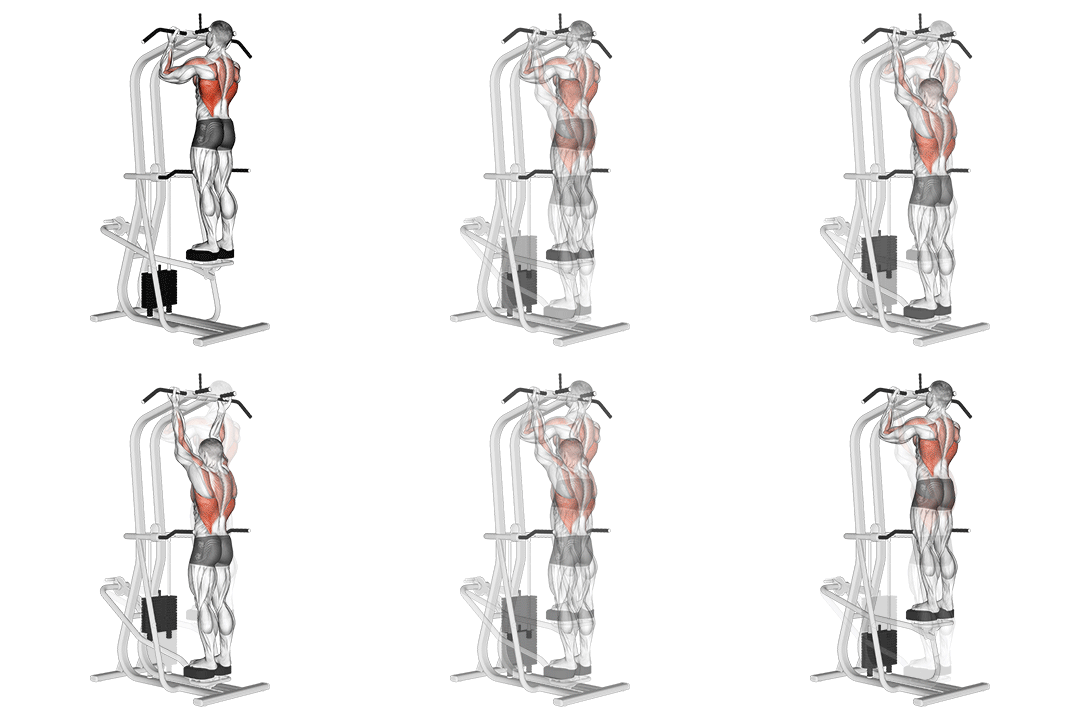
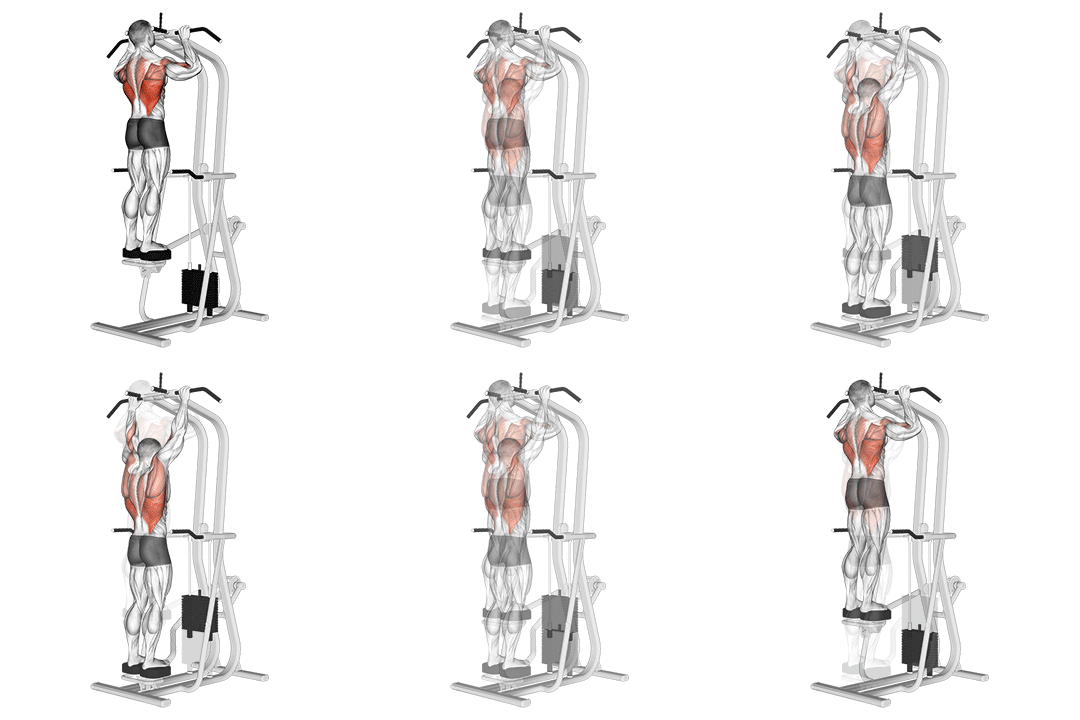
More comparisons with Assisted Pull-up
Compare More Exercises
Use our free comparison tool to analyze any two exercises head-to-head.
Compare Exercises