

Assisted Parallel Close Grip Pull-up vs Assisted Standing Chin-up: Complete Comparison Guide
Assisted Parallel Close Grip Pull-up vs Assisted Standing Chin-up — if you want stronger, thicker lats without fighting full bodyweight, these two assisted lever variations are solid choices. I’ll walk you through how each one loads the latissimus, how the grip and line of pull change biceps and forearm involvement, the equipment you need, and clear progression and programming tips. Read on so you can pick the variation that fits your current strength, rehab needs, and muscle-growth goals.
Exercise Comparison
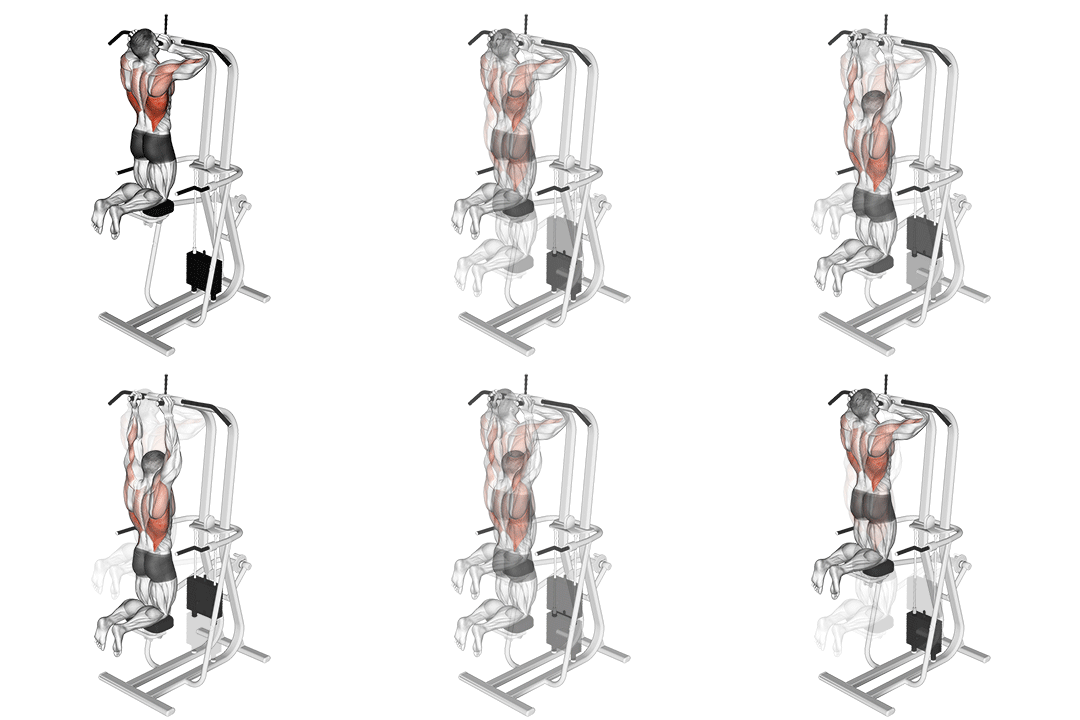
Assisted Parallel Close Grip Pull-up
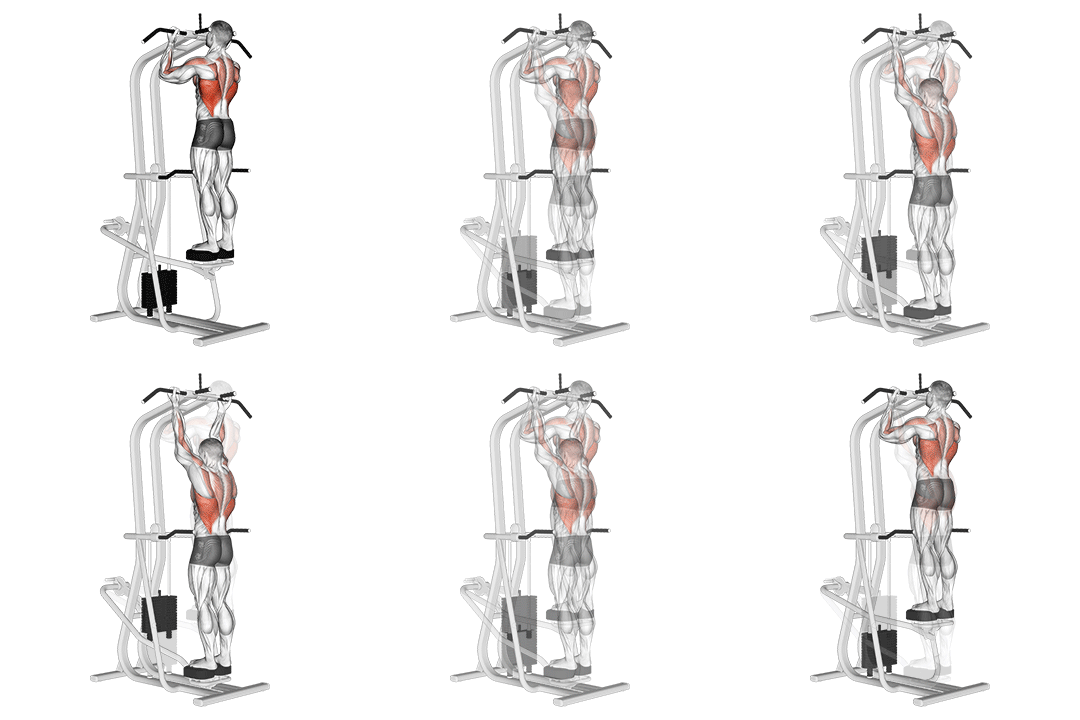
Assisted Standing Chin-up
Head-to-Head Comparison
| Attribute | Assisted Parallel Close Grip Pull-up | Assisted Standing Chin-up |
|---|---|---|
| Target Muscle |
Lats
|
Lats
|
| Body Part |
Back
|
Back
|
| Equipment |
Lever
|
Lever
|
| Difficulty |
Beginner
|
Beginner
|
| Movement Type |
Compound
|
Compound
|
| Secondary Muscles |
2
|
2
|
Secondary Muscles Activated
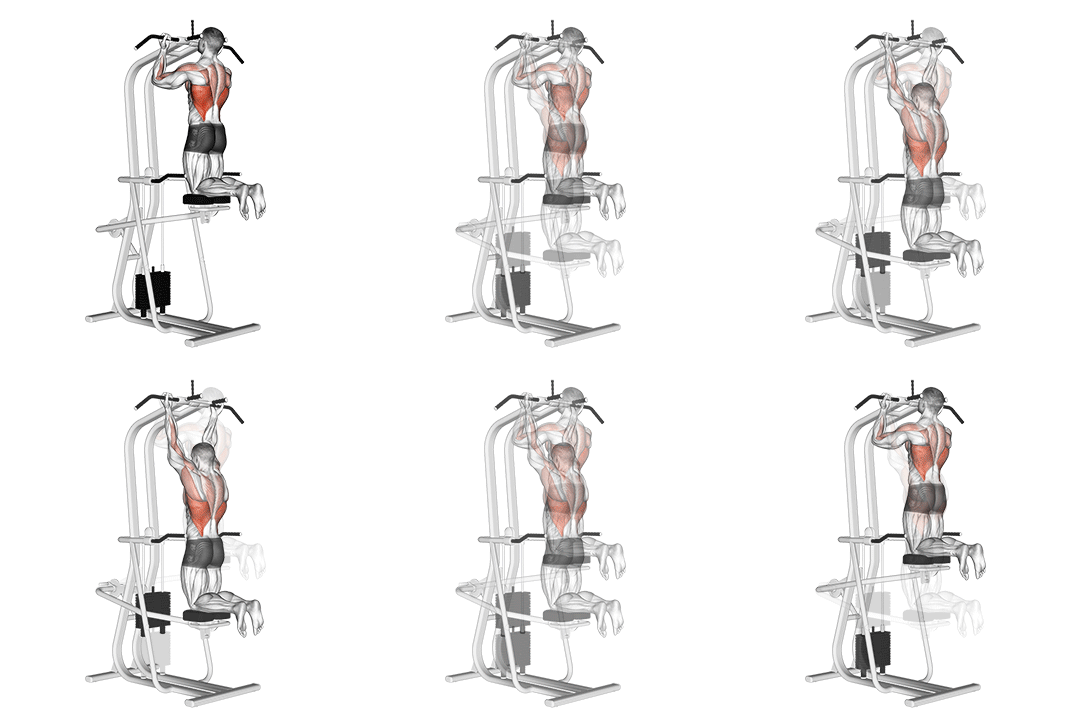
Assisted Parallel Close Grip Pull-up
Assisted Standing Chin-up
Visual Comparison
Overview
Assisted Parallel Close Grip Pull-up vs Assisted Standing Chin-up — if you want stronger, thicker lats without fighting full bodyweight, these two assisted lever variations are solid choices. I’ll walk you through how each one loads the latissimus, how the grip and line of pull change biceps and forearm involvement, the equipment you need, and clear progression and programming tips. Read on so you can pick the variation that fits your current strength, rehab needs, and muscle-growth goals.
Key Differences
- Both exercises target the Lats using Lever. The main differences are in their movement patterns and muscle activation angles.
Pros & Cons
Assisted Parallel Close Grip Pull-up
+ Pros
- Stronger lat emphasis due to neutral grip and better scapular retraction
- Lower biceps dominance — lets you overload lats more effectively
- Cleaner vertical pull line for progressive strength work
- Easier on biceps tendons and often on the wrists
− Cons
- Requires neutral parallel handles which aren’t always available
- Slightly harder to learn scapular control and strict form
- May feel more challenging at higher assistance reductions
Assisted Standing Chin-up
+ Pros
- More accessible to beginners — standing position feels natural
- Higher biceps involvement helps you complete reps sooner
- Can be approximated with bands, cables, or low bars
- Good for building elbow flexor strength alongside lats
− Cons
- Biceps can take over, limiting lat overload
- Supinated grip increases strain on distal biceps and medial elbow
- Less scapular emphasis can reduce targeted lat stimulus
When Each Exercise Wins
The neutral close grip shifts load onto the latissimus and reduces early biceps takeover, letting you target the lats across a full range of shoulder extension. Aim for 6–12 controlled reps with a 2–3 second eccentric to maximize mechanical tension.
Neutral grip encourages stricter scapular control and a cleaner vertical pull, which transfers better to unassisted pull strength. Progress by dropping assistance in 5–10% increments and adding heavy 3–6 rep sets once you can maintain rigid form.
Standing chin-ups let the biceps contribute early, so beginners complete more reps and build confidence while learning scapular set and elbow mechanics. Use 8–15 reps and focus on full scapular depression before each rep.
Standing chin-ups can be approximated using bands, a low bar with foot assistance, or cable setups, making them easier to replicate at home. The supinated grip options are more commonly supported by basic home equipment than parallel lever handles.
Frequently Asked Questions
Can I do both Assisted Parallel Close Grip Pull-up and Assisted Standing Chin-up in the same workout?
Yes — pairing them works well: use standing chin-ups as warm-up volume (2–3 sets of 8–12) to groove the movement, then do parallel close-grip pull-ups for heavier 4–8 rep sets. Monitor fatigue and keep total volume in the 8–20 hard sets per week range per muscle group.
Which exercise is better for beginners?
Assisted Standing Chin-up is better for most beginners because the supinated grip lets the biceps assist, making clean reps easier. Start with higher assistance and 8–15 reps to build strength while practicing scapular control.
How do the muscle activation patterns differ?
The parallel neutral grip promotes earlier scapular retraction and longer lat tension during terminal shoulder extension, while the supinated chin-up recruits the biceps earlier and shifts some force away from the lat. That changes the force vector and timing of peak activation across the pull.
Can Assisted Standing Chin-up replace Assisted Parallel Close Grip Pull-up?
It can replace it temporarily if your goal is general back development or convenience, but it won’t load the lats as purely. If you want maximal lat overload and carryover to strict pull-up strength, keep the parallel close-grip in your rotation.
Expert Verdict
Pick the Assisted Parallel Close Grip Pull-up if your primary goal is targeted lat development and long-term pull strength — its neutral grip and earlier scapular retraction let you load the lat with fewer biceps limits. Choose the Assisted Standing Chin-up if you’re a beginner, rehabbing, or need a variation you can easily mimic with bands or cables; the supinated grip speeds early success and builds elbow flexor strength. Program both: use standing chin-ups for volume and skill work (8–15 reps) and parallel close-grip pull-ups for heavier, lower-rep stimulus (4–8 reps) to balance muscle growth and strength.
Also Compare
More comparisons with Assisted Parallel Close Grip Pull-up
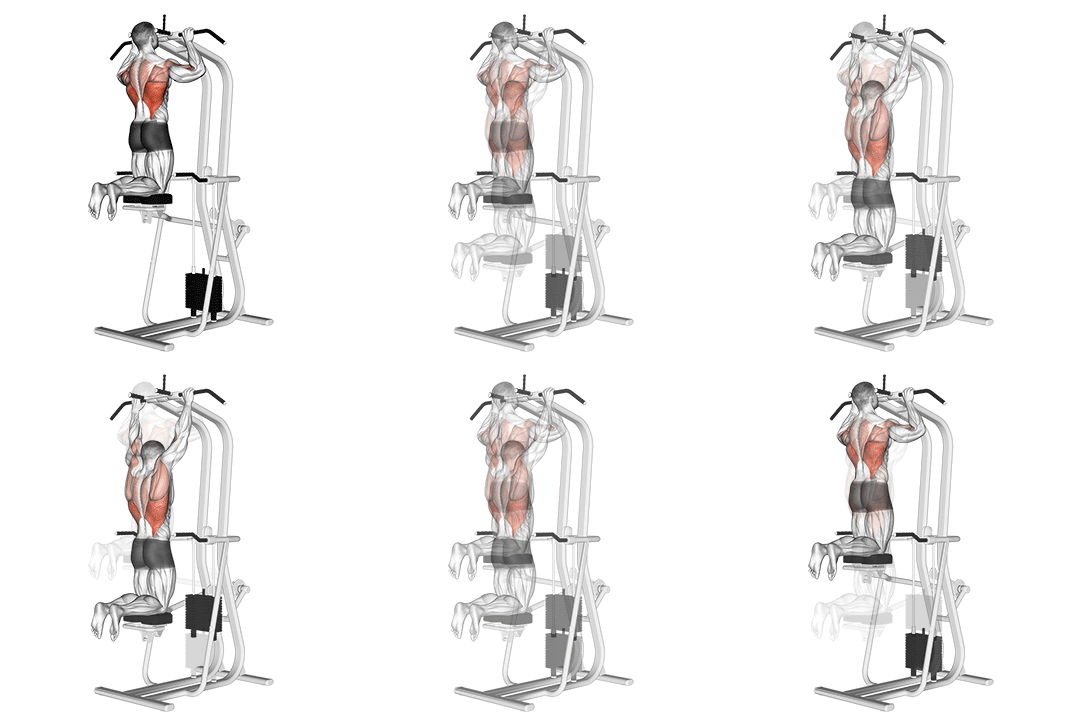
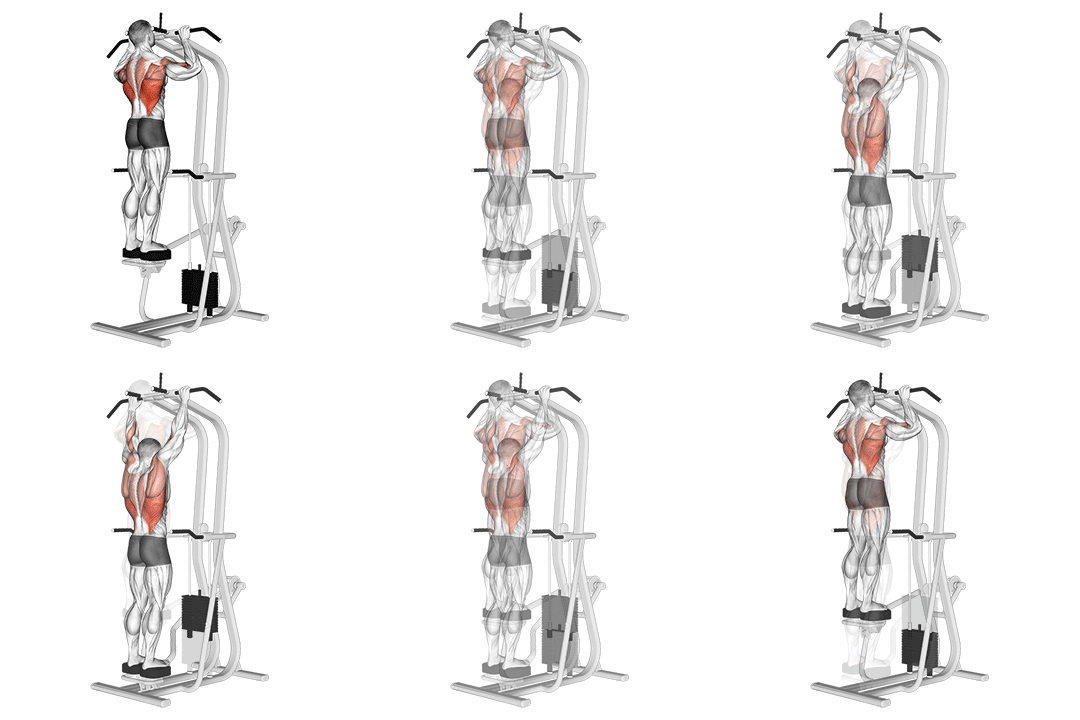
More comparisons with Assisted Standing Chin-up
Compare More Exercises
Use our free comparison tool to analyze any two exercises head-to-head.
Compare Exercises