

Assisted Parallel Close Grip Pull-up vs Assisted Standing Pull-up: Complete Comparison Guide
Assisted Parallel Close Grip Pull-up vs Assisted Standing Pull-up — if you’re trying to build a thicker back or simply practice pull mechanics, these two assisted lever variations are common in gyms. You’ll get clear, practical guidance on who should pick each exercise. I’ll compare primary and secondary muscle activation, show how the force vectors and joint angles change movement demand, list equipment and setup differences, and give technique cues and progression options so you can choose the best path for muscle growth, strength, or beginner practice.
Exercise Comparison
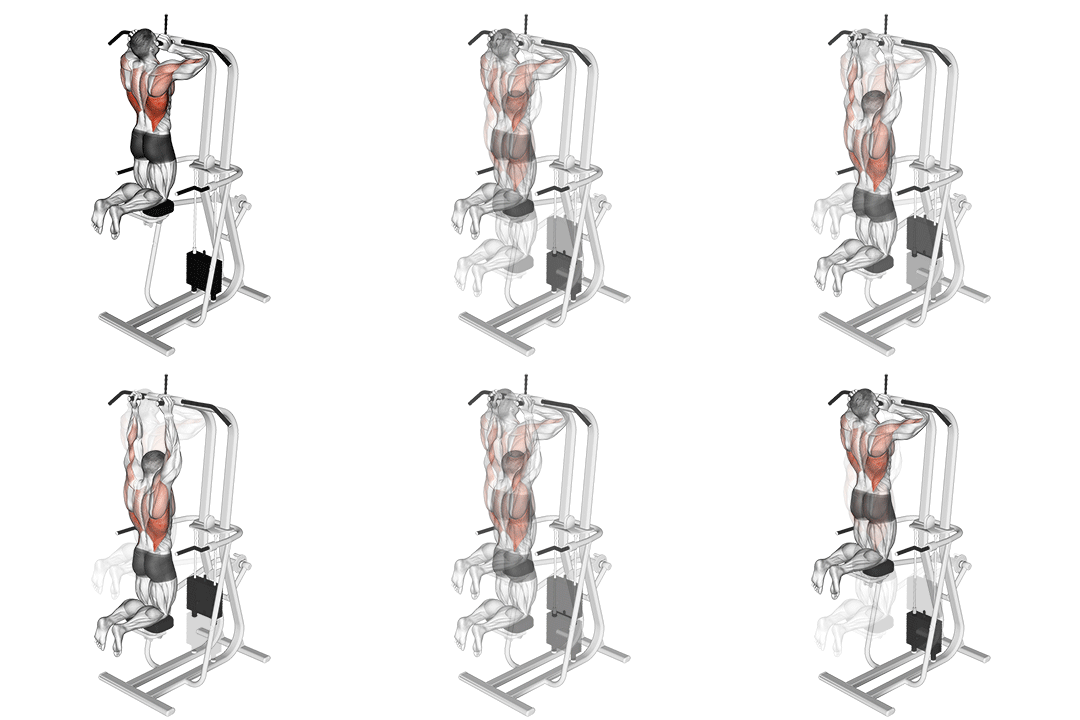
Assisted Parallel Close Grip Pull-up
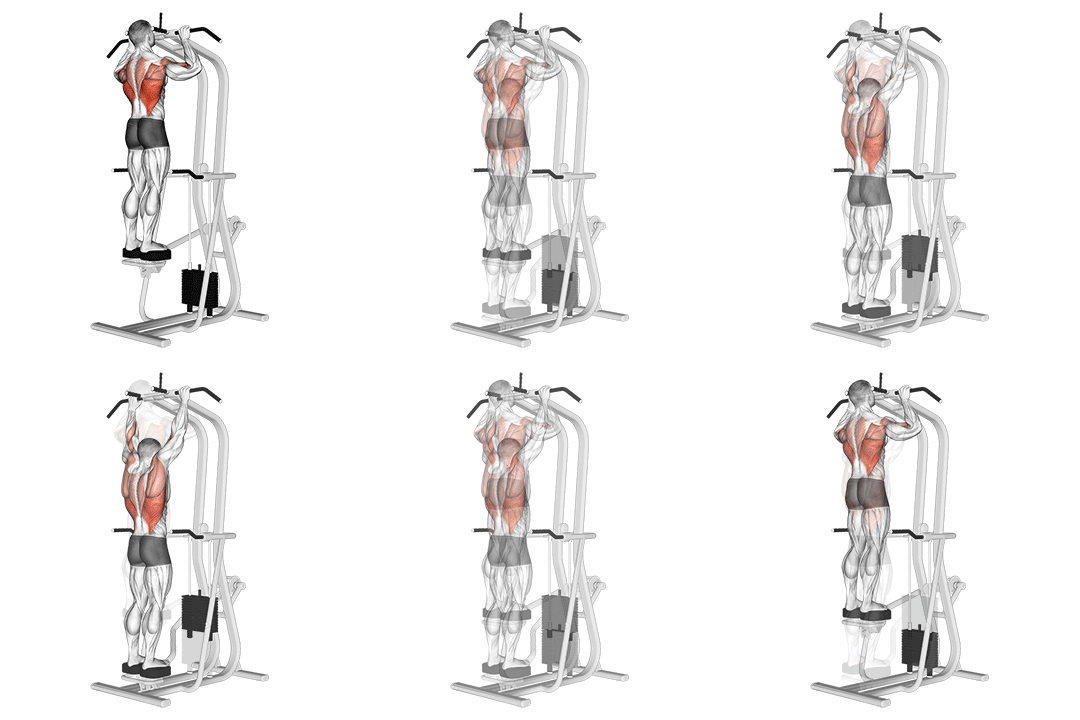
Assisted Standing Pull-up
Head-to-Head Comparison
| Attribute | Assisted Parallel Close Grip Pull-up | Assisted Standing Pull-up |
|---|---|---|
| Target Muscle |
Lats
|
Lats
|
| Body Part |
Back
|
Back
|
| Equipment |
Lever
|
Lever
|
| Difficulty |
Beginner
|
Beginner
|
| Movement Type |
Compound
|
Compound
|
| Secondary Muscles |
2
|
2
|
Secondary Muscles Activated
Assisted Parallel Close Grip Pull-up
Assisted Standing Pull-up
Visual Comparison
Overview
Assisted Parallel Close Grip Pull-up vs Assisted Standing Pull-up — if you’re trying to build a thicker back or simply practice pull mechanics, these two assisted lever variations are common in gyms. You’ll get clear, practical guidance on who should pick each exercise. I’ll compare primary and secondary muscle activation, show how the force vectors and joint angles change movement demand, list equipment and setup differences, and give technique cues and progression options so you can choose the best path for muscle growth, strength, or beginner practice.
Key Differences
- Both exercises target the Lats using Lever. The main differences are in their movement patterns and muscle activation angles.
Pros & Cons
Assisted Parallel Close Grip Pull-up
+ Pros
- Stronger vertical force vector increases lower-lat recruitment
- Neutral parallel grip reduces shoulder external rotation stress
- Easier to transfer to strict unassisted pull-ups for strength
- Good for controlled eccentric training (3–5 sec negatives)
− Cons
- Requires neutral parallel handles which aren’t always available
- Higher biceps and elbow loading can irritate tendons
- Less forgiving on poor scapular control; needs stricter technique
Assisted Standing Pull-up
+ Pros
- More commonly available in commercial gyms with lever stations
- Easier setup and steadier base for absolute beginners
- Allows subtle trunk lean to assist range-of-motion if needed
- Quick to adjust assistance and practice high-rep endurance (12–20 reps)
− Cons
- Can encourage excessive trunk lean, reducing strict lat demand
- Slightly less targeted for lower-lat fibers compared with close-grip
- May promote upper-trap compensation if you shrug during reps
When Each Exercise Wins
The vertical force vector and neutral grip bias lower-lat fibers and allow strict tension through a 6–12 rep hypertrophy range. You can also emphasize eccentrics (3–5 sec) and reduce assistance in small increments to increase time under tension.
A stricter path and reduced trunk compensation make the close-grip better for building raw pulling strength; work in lower rep ranges (3–6) with decreased assistance to overload the lats and elbow flexors.
Standing assistance provides a stable base, simpler setup, and easier incremental reductions in support, which helps you learn scapular depression/retraction and full-range pulling without complex balance or handle positioning.
Assisted standing setups are more commonly replicated with resistance bands or step platforms at home; the standard assisted lever station is more likely to be mimicked than a dedicated neutral-handle lever.
Frequently Asked Questions
Can I do both Assisted Parallel Close Grip Pull-up and Assisted Standing Pull-up in the same workout?
Yes—pairing them works well: start with the stricter close-grip for 3–6 heavy or hypertrophy sets, then use the standing variation for supplementary volume (8–15 reps) to add extra time under tension without maximal fatigue.
Which exercise is better for beginners?
The Assisted Standing Pull-up is better for most beginners because it offers a stable base and simpler increments of assistance, letting you focus on scapular retraction and full range-of-motion before progressing to stricter variations.
How do the muscle activation patterns differ?
Close parallel grips bias the lats and biceps with a more vertical force vector and higher elbow-flexor engagement; standing pulls allow a slightly different scapular rhythm and potential posterior deltoid/upper-trap input if you lean or shrug, shifting peak activation earlier in the concentric.
Can Assisted Standing Pull-up replace Assisted Parallel Close Grip Pull-up?
For general back development it can substitute, but if your goal is strict pulling strength or maximal lower-lat stimulation, the parallel close-grip is the better long-term choice. Use standing pulls for volume, skill practice, or when neutral handles aren’t available.
Expert Verdict
Both assisted lever pull-ups target the lats and can be used by beginners, but choose based on your goal. Pick the Assisted Parallel Close Grip Pull-up if you want tight lat-focused tension and a direct transfer to strict unassisted pull-ups—use 6–12 reps for hypertrophy and 3–6 for strength, reduce assistance in 5–10% steps, and add controlled eccentrics. Choose the Assisted Standing Pull-up if you need the easiest setup, steadier footing, or are prioritizing practice and volume while you build scapular control and basic pulling mechanics.
Also Compare
More comparisons with Assisted Parallel Close Grip Pull-up
More comparisons with Assisted Standing Pull-up
Compare More Exercises
Use our free comparison tool to analyze any two exercises head-to-head.
Compare Exercises