

Assisted Parallel Close Grip Pull-up vs Lever Bent-over Row With V-bar: Complete Comparison Guide
Assisted Parallel Close Grip Pull-up vs Lever Bent-over Row With V-bar — which should you pick for back development? You’ll get a clear, practical breakdown so you can choose based on your goals. I’ll cover primary and secondary muscle activation, movement mechanics, equipment needs, learning curve, progression options, and injury risk. Expect specific technique cues (grip width, torso angle, scapular set), rep ranges for hypertrophy and strength, and clear scenarios where one exercise outperforms the other. Read on and use the recommendations to structure your next back session.
Exercise Comparison
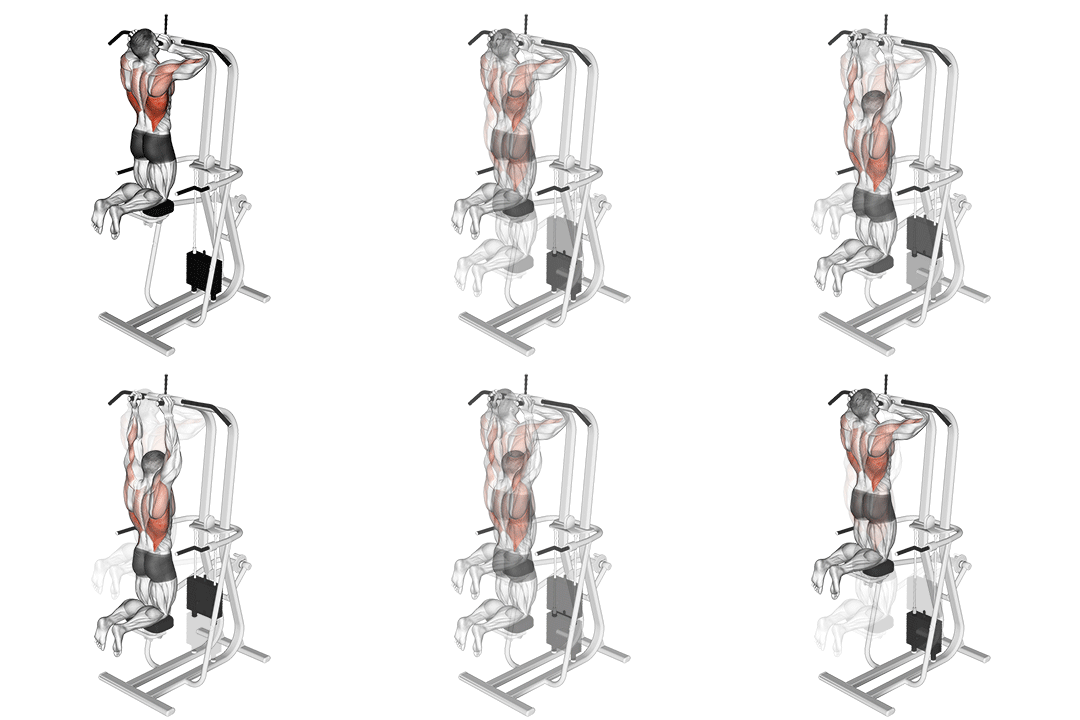
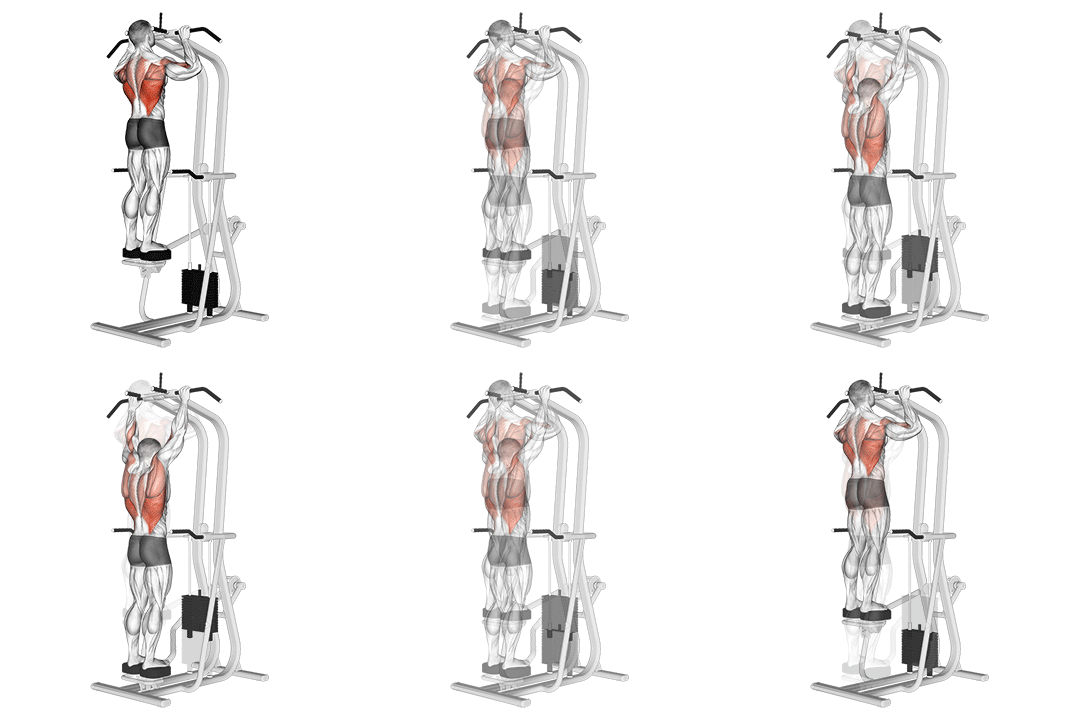
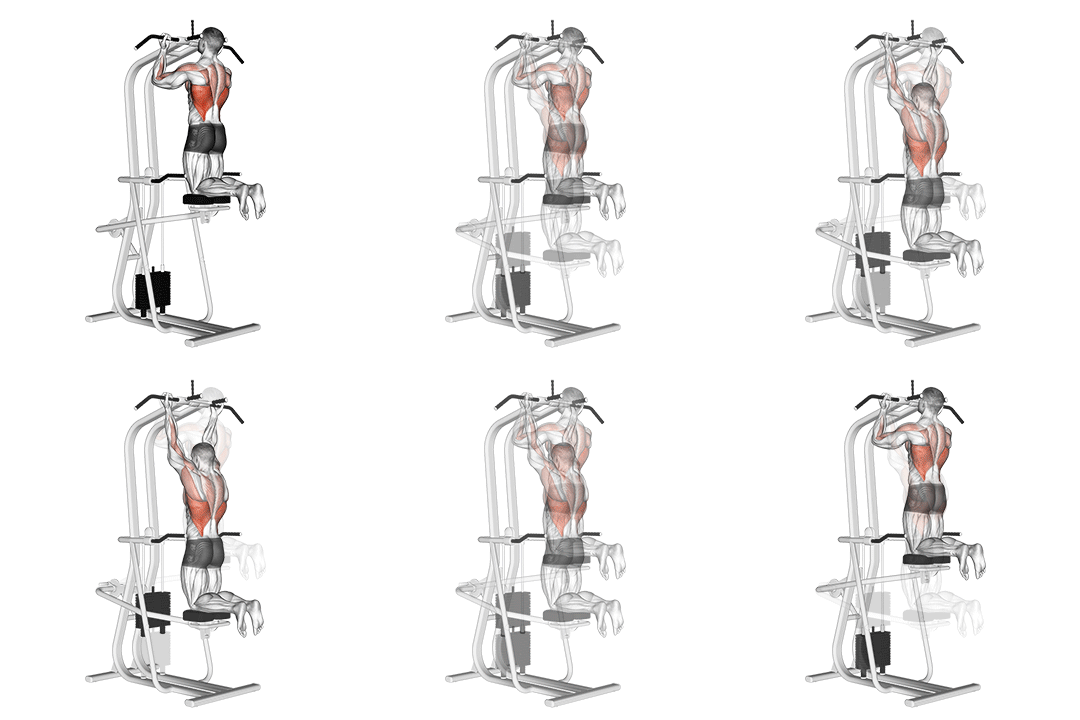
Assisted Parallel Close Grip Pull-up
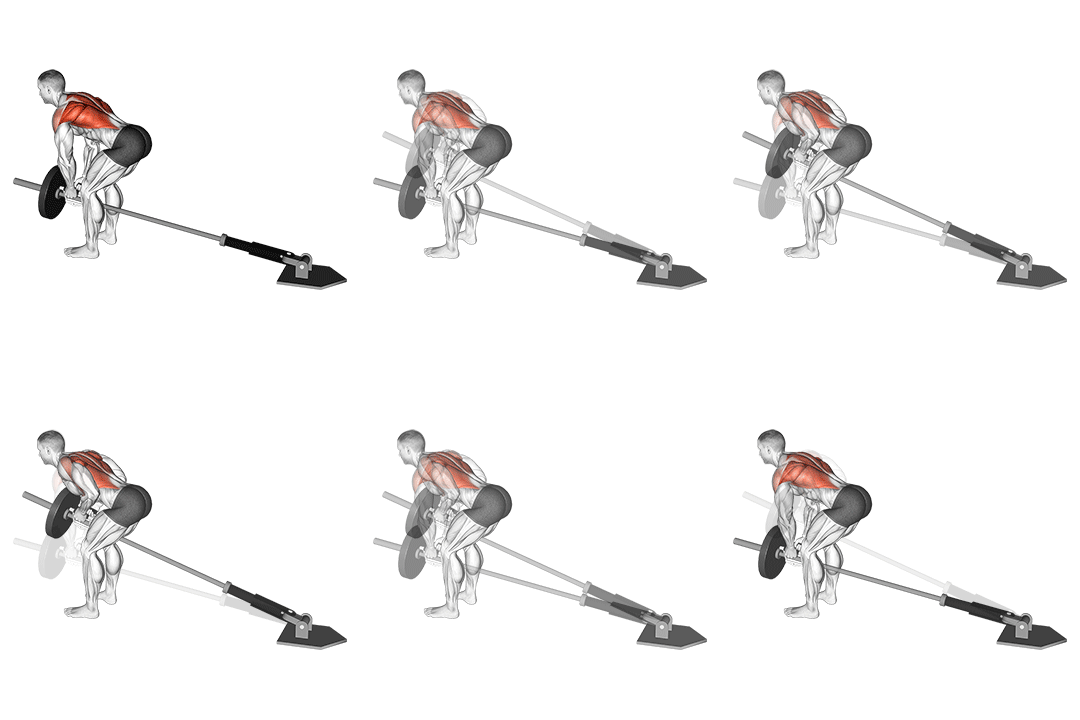
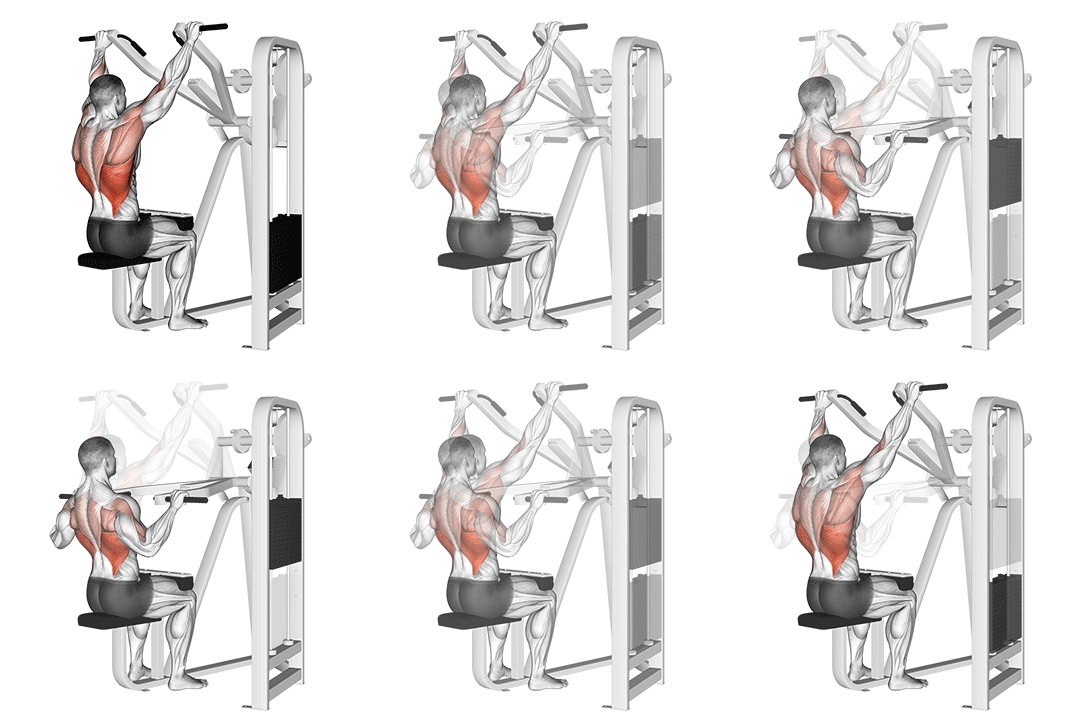
Lever Bent-over Row With V-bar
Head-to-Head Comparison
| Attribute | Assisted Parallel Close Grip Pull-up | Lever Bent-over Row With V-bar |
|---|---|---|
| Target Muscle |
Lats
|
Lats
|
| Body Part |
Back
|
Back
|
| Equipment |
Lever
|
Lever
|
| Difficulty |
Beginner
|
Intermediate
|
| Movement Type |
Compound
|
Compound
|
| Secondary Muscles |
2
|
2
|
Secondary Muscles Activated
Assisted Parallel Close Grip Pull-up
Lever Bent-over Row With V-bar
Visual Comparison
Overview
Assisted Parallel Close Grip Pull-up vs Lever Bent-over Row With V-bar — which should you pick for back development? You’ll get a clear, practical breakdown so you can choose based on your goals. I’ll cover primary and secondary muscle activation, movement mechanics, equipment needs, learning curve, progression options, and injury risk. Expect specific technique cues (grip width, torso angle, scapular set), rep ranges for hypertrophy and strength, and clear scenarios where one exercise outperforms the other. Read on and use the recommendations to structure your next back session.
Key Differences
- Difficulty levels differ: Assisted Parallel Close Grip Pull-up is beginner, while Lever Bent-over Row With V-bar is intermediate.
- Both exercises target the Lats using Lever. The main differences are in their movement patterns and muscle activation angles.
Pros & Cons
Assisted Parallel Close Grip Pull-up
+ Pros
- Direct vertical lat loading with high long-head activation
- Beginner-friendly via adjustable assistance
- Neutral parallel grip reduces shoulder torque
- Minimal setup beyond an assisted station or bands
− Cons
- Limited progressive overload ceiling without weighted progression
- Less posterior deltoid and middle trap emphasis compared to rows
- Requires a machine or effective band/assistance setup
Lever Bent-over Row With V-bar
+ Pros
- Stronger progression control with precise loading increments
- Greater scapular retraction and middle-back activation
- Higher mechanical tension potential for hypertrophy under load
- Teaches hip hinge and trunk bracing under horizontal pull vectors
− Cons
- Higher technical demand—requires solid hip hinge and neutral spine
- Less accessible without the specific lever + V-bar machine
- Greater low-back stress if performed with poor form
When Each Exercise Wins
The row allows more precise loading and sustained mechanical tension across the lats and middle-back; using 8–12 reps with slow 2–3 sec eccentrics delivers stronger hypertrophic stimulus and better mid-back fiber recruitment.
Rows let you overload in lower rep ranges (4–6 reps) with stable force vectors and controlled trunk angle, enabling higher absolute loads and progressive increases in 1RM-style strength work.
Assistance reduces required force so you can learn scapular retraction, bracing, and proper pull mechanics safely; neutral grip and controlled ROM lower shoulder stress while building biceps and lats.
You can replicate assistance with bands or simple assisted stations; a neutral grip pull-up requires far less specialized equipment than a lever row with V-bar machine.
Frequently Asked Questions
Can I do both Assisted Parallel Close Grip Pull-up and Lever Bent-over Row With V-bar in the same workout?
Yes — pairing them works well. Start with the heavier, mechanically demanding row (4–6 reps or 6–8 heavy sets) then follow with assisted pull-ups for volume (6–12 reps) to hit the lats with different force vectors and fatigue patterns.
Which exercise is better for beginners?
Assisted Parallel Close Grip Pull-up is better for beginners because assistance lowers the load while you learn scapular depression/retraction and safe pulling mechanics. Neutral grip reduces shoulder torque so you can build strength gradually.
How do the muscle activation patterns differ?
Pull-ups use a vertical force vector with greater shoulder extension range, peaking lat tension as the elbow passes the torso; rows use a horizontal vector, combining elbow-driven lat work with strong scapular retraction and increased spinal erector stabilization demands.
Can Lever Bent-over Row With V-bar replace Assisted Parallel Close Grip Pull-up?
Not entirely — rows are excellent for hypertrophy and heavy loading but they don’t fully replicate the vertical pulling pattern or grip-specific strength of pull-ups. Use rows as a primary mass-builder and keep pull-ups for vertical strength and bodyweight skill.
Expert Verdict
Use the Assisted Parallel Close Grip Pull-up when you need an accessible, low-risk way to build vertical pulling strength and teach scapular control—ideal for beginners and home setups. Aim for 6–12 reps, reduce assistance over time, and progress to weighted neutral-grip pull-ups as you adapt. Choose the Lever Bent-over Row With V-bar when you want controlled horizontal pulling, greater progressive overload, and superior hypertrophy potential for the lats and mid-back—use 4–6 reps for strength phases and 8–12 for hypertrophy with strict 30–45° torso hinge and scapular retraction. Both moves complement each other: prioritize rows for heavy tension and pull-ups for vertical strength and carryover to bodyweight performance.
Also Compare
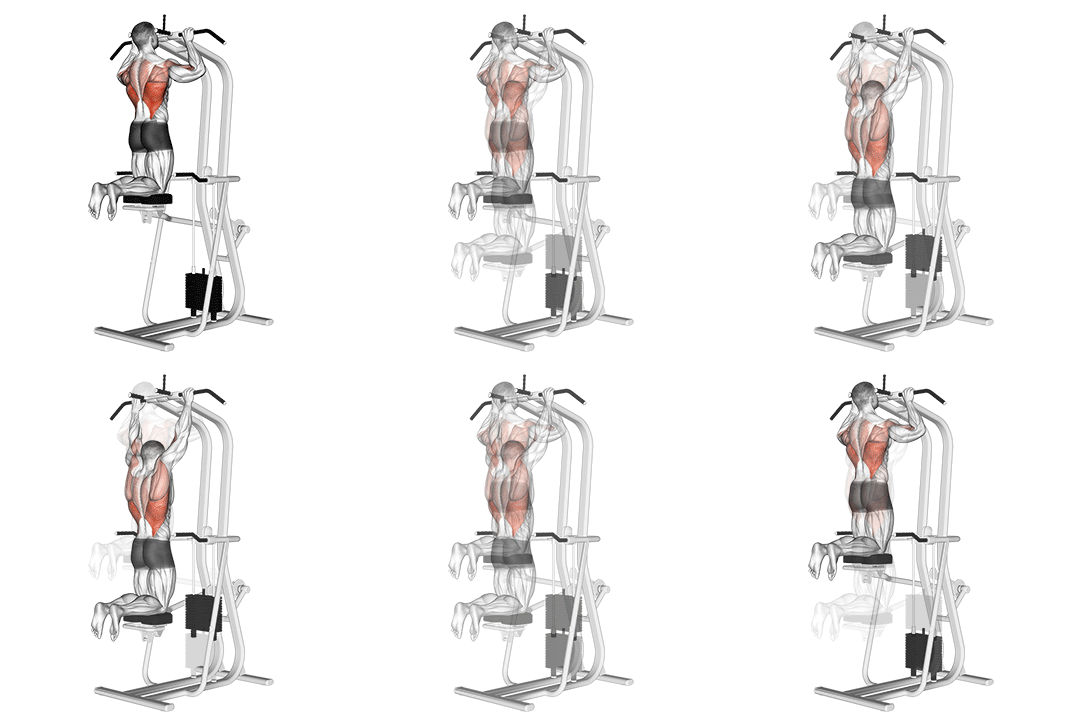
More comparisons with Assisted Parallel Close Grip Pull-up
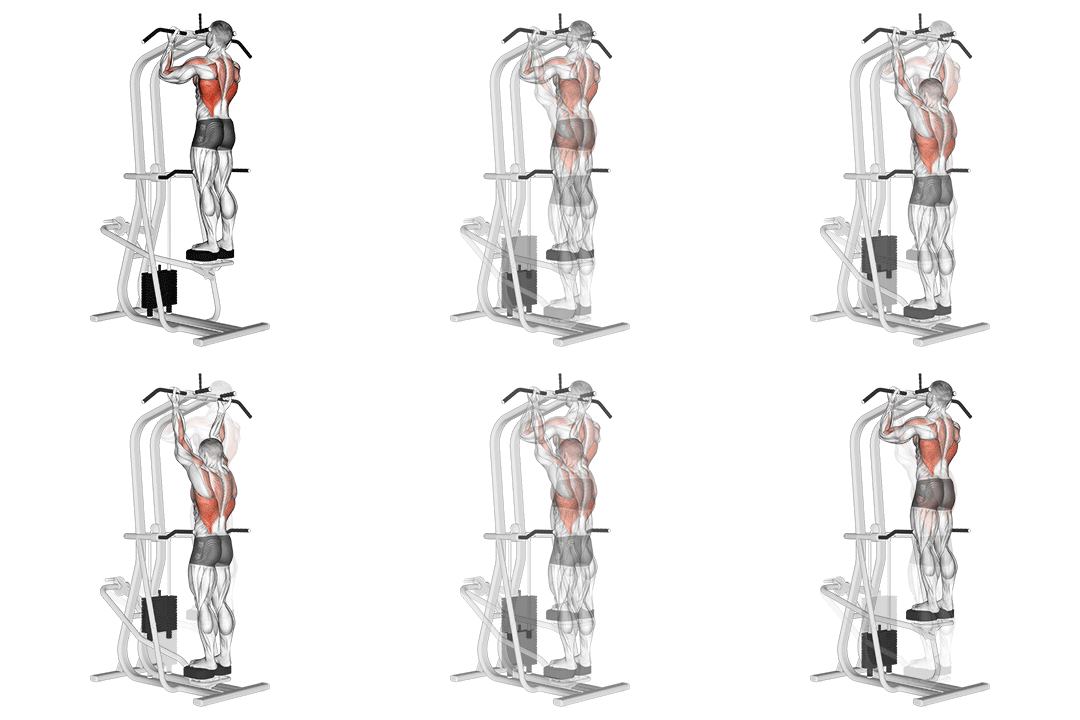
More comparisons with Lever Bent-over Row With V-bar
Compare More Exercises
Use our free comparison tool to analyze any two exercises head-to-head.
Compare Exercises