

Assisted Parallel Close Grip Pull-up vs Lever Front Pulldown: Complete Comparison Guide
Assisted Parallel Close Grip Pull-up vs Lever Front Pulldown — two beginner-friendly lever-based back moves that both target the lats. If you want to know which one gives you better lat activation, which recruits more secondary muscles, and which fits your equipment and goals, you’re in the right place. I’ll cover biomechanics, specific technique cues (hand placement, torso angle, scapular control), rep ranges for hypertrophy and strength (6–12 and 3–6), and clear progression options so you can pick the one that accelerates your progress.
Exercise Comparison
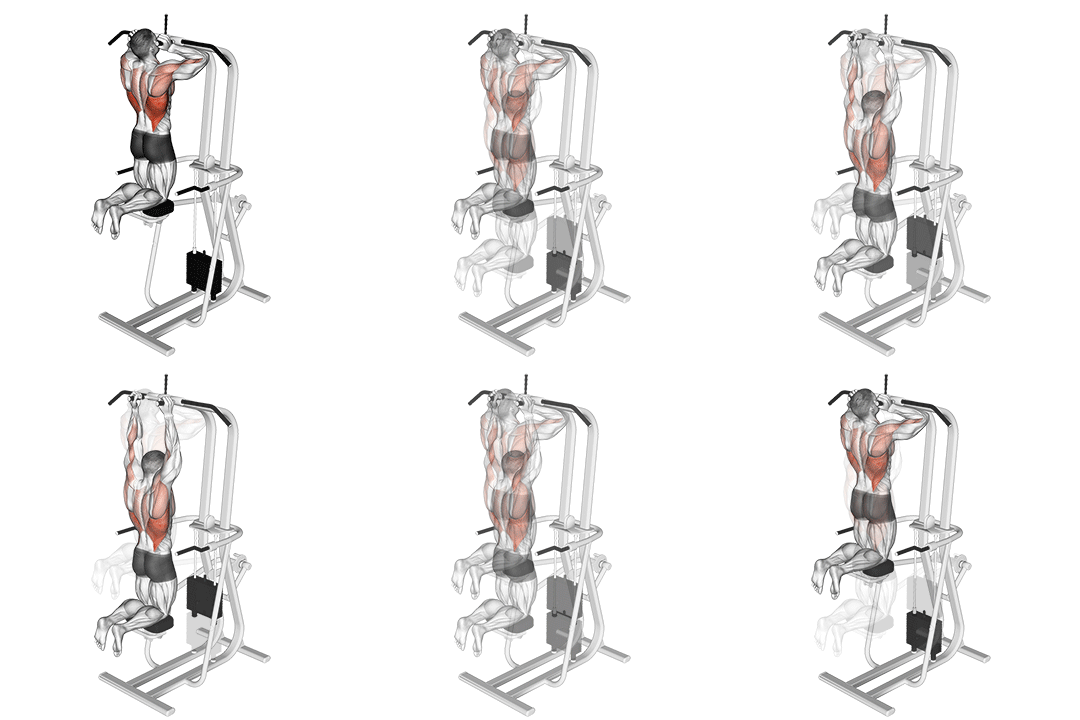
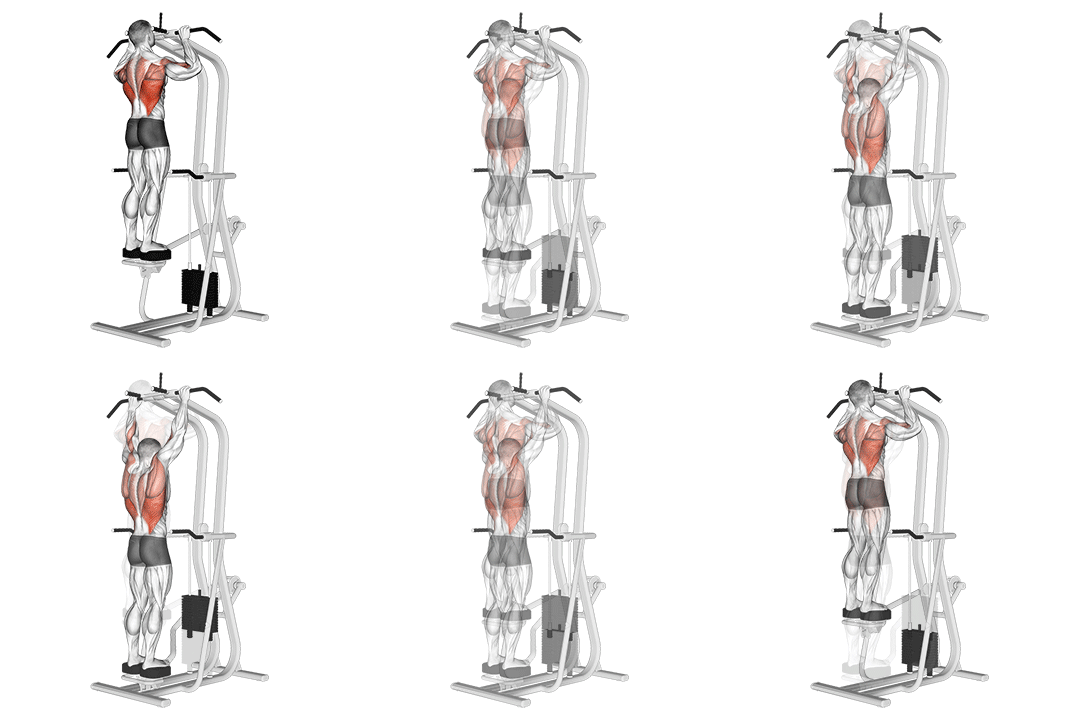
Assisted Parallel Close Grip Pull-up
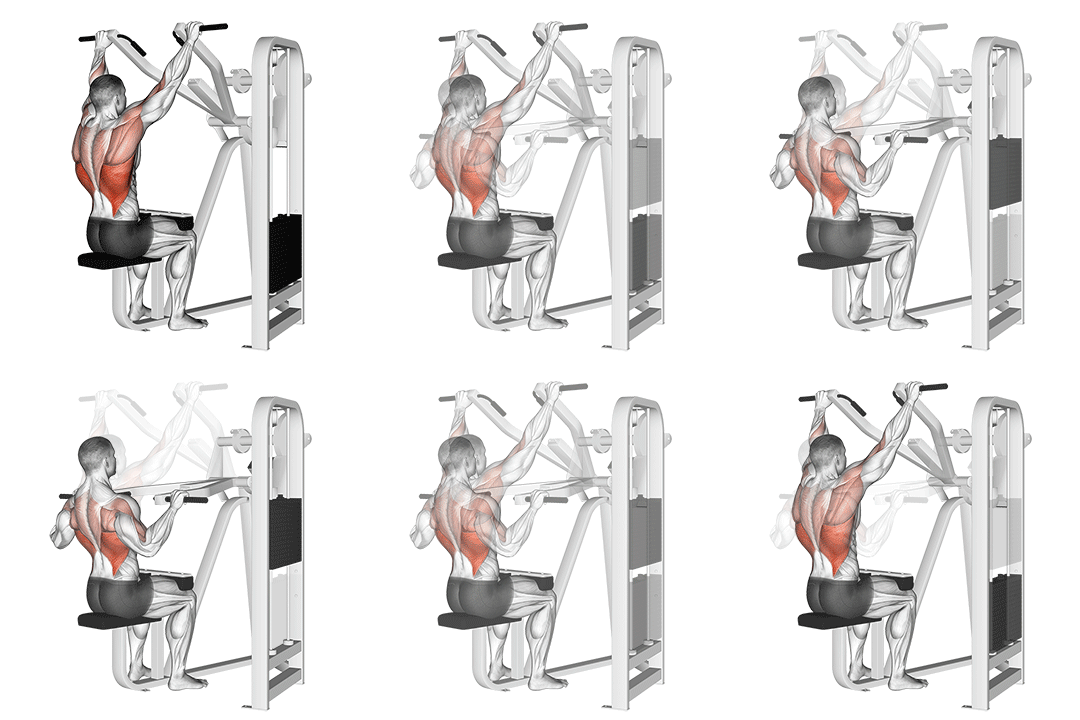
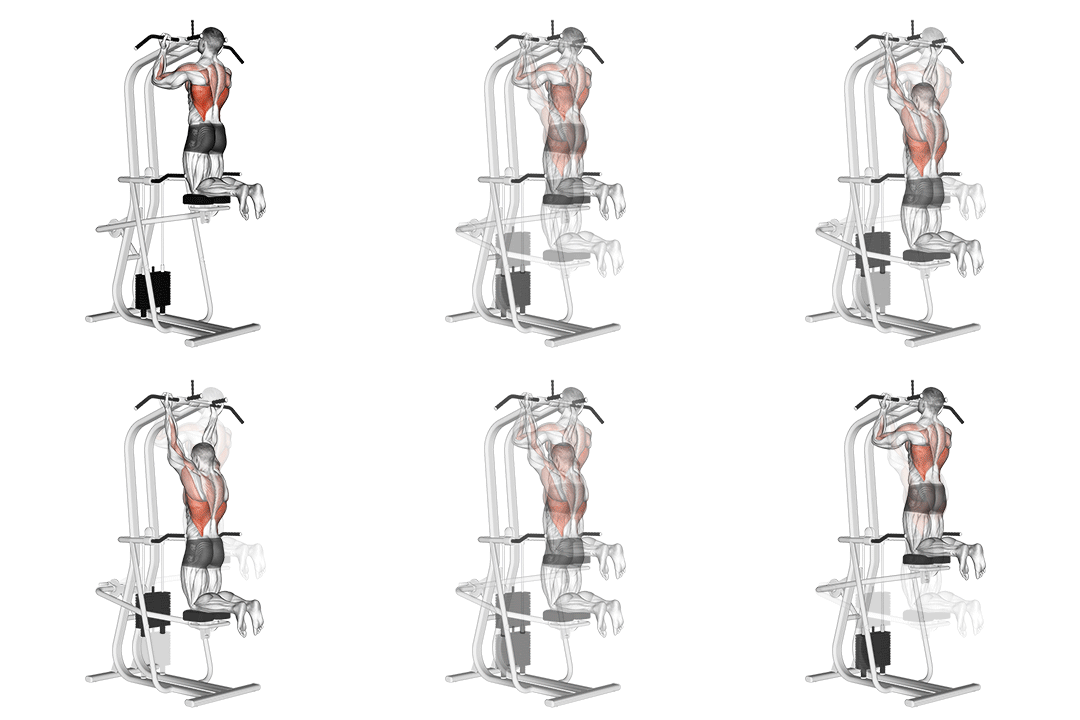
Lever Front Pulldown
Head-to-Head Comparison
| Attribute | Assisted Parallel Close Grip Pull-up | Lever Front Pulldown |
|---|---|---|
| Target Muscle |
Lats
|
Lats
|
| Body Part |
Back
|
Back
|
| Equipment |
Lever
|
Lever
|
| Difficulty |
Beginner
|
Beginner
|
| Movement Type |
Compound
|
Compound
|
| Secondary Muscles |
2
|
3
|
Secondary Muscles Activated
Assisted Parallel Close Grip Pull-up
Lever Front Pulldown
Visual Comparison
Overview
Assisted Parallel Close Grip Pull-up vs Lever Front Pulldown — two beginner-friendly lever-based back moves that both target the lats. If you want to know which one gives you better lat activation, which recruits more secondary muscles, and which fits your equipment and goals, you’re in the right place. I’ll cover biomechanics, specific technique cues (hand placement, torso angle, scapular control), rep ranges for hypertrophy and strength (6–12 and 3–6), and clear progression options so you can pick the one that accelerates your progress.
Key Differences
- Both exercises target the Lats using Lever. The main differences are in their movement patterns and muscle activation angles.
Pros & Cons
Assisted Parallel Close Grip Pull-up
+ Pros
- Strong specificity for building pulling strength and transferring to unassisted pull-ups
- Greater eccentric stretch at the bottom increases mechanical tension across lats
- Neutral grip reduces shoulder impingement risk and boosts biceps recruitment
- Bodyweight-style movement improves core and scapular stability
− Cons
- Requires an assisted pull-up station or creative band setups if no machine
- Harder to micro-load compared to weight-stack pulldowns
- Higher technical demand for clean scapular depression and timing
Lever Front Pulldown
+ Pros
- Precise load control and easy micro-loading for hypertrophy (6–12 reps)
- Seated setup stabilizes the torso, letting you focus on lat contraction and scapular retraction
- Typically available on most commercial lever/pulldown stations
- Lower coordination demand; good for strict tempo and time-under-tension work
− Cons
- Less carryover to bodyweight pull-up strength and coordination
- Can under-recruit biceps compared with close-grip pulls
- If performed with excessive torso lean, the movement shifts to more posterior deltoid and traps
When Each Exercise Wins
The pulldown lets you control load precisely and keep near-constant tension (use 6–12 reps, 8–12s total time under tension). That controlled path and micro-loading optimize time under tension and progressive overload for lat muscle growth.
Assisted pull-ups build the specific force application needed for unassisted and weighted pull-ups by training large ranges of motion and intermuscular coordination. Use lower rep ranges (3–6) and reduce assistance in 5–10% steps to add strength.
The seated, stabilized position simplifies technique and lets you dial load without demanding scapular or core stability. Beginners can learn scapular retraction and lat feel at lighter weights first.
You can replicate neutral-grip assisted pulls with bands, a doorway pull-up bar with parallel handles, or a low row setup, while pulldown machines are uncommon at home. Bands allow progressive assistance and similar ROM.
Frequently Asked Questions
Can I do both Assisted Parallel Close Grip Pull-up and Lever Front Pulldown in the same workout?
Yes. Pairing them back-to-back is effective: use pulldowns early for volume work (8–12 reps) and finish with assisted pull-ups for strength and specificity (3–6 reps or controlled eccentrics). Monitor fatigue and keep technique tight to avoid compromising scapular mechanics.
Which exercise is better for beginners?
Lever Front Pulldown is better for most beginners because the seated, stabilized setup reduces coordination demands and lets you learn scapular retraction and lat engagement at lighter loads. Start with 8–12 reps and prioritize controlled tempo.
How do the muscle activation patterns differ?
Assisted pull-ups create a larger eccentric stretch and demand simultaneous scapular depression and elbow flexion, increasing biceps and forearm activation. Pulldowns maintain steadier tension with more scapular retraction emphasis, which can increase rhomboid and rear-delt contribution relative to the pull-up.
Can Lever Front Pulldown replace Assisted Parallel Close Grip Pull-up?
Pulldowns can substitute when the goal is hypertrophy and controlled overload, but they don’t fully replace pull-ups for bodyweight strength and coordination. If your goal is unassisted pull-ups or sport-specific pulling, keep assisted pull-ups in the program.
Expert Verdict
Both moves serve you well, but pick based on clear goals. Choose Lever Front Pulldown when your priority is hypertrophy, precise loading, and rapid technical learning — sit tall, lock your hips, retract the scapula, and pull to the chest for 6–12 reps. Choose Assisted Parallel Close Grip Pull-up when you want to build bodyweight pulling strength, improve intermuscular coordination, and progress toward unassisted pull-ups — focus on full ROM, neutral grip, and progressively reduce assistance in 5–10% steps. If possible, cycle both: use pulldowns for volume and controlled overload, and include assisted pulls for specificity and strength transfer.
Also Compare
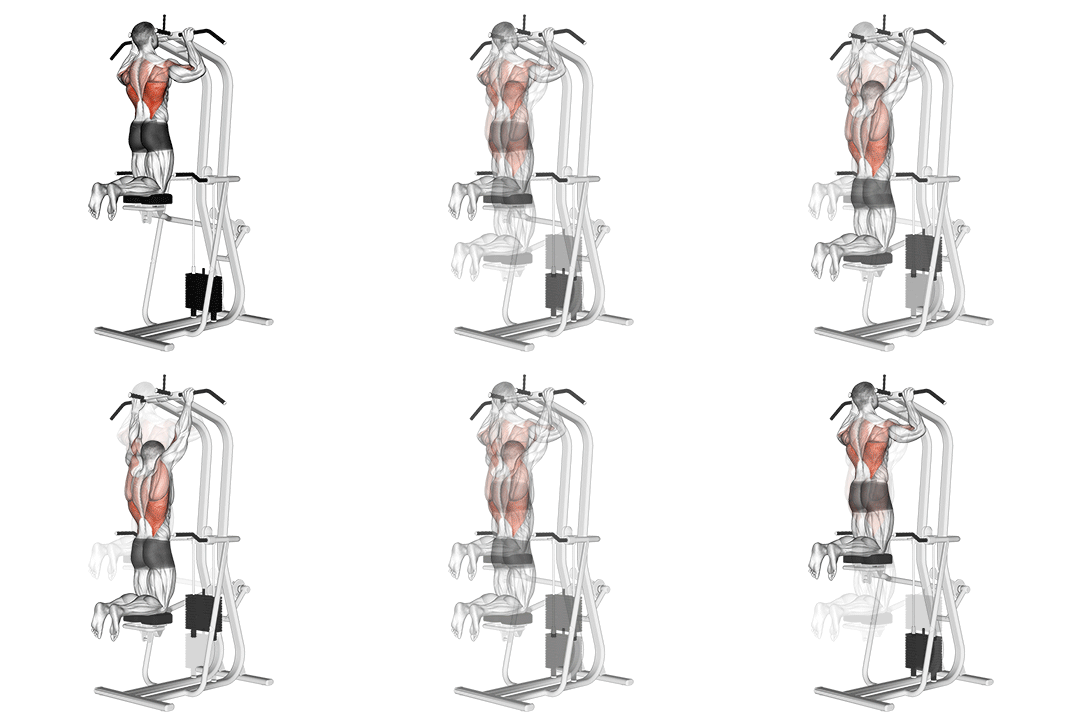
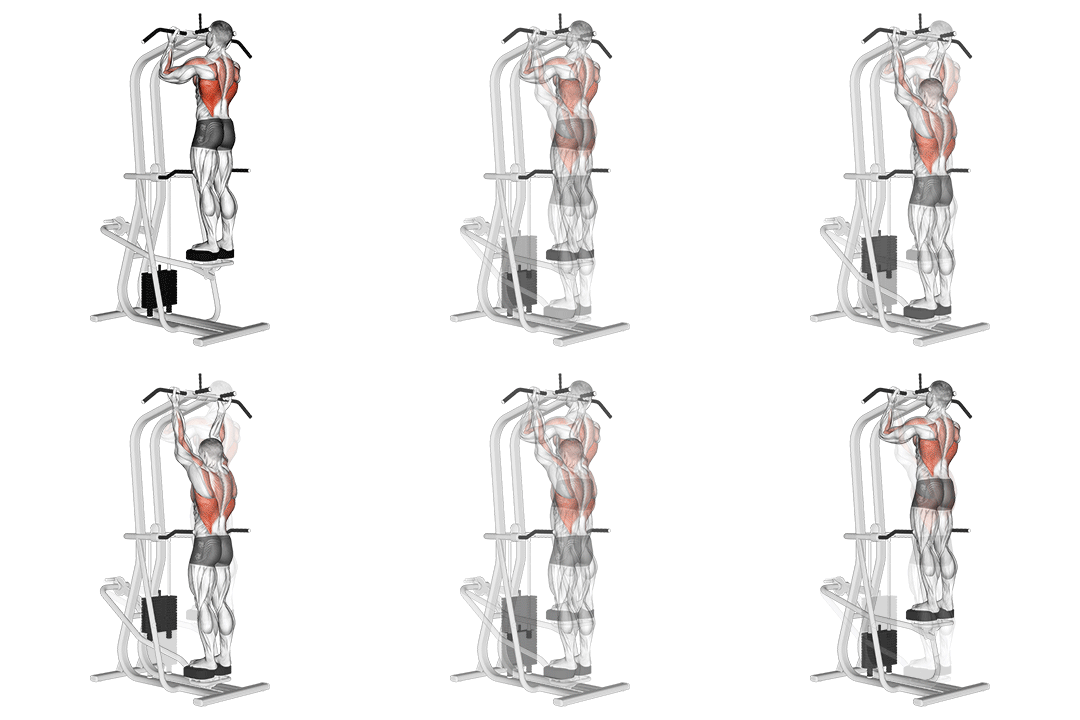
More comparisons with Assisted Parallel Close Grip Pull-up
More comparisons with Lever Front Pulldown
Compare More Exercises
Use our free comparison tool to analyze any two exercises head-to-head.
Compare Exercises