

Assisted Pull-up vs Assisted Standing Chin-up: Complete Comparison Guide
Assisted Pull-up vs Assisted Standing Chin-up — if you want stronger lats and better vertical pulling, you need to pick the right assisted variation. You’ll get clear technique cues, biomechanical differences, and practical progressions so you can choose based on muscle growth, strength, or ease of learning. I’ll cover how grip changes force vectors, which exercise loads the biceps more, exact rep ranges for hypertrophy and strength, equipment needs, and step-by-step progressions you can use in your next workout.
Exercise Comparison
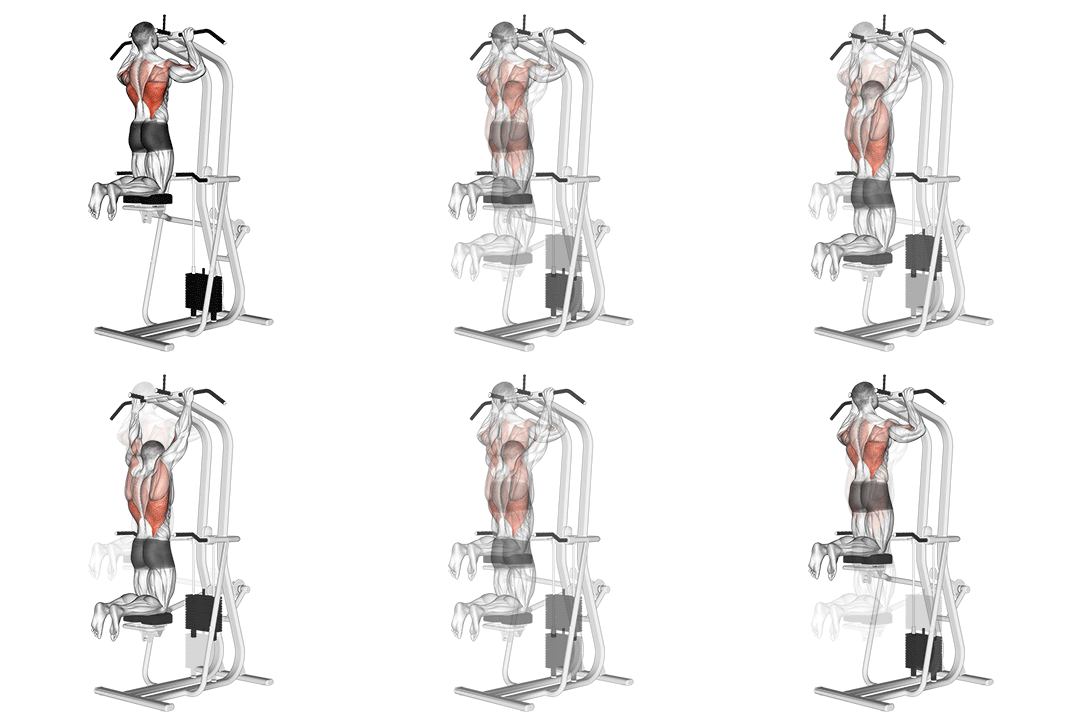
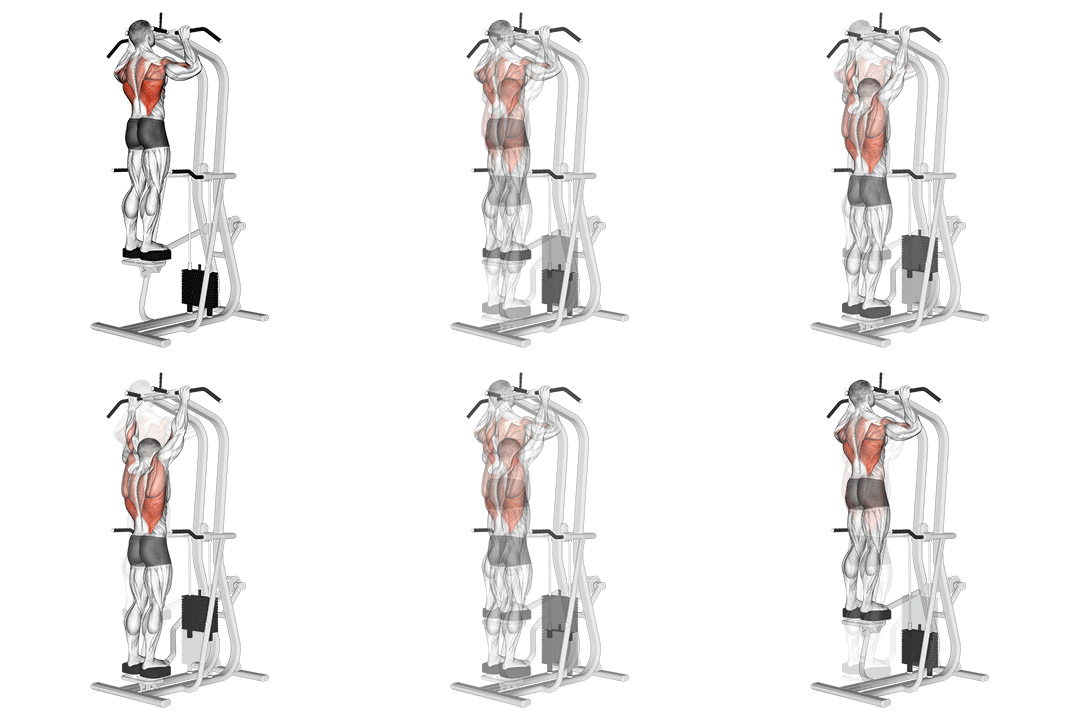
Assisted Pull-up
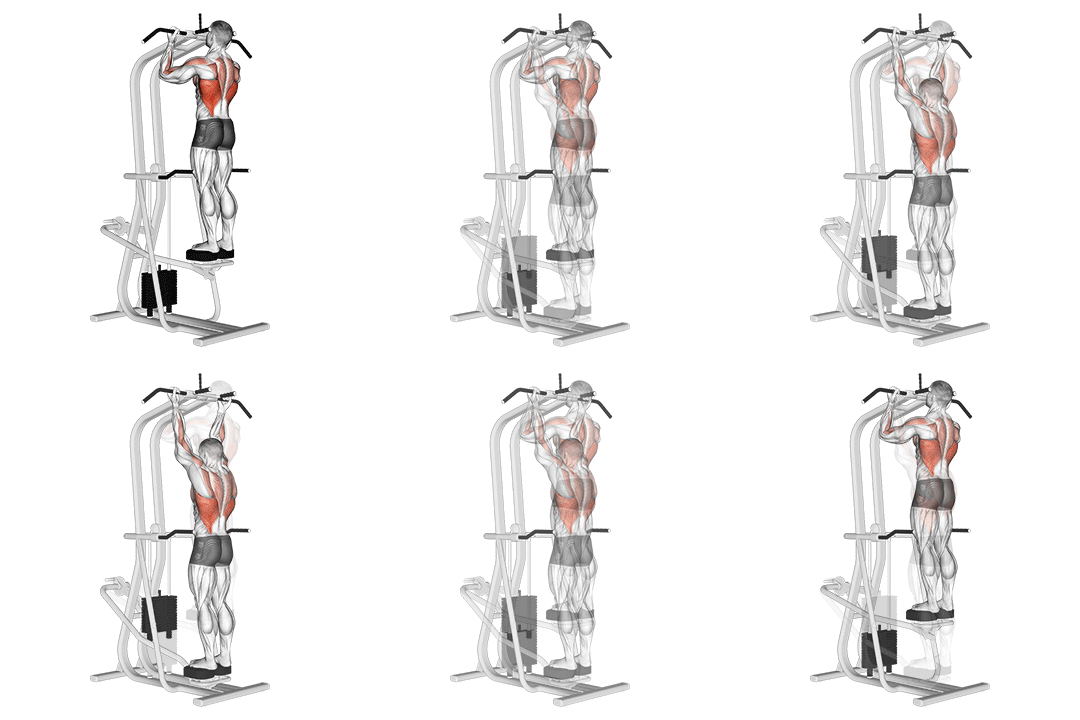
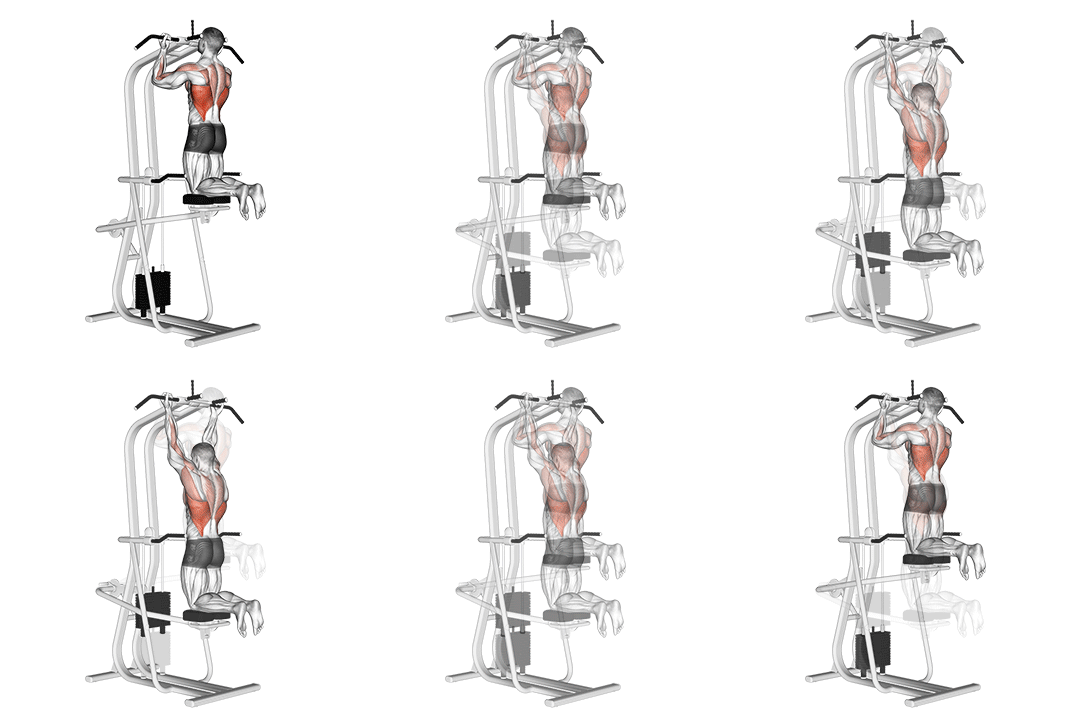
Assisted Standing Chin-up
Head-to-Head Comparison
| Attribute | Assisted Pull-up | Assisted Standing Chin-up |
|---|---|---|
| Target Muscle |
Lats
|
Lats
|
| Body Part |
Back
|
Back
|
| Equipment |
Lever
|
Lever
|
| Difficulty |
Beginner
|
Beginner
|
| Movement Type |
Compound
|
Compound
|
| Secondary Muscles |
2
|
2
|
Secondary Muscles Activated
Assisted Pull-up
Assisted Standing Chin-up
Visual Comparison
Overview
Assisted Pull-up vs Assisted Standing Chin-up — if you want stronger lats and better vertical pulling, you need to pick the right assisted variation. You’ll get clear technique cues, biomechanical differences, and practical progressions so you can choose based on muscle growth, strength, or ease of learning. I’ll cover how grip changes force vectors, which exercise loads the biceps more, exact rep ranges for hypertrophy and strength, equipment needs, and step-by-step progressions you can use in your next workout.
Key Differences
- Both exercises target the Lats using Lever. The main differences are in their movement patterns and muscle activation angles.
Pros & Cons
Assisted Pull-up
+ Pros
- Stronger emphasis on lats and posterior chain through humeral extension
- Easier to target wider grip angles for lat stretch
- Common machine availability in gyms for consistent loading
- Better long-term progression toward unassisted vertical pull strength
− Cons
- Requires solid scapular control to avoid shoulder impingement
- Slightly less biceps assistance, making initial reps harder for some beginners
- Wide-grip versions can feel uncomfortable for those with shoulder mobility limits
Assisted Standing Chin-up
+ Pros
- More biceps assistance makes full-range reps easier for beginners
- Supinated grip creates a stronger elbow-flexion torque for comfortable pulling
- Can be replicated with bands or low-bar setups for home-style practice
- Good transfer to curling strength and elbow flexor development
− Cons
- Shifts some load off the lats onto the biceps, reducing pure lat stimulus
- Slightly higher stress on the distal biceps and medial elbow under load
- Less ideal for maximizing wider-lat activation and scapular depression patterns
When Each Exercise Wins
Pronated pull-ups let you emphasize lat length-tension by maintaining a wider shoulder position and greater humeral extension. Use 6–12 reps with controlled 2:1 concentric:eccentric tempos and reduce assistance gradually to maximize lat mechanical tension.
Pull-ups better transfer to unassisted vertical pulling strength because they demand more lat and scapular stabilizer torque. Progress with lower-assist sets of 3–6 reps, heavy eccentrics, and partial negatives to build max force.
The supinated grip increases biceps contribution, making full-range reps easier and more achievable for novices. Start with 8–15 assisted reps focusing on scapular retraction and a 2–3 second eccentric to build control.
Standing chin-up mechanics are simpler to replicate with resistance bands or a low bar and platform. Bands give adjustable assistance in 10–30 lb steps, letting you practice full-range movements without a dedicated lever machine.
Frequently Asked Questions
Can I do both Assisted Pull-up and Assisted Standing Chin-up in the same workout?
Yes — pairing them complements muscle balance. Do 3–4 sets of one as your primary exercise (heavier or lower-rep) and finish with 2–3 sets of the other for accessory volume in the 8–15 rep range.
Which exercise is better for beginners?
Assisted Standing Chin-up is better for most beginners because the supinated grip increases biceps assistance and helps you complete full-range reps while you develop scapular and core stability.
How do the muscle activation patterns differ?
The pronated pull-up shifts more torque to the lats and posterior shoulder by aligning the humeral force vector for extension, while the supinated chin-up increases biceps EMG and moves peak torque earlier in the concentric phase due to elbow flexor contribution.
Can Assisted Standing Chin-up replace Assisted Pull-up?
It can replace pull-ups temporarily if your goal is to build volume and confidence, but for maximal lat-specific overload and vertical-pull strength you should transition back to pronated pull-ups as you reduce assistance.
Expert Verdict
If your priority is lat development and long-term vertical-pull strength, prioritize Assisted Pull-ups. They keep the force vector through humeral extension and let you target the lats with wider grips and progressive decreases in assistance; use 6–12 reps for hypertrophy and 3–6 for strength-focused sets. If you’re new to pulling or need an option you can replicate at home, start with Assisted Standing Chin-ups — the supinated grip lets you complete more quality reps and trains elbow-flexion strength while you build scapular control. For programming, rotate both: use chin-ups for volume and pull-ups for heavy or specificity blocks.
Also Compare
More comparisons with Assisted Pull-up
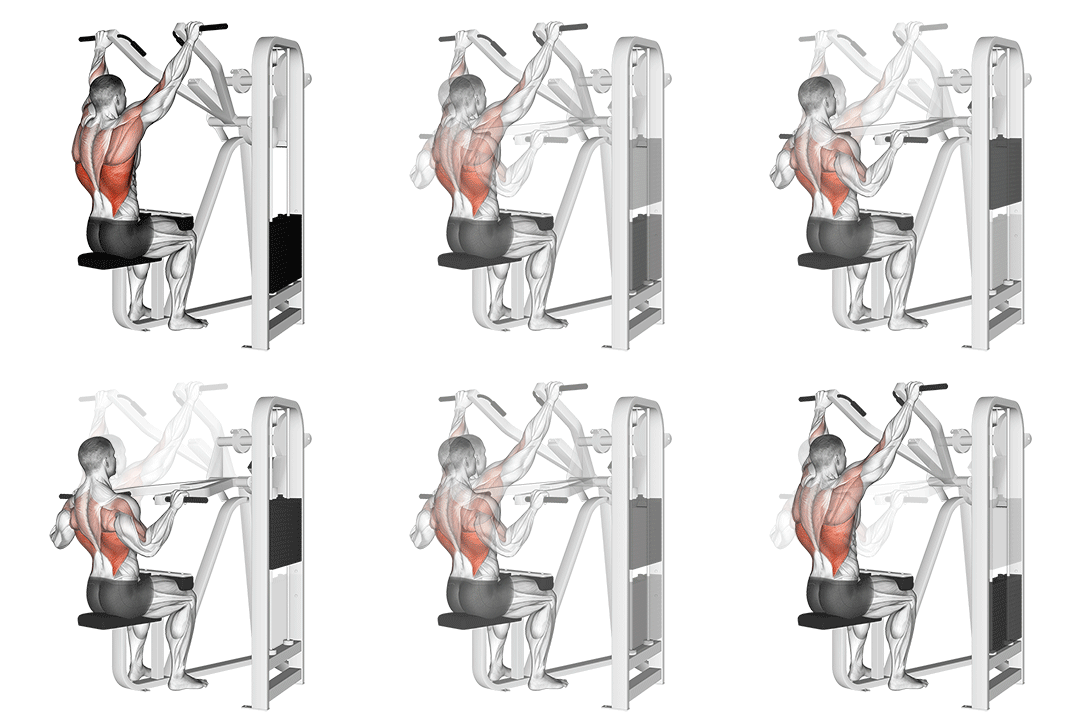
More comparisons with Assisted Standing Chin-up
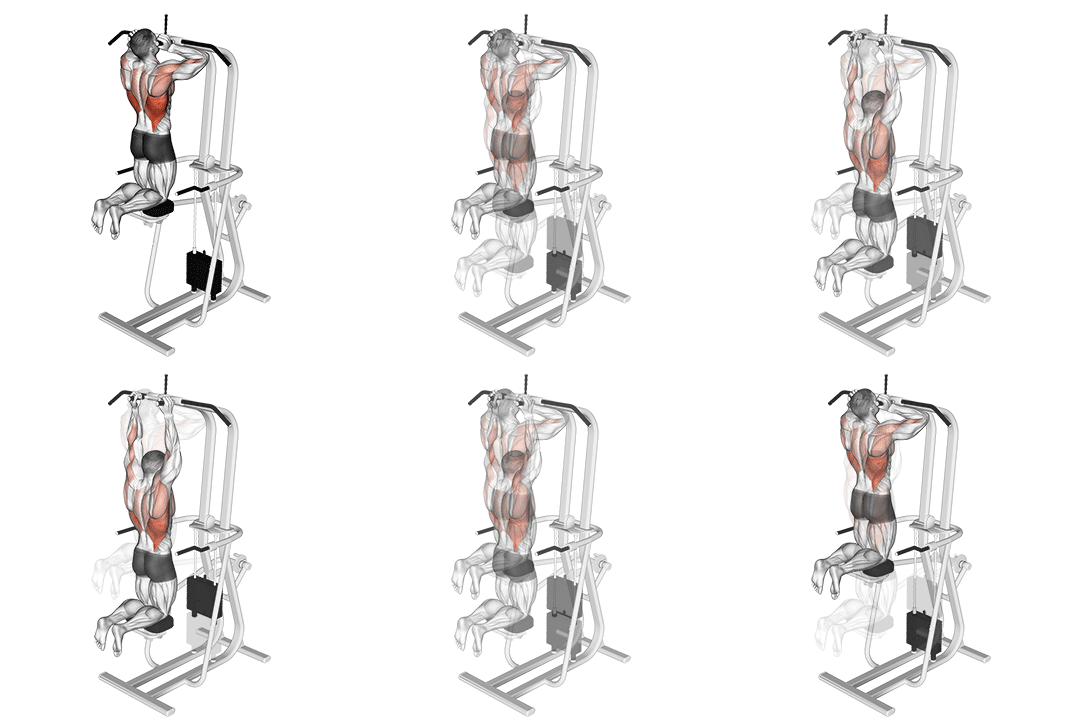
Compare More Exercises
Use our free comparison tool to analyze any two exercises head-to-head.
Compare Exercises