

Assisted Pull-up vs Assisted Standing Pull-up: Complete Comparison Guide
Assisted Pull-up vs Assisted Standing Pull-up — if you want stronger lats without being able to do an unassisted rep, you should read this. I’ll walk you through how each variation loads the latissimus dorsi, how the biceps and forearms assist, and which movement better maps to strength, hypertrophy, and easy progression. You’ll get clear technique cues (elbow path, scapular control, torso angle), numbers for rep ranges (6–12 for hypertrophy, 3–6 for strength), and practical tips for programming and injury avoidance so you can pick the best tool for your goals.
Exercise Comparison
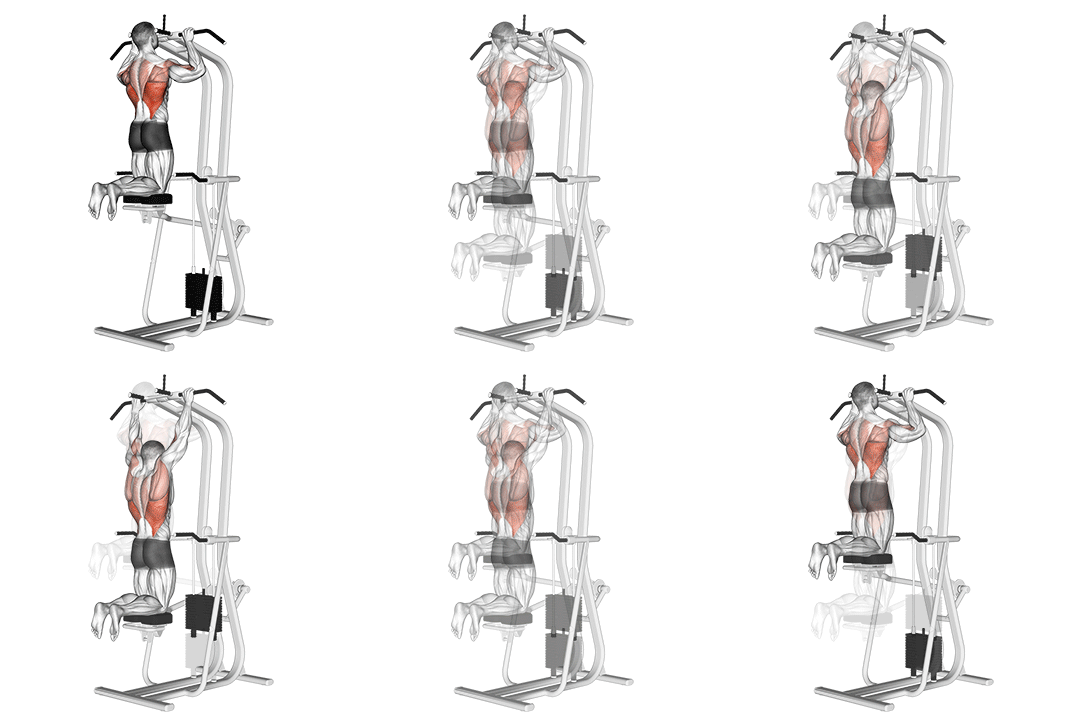
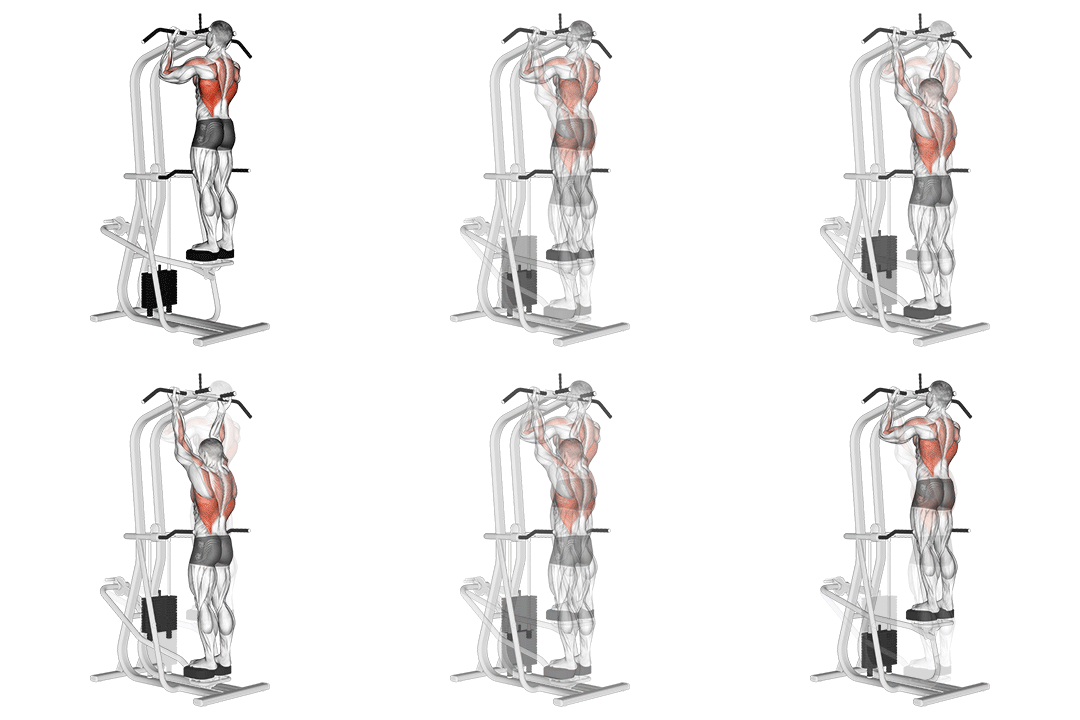
Assisted Pull-up
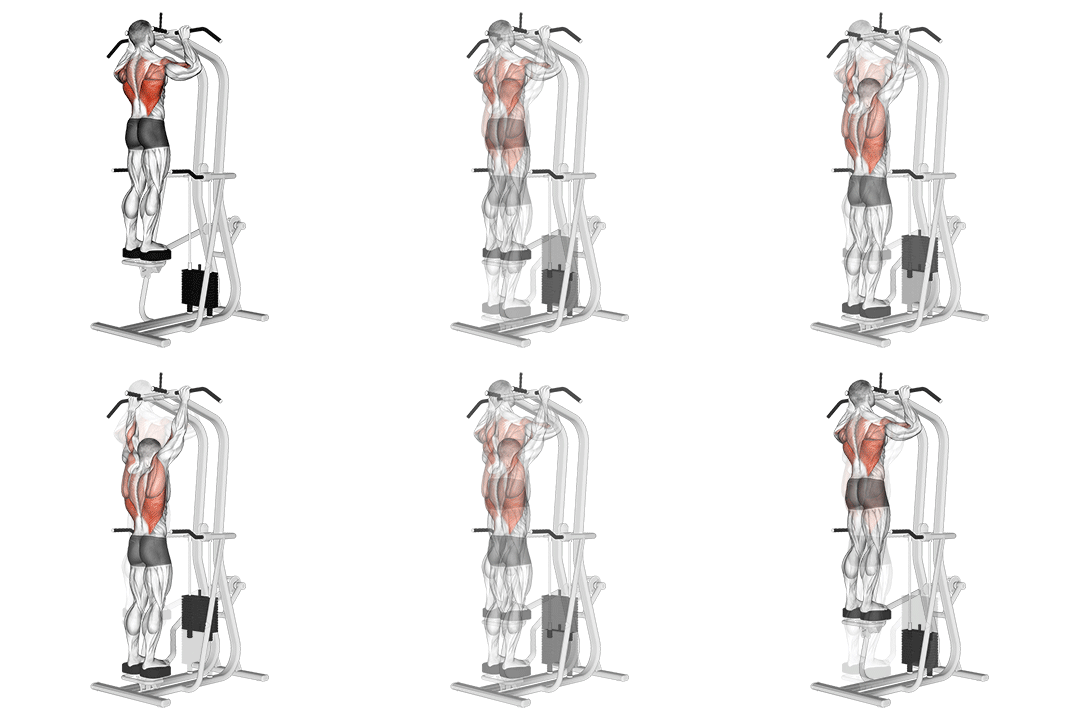
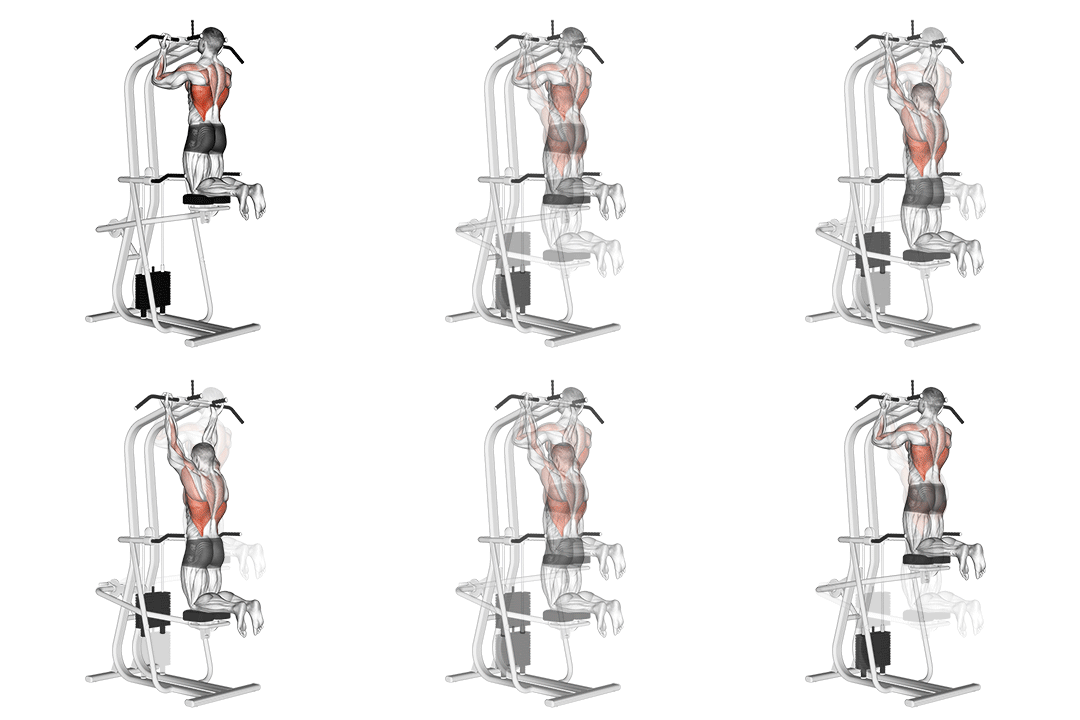
Assisted Standing Pull-up
Head-to-Head Comparison
| Attribute | Assisted Pull-up | Assisted Standing Pull-up |
|---|---|---|
| Target Muscle |
Lats
|
Lats
|
| Body Part |
Back
|
Back
|
| Equipment |
Lever
|
Lever
|
| Difficulty |
Beginner
|
Beginner
|
| Movement Type |
Compound
|
Compound
|
| Secondary Muscles |
2
|
2
|
Secondary Muscles Activated
Assisted Pull-up
Assisted Standing Pull-up
Visual Comparison
Overview
Assisted Pull-up vs Assisted Standing Pull-up — if you want stronger lats without being able to do an unassisted rep, you should read this. I’ll walk you through how each variation loads the latissimus dorsi, how the biceps and forearms assist, and which movement better maps to strength, hypertrophy, and easy progression. You’ll get clear technique cues (elbow path, scapular control, torso angle), numbers for rep ranges (6–12 for hypertrophy, 3–6 for strength), and practical tips for programming and injury avoidance so you can pick the best tool for your goals.
Key Differences
- Both exercises target the Lats using Lever. The main differences are in their movement patterns and muscle activation angles.
Pros & Cons
Assisted Pull-up
+ Pros
- Stable body position reduces momentum and encourages strict scapular retraction
- Easier to control range of motion and assistance levels (20–90% bodyweight)
- Cleaner transfer to strict pull-up strength work and low lumbar shear
- Straightforward cues: chest up, elbows down and back, full ROM to 20–30° humeral extension
− Cons
- Less variability in torso angle may limit some lat fiber targeting strategies
- Machine availability can be limited in crowded gyms
- Can feel unnatural if you’re used to free-hanging pull-ups
Assisted Standing Pull-up
+ Pros
- Allows a greater lat stretch at the bottom with a modest torso lean (10–30°)
- Easier to mimic standing pulling patterns that transfer to everyday movements
- Can be adapted with bands or cables for standing home-style variations
- Engages core and stabilizers more due to standing posture
− Cons
- Requires better coordination to keep a strict vertical elbow path
- Higher chance of using momentum or excessive torso swing
- Slightly harder to quantify assistance load consistently
When Each Exercise Wins
Assisted Pull-up allows a controlled full range of motion and less momentum, making it easier to target the lats for time under tension in the 6–12 rep range and to emphasize eccentric control for muscle growth.
The stable setup lets you load heavier relative intensities (lower assistance) and hit low-rep sets (3–6) with cleaner technique, which produces better force-transfer patterns toward unassisted pull-up strength.
Beginners benefit from the reduced balance demand and clearer kinesthetic feedback; the supported posture makes it easier to learn scapular control and a proper elbow-down pulling path.
While both originally need a lever, the standing pattern adapts more readily to banded or cable setups at home, letting you replicate the movement with fewer specialized machines.
Frequently Asked Questions
Can I do both Assisted Pull-up and Assisted Standing Pull-up in the same workout?
Yes. Start with the stricter Assisted Pull-up for heavy or main sets (3–6 or 6–12 reps), then use the Assisted Standing Pull-up as an accessory for 2–4 sets of higher reps to emphasize stretch and stability without fatiguing prime movers prematurely.
Which exercise is better for beginners?
Assisted Pull-up is better for most beginners because the supported knee/foot position reduces balance demands, simplifies scapular control, and lowers lumbar shear, making it easier to learn proper pulling mechanics.
How do the muscle activation patterns differ?
Both activate the lats via humeral extension and adduction, but the standing variation shifts length-tension by increasing bottom-end stretch and slightly earlier peak force in the concentric phase. That also moves biceps peak activation timing and ups stabilizer work.
Can Assisted Standing Pull-up replace Assisted Pull-up?
It can replace it in some programs, especially if you want more stretch or a standing pattern, but for pure strength progression and reproducible loading formulas the standard Assisted Pull-up is generally the superior primary choice.
Expert Verdict
Use the standard Assisted Pull-up as your default if your goal is strict strength or hypertrophy of the lats because it enforces a stable posture, precise ROM, and easy, incremental reductions in assistance (aim for 5–10% bodyweight steps). Pick Assisted Standing Pull-up when you want a slightly greater lat stretch, a standing pattern that challenges core stabilizers, or when you need a variant that translates to banded/home setups. Program both for variety: prioritize Assisted Pull-up for 3–6 heavy sets or 6–12 hypertrophy sets, and slot the standing version for accessory work (2–4 sets of 8–15) to emphasize different length-tension and stabilizer demands.
Also Compare
More comparisons with Assisted Pull-up
More comparisons with Assisted Standing Pull-up
Compare More Exercises
Use our free comparison tool to analyze any two exercises head-to-head.
Compare Exercises