

Assisted Pull-up vs Lever Assisted Chin-up: Complete Comparison Guide
Assisted Pull-up vs Lever Assisted Chin-up — if you want stronger lats and a reliable vertical-pull progression, you need to pick the movement that fits your body and goals. You’ll learn how each exercise loads the latissimus dorsi, how grip changes biceps and forearm involvement, what equipment each needs, and practical cues and rep ranges for strength and hypertrophy. I’ll compare activation patterns with biomechanics (length-tension and force vectors), show which is easier to learn, and give clear programming recommendations so you can choose the right assisted pull for your next workout.
Exercise Comparison
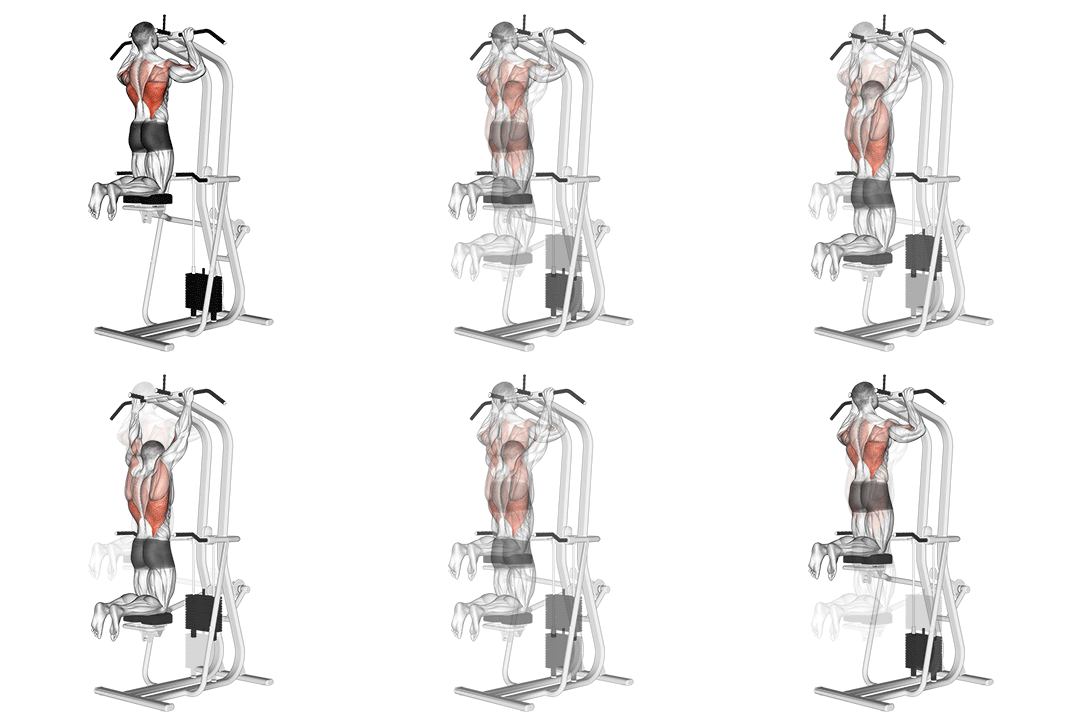
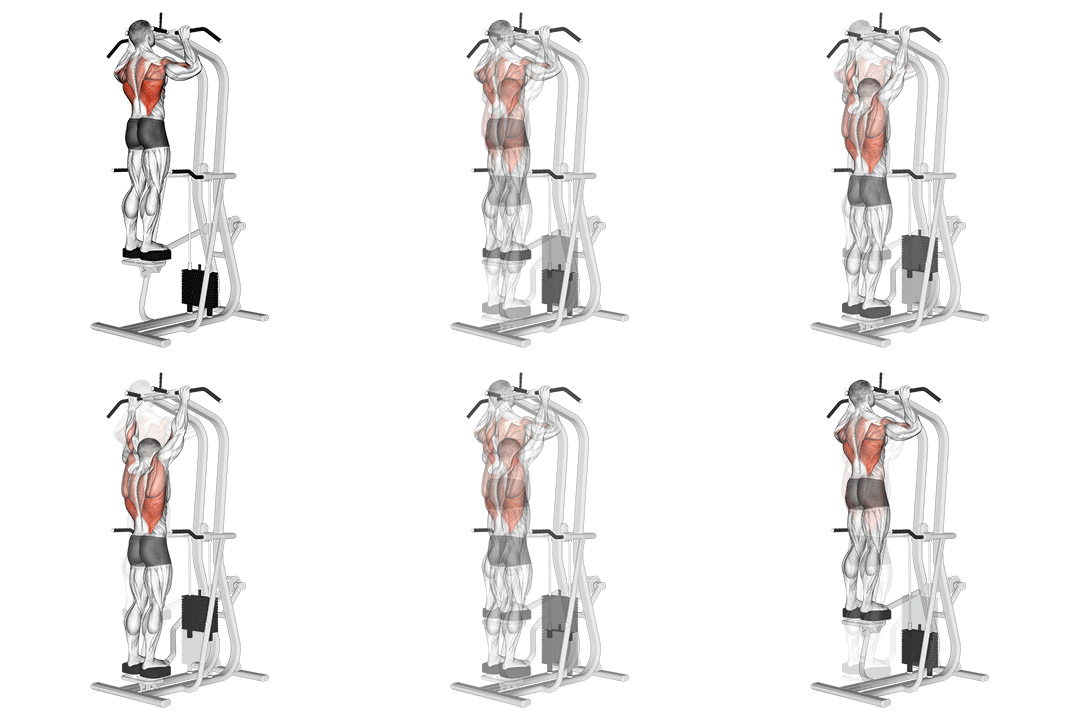
Assisted Pull-up
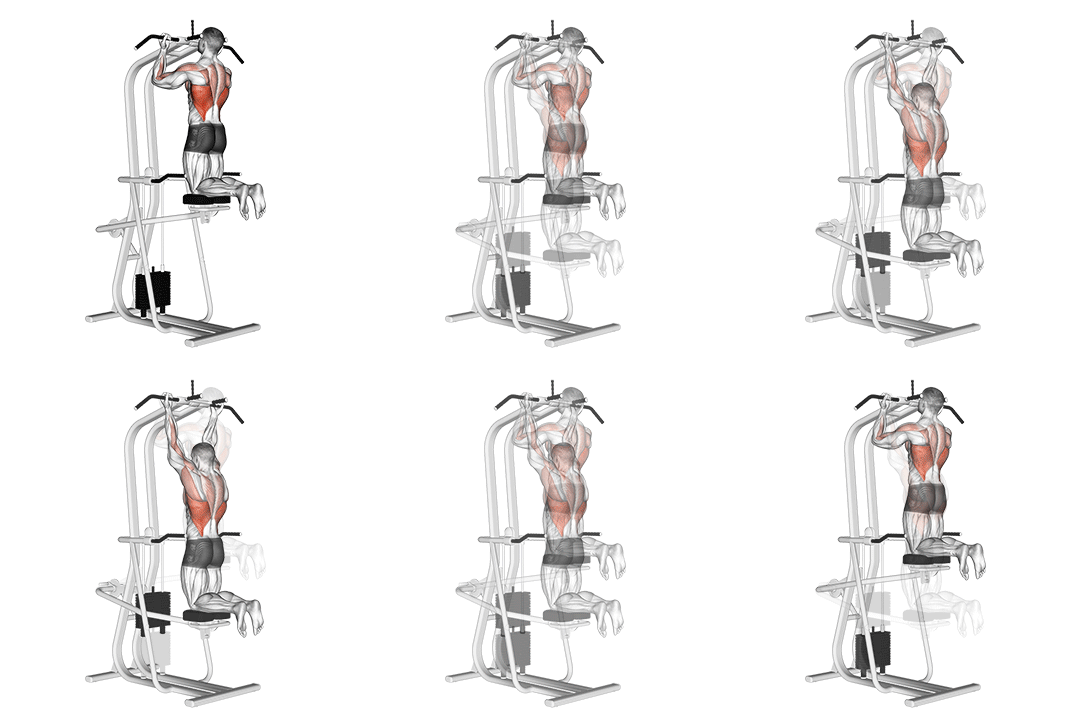
Lever Assisted Chin-up
Head-to-Head Comparison
| Attribute | Assisted Pull-up | Lever Assisted Chin-up |
|---|---|---|
| Target Muscle |
Lats
|
Lats
|
| Body Part |
Back
|
Back
|
| Equipment |
Lever
|
Lever
|
| Difficulty |
Beginner
|
Beginner
|
| Movement Type |
Compound
|
Compound
|
| Secondary Muscles |
2
|
2
|
Secondary Muscles Activated
Assisted Pull-up
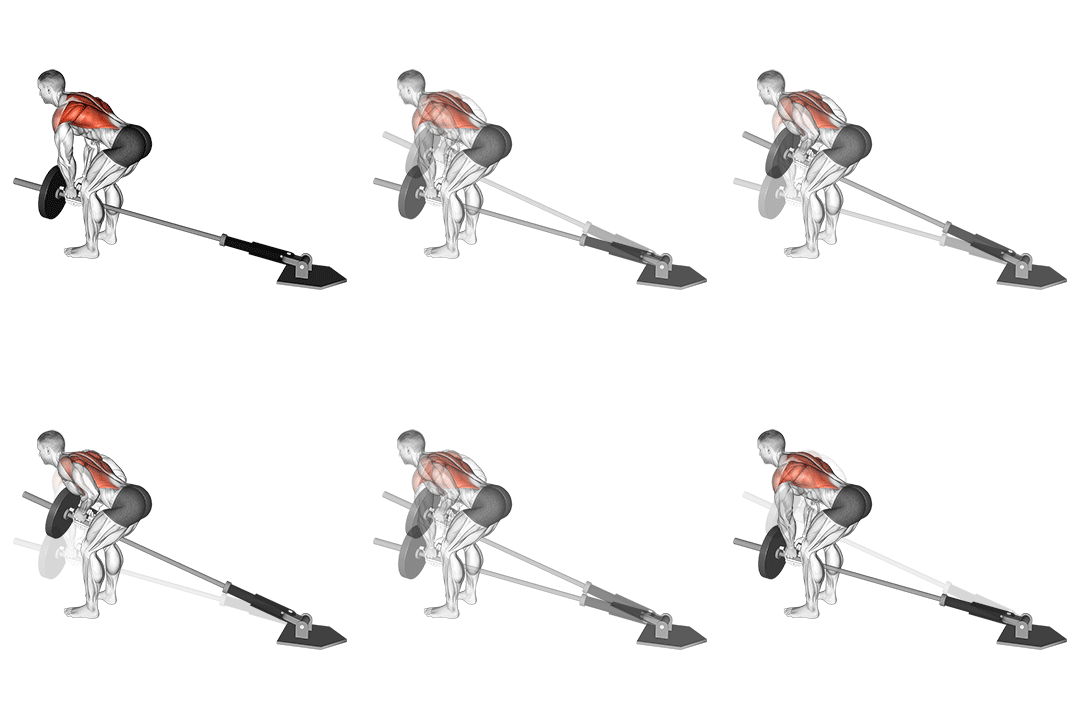
Lever Assisted Chin-up
Visual Comparison
Overview
Assisted Pull-up vs Lever Assisted Chin-up — if you want stronger lats and a reliable vertical-pull progression, you need to pick the movement that fits your body and goals. You’ll learn how each exercise loads the latissimus dorsi, how grip changes biceps and forearm involvement, what equipment each needs, and practical cues and rep ranges for strength and hypertrophy. I’ll compare activation patterns with biomechanics (length-tension and force vectors), show which is easier to learn, and give clear programming recommendations so you can choose the right assisted pull for your next workout.
Key Differences
- Both exercises target the Lats using Lever. The main differences are in their movement patterns and muscle activation angles.
Pros & Cons
Assisted Pull-up
+ Pros
- Stronger carryover to unassisted pull-ups and weighted progressions
- Better outer-lat bias through a more favorable shoulder extension force vector
- Easily replicated at home with bands or a low bar
- Allows wider grip variations to target different lat regions
− Cons
- Slightly less biceps assistance makes it harder for absolute beginners
- Wider grips can increase shoulder impingement risk if form breaks down
- Requires a stable bar or machine for band-assisted variations
Lever Assisted Chin-up
+ Pros
- More biceps involvement makes it easier for beginners to complete reps
- Often feels stronger early because of elbow-flexor assistance
- Good option for building elbow flexor strength and forearm work
- Controlled lever assistance yields consistent resistance across reps
− Cons
- Less direct carryover to wide-grip or strict pronated pull-up patterns
- Increases load on biceps tendon and elbow joint if overloaded
- Machine-specific setup can be harder to replicate at home without a lever
When Each Exercise Wins
Assisted Pull-up produces a larger shoulder-extension moment that stretches the lat on the descent and maintains tension through the concentric, making it slightly better for lat hypertrophy. Use 6–12 rep sets with a 2–3 second eccentric to maximize time under tension.
Assisted Pull-up transfers better to unassisted weighted pull-ups because the pronated grip and force vectors match most strength variations; progress by reducing assistance in 5–20% steps or adding weighted pull-ups once unassisted reps exceed 5–8.
Lever Assisted Chin-up is easier to grok because the supinated grip recruits the biceps and shortens the effective range for shoulder extensors, letting beginners complete controlled reps and build confidence while learning scapular control.
Assisted Pull-up is easier to mimic at home with bands anchored to a pull-up bar or a sturdy beam, offering scalable assistance from 10–90% of bodyweight without needing a machine-specific lever.
Frequently Asked Questions
Can I do both Assisted Pull-up and Lever Assisted Chin-up in the same workout?
Yes. Pair them as a heavy/assistance superset—use Lever Assisted Chin-ups for higher-volume warm-up sets (8–15 reps) to preload biceps, then follow with Assisted Pull-ups for lower-rep, higher-tension work (4–8 reps). Keep total weekly volume consistent to avoid elbow or shoulder overload.
Which exercise is better for beginners?
Lever Assisted Chin-up is typically better for beginners because the supinated grip recruits the biceps and reduces perceived difficulty, allowing trainees to complete controlled concentric and eccentric phases while they learn scapular retraction and elbow mechanics.
How do the muscle activation patterns differ?
Both strongly activate the latissimus dorsi, but grip orientation shifts the force vector and moment arms: supinated chin-ups increase biceps and brachioradialis activation by about 10–20%, while pronated pull-ups bias posterior deltoid and outer lat fibers and emphasize shoulder extension torque.
Can Lever Assisted Chin-up replace Assisted Pull-up?
Yes for early-stage training or biceps-focused goals, but it doesn’t fully replace Assisted Pull-ups if your target is lat-dominant strength or unassisted pull-up carryover. Use chin-ups for volume and assistance, then transition to pull-ups for sport-specific progress.
Expert Verdict
Use the Assisted Pull-up when your priority is lat development and direct transfer to unassisted pull-up strength: it offers a advantageous shoulder-extension force vector and can be progressed by reducing assistance or adding load. Choose the Lever Assisted Chin-up when you or your clients need an easier entry point or want extra biceps overload; the supinated grip offers a stronger elbow-flexor contribution and smoother initial reps. Program both: start beginners with lever-assisted chin-ups to build volume and confidence, then shift emphasis to assisted pull-ups (6–12 reps for hypertrophy, 4–6 or weighted for strength) to maximize lat-specific progress.
Also Compare
More comparisons with Assisted Pull-up
More comparisons with Lever Assisted Chin-up
Compare More Exercises
Use our free comparison tool to analyze any two exercises head-to-head.
Compare Exercises