

Assisted Seated Pectoralis Major Stretch With Stability Ball vs Cable One Arm Fly On Exercise Ball:
Assisted Seated Pectoralis Major Stretch With Stability Ball vs Cable One Arm Fly On Exercise Ball — you’re comparing a mobility-focused, passive chest stretch to a loaded, unilateral isolation movement. This guide helps you decide which to use based on flexibility, muscle loading, injury prevention, and training goals. You’ll get clear technique cues, numeric recommendations (rep ranges, angles, hold times), biomechanical explanations (length-tension, force vectors, scapular control), and scenario-based winners so you can choose the right exercise for warm-ups, hypertrophy cycles, or rehab-friendly training.
Exercise Comparison
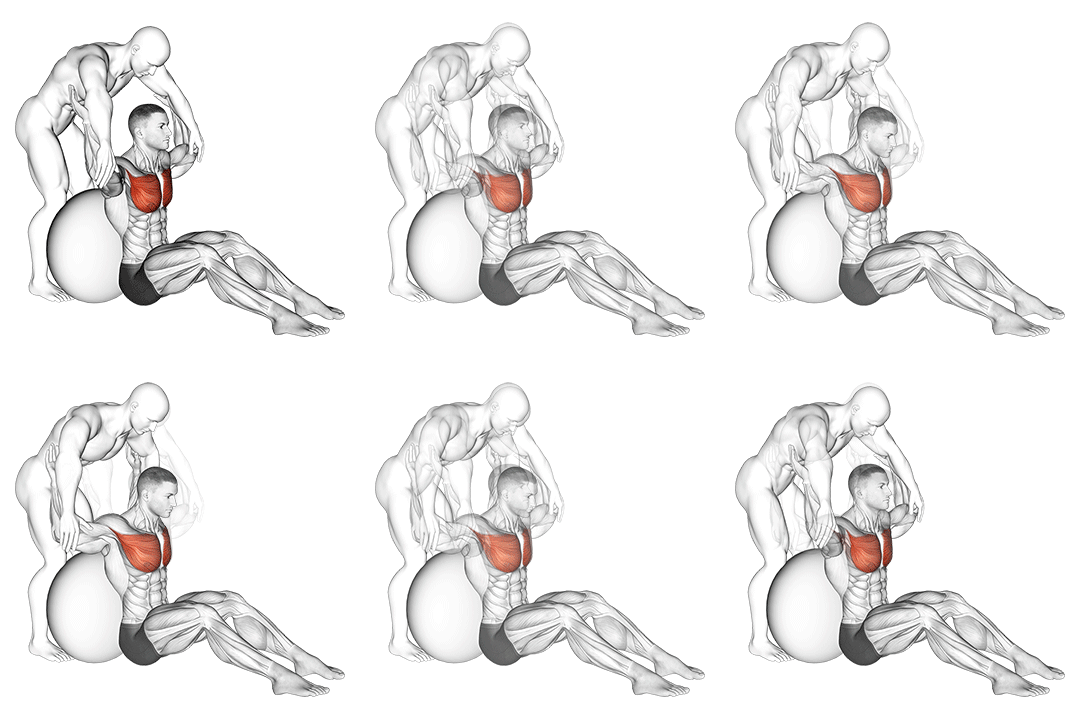
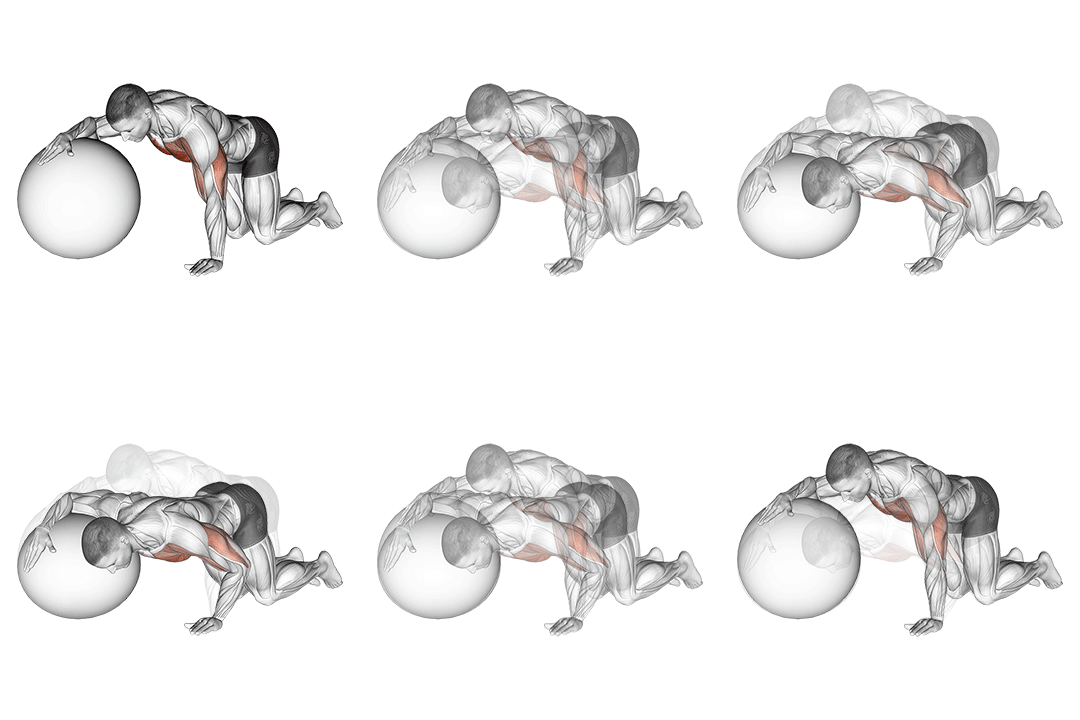
Assisted Seated Pectoralis Major Stretch With Stability Ball
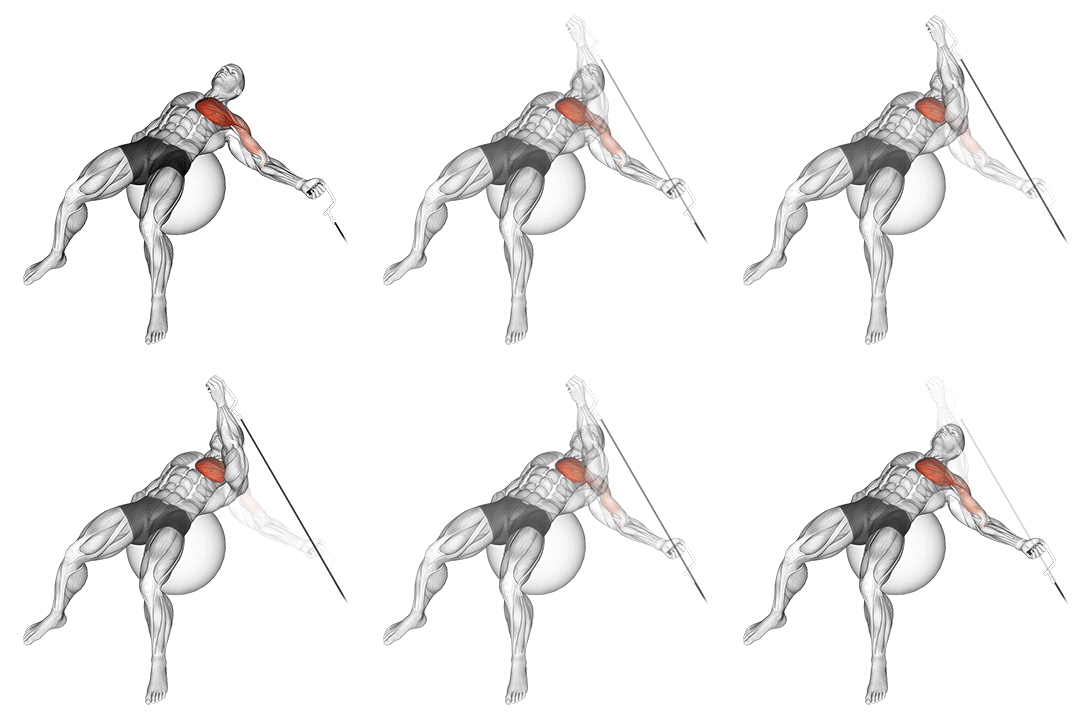
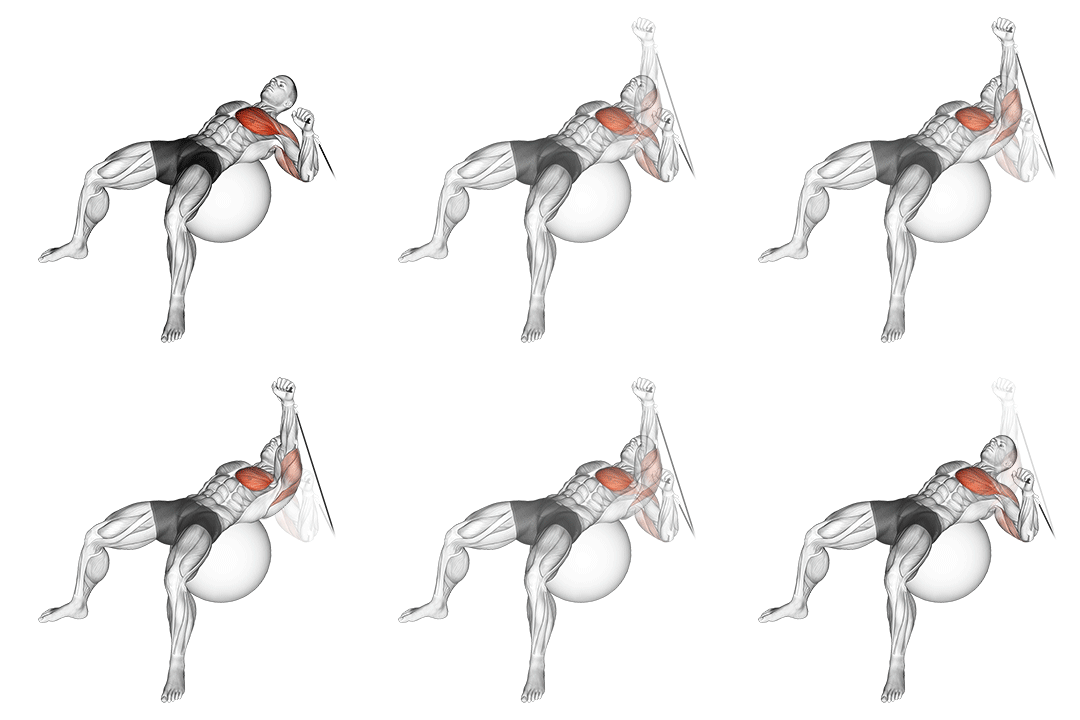
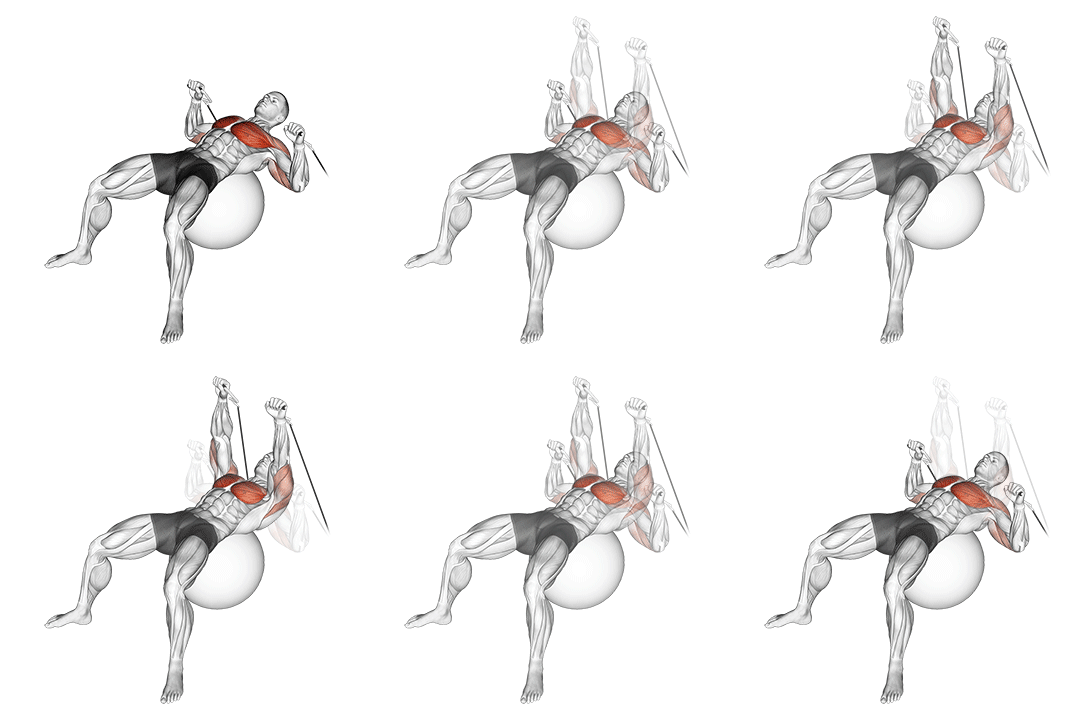
Cable One Arm Fly On Exercise Ball
Head-to-Head Comparison
| Attribute | Assisted Seated Pectoralis Major Stretch With Stability Ball | Cable One Arm Fly On Exercise Ball |
|---|---|---|
| Target Muscle |
Pectorals
|
Pectorals
|
| Body Part |
Chest
|
Chest
|
| Equipment |
Stability-ball
|
Stability-ball
|
| Difficulty |
Beginner
|
Intermediate
|
| Movement Type |
Isolation
|
Isolation
|
| Secondary Muscles |
2
|
2
|
Secondary Muscles Activated
Assisted Seated Pectoralis Major Stretch With Stability Ball
Cable One Arm Fly On Exercise Ball
Visual Comparison
Overview
Assisted Seated Pectoralis Major Stretch With Stability Ball vs Cable One Arm Fly On Exercise Ball — you’re comparing a mobility-focused, passive chest stretch to a loaded, unilateral isolation movement. This guide helps you decide which to use based on flexibility, muscle loading, injury prevention, and training goals. You’ll get clear technique cues, numeric recommendations (rep ranges, angles, hold times), biomechanical explanations (length-tension, force vectors, scapular control), and scenario-based winners so you can choose the right exercise for warm-ups, hypertrophy cycles, or rehab-friendly training.
Key Differences
- Difficulty levels differ: Assisted Seated Pectoralis Major Stretch With Stability Ball is beginner, while Cable One Arm Fly On Exercise Ball is intermediate.
- Both exercises target the Pectorals using Stability-ball. The main differences are in their movement patterns and muscle activation angles.
Pros & Cons
Assisted Seated Pectoralis Major Stretch With Stability Ball
+ Pros
- Excellent for increasing pectoral length and shoulder extension ROM (hold 30–60s)
- Low equipment needs—only a stability ball and a partner or anchor
- Very low concentric loading—good for warm-ups and rehab progressions
- Simple technique with minimal coordination required
− Cons
- Doesn’t provide significant hypertrophic or strength stimulus
- Passive—limited carryover to force production
- May be ineffective if scapular position and posterior tilt aren’t controlled
Cable One Arm Fly On Exercise Ball
+ Pros
- Strong active loading for pectoralis major—effective for hypertrophy (8–15 reps)
- Unilateral work corrects side-to-side imbalances
- Adjustable pulley height changes fiber emphasis (upper vs lower pec)
- Eccentric phase creates high mechanical tension for muscle remodeling
− Cons
- Requires cable machine and stability ball—less accessible at home
- Higher technical demand—needs solid scapular and core control
- Risk of anterior shoulder strain if performed with poor mechanics or excessive load
When Each Exercise Wins
Cable one-arm fly provides active concentric/eccentric loading and precise tension across the range (8–15 reps), producing greater mechanical tension for pectoral hypertrophy compared with a passive stretch.
Loaded unilateral cable flys allow progressive overload and higher time under tension; adjusting pulley height and load trains force production patterns directly relevant to chest strength.
The assisted stretch is low-skill, low-load, and teaches safe end-range chest mobility while placing minimal demands on balance and coordination—ideal for new exercisers or those rehabbing.
Requires only a stability ball and space to sit; cable fly needs a pulley system and is usually gym-only, making the stretch the practical home choice.
Frequently Asked Questions
Can I do both Assisted Seated Pectoralis Major Stretch With Stability Ball and Cable One Arm Fly On Exercise Ball in the same workout?
Yes. Use the assisted stretch as a warm-up or mobility drill (30–60s holds) to improve end-range prior to performing loaded cable flys. Do flies after the stretch when your shoulder has better ROM and you can maintain scapular control.
Which exercise is better for beginners?
The assisted seated stretch is better for beginners because it has low coordination demand and minimal loading, helping establish safe range of motion before progressing to loaded unilateral flys.
How do the muscle activation patterns differ?
The stretch produces low phasic activation and high passive tension at end-range, while the cable fly creates peak active pectoral activation in mid-range with high eccentric tension—this difference drives flexibility versus remodeling adaptations.
Can Cable One Arm Fly On Exercise Ball replace Assisted Seated Pectoralis Major Stretch With Stability Ball?
Not fully. The cable fly replaces the load and hypertrophy stimulus but doesn’t replicate the passive lengthening benefits of a dedicated assisted stretch; include both if you need mobility and strength.
Expert Verdict
Use the assisted seated pectoralis stretch when your priority is mobility, restoring pectoral length-tension relationships, or providing a low-risk warm-up or rehab tool. Hold the stretch 30–60 seconds and focus on scapular retraction and posterior tilt. Choose the cable one-arm fly when you want active loading for hypertrophy or unilateral strength work—perform 3–4 sets of 8–15 reps with controlled eccentrics and strict scapular stability. If you train both, sequence the stretch early in the session for ROM, then load with flies once active control is established.
Also Compare
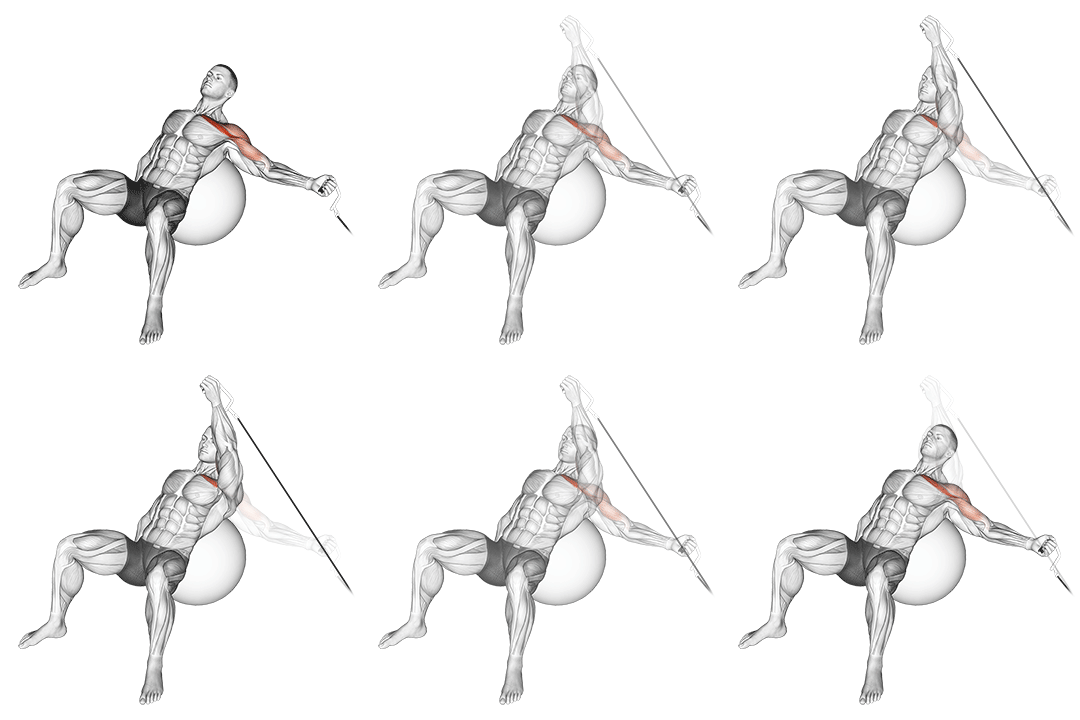
More comparisons with Assisted Seated Pectoralis Major Stretch With Stability Ball
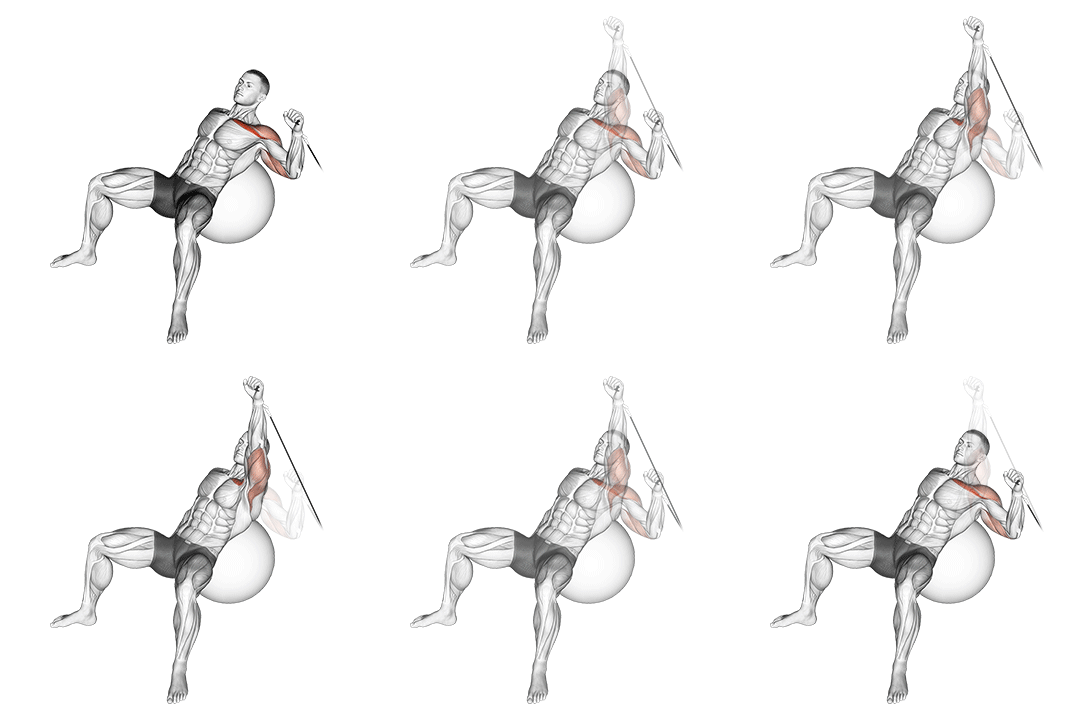
More comparisons with Cable One Arm Fly On Exercise Ball
Compare More Exercises
Use our free comparison tool to analyze any two exercises head-to-head.
Compare Exercises