

Assisted Seated Pectoralis Major Stretch With Stability Ball vs Cable One Arm Incline Fly On Exercis
Assisted Seated Pectoralis Major Stretch With Stability Ball vs Cable One Arm Incline Fly On Exercise Ball — you’re comparing a mobility-focused, beginner-friendly stretch to an intermediate single-arm resistance move. I’ll walk you through how each targets the pectorals, how secondary muscles (deltoids, triceps, core) factor in, what equipment and skill each needs, and when to pick one based on muscle growth, strength, or mobility goals. Expect clear technique cues, biomechanical reasoning (length-tension and force vectors), and practical programming tips you can use right away.
Exercise Comparison
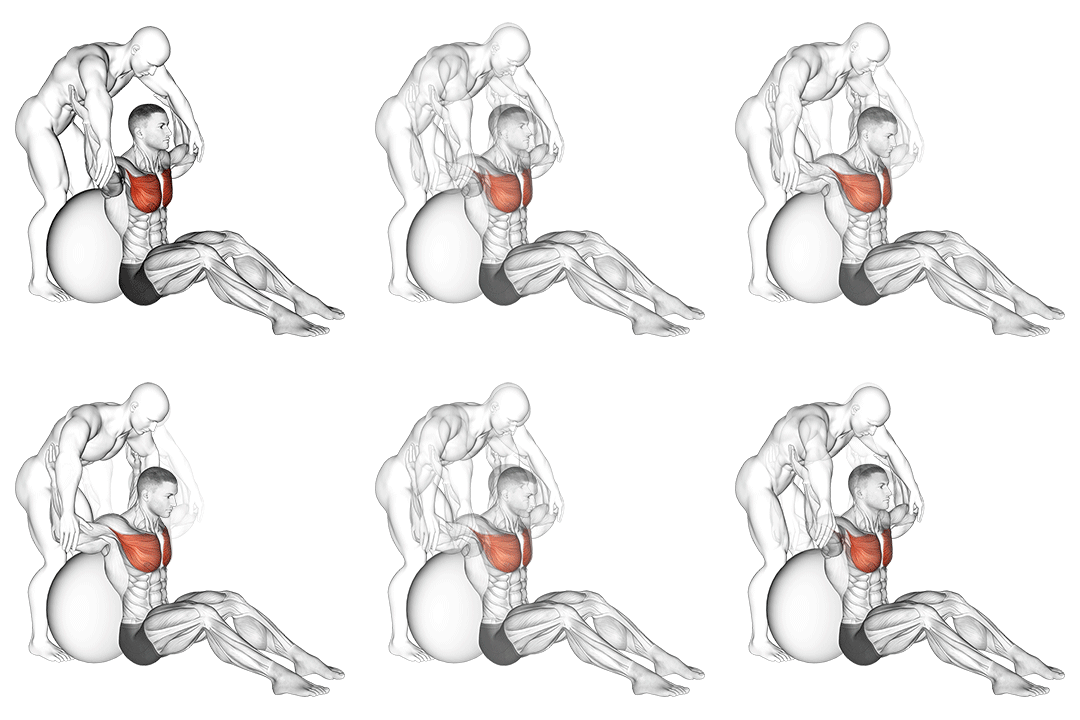
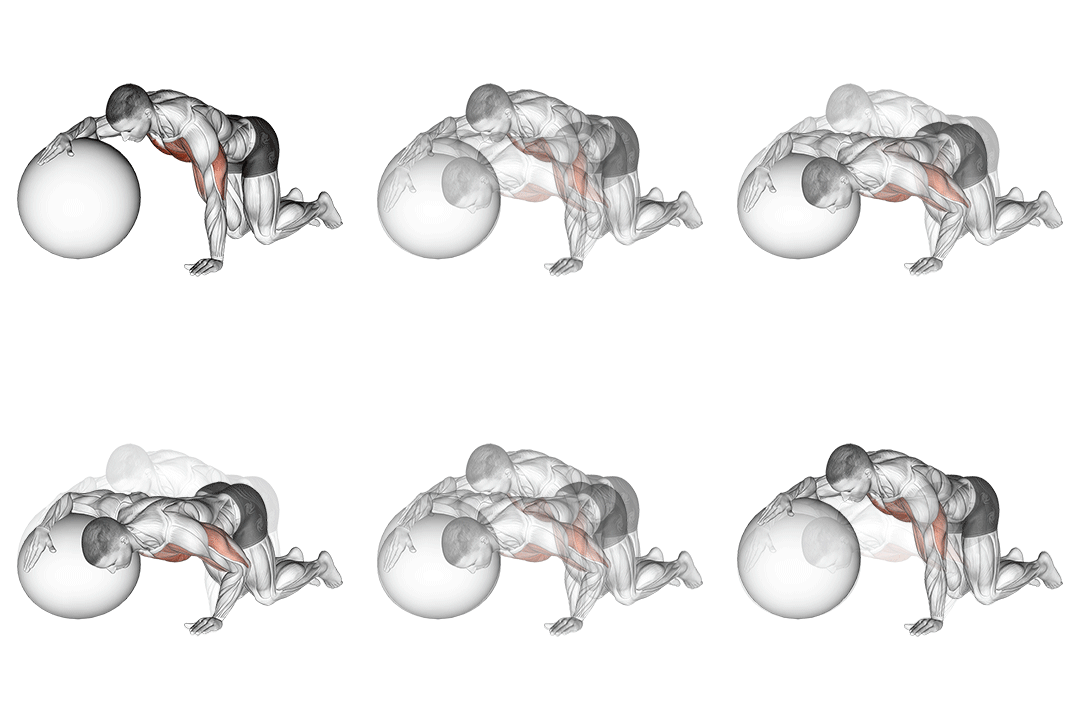
Assisted Seated Pectoralis Major Stretch With Stability Ball
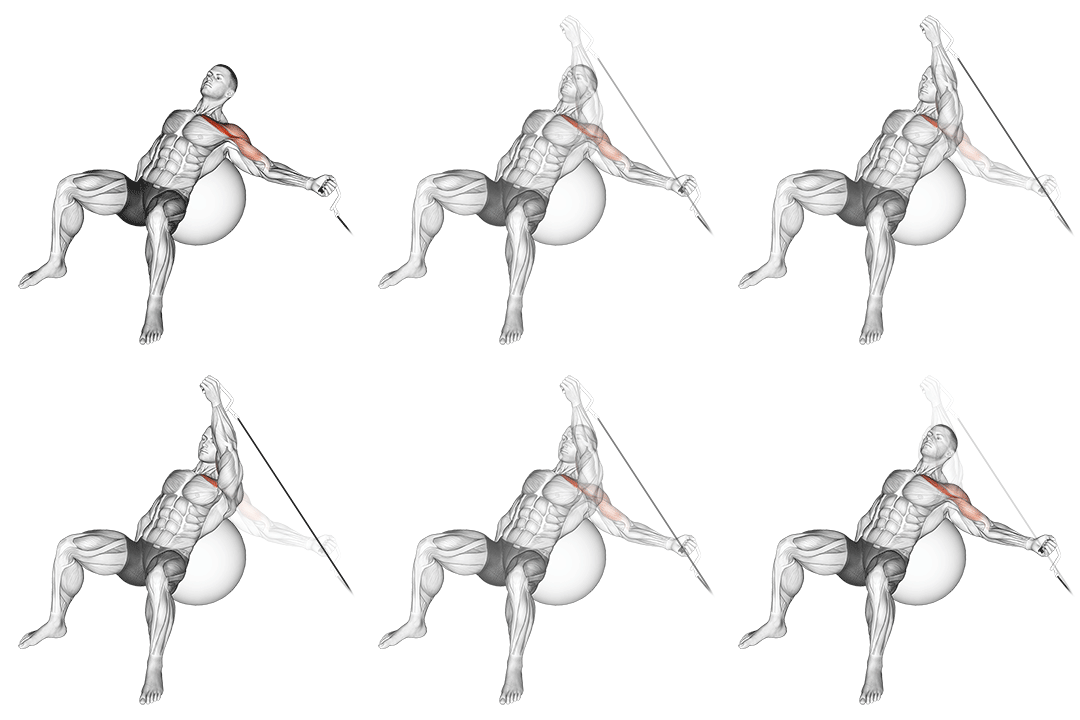
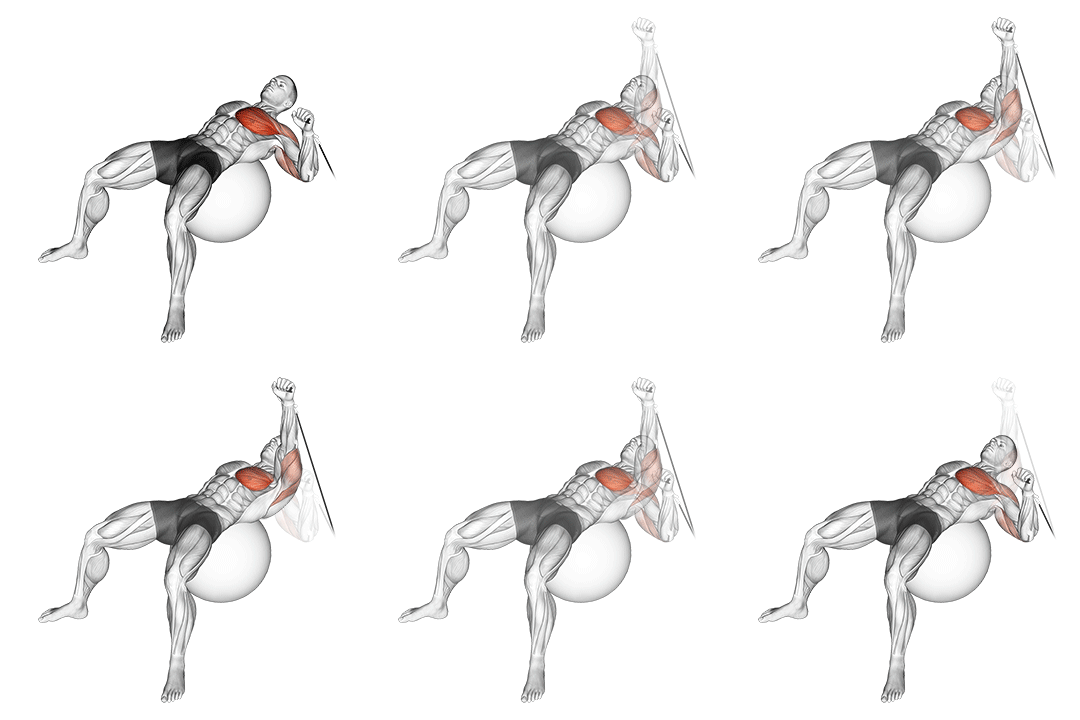
Cable One Arm Incline Fly On Exercise Ball
Head-to-Head Comparison
| Attribute | Assisted Seated Pectoralis Major Stretch With Stability Ball | Cable One Arm Incline Fly On Exercise Ball |
|---|---|---|
| Target Muscle |
Pectorals
|
Pectorals
|
| Body Part |
Chest
|
Chest
|
| Equipment |
Stability-ball
|
Stability-ball
|
| Difficulty |
Beginner
|
Intermediate
|
| Movement Type |
Isolation
|
Isolation
|
| Secondary Muscles |
2
|
2
|
Secondary Muscles Activated
Assisted Seated Pectoralis Major Stretch With Stability Ball
Cable One Arm Incline Fly On Exercise Ball
Visual Comparison
Overview
Assisted Seated Pectoralis Major Stretch With Stability Ball vs Cable One Arm Incline Fly On Exercise Ball — you’re comparing a mobility-focused, beginner-friendly stretch to an intermediate single-arm resistance move. I’ll walk you through how each targets the pectorals, how secondary muscles (deltoids, triceps, core) factor in, what equipment and skill each needs, and when to pick one based on muscle growth, strength, or mobility goals. Expect clear technique cues, biomechanical reasoning (length-tension and force vectors), and practical programming tips you can use right away.
Key Differences
- Difficulty levels differ: Assisted Seated Pectoralis Major Stretch With Stability Ball is beginner, while Cable One Arm Incline Fly On Exercise Ball is intermediate.
- Both exercises target the Pectorals using Stability-ball. The main differences are in their movement patterns and muscle activation angles.
Pros & Cons
Assisted Seated Pectoralis Major Stretch With Stability Ball
+ Pros
- Improves anterior chest and shoulder ROM with sustained long-length tension
- Minimal equipment — easy for home and rehab settings
- Low technical demand; safe for most beginners when done correctly
- Supports posture and scapular mobility by cueing retraction during the hold
− Cons
- Offers minimal mechanical overload for hypertrophy or strength
- Too aggressive holds can irritate the anterior capsule or tendon
- Limited ways to progress load other than time under tension
Cable One Arm Incline Fly On Exercise Ball
+ Pros
- Provides high, adjustable mechanical tension for hypertrophy (8–15 reps)
- Unilateral setup reduces imbalances and enhances mind-muscle connection
- Incline angle targets clavicular fibers and shifts force vector favorably
- Easily progressed with weight, tempo, and pulley height adjustments
− Cons
- Requires cable machine, ball, and better core/stability control
- Higher technical demand increases chance of poor mechanics under load
- Greater potential for shoulder irritation if end-range control is poor
When Each Exercise Wins
The cable fly produces consistent mechanical tension across concentric and eccentric phases, which drives hypertrophy. You can load it progressively, manipulate pulley angle (15–30° incline) and tempo (2–3s eccentrics) to maximize time under tension.
Although not a primary strength lift, the cable fly allows heavier and progressive loading with unilateral focus, improving horizontal adduction strength and joint control more effectively than a passive stretch.
The assisted stretch requires minimal technique and equipment, helps normalize scapular position and chest flexibility, and reduces early overload to the joint—good first step before adding weighted horizontal adduction work.
You only need a stability ball and wall or partner, making it far easier to implement at home. It improves mobility and prepares the chest and shoulder girdle for future loaded work.
Frequently Asked Questions
Can I do both Assisted Seated Pectoralis Major Stretch With Stability Ball and Cable One Arm Incline Fly On Exercise Ball in the same workout?
Yes. Use the assisted stretch as a mobility primer or inter-set release (30–60s) to increase range before performing cable flies, or do stretches post-session to aid recovery. Sequence the stretch before heavy sets if limited ROM is an issue; otherwise perform it after heavier loading.
Which exercise is better for beginners?
The assisted seated stretch is better for beginners because it teaches scapular positioning and chest lengthening with low technical demand. Beginners should master mobility and stability before progressing to unilateral cable flies on a ball.
How do the muscle activation patterns differ?
The cable fly creates cyclic concentric and eccentric activation with peak force in mid-to-end ranges, driving high motor-unit recruitment. The assisted stretch produces sustained passive/isometric tension at long muscle lengths, yielding low EMG but large increases in range of motion and passive tissue strain.
Can Cable One Arm Incline Fly On Exercise Ball replace Assisted Seated Pectoralis Major Stretch With Stability Ball?
Not fully. The cable fly can improve strength and hypertrophy but won’t replicate the sustained long‑length passive stretch needed to restore anterior chest and capsular mobility. Use the fly for loading and the assisted stretch for mobility and injury-prevention work.
Expert Verdict
Use the Assisted Seated Pectoralis Major Stretch With Stability Ball when your priority is chest mobility, posture correction, shoulder health, or you’re new to training—perform 2–3 sets of 30–60s holds with scapular retraction and a neutral spine. Choose the Cable One-Arm Incline Fly On Exercise Ball when your goal is muscle growth or unilateral strength: set the pulley low with a 15–30° incline, keep a 10–20° elbow bend, and work 3–4 sets of 8–15 controlled reps (2–3s eccentric). Both can complement each other—stretching to increase ROM and the cable fly to apply progressive overload—so pick based on whether you need mobility or mechanical tension first.
Also Compare
More comparisons with Assisted Seated Pectoralis Major Stretch With Stability Ball
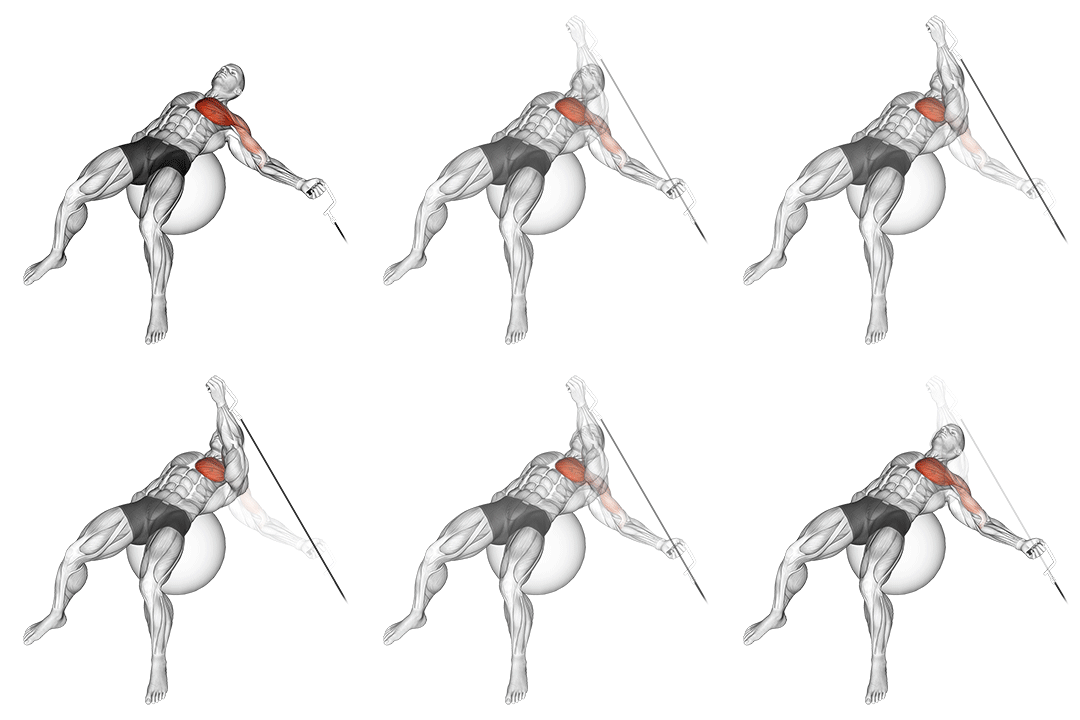
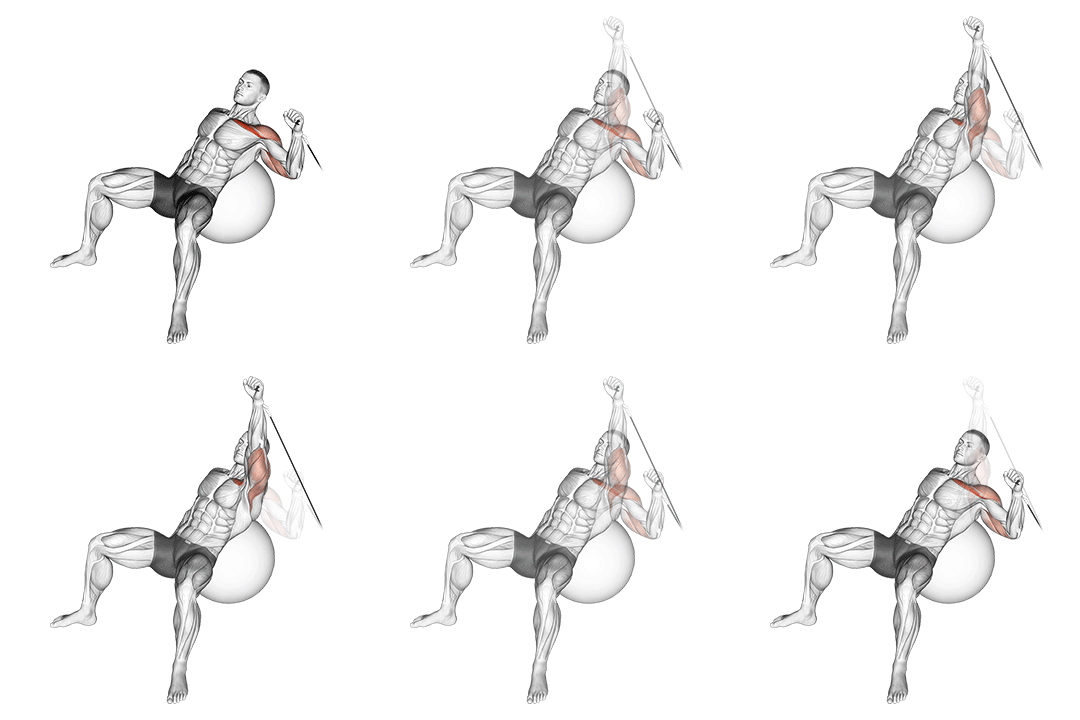
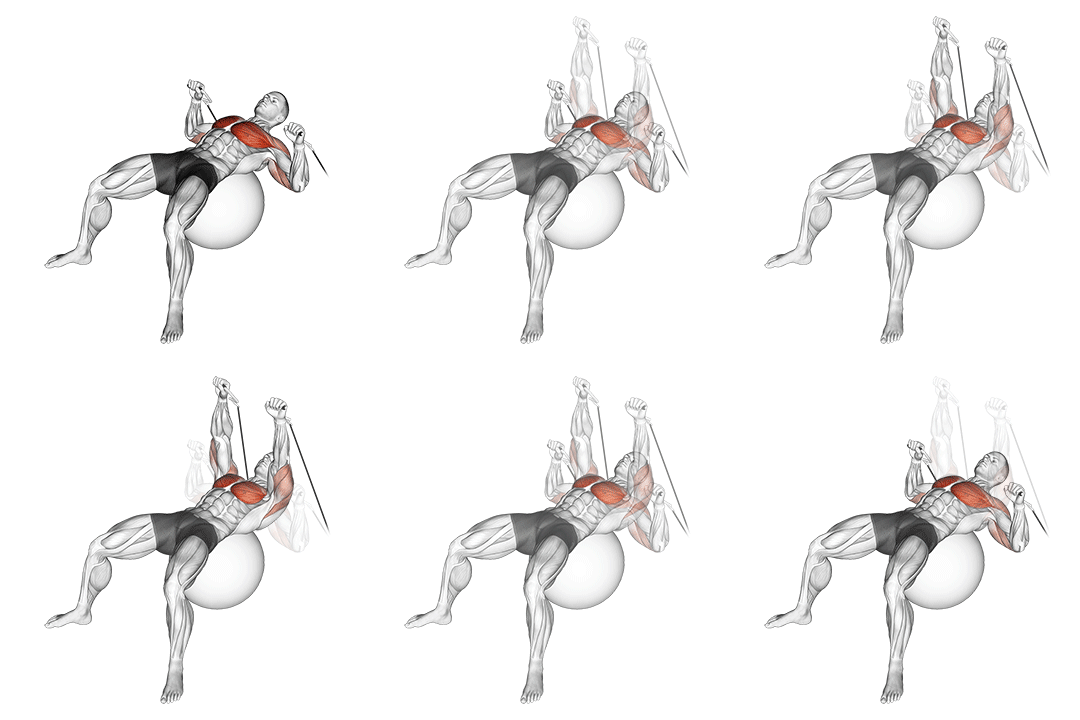
More comparisons with Cable One Arm Incline Fly On Exercise Ball
Compare More Exercises
Use our free comparison tool to analyze any two exercises head-to-head.
Compare Exercises