

Assisted Seated Pectoralis Major Stretch With Stability Ball vs Cable One Arm Incline Press On Exerc
Assisted Seated Pectoralis Major Stretch With Stability Ball vs Cable One Arm Incline Press On Exercise Ball — two chest-focused moves that serve very different goals. You’ll read a clear breakdown of how each targets the pectorals, what secondary muscles they recruit, the equipment and skill needed, and when to use each in your program. Expect specific technique cues (angles, hold times, rep ranges), biomechanics explanations (length-tension, force vectors, stability demands), and practical recommendations so you can pick the right move for mobility, hypertrophy, or strength.
Exercise Comparison
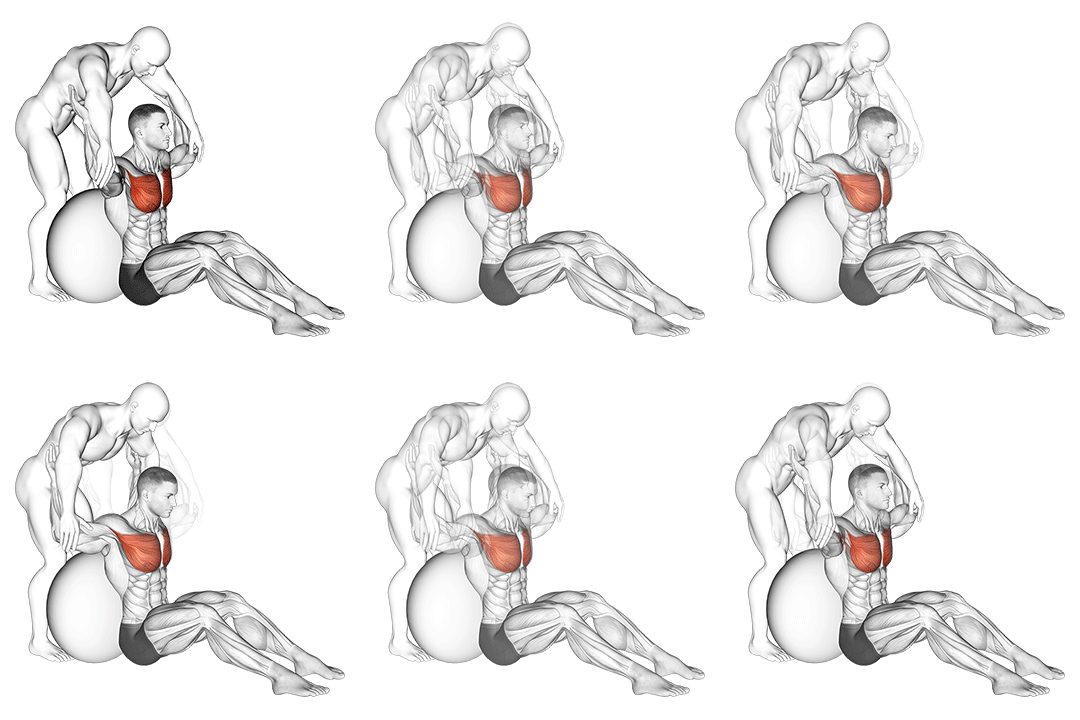
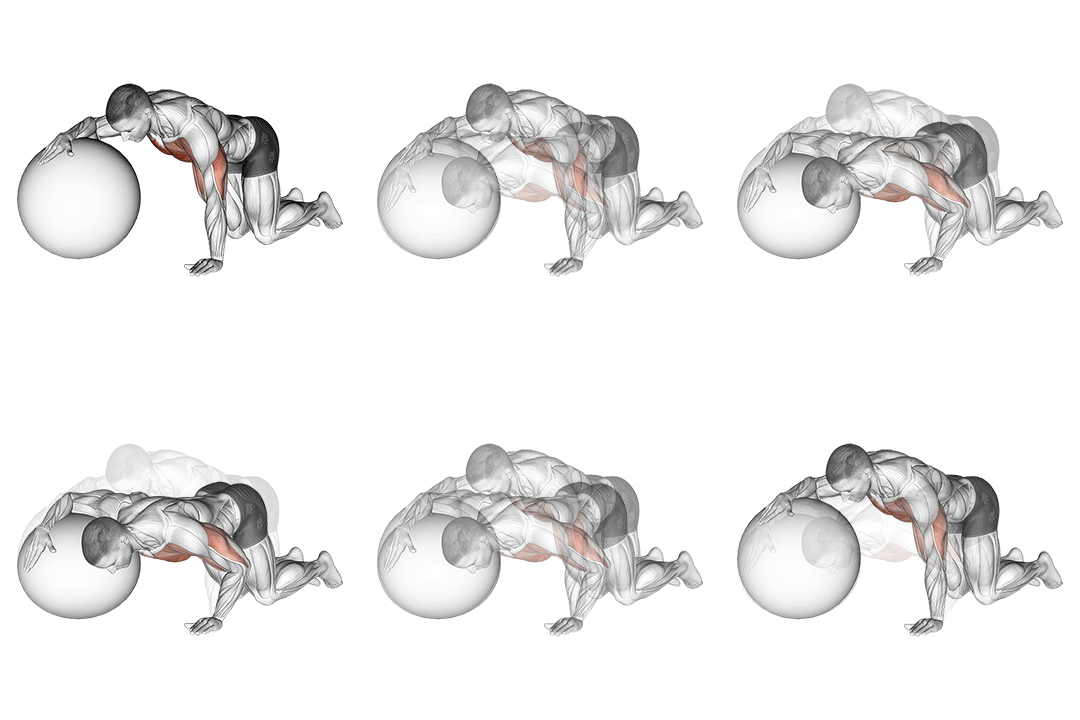
Assisted Seated Pectoralis Major Stretch With Stability Ball
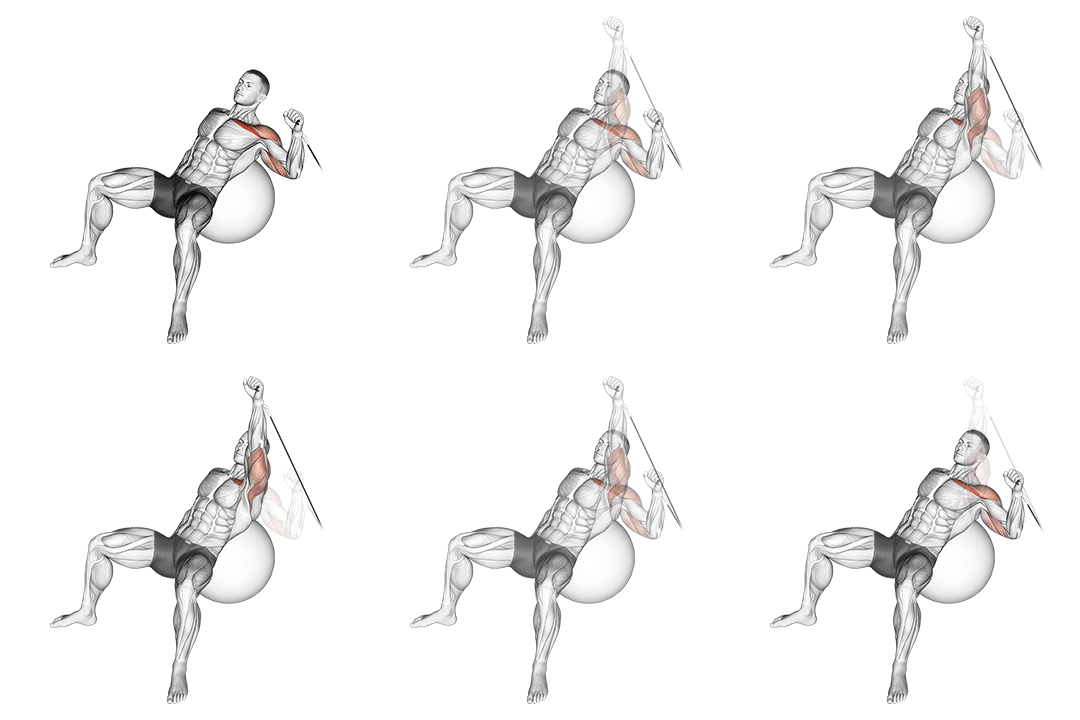
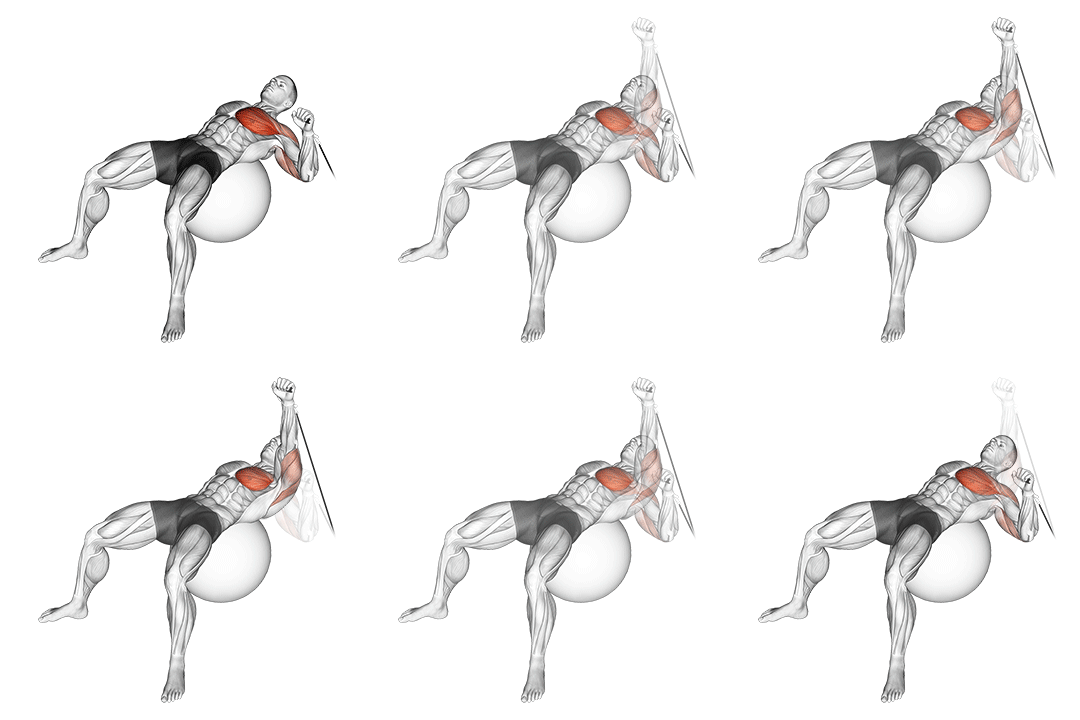
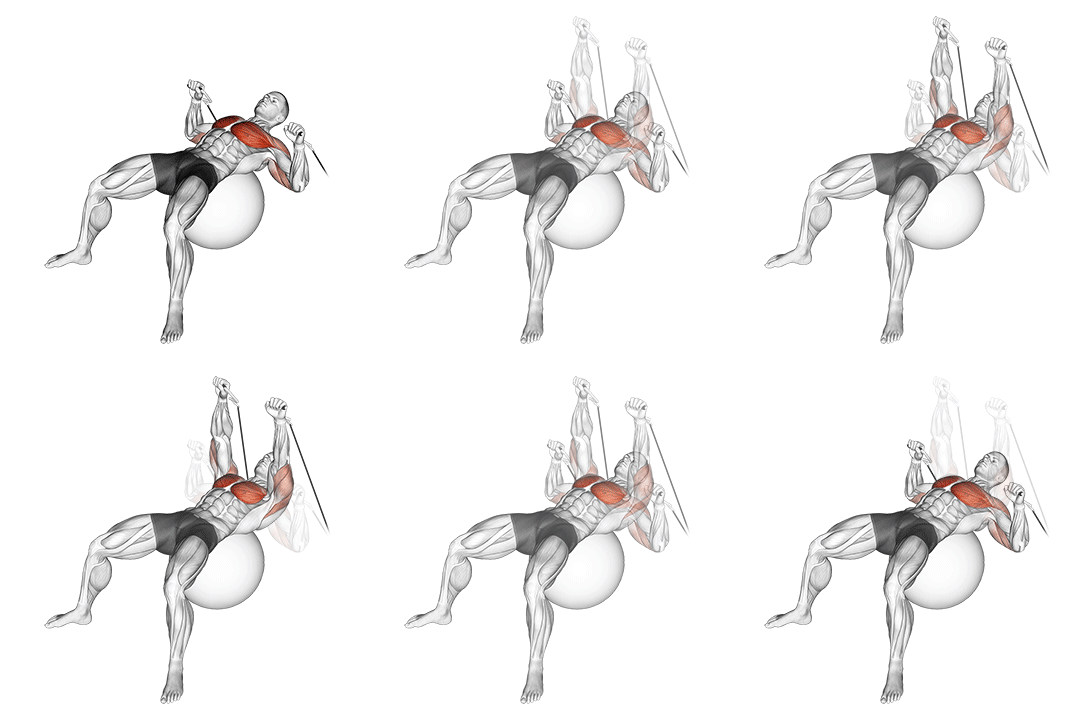
Cable One Arm Incline Press On Exercise Ball
Head-to-Head Comparison
| Attribute | Assisted Seated Pectoralis Major Stretch With Stability Ball | Cable One Arm Incline Press On Exercise Ball |
|---|---|---|
| Target Muscle |
Pectorals
|
Pectorals
|
| Body Part |
Chest
|
Chest
|
| Equipment |
Stability-ball
|
Stability-ball
|
| Difficulty |
Beginner
|
Advanced
|
| Movement Type |
Isolation
|
Compound
|
| Secondary Muscles |
2
|
2
|
Secondary Muscles Activated
Assisted Seated Pectoralis Major Stretch With Stability Ball
Cable One Arm Incline Press On Exercise Ball
Visual Comparison
Overview
Assisted Seated Pectoralis Major Stretch With Stability Ball vs Cable One Arm Incline Press On Exercise Ball — two chest-focused moves that serve very different goals. You’ll read a clear breakdown of how each targets the pectorals, what secondary muscles they recruit, the equipment and skill needed, and when to use each in your program. Expect specific technique cues (angles, hold times, rep ranges), biomechanics explanations (length-tension, force vectors, stability demands), and practical recommendations so you can pick the right move for mobility, hypertrophy, or strength.
Key Differences
- Assisted Seated Pectoralis Major Stretch With Stability Ball is an isolation exercise, while Cable One Arm Incline Press On Exercise Ball is a compound movement.
- Difficulty levels differ: Assisted Seated Pectoralis Major Stretch With Stability Ball is beginner, while Cable One Arm Incline Press On Exercise Ball is advanced.
- Both exercises target the Pectorals using Stability-ball. The main differences are in their movement patterns and muscle activation angles.
Pros & Cons
Assisted Seated Pectoralis Major Stretch With Stability Ball
+ Pros
- Easy to learn and low skill demand
- Requires only a stability ball and optional partner
- Improves chest mobility and length-tension relationships
- Low acute load and reduced joint compression
− Cons
- Minimal active mechanical tension for hypertrophy
- Limited progression for strength development
- Can aggravate anterior shoulder if performed with poor scapular control
Cable One Arm Incline Press On Exercise Ball
+ Pros
- High active mechanical tension—effective for hypertrophy
- Compound pattern recruits shoulders, triceps, and core
- Progressive overload is straightforward with cable stacks
- Incline angle emphasizes clavicular head for upper chest development
− Cons
- Requires cable machine and exercise ball setup
- Advanced stability and coordination demands
- Higher risk of shoulder strain or loss of balance under load
When Each Exercise Wins
The cable incline press produces higher concentric and eccentric mechanical tension and allows progressive overload (6–12 reps, 3–5 sets). The force vector at a 30–45° incline targets the upper pectoral fibers more effectively for muscle growth.
Strength requires heavy, progressive loading and neural recruitment; the cable press lets you increase load in small increments and train lower rep ranges (4–6) while maintaining a functional pressing pattern.
Beginners benefit from low-risk mobility work and learning chest lengthening and scapular positioning. The assisted stretch teaches you safe anterior shoulder mechanics without heavy loading or complex balance demands.
Home setups often lack cable machines. The assisted stretch needs only a stability ball and can improve posture and range of motion without specialized equipment.
Frequently Asked Questions
Can I do both Assisted Seated Pectoralis Major Stretch With Stability Ball and Cable One Arm Incline Press On Exercise Ball in the same workout?
Yes — pair them intelligently: do the assisted stretch as part of your warm-up or between pressing sets to maintain range of motion (20–30s holds). Follow with the cable one-arm incline press as the primary loading exercise for strength or hypertrophy.
Which exercise is better for beginners?
The assisted seated pectoralis major stretch is better for beginners because it teaches chest length and scapular positioning with minimal load. The cable one-arm incline press is advanced due to unilateral load and balance demands on the exercise ball.
How do the muscle activation patterns differ?
The assisted stretch produces low active EMG but increases passive tension and fascial loading at long muscle lengths, improving length-tension relationships. The cable incline press produces high concentric and eccentric activation with peak force during the press and greater time under tension for hypertrophy.
Can Cable One Arm Incline Press On Exercise Ball replace Assisted Seated Pectoralis Major Stretch With Stability Ball?
No — they serve different roles. The cable press provides mechanical overload for muscle growth and strength, while the assisted stretch restores mobility and muscle length. Use the press for loading and the stretch for maintenance and prehab.
Expert Verdict
Use the assisted seated pectoralis major stretch with a stability ball when your goal is to restore chest length, improve shoulder posture, or include low-risk prehab work in your routine. Hold the stretch 20–60 seconds, 2–3 sets, and focus on scapular retraction and breathing. Choose the cable one-arm incline press on an exercise ball when your aim is hypertrophy or unilateral strength: set the bench angle to 30–45°, use 4–12 rep ranges depending on goal (4–6 for strength, 6–12 for hypertrophy), and progress load progressively. Pair them: stretch for mobility and press for load when you need both flexibility and muscle growth.
Also Compare
More comparisons with Assisted Seated Pectoralis Major Stretch With Stability Ball
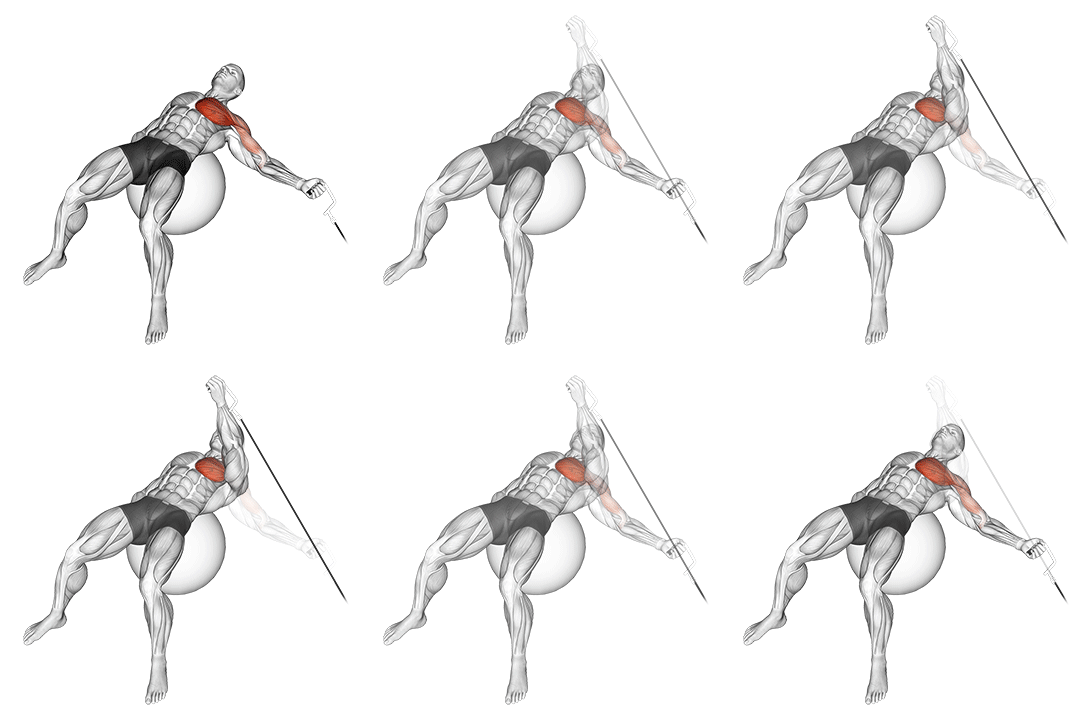
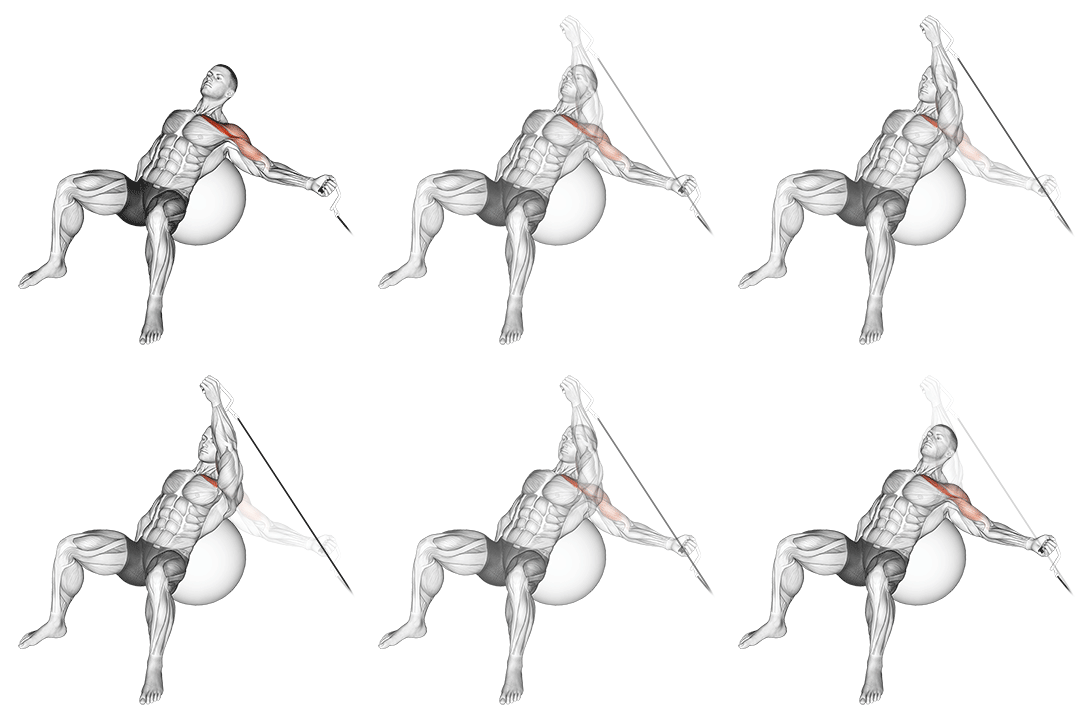
More comparisons with Cable One Arm Incline Press On Exercise Ball
Compare More Exercises
Use our free comparison tool to analyze any two exercises head-to-head.
Compare Exercises