

Assisted Seated Pectoralis Major Stretch With Stability Ball vs Chest Stretch With Exercise Ball: Co
Assisted Seated Pectoralis Major Stretch With Stability Ball vs Chest Stretch With Exercise Ball — both are beginner-friendly ways to open your chest, but they do it differently. In this guide you’ll get clear technique cues, biomechanics-based comparisons of pectoralis loading and scapular behavior, recommended hold times (30–90 seconds), and practical recommendations for mobility, pre-workout prep, and home routines. Read on to see which stretch better targets your goals, how to perform each with proper form, and when to use one over the other.
Exercise Comparison
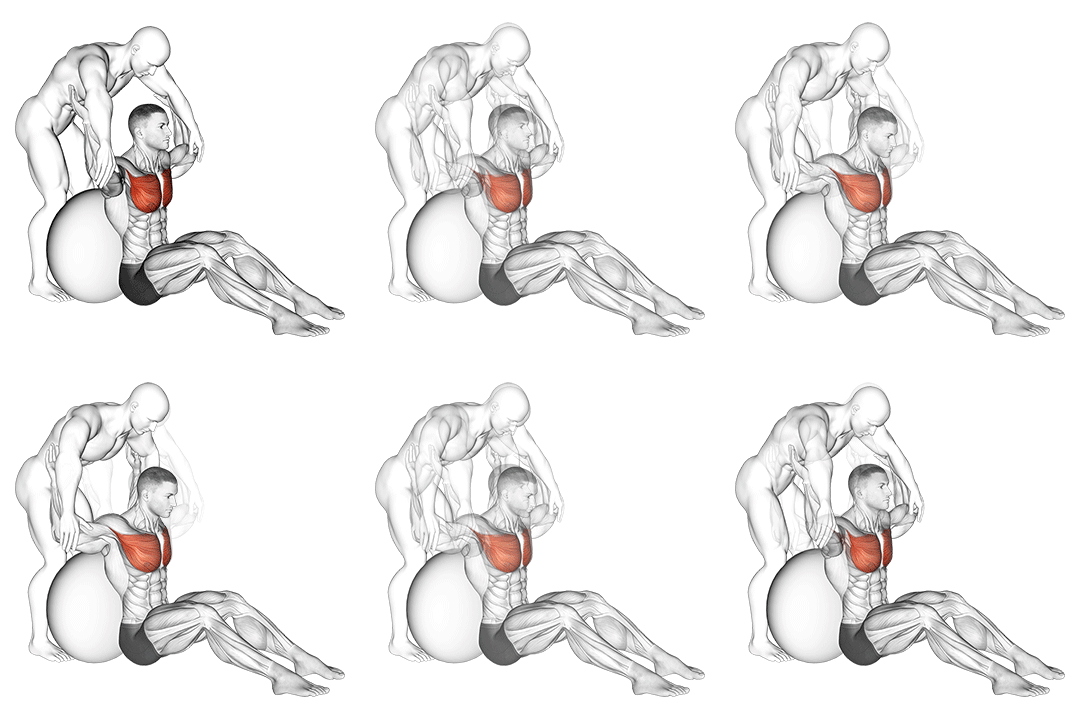
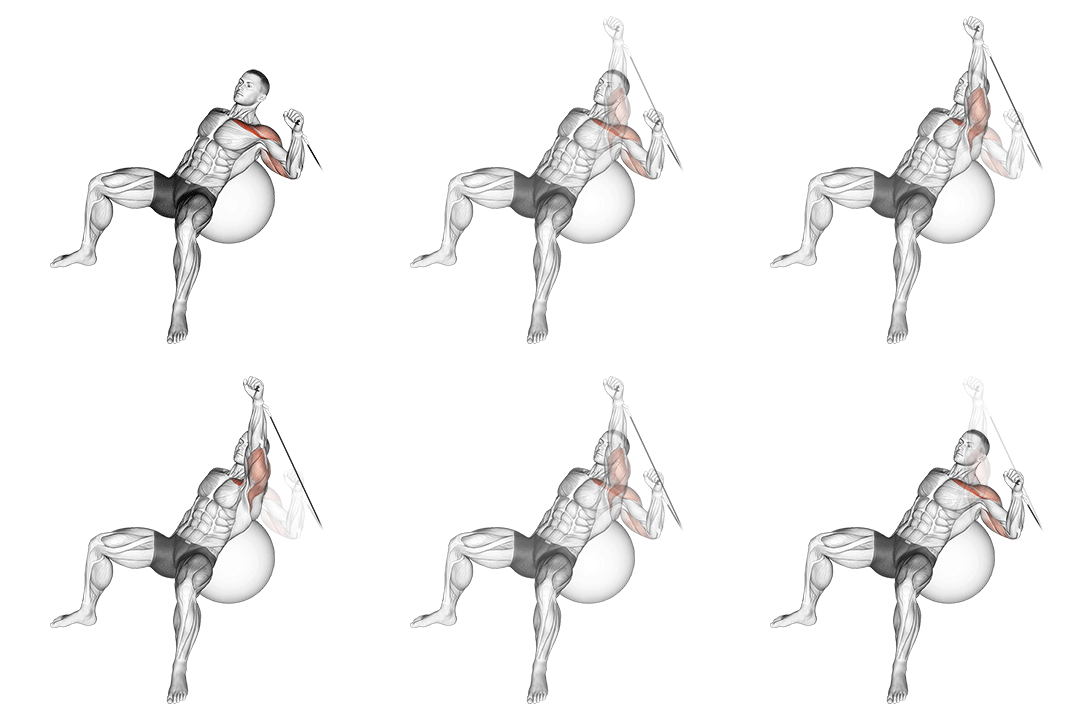
Assisted Seated Pectoralis Major Stretch With Stability Ball
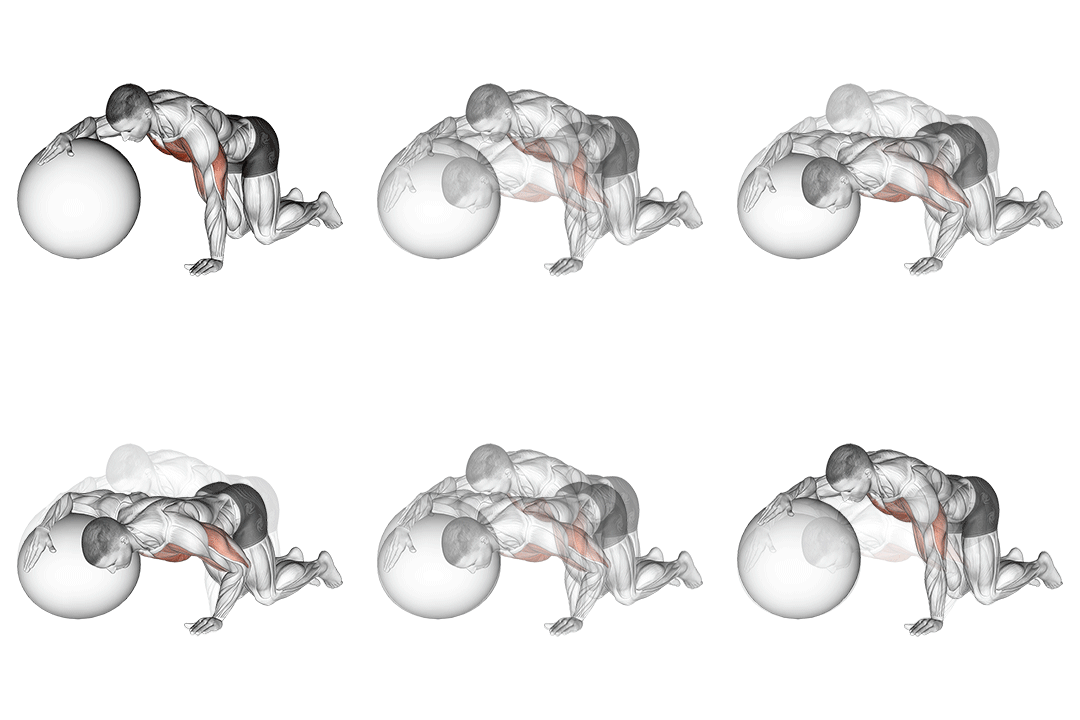
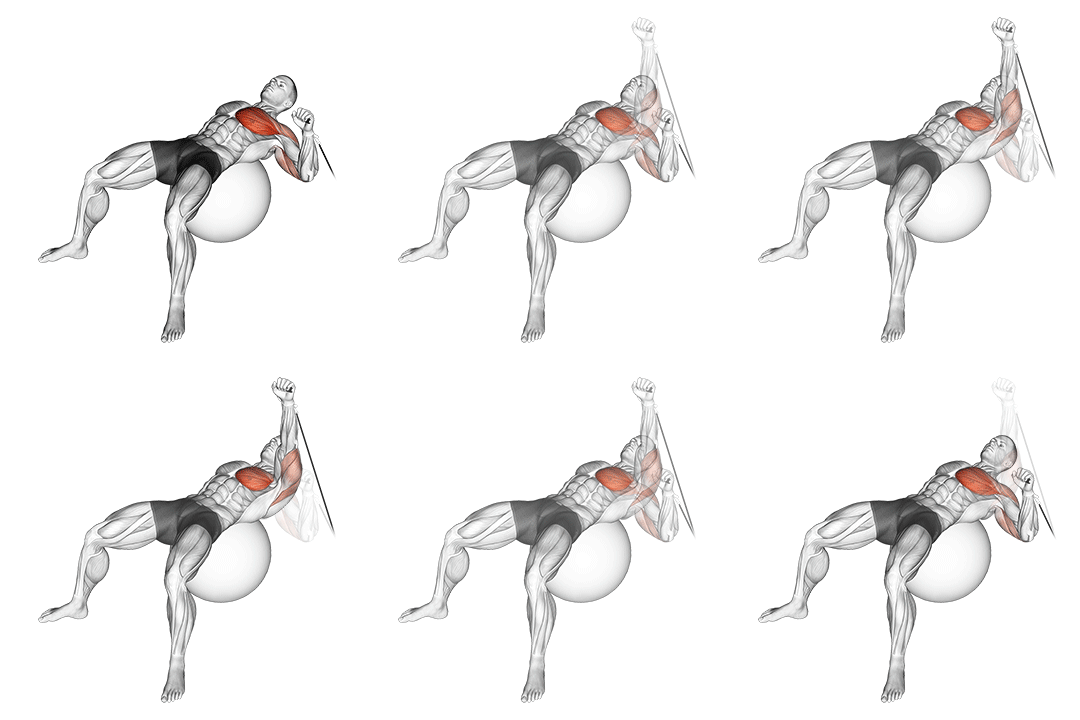
Chest Stretch With Exercise Ball
Head-to-Head Comparison
| Attribute | Assisted Seated Pectoralis Major Stretch With Stability Ball | Chest Stretch With Exercise Ball |
|---|---|---|
| Target Muscle |
Pectorals
|
Pectorals
|
| Body Part |
Chest
|
Chest
|
| Equipment |
Stability-ball
|
Stability-ball
|
| Difficulty |
Beginner
|
Beginner
|
| Movement Type |
Isolation
|
Isolation
|
| Secondary Muscles |
2
|
2
|
Secondary Muscles Activated
Assisted Seated Pectoralis Major Stretch With Stability Ball
Chest Stretch With Exercise Ball
Visual Comparison
Overview
Assisted Seated Pectoralis Major Stretch With Stability Ball vs Chest Stretch With Exercise Ball — both are beginner-friendly ways to open your chest, but they do it differently. In this guide you’ll get clear technique cues, biomechanics-based comparisons of pectoralis loading and scapular behavior, recommended hold times (30–90 seconds), and practical recommendations for mobility, pre-workout prep, and home routines. Read on to see which stretch better targets your goals, how to perform each with proper form, and when to use one over the other.
Key Differences
- Both exercises target the Pectorals using Stability-ball. The main differences are in their movement patterns and muscle activation angles.
Pros & Cons
Assisted Seated Pectoralis Major Stretch With Stability Ball
+ Pros
- Simple setup—ball and chair only, minimal floor space required
- Lower balance and core demand; easier for beginners
- Direct pec isolation with controllable horizontal abduction (80–110°)
- Easy to progress by increasing hold time (30–90s) or arm angle
− Cons
- Less thoracic extension and global mobility benefit
- Limited progression beyond increased duration or arm angle
- Can under-challenge scapular retractors and spinal extensors
Chest Stretch With Exercise Ball
+ Pros
- Promotes thoracic extension and scapular retraction, improving posture
- Longer pec stretch due to lever arm and torso curvature
- Greater carryover to overhead and pressing mechanics
- Multiple progression pathways: arm angle, PNF, dynamic holds
− Cons
- Requires more floor space and proprioception for balance
- Higher demand on lumbar control—risk of hyperextension without core bracing
- Setup and sizing of the ball matters; wrong size reduces effectiveness
When Each Exercise Wins
It creates a longer passive stretch and better thoracic extension, increasing pec length-tension range and improving subsequent loading capacity. Use 30–60s holds and follow with eccentric-focused presses (3–5 sets of 6–12 reps) to exploit the increased ROM for muscle growth.
By improving thoracic mobility and scapular positioning it helps you achieve safer, deeper pressing positions and better force transfer through the shoulder girdle. Incorporate it as part of a pre-workup mobility routine to improve bar path and keep force vectors aligned.
Lower balance and core requirements make it easier to learn and safer to perform while you build shoulder control. Start with 2 sets of 30–45s and focus on scapular positioning—avoid forcing >110° horizontal abduction.
It uses minimal floor space and simpler setup, so you can include it in short routines or between sets in limited space. A chair plus ball is often easier to organize than clearing room to lie back over a large ball.
Frequently Asked Questions
Can I do both Assisted Seated Pectoralis Major Stretch With Stability Ball and Chest Stretch With Exercise Ball in the same workout?
Yes. Use the chest-over-ball variation early to emphasize thoracic mobility (1–2 sets of 30–60s), then finish with 1–2 seated assisted holds to target any lingering pec tightness. Keep total stretch time per muscle to 3–5 minutes to avoid performance drops.
Which exercise is better for beginners?
Assisted Seated Pectoralis Major Stretch With Stability Ball is better for beginners because it reduces balance and core demands and isolates the pec. Start with 2 sets of 30–45s focusing on comfortable horizontal abduction around 80–100°.
How do the muscle activation patterns differ?
Both are primarily passive stretches with low concentric activation (<10% MVIC), but the chest-over-ball recruits more spinal extensors and scapular retractors to maintain thoracic extension. The seated assisted version emphasizes passive pec length with lower posterior chain involvement.
Can Chest Stretch With Exercise Ball replace Assisted Seated Pectoralis Major Stretch With Stability Ball?
Yes for mobility-focused goals—chest-over-ball offers broader thoracic and scapular benefits. If you need a simpler, lower-risk option for quick warm-ups or limited space, keep the assisted seated stretch in your routine instead.
Expert Verdict
Both stretches are useful tools. Choose Chest Stretch With Exercise Ball when you want greater thoracic extension, longer pec lengthening, and carryover to pressing and overhead movements — use 30–90s holds, arm angles at 0–90° abduction, and add PNF for extra ROM gains. Choose Assisted Seated Pectoralis Major Stretch With Stability Ball if you need a lower-risk, easy-to-teach option for quick mobility or pre-set warm-ups; perform 2–3 sets of 30–60s focusing on scapular alignment and avoiding forced horizontal abduction beyond ~110°. Use the ball-over variation to target posture and the seated version for accessibility and safety.
Also Compare
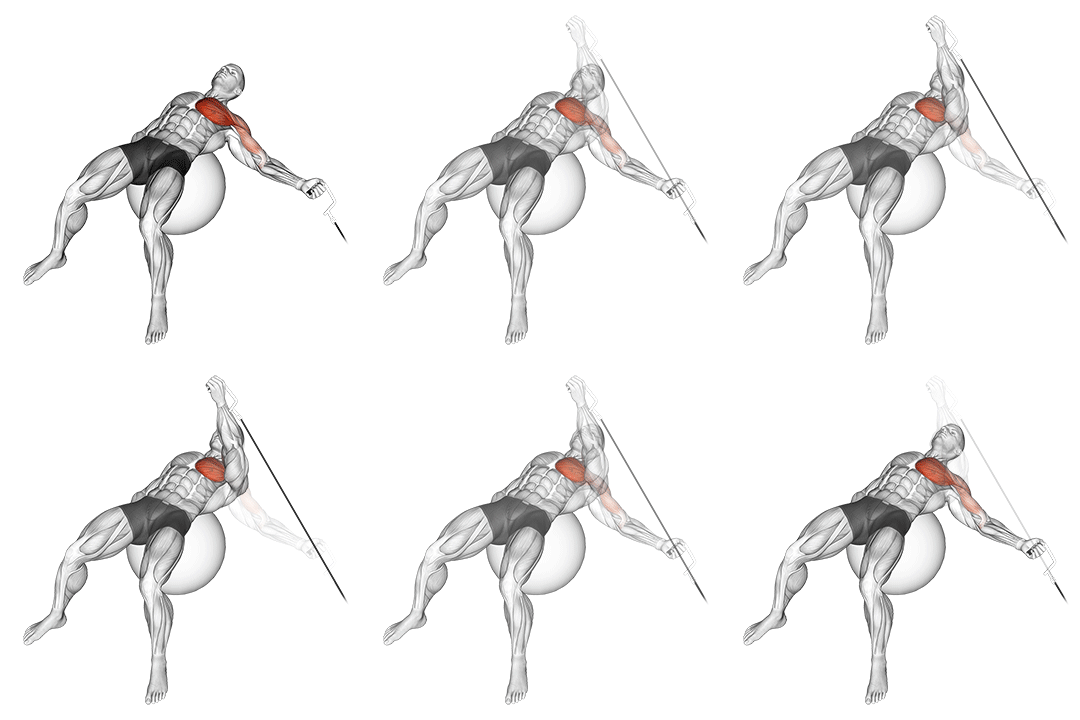
More comparisons with Assisted Seated Pectoralis Major Stretch With Stability Ball
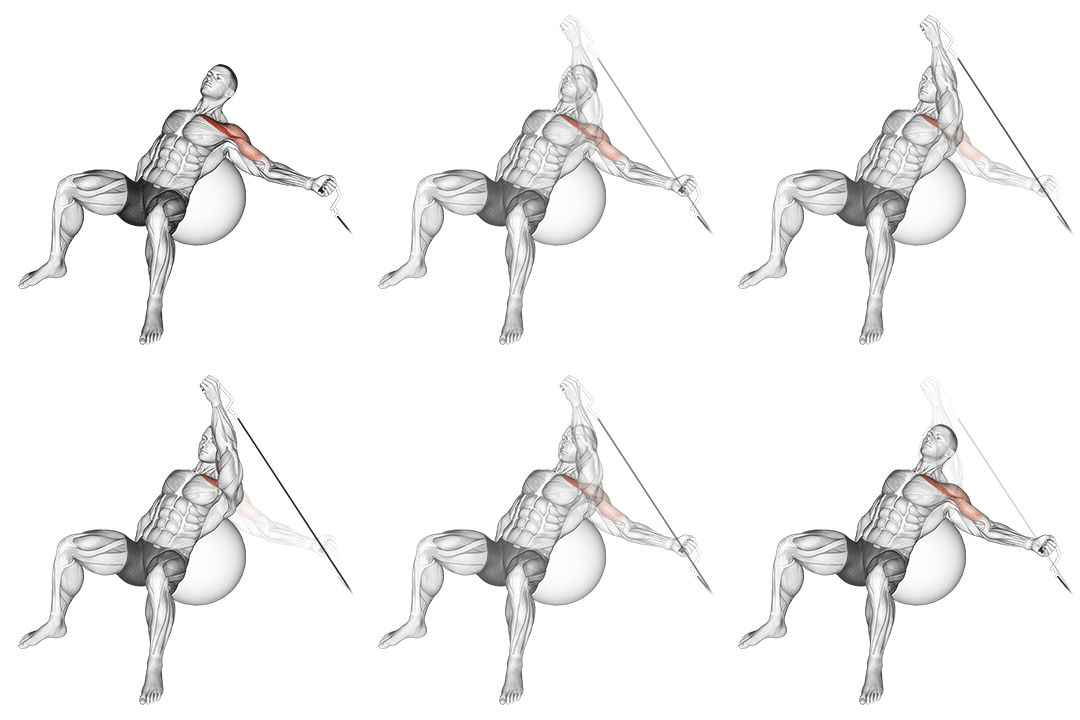
More comparisons with Chest Stretch With Exercise Ball
Compare More Exercises
Use our free comparison tool to analyze any two exercises head-to-head.
Compare Exercises