

Assisted Standing Chin-up vs Lever Assisted Chin-up: Complete Comparison Guide
Assisted Standing Chin-up vs Lever Assisted Chin-up — you want a reliable way to train your lats while keeping biceps and forearms involved. In this guide you’ll get clear, actionable comparisons of muscle activation, equipment needs, technique cues, and progression options so you can pick the one that fits your routine. I’ll cover how each exercise loads the latissimus, how force vectors change with torso angle, step-by-step technique cues, rep ranges for hypertrophy and strength, and which is the better pick for beginners or home use.
Exercise Comparison
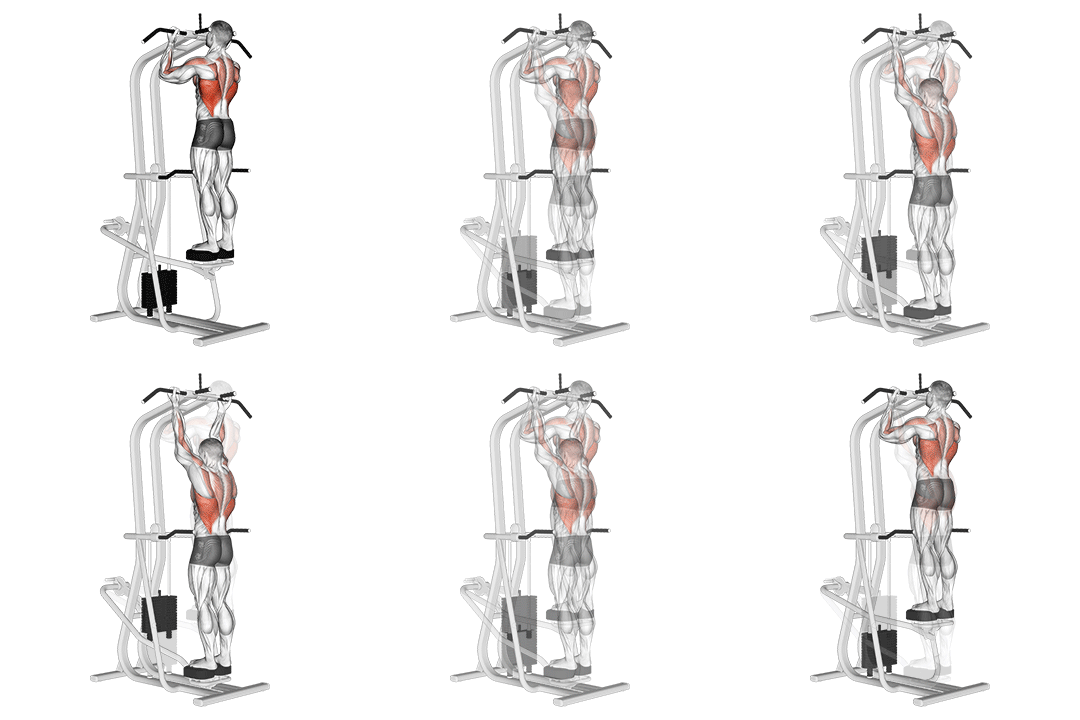
Assisted Standing Chin-up
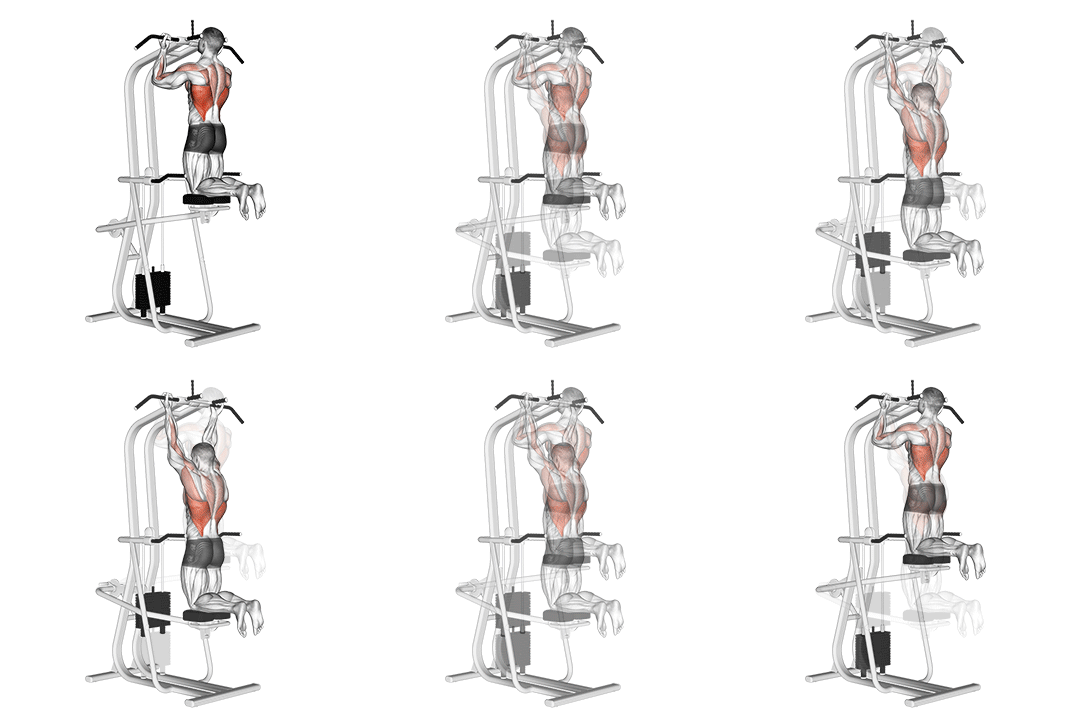
Lever Assisted Chin-up
Head-to-Head Comparison
| Attribute | Assisted Standing Chin-up | Lever Assisted Chin-up |
|---|---|---|
| Target Muscle |
Lats
|
Lats
|
| Body Part |
Back
|
Back
|
| Equipment |
Lever
|
Lever
|
| Difficulty |
Beginner
|
Beginner
|
| Movement Type |
Compound
|
Compound
|
| Secondary Muscles |
2
|
2
|
Secondary Muscles Activated
Assisted Standing Chin-up
Lever Assisted Chin-up
Visual Comparison
Overview
Assisted Standing Chin-up vs Lever Assisted Chin-up — you want a reliable way to train your lats while keeping biceps and forearms involved. In this guide you’ll get clear, actionable comparisons of muscle activation, equipment needs, technique cues, and progression options so you can pick the one that fits your routine. I’ll cover how each exercise loads the latissimus, how force vectors change with torso angle, step-by-step technique cues, rep ranges for hypertrophy and strength, and which is the better pick for beginners or home use.
Key Differences
- Both exercises target the Lats using Lever. The main differences are in their movement patterns and muscle activation angles.
Pros & Cons
Assisted Standing Chin-up
+ Pros
- More accessible for compact gym setups or small home rigs
- Allows natural scapular motion when you control your torso angle
- Easier to adjust body angle for carryover to free-hanging pull-ups
- Good for tempo work and eccentric overload with full foot contact
− Cons
- Less precise assistance increments make progressive loading harder
- Requires more balance and setup to maintain consistent range of motion
- Can increase biceps involvement if torso angle or grip changes
Lever Assisted Chin-up
+ Pros
- Precise, repeatable assistance with counterweight adjustments
- Guided path stabilizes the trunk and reduces unwanted swing
- Better for controlled eccentric reps and tracking progress
- Safer for absolute beginners learning scapular retraction and vertical pulls
− Cons
- Requires a bulky assisted machine that not every home has
- Machine path may slightly alter natural shoulder kinematics
- Assistance increments might encourage reliance on the machine rather than building full-body stability
When Each Exercise Wins
The lever machine lets you hit 8–12 reps consistently while reducing assistance in small steps, keeping time under tension high. That consistency makes it easier to manage progressive overload and maintain optimal lat length-tension for hypertrophy.
Standing variations let you manipulate body angle and load transfer, which translates better to unassisted, free-hanging pull-up strength. Use 4–6 heavy sets with slow eccentrics and reduced assistance to build maximal pulling force.
The guided path and adjustable counterweight simplify technique learning—scapular retraction and vertical pulling are easier to isolate. It’s faster to build a consistent rep baseline before moving to less assisted variations.
Assisted standing setups can be improvised with a lever-style attachment or box for foot assistance and take up less space than a full assisted machine. That makes them more practical for limited home equipment.
Frequently Asked Questions
Can I do both Assisted Standing Chin-up and Lever Assisted Chin-up in the same workout?
Yes. Use the Lever Assisted Chin-up for warm-up sets and technical practice, then finish with Assisted Standing Chin-up to challenge stability and transfer to free-hanging pull-ups. Structure it as 2–3 warm-up sets at higher assistance followed by 2–4 working sets with less assistance.
Which exercise is better for beginners?
Lever Assisted Chin-up is better for most beginners because the machine enforces a consistent path and lets you dial assistance precisely. That lets you focus on scapular control and build a reliable rep baseline before reducing support.
How do the muscle activation patterns differ?
Both load the lats through vertical adduction, but the Lever Assisted Chin-up produces a steadier vertical force vector and more consistent lat length-tension across reps. Assisted Standing Chin-up changes instantaneous activation when you alter torso angle, increasing biceps and forearm contribution with more upright or supinated grips.
Can Lever Assisted Chin-up replace Assisted Standing Chin-up?
Yes for many goals—especially for hypertrophy and beginner technique work—because it provides precise assistance and safer eccentrics. However, keep Assisted Standing Chin-ups in rotation if you want better transfer to unassisted pull-ups and to train trunk stability and variable force vectors.
Expert Verdict
Use the Lever Assisted Chin-up when you want precise, repeatable assistance for hypertrophy, technique work, and beginner programming—its counterweight system makes 8–12 rep sets and slow eccentrics easy to manage. Choose the Assisted Standing Chin-up when you want carryover to unassisted pull-ups, more freedom to vary torso angle, or a compact option for home workouts; target 4–6 heavy sets for strength or 8–15 tempo sets for muscle growth. Focus on scapular depression and retraction at the start of every rep, keep the elbows tracking down and back, and progress by reducing assistance in 5–10% steps or by increasing time under tension.
Also Compare
More comparisons with Assisted Standing Chin-up
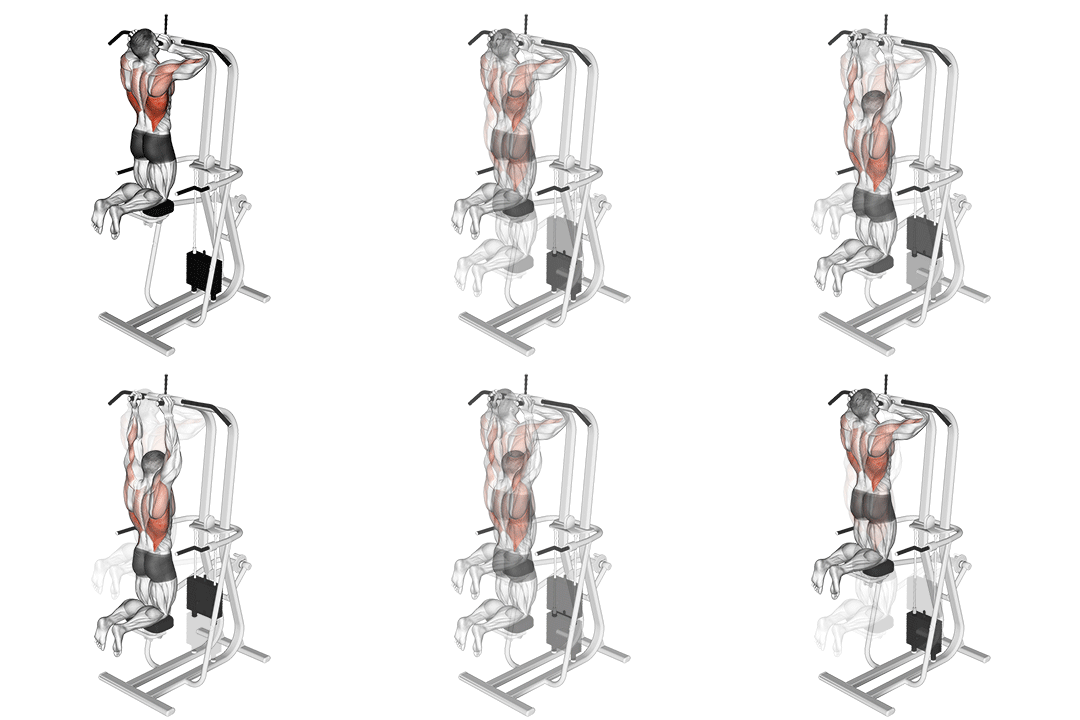
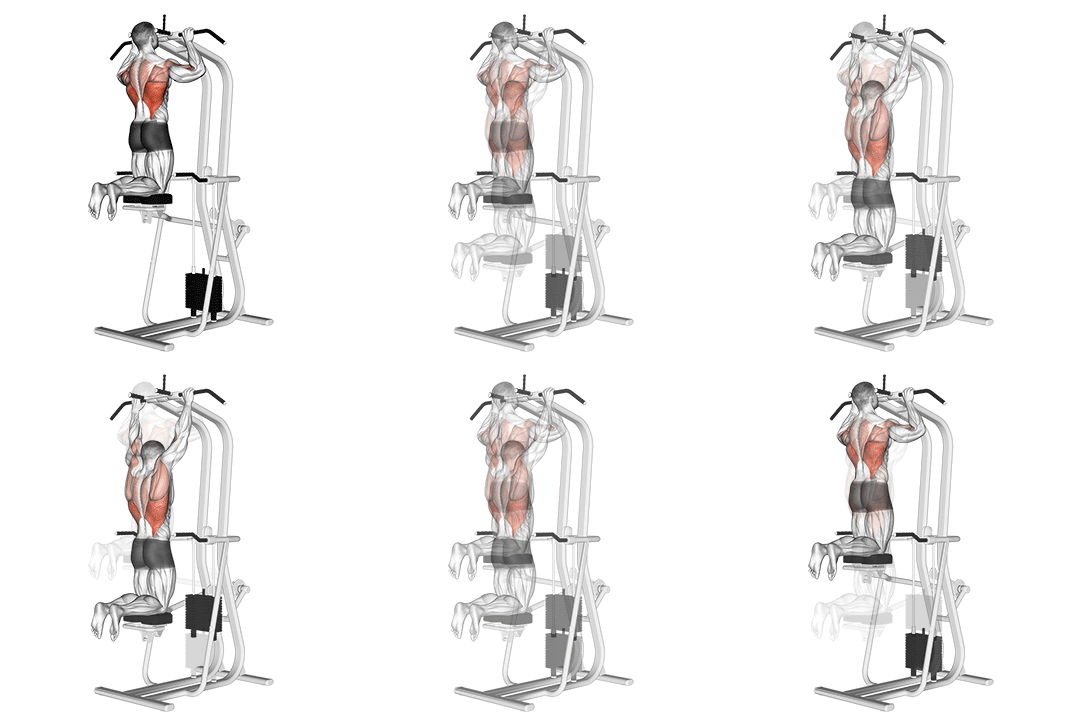
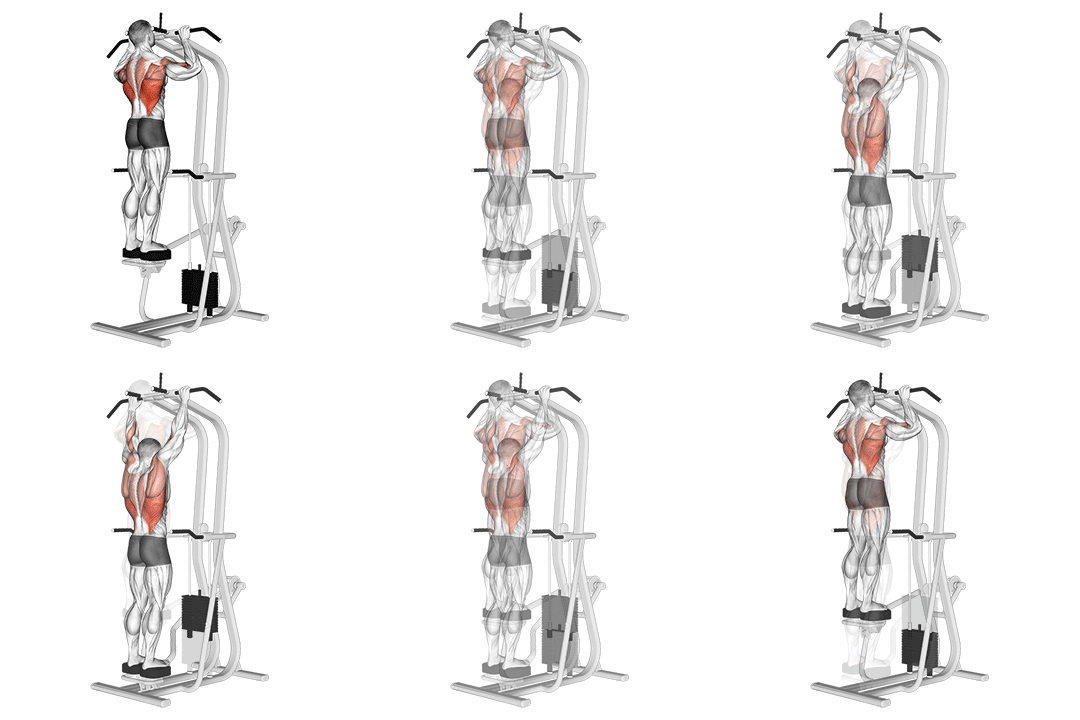
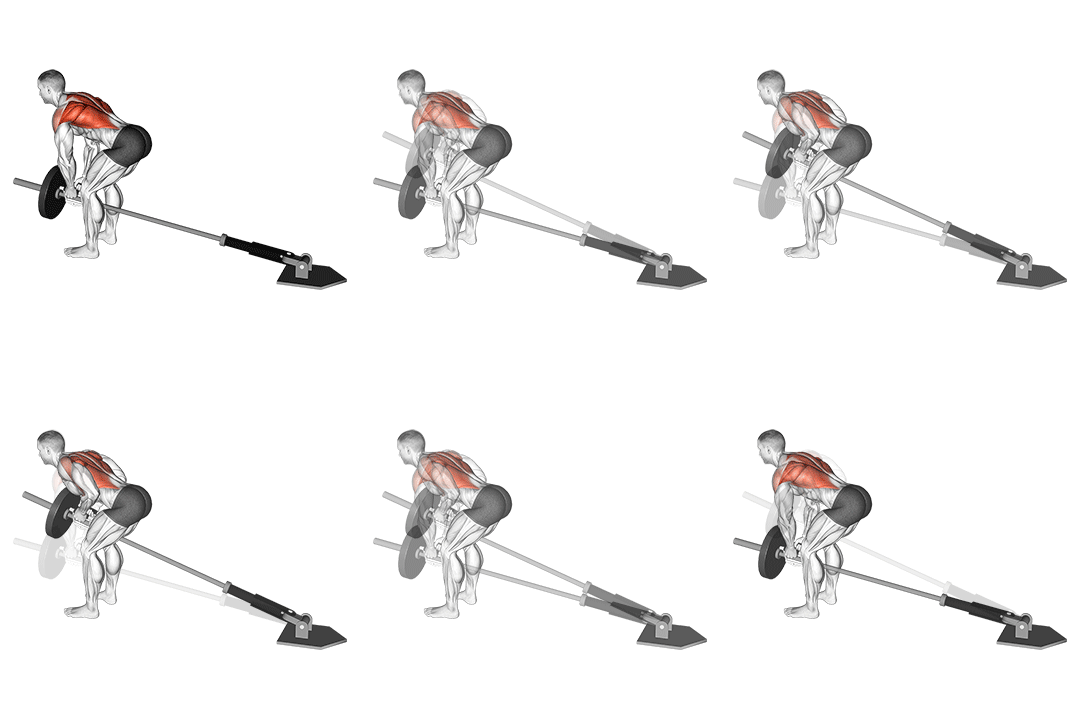
More comparisons with Lever Assisted Chin-up
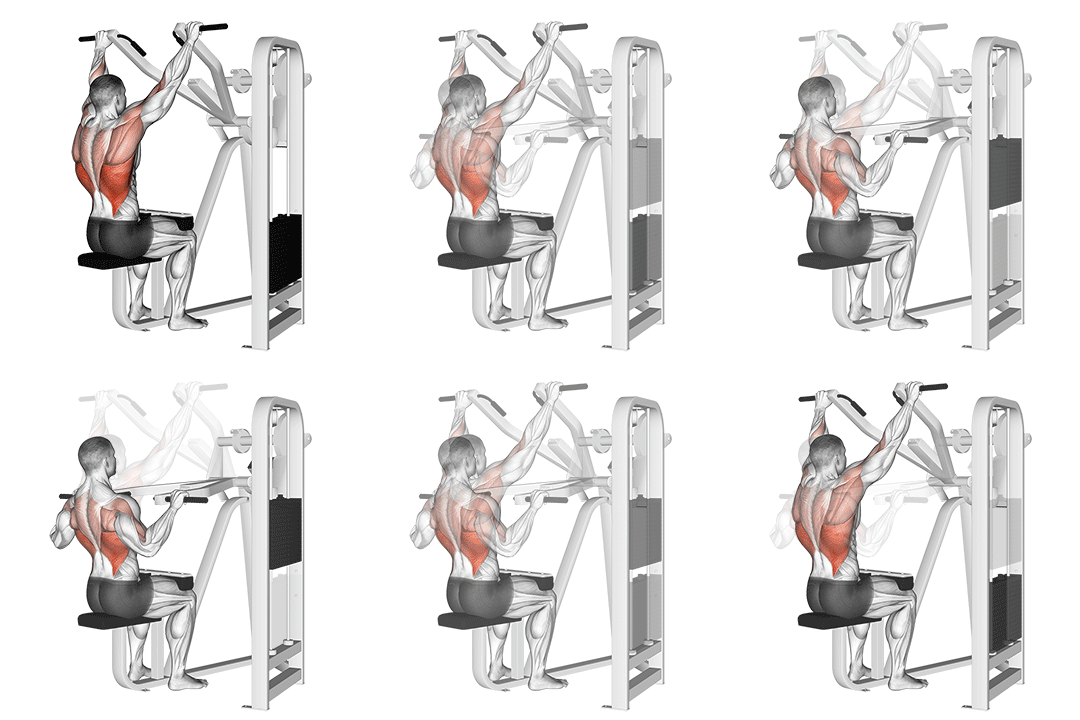
Compare More Exercises
Use our free comparison tool to analyze any two exercises head-to-head.
Compare Exercises