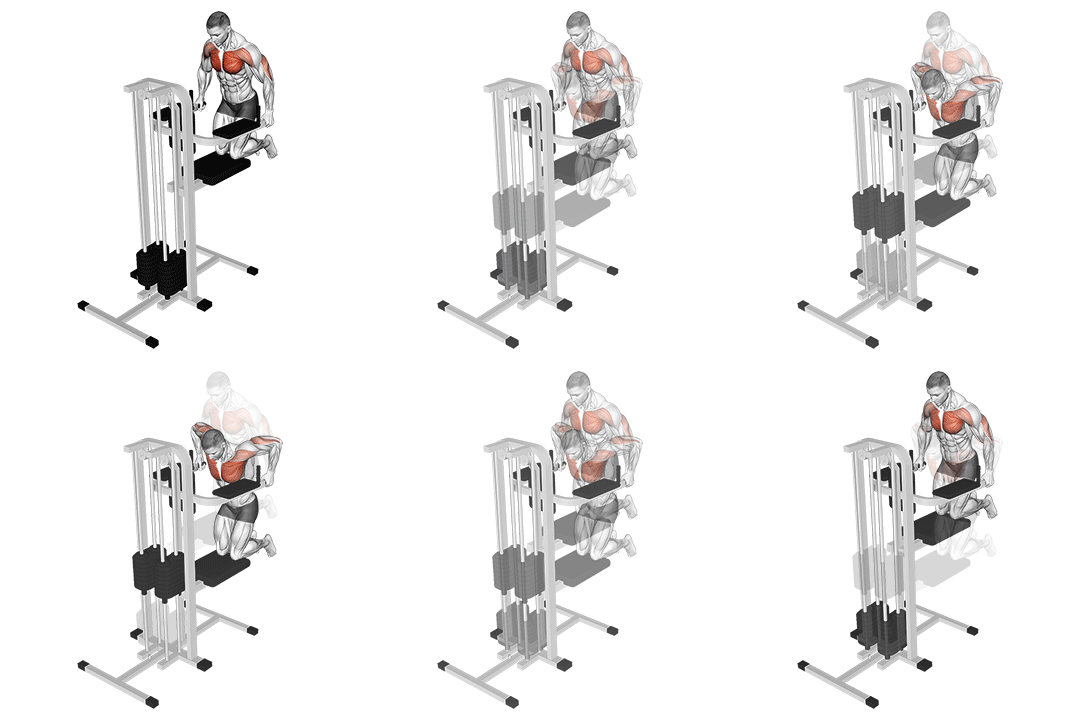
Assisted Wide-grip Chest Dip (kneeling) vs Lever Chest Press
Compare target muscles, equipment, difficulty, movement type, and secondary muscles for Assisted Wide-grip Chest Dip (kneeling) and Lever Chest Press.
Change comparison Share

Get comparison link

Select the link and use your device's Copy command.

Comparison overview

AI-generated
Assisted Wide-grip Chest Dip (kneeling) vs Lever Chest Press — you’re choosing between two beginner-friendly lever-based chest moves. I’ll walk you through how each targets the pectorals, the differences in triceps and shoulder involvement, equipment needs, risk factors, and clear progression guidelines. You’ll get specific technique cues (elbow path, torso angle, seat height), recommended rep ranges for hypertrophy (6–12) and strength (3–6), and practical scenarios showing when to pick one over the other. Read on to match the movement to your goal and avoid common setup mistakes.
Exercise Comparison

Exercise A
Assisted Wide-grip Chest Dip (kneeling) demonstration
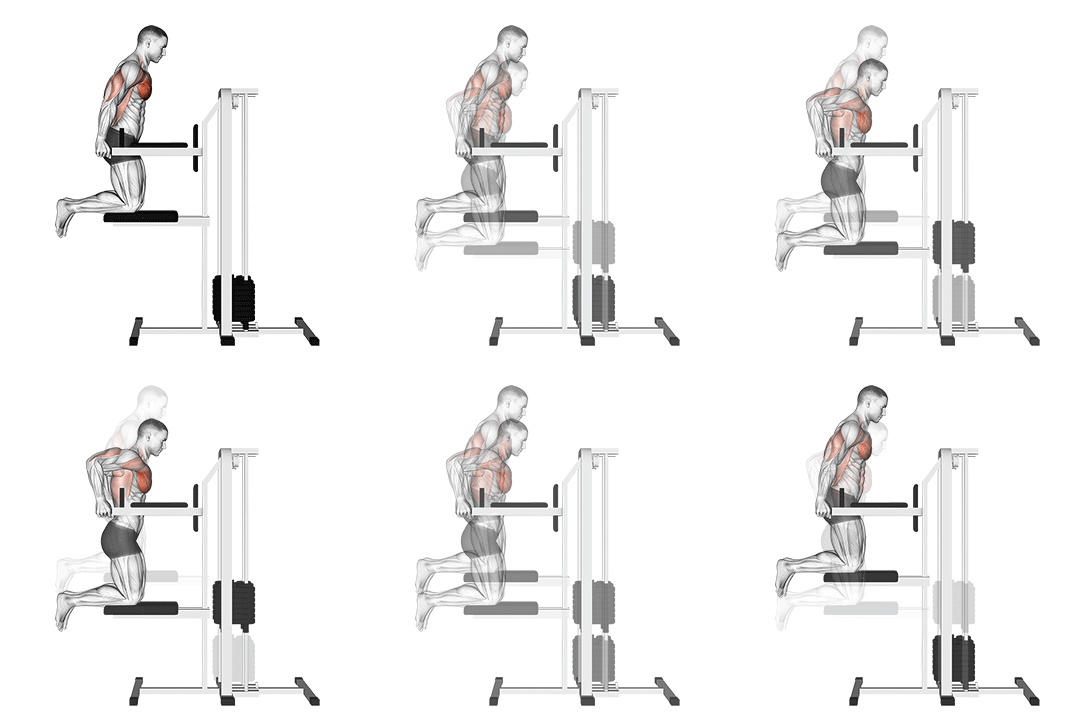
Assisted Wide-grip Chest Dip (kneeling)
Target Pectorals
Equipment Lever
Body Part Chest
Difficulty Beginner
Movement Compound
Secondary Muscles
Triceps Shoulders
VS
Exercise B
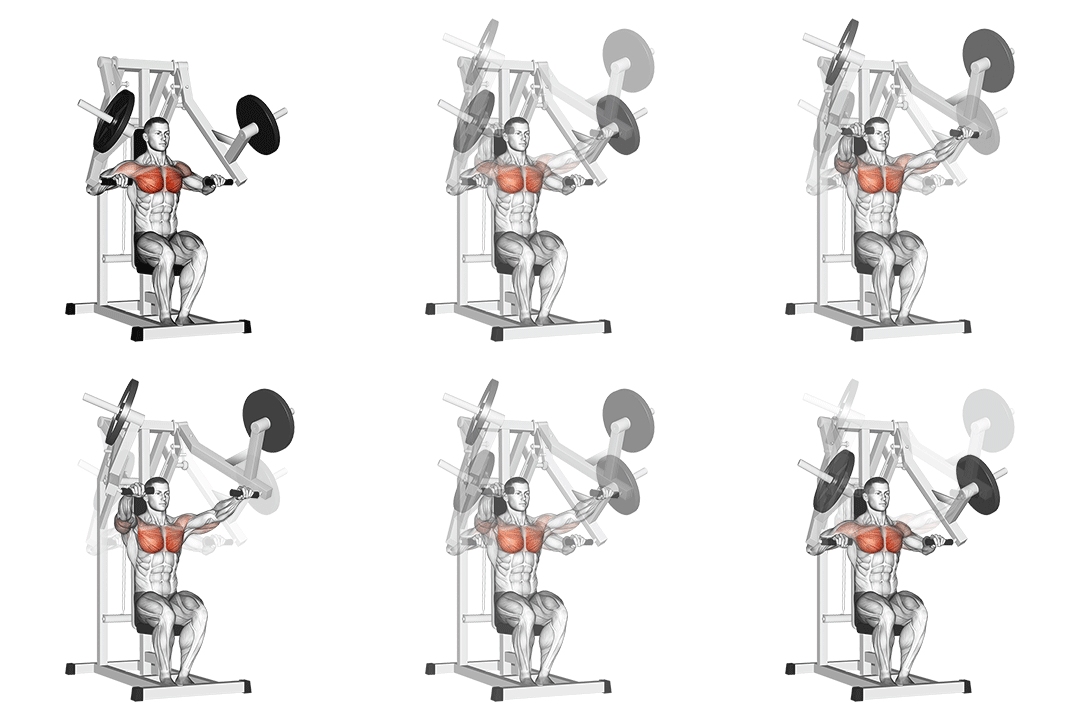
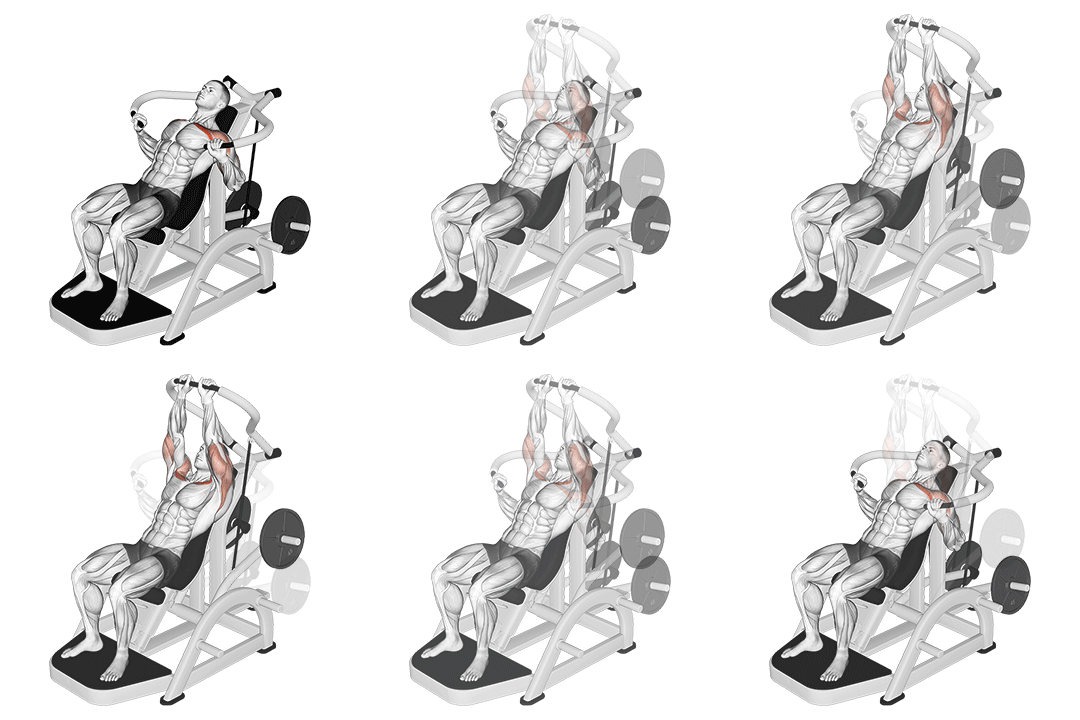
Lever Chest Press demonstration

Lever Chest Press

Target Pectorals
Equipment Lever
Body Part Chest
Difficulty Beginner
Movement Compound
Secondary Muscles
Triceps Shoulders

Head-to-Head Comparison

Different values are marked. These are catalogue attributes, not performance scores.

Muscles used

Listed target and secondary muscles, shown on the body. Locations, not activation or strength scores.

  • Target
  • Secondary
  • Not highlighted

Assisted Wide-grip Chest Dip (kneeling)

Front
Assisted Wide-grip Chest Dip (kneeling): front muscle locationsSolid: listed target. Striped: listed secondary. Grey: not highlighted. Locations, not activation or strength scores. See the muscle names below.
Back
Assisted Wide-grip Chest Dip (kneeling): back muscle locationsSolid: listed target. Striped: listed secondary. Grey: not highlighted. Locations, not activation or strength scores. See the muscle names below.
Target
Pectorals
Secondary
Triceps, Shoulders

Not shown on diagram: Shoulders. These labels do not identify a precise region on this map.

Lever Chest Press

Front
Lever Chest Press: front muscle locationsSolid: listed target. Striped: listed secondary. Grey: not highlighted. Locations, not activation or strength scores. See the muscle names below.
Back
Lever Chest Press: back muscle locationsSolid: listed target. Striped: listed secondary. Grey: not highlighted. Locations, not activation or strength scores. See the muscle names below.
Target
Pectorals
Secondary
Triceps, Shoulders

Not shown on diagram: Shoulders. These labels do not identify a precise region on this map.

Grey does not mean a muscle is unused. The diagrams show only the mapped catalogue labels.

Attribute Assisted Wide-grip Chest Dip (kneeling) Lever Chest Press
Target Muscle
Pectorals
Pectorals
Body Part
Chest
Chest
Equipment
Lever
Lever
Difficulty
Beginner
Beginner
Movement Type
Compound
Compound
Secondary Muscles
Triceps, Shoulders
Triceps, Shoulders

Visual Comparison

An illustrative 1–10 profile derived from catalog difficulty, equipment, and listed-muscle fields—not measured performance or muscle activation.

Key Differences

  • Both exercises target the Pectorals using Lever. The catalogue does not establish which exercise is better for an individual goal.

Muscle comparison

Shared target muscles

Both exercises primarily load the pectoralis major. The lever chest press produces a horizontal force vector that emphasizes the clavicular and sternal heads in a classic press pattern, while the assisted wide-grip chest dip shifts the humerus into greater extension and horizontal adduction at the bottom, taking the pecs through a longer length — often increasing sternal head stretch. Expect comparable peak activation when load is matched, but the dip variant biases a longer length-tension curve for the pecs.

Secondary muscle differences

Secondary recruitment differs: the assisted wide-grip dip increases triceps long-head and anterior deltoid involvement due to greater shoulder extension and elbow flexion range; the lever chest press reduces scapular demand and shifts some load to the anterior deltoid and triceps without as much long-head triceps stretch. Dips also call on scapular depressors and posterior shoulder stabilizers to control the descent, whereas the lever press minimizes that demand.

Muscle involvement analysis

During the kneeling assisted dip you’ll see a concentric push as the shoulders move from roughly 30–60° of extension back toward neutral and strong horizontal adduction — the pecs operate at longer muscle lengths on the eccentric. The lever press follows a more linear push from ~0–30° of horizontal adduction with a stable scapular base, favoring force production at mid-range. That means dips emphasize stretch-mediated tension; lever press emphasizes consistent load across the press arc.

Equipment and setup

Assisted Wide-grip Chest Dip (kneeling): setup

Assisted Wide-grip Chest Dip (kneeling) needs an assisted dip/lever station with a counterweight or assistance platform and an adjustable knee pad to control load. You also need enough overhead clearance and a wide-grip handle position.

Lever Chest Press: setup

Lever Chest Press requires a seated lever press machine (plate-loaded or selectorized) with adjustable seat height and back pad so the handles align with mid-chest. Proper range-limiting stops or spotter arms are helpful for safety.

Access and practicality

Lever Chest Press — more gyms and commercial facilities stock a chest press machine, and it requires less bespoke setup. The assisted wide-grip dip needs a specific assisted dip station or band setup, making it less available in smaller gyms.

Learning and progression

Learning the movements

Lever Chest Press is easier to learn: the fixed path and back support simplify motor control, letting you focus on force production and seat/handle alignment. The assisted wide-grip dip requires more torso control, scapular stability, and timing of knee assistance, so it takes a few sessions to perform with clean technique.

Progression considerations

Lever Chest Press offers straightforward progression: increase plates/weight in 2.5–10 lb increments and use paused reps or tempo (3-1-1) for overload. Assisted dips progress by reducing assistance weight, increasing range of motion, or adding belt resistance once body positioning is mastered, which allows excellent transfer to free dips.

Limitations and precautions

Assisted dips carry a higher shoulder risk if you drop too deep (excessive posterior capsule and biceps tendon strain) — keep end range around a 90° or slightly greater shoulder flexion/extension depending on your shoulder health. Lever chest press lowers risk due to guided path and back support, but poor seat height or flared elbows can increase anterior shoulder stress.

Pros & Cons

Assisted Wide-grip Chest Dip (kneeling)

+ Pros

  • Stronger stretch on sternal pecs and long-tension exposure for muscle growth
  • Trains scapular control and joint stability useful for bodyweight pressing
  • Easy to scale by adjusting assistance weight for exact loading
  • Carries good transfer to unassisted dips and other functional pushing moves

Cons

  • Requires an assisted-dip station or specific attachment
  • Greater shoulder stress if you use excessive depth or flare elbows >45°
  • Harder to quantify load precisely compared to stacked/plate machines

Lever Chest Press

+ Pros

  • Fixed path and back support reduce technical demand and injury risk
  • Simple, linear progression by adding weight in small increments
  • Consistent muscle tension through the press arc for reliable overload
  • Widely available in commercial gyms

Cons

  • Less demand on scapular stabilizers and functional control
  • Can under-recruit pec stretch at the bottom compared to dips
  • Seat misadjustment or improper elbow angle reduces pec emphasis

When Each Exercise Wins

1
For muscle hypertrophy: Assisted Wide-grip Chest Dip (kneeling)

The kneeling wide-grip dip takes the pectorals through a longer length-tension curve and increases stretch-mediated tension, which promotes muscle growth when paired with 6–12 reps and controlled tempo. Use progressive reduction in assistance and full but safe range to maximize sternal pec loading.

2
For strength gains: Lever Chest Press

Lever chest press allows precise, incremental loading and safer heavy sets (3–6 reps) with back support and a repeatable path, making it superior for raw pressing strength development and progressive overload.

3
For beginners: Lever Chest Press

The fixed plane and seat support make it simpler for beginners to learn horizontal pressing mechanics and build baseline strength without demanding high scapular control or exposing the shoulder to large end-range loads.

4
For home workouts: Assisted Wide-grip Chest Dip (kneeling)

If you can rig assistance with bands or a compact assisted dip station, the kneeling version scales to very low loads and can be performed with minimal footprint; most lever press machines aren’t practical for home setups.

Frequently Asked Questions

Can I do both Assisted Wide-grip Chest Dip (kneeling) and Lever Chest Press in the same workout?

Yes — pair them intelligently: start with the lever chest press as your heavy compound for strength (3–6 reps) or main hypertrophy sets (6–10), then use assisted dips as a secondary movement focusing on stretch and tempo for 8–12 reps. Monitor fatigue to avoid shoulder overload.

Which exercise is better for beginners?

The lever chest press is better for absolute beginners because its fixed path and back support simplify motor learning and reduce early injury risk. Once you build basic pressing strength and scapular control, add assisted dips to develop range and functional pressing ability.

How do the muscle activation patterns differ?

Assisted wide-grip dips emphasize pectoral activation at longer muscle lengths with greater shoulder extension and horizontal adduction, increasing sternal head stress. Lever chest press produces more consistent mid-range tension with a horizontal force vector and less demand on scapular stabilizers.

Can Lever Chest Press replace Assisted Wide-grip Chest Dip (kneeling)?

Yes for strength and consistent overload — the lever press can substitute when shoulder health or equipment availability limit dips. However, it won’t fully replicate the dip’s long-length pectoral stretch and transfer to unassisted dip progressions, so include dips when your goal is that specific stimulus.

Comparison Summary

Choose the assisted wide-grip chest dip (kneeling) when your goal is targeted pectoral development and improved bodyweight pressing mechanics — especially if you can control depth and progress by reducing assistance. Aim for 6–12 reps with a 2–3 second eccentric to exploit stretch-mediated tension. Pick the lever chest press if you want straightforward strength progression, consistency, and lower shoulder demand; use 3–6 reps for strength blocks and 6–12 for hypertrophy with strict seat alignment and a 0–45° elbow path. Both are useful: use the lever press to build baseline strength and the assisted dip to increase pec stretch and transfer to free dips.

Exercise instructions

Steps from the exercise catalogue. Read the full sequence before starting.

Assisted Wide-grip Chest Dip (kneeling)

  1. Adjust the machine to your desired height and secure your knees on the pad.
  2. Grasp the handles with a wide grip and keep your elbows slightly bent.
  3. Lower your body by bending your elbows until your upper arms are parallel to the floor.
Read remaining steps for Assisted Wide-grip Chest Dip (kneeling)
  1. Push yourself back up to the starting position by extending your arms.
  2. Repeat for the desired number of repetitions.

Lever Chest Press

  1. Adjust the seat height and position yourself on the machine with your back flat against the pad.
  2. Grasp the handles with an overhand grip and position your elbows at a 90-degree angle.
  3. Push the handles forward until your arms are fully extended, exhaling during the movement.
Read remaining steps for Lever Chest Press
  1. Pause briefly at the end of the movement, then slowly return to the starting position, inhaling as you do so.
  2. Repeat for the desired number of repetitions.

Also Compare

Compare another pair

Choose two exercises to see their differences side by side.

Compare Exercises