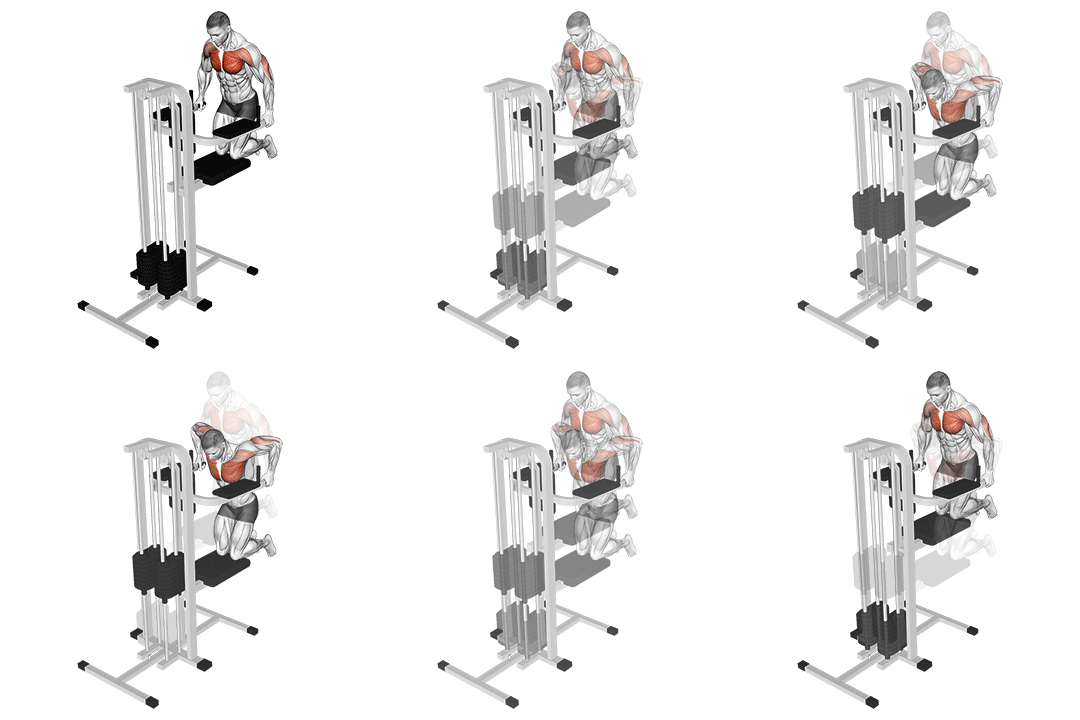
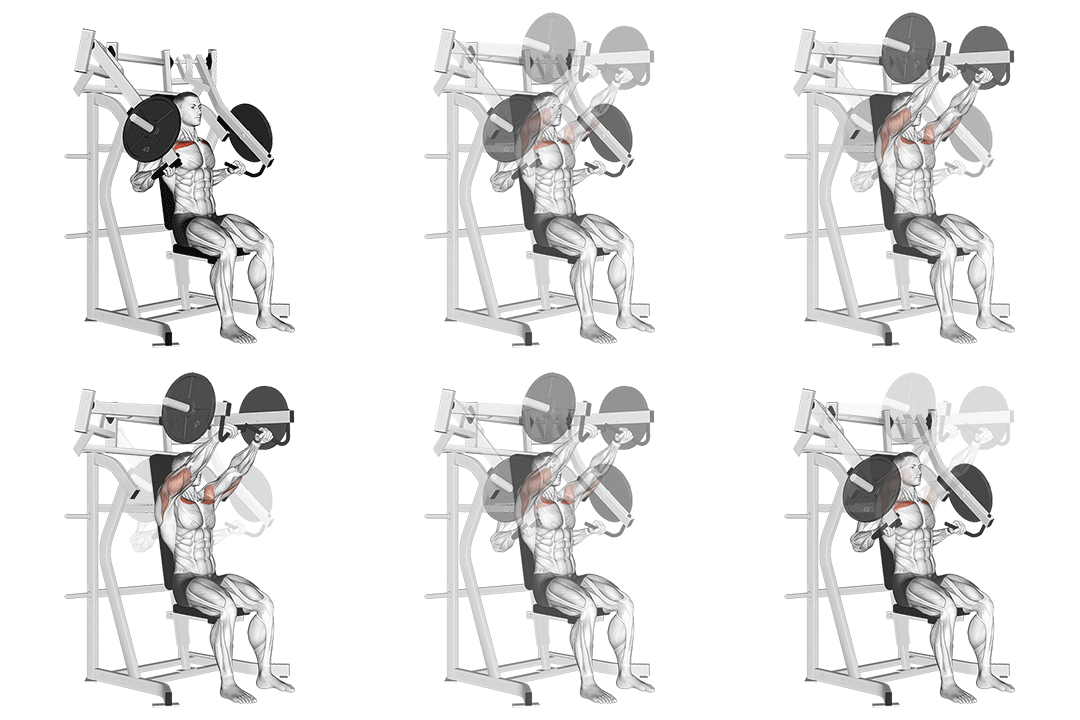
Assisted Wide-grip Chest Dip (kneeling) vs Lever Incline Chest Press V. 2
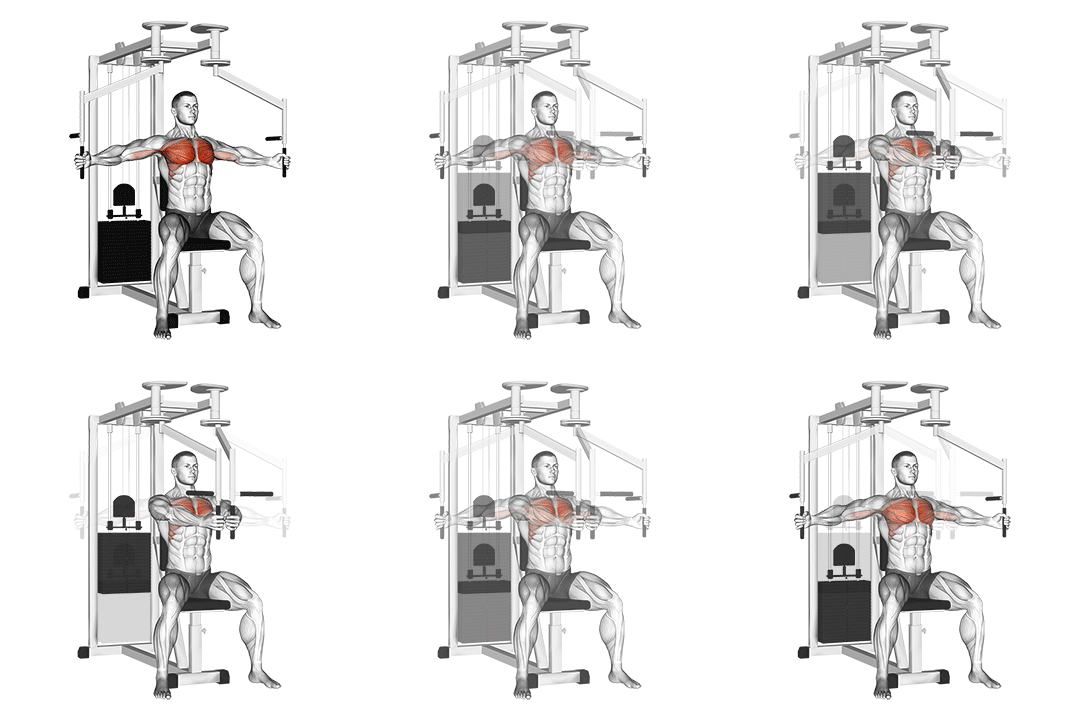
Compare target muscles, equipment, difficulty, movement type, and secondary muscles for Assisted Wide-grip Chest Dip (kneeling) and Lever Incline Chest Press V. 2.
Change comparison Share

Get comparison link

Select the link and use your device's Copy command.

Comparison overview

AI-generated
Assisted Wide-grip Chest Dip (kneeling) vs Lever Incline Chest Press V. 2 is a head-to-head that helps you pick the best lever-based chest movement for your goals. I’ll walk you through primary and secondary muscle recruitment, equipment needs, learning curve, and injury risk. You’ll get concrete technique cues (angles, rep ranges, body position), biomechanics-based reasons why one may favor upper versus lower pecs, and clear recommendations for hypertrophy, strength, or beginner programming so you can choose the right lift for your routine.
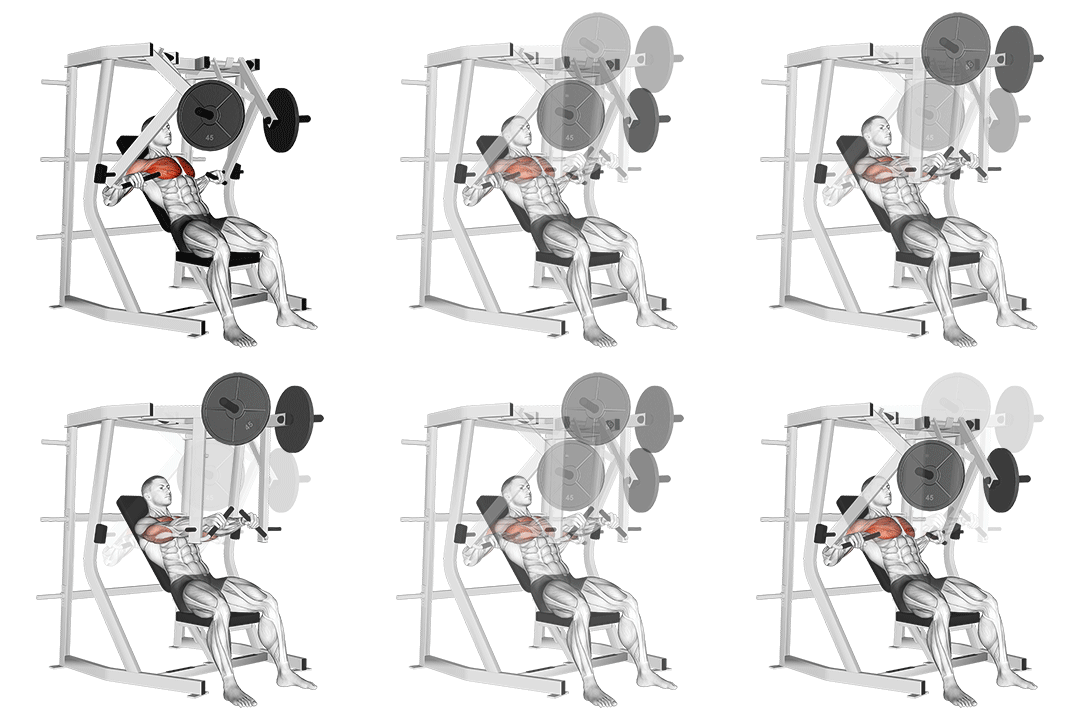
Exercise Comparison

Exercise A
Assisted Wide-grip Chest Dip (kneeling) demonstration
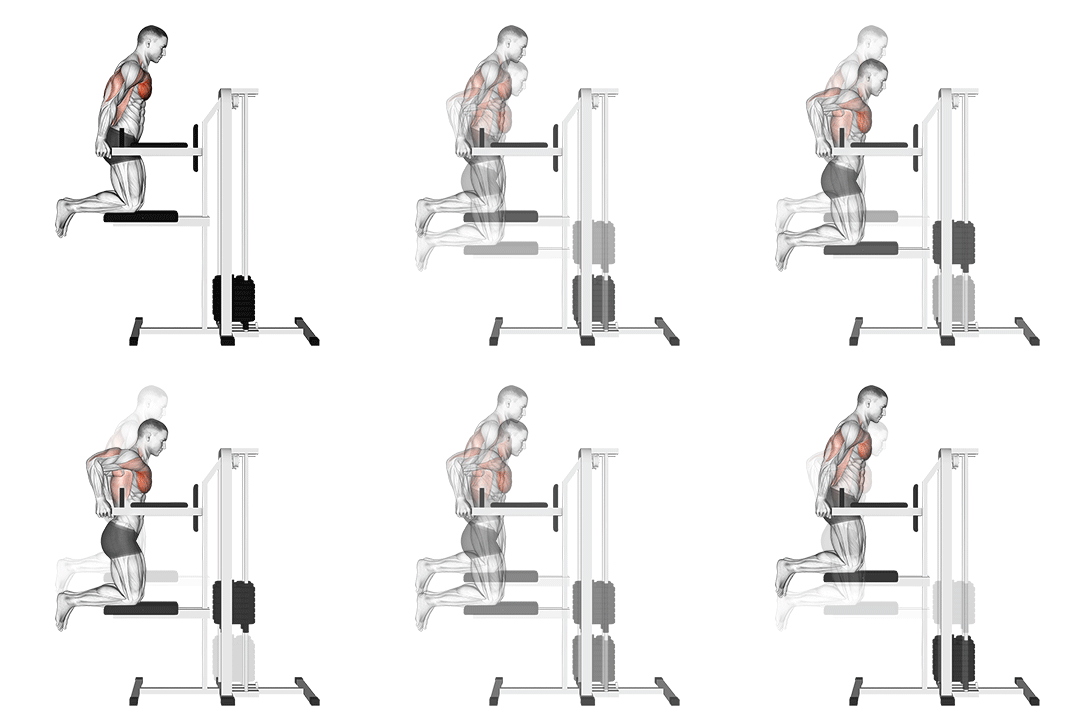
Assisted Wide-grip Chest Dip (kneeling)
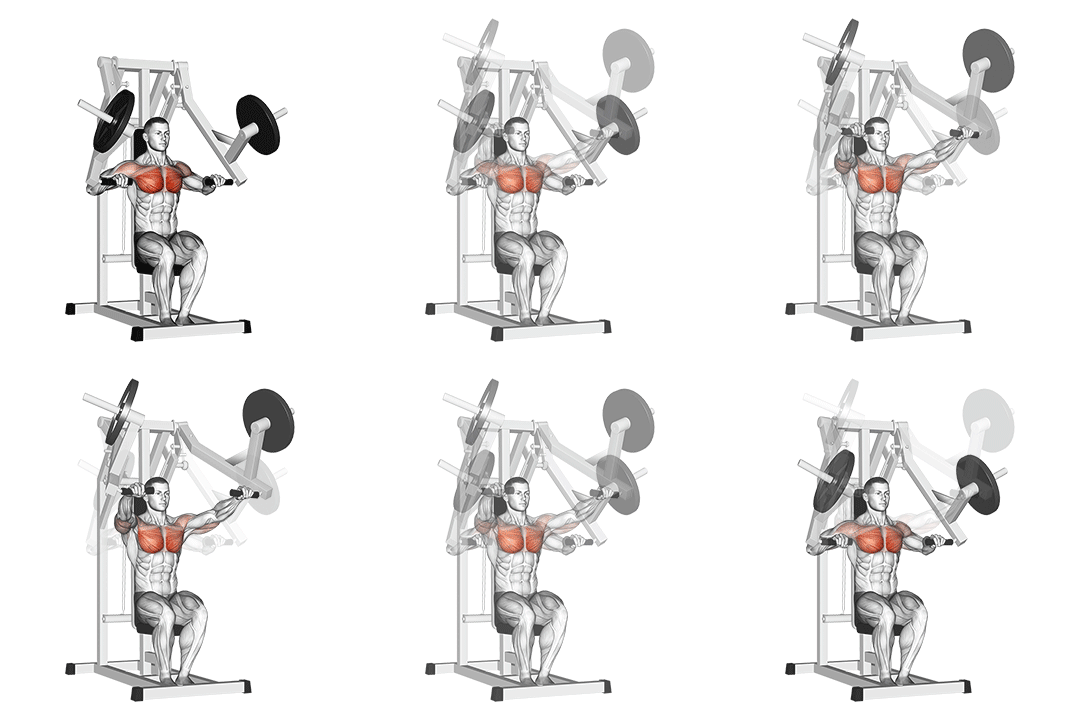
Target Pectorals
Equipment Lever
Body Part Chest
Difficulty Beginner
Movement Compound
Secondary Muscles
Triceps Shoulders
VS
Exercise B
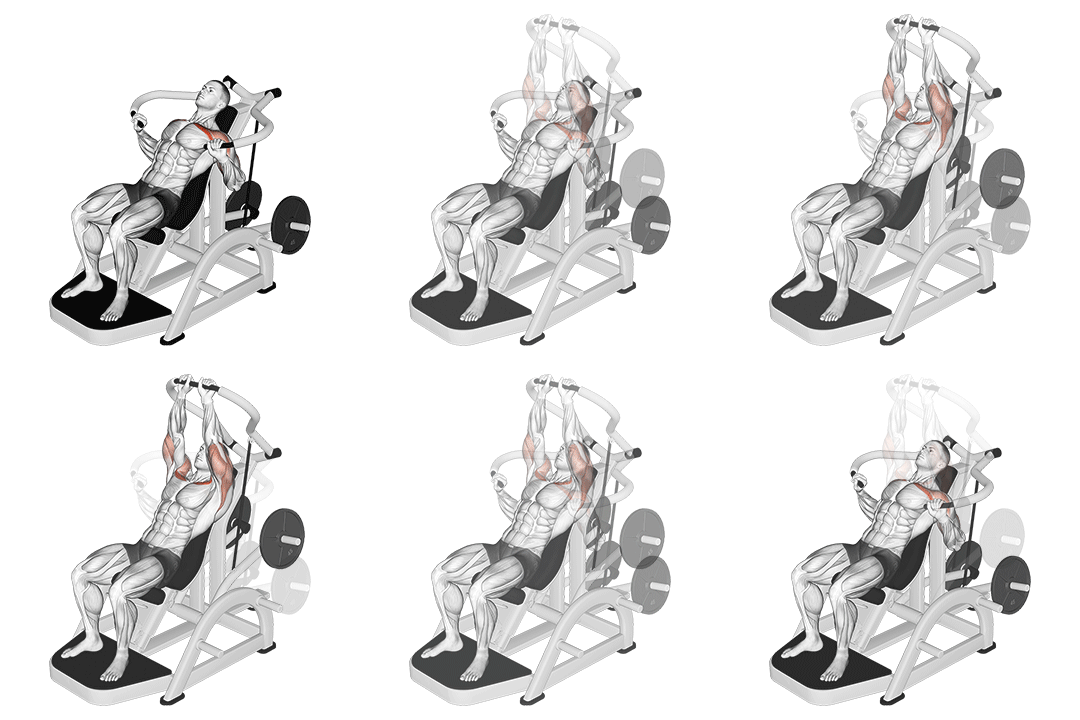
Lever Incline Chest Press V. 2 demonstration

Lever Incline Chest Press V. 2

Target Pectorals
Equipment Lever
Body Part Chest
Difficulty Intermediate
Movement Compound
Secondary Muscles
Triceps Shoulders

Head-to-Head Comparison

Different values are marked. These are catalogue attributes, not performance scores.

Muscles used

Listed target and secondary muscles, shown on the body. Locations, not activation or strength scores.

  • Target
  • Secondary
  • Not highlighted

Assisted Wide-grip Chest Dip (kneeling)

Front
Assisted Wide-grip Chest Dip (kneeling): front muscle locationsSolid: listed target. Striped: listed secondary. Grey: not highlighted. Locations, not activation or strength scores. See the muscle names below.
Back
Assisted Wide-grip Chest Dip (kneeling): back muscle locationsSolid: listed target. Striped: listed secondary. Grey: not highlighted. Locations, not activation or strength scores. See the muscle names below.
Target
Pectorals
Secondary
Triceps, Shoulders

Not shown on diagram: Shoulders. These labels do not identify a precise region on this map.

Lever Incline Chest Press V. 2

Front
Lever Incline Chest Press V. 2: front muscle locationsSolid: listed target. Striped: listed secondary. Grey: not highlighted. Locations, not activation or strength scores. See the muscle names below.
Back
Lever Incline Chest Press V. 2: back muscle locationsSolid: listed target. Striped: listed secondary. Grey: not highlighted. Locations, not activation or strength scores. See the muscle names below.
Target
Pectorals
Secondary
Triceps, Shoulders

Not shown on diagram: Shoulders. These labels do not identify a precise region on this map.

Grey does not mean a muscle is unused. The diagrams show only the mapped catalogue labels.

Attribute Assisted Wide-grip Chest Dip (kneeling) Lever Incline Chest Press V. 2
Target Muscle
Pectorals
Pectorals
Body Part
Chest
Chest
Equipment
Lever
Lever
Difficulty Different
Beginner
Intermediate
Movement Type
Compound
Compound
Secondary Muscles
Triceps, Shoulders
Triceps, Shoulders

Visual Comparison

An illustrative 1–10 profile derived from catalog difficulty, equipment, and listed-muscle fields—not measured performance or muscle activation.

Key Differences

  • Difficulty levels differ: Assisted Wide-grip Chest Dip (kneeling) is beginner, while Lever Incline Chest Press V. 2 is intermediate.
  • Both exercises target the Pectorals using Lever. The catalogue does not establish which exercise is better for an individual goal.

Muscle comparison

Shared target muscles

Both moves target the pectoralis major. The assisted wide-grip chest dip biases the sternal (lower) pec fibers through a more vertical torso lean and a larger humeral extension at the bottom, while the Lever Incline Chest Press V. 2 shifts the line of force up the clavicular (upper) pec fibers by pressing on a 20–35° incline, increasing activation of upper pecs and anterior deltoid. Expect roughly a 55/45 lower-to-upper pec emphasis on the dip vs a 60/40 upper-to-lower emphasis on the incline press for typical setups.

Secondary muscle differences

Both recruit triceps and anterior deltoid, but the dip loads triceps more during the lockout due to a greater elbow extension moment arm. The incline press increases anterior deltoid involvement because the force vector is more superior, while the dip produces higher posterior shoulder stretch and scapular stabilization demands.

Muscle involvement analysis

During the dip you get greater pec stretch at the bottom (longer sarcomere length) and a larger concentric shortening range, leveraging length-tension for powerful lockout work. The incline press keeps the pecs at a shorter operating length throughout the push, favoring constant tension and safer joint angles; force is transferred along a more horizontal-to-upward vector, changing moment arms at the glenohumeral and elbow joints.

Equipment and setup

Assisted Wide-grip Chest Dip (kneeling): setup

A lever-assisted dip station or assisted-dip machine with adjustable counterweight and a platform for kneeling; a stable handrail width that supports a wide grip; optional bench for foot support.

Lever Incline Chest Press V. 2: setup

A lever-based incline chest press machine with an adjustable backpad set to roughly 20–35° and a weight stack or plate-loaded mechanism; a seat that allows feet planted and chest aligned with handles.

Access and practicality

Lever Incline Chest Press V. 2 — Most commercial gyms have an incline press machine or multi-station lever that’s adjustable, while a true assisted-dip machine is less common. The incline lever also allows precise load increments and easier seat adjustments for different users.

Learning and progression

Learning the movements

Assisted Wide-grip Chest Dip (kneeling) is easier for beginners to pick up because the machine offsets load and the kneeling position reduces balance demands; technique focuses on a controlled descent and a forward lean of ~15–25°. The Lever Incline Chest Press V. 2 requires seat and pad adjustments and a consistent pressing path, so it has a slightly steeper setup learning curve.

Progression considerations

Lever Incline Chest Press V. 2 offers clearer progression via small weight increments, tempo manipulation, and pause reps. The assisted dip can progress by reducing assistance incrementally or switching to a standing/full dip, but incremental loading is coarser on some assisted machines.

Limitations and precautions

Assisted dips carry higher shoulder risk if you descend too deep—excessive humeral extension can impinge the anterior capsule. The incline lever press scores lower for acute injury risk due to fixed path and controlled ROM, but poor seat alignment or locking into end-range can still stress the AC joint.

Pros & Cons

Assisted Wide-grip Chest Dip (kneeling)

+ Pros

  • High lower-pec stimulus with long stretch at the bottom for hypertrophy
  • Beginner-friendly when assistance reduces load
  • Encourages scapular control and core bracing in kneeling position
  • Easy to transition to unassisted dips for progression

Cons

  • Greater shoulder extension risk if taken too deep
  • Less precise load increments on some assisted machines
  • Requires a specific assisted-dip station which may not be available

Lever Incline Chest Press V. 2

+ Pros

  • Consistent, controlled path that’s easy to load progressively
  • Strong upper-pec and anterior deltoid emphasis at 20–35° incline
  • Lower injury risk due to fixed mechanics and seat adjustments
  • Easier to use for heavy sets (3–6 reps) and strict tempo work

Cons

  • Less stretch-mediated tension compared with deep dips
  • Requires correct seat and pad setup to target the pecs effectively
  • Can under-recruit lower pec fibers unless combined with flat/decline work

When Each Exercise Wins

1
For muscle hypertrophy: Lever Incline Chest Press V. 2

The incline press lets you load the pecs with precise progressive overload and keeps constant tension across reps; at 8–12 reps it targets upper chest hypertrophy efficiently while reducing shoulder strain, making it easier to accumulate quality volume.

2
For strength gains: Lever Incline Chest Press V. 2

Its fixed lever path and easy micro-loading allow heavy triples and doubles with stable biomechanics. You can overload neurologically with low rep ranges (3–6 reps) while maintaining chest-dominant force vectors.

3
For beginners: Assisted Wide-grip Chest Dip (kneeling)

Assistance lets you train the pushing pattern with minimal joint load and simplified cueing: lean ~20°, keep elbows ~45° from the torso, control the descent for 2–3 seconds. That builds confidence and target muscle activation before moving to heavier presses.

4
For home workouts: Assisted Wide-grip Chest Dip (kneeling)

You can approximate assisted dips at home using resistance bands, a bench for support, or a compact assisted station, while a lever incline machine is rarely available outside a gym. Dips are easier to modify for limited equipment setups.

Frequently Asked Questions

Can I do both Assisted Wide-grip Chest Dip (kneeling) and Lever Incline Chest Press V. 2 in the same workout?

Yes. Use the incline press for heavy working sets (3–6 or 6–12 reps) and finish with assisted dips for higher-volume stretch-focused sets (8–15 reps). Sequence pressing heavy first to avoid fatigue-related form breakdown on the lever machine.

Which exercise is better for beginners?

Assisted Wide-grip Chest Dip (kneeling) is better for most beginners because the machine offsets load and simplifies the pattern. It teaches a stable pressing path and allows you to build tolerance before moving to unassisted dips or heavier presses.

How do the muscle activation patterns differ?

Dips create greater pec stretch and emphasize lower sternal fibers due to more humeral extension and a vertical vector, whereas the incline press places the pecs at a shorter operating length and shifts force to the clavicular head and anterior deltoid because of the 20–35° incline and upward force vector.

Can Lever Incline Chest Press V. 2 replace Assisted Wide-grip Chest Dip (kneeling)?

It can replace the dip for upper-pec development and safer heavy loading, but it won’t fully replicate the deep stretch and lower-pec emphasis of dips. For a balanced chest program include both or substitute incline press plus a flat/decline movement to cover the lower pecs.

Comparison Summary

Use the Assisted Wide-grip Chest Dip (kneeling) when you want a beginner-safe, lower-pec-focused movement that trains scapular control and sets you up for full dips. Keep the torso leaning ~15–25°, limit descent to avoid anterior shoulder impingement, and progress by reducing assistance or increasing reps (8–15). Choose the Lever Incline Chest Press V. 2 when you need precise loading, want to emphasize upper-pec development, or plan to train heavy for strength (3–6 reps) or moderate hypertrophy (6–12 reps). Pair both in a program—incline press for heavy, loaded sets and assisted dips for volume and stretch—based on your equipment access and shoulder health.

Exercise instructions

Steps from the exercise catalogue. Read the full sequence before starting.

Assisted Wide-grip Chest Dip (kneeling)

  1. Adjust the machine to your desired height and secure your knees on the pad.
  2. Grasp the handles with a wide grip and keep your elbows slightly bent.
  3. Lower your body by bending your elbows until your upper arms are parallel to the floor.
Read remaining steps for Assisted Wide-grip Chest Dip (kneeling)
  1. Push yourself back up to the starting position by extending your arms.
  2. Repeat for the desired number of repetitions.

Lever Incline Chest Press V. 2

  1. Adjust the seat height and backrest angle on the leverage machine to a comfortable position.
  2. Sit on the machine with your back against the backrest and your feet flat on the floor.
  3. Grasp the handles with an overhand grip and position your hands slightly wider than shoulder-width apart.
Read remaining steps for Lever Incline Chest Press V. 2
  1. Push the handles forward and away from your body until your arms are fully extended, but without locking your elbows.
  2. Pause for a moment at the fully extended position, then slowly bend your elbows and lower the handles back towards your chest.
  3. Repeat for the desired number of repetitions.

Also Compare

Compare another pair

Choose two exercises to see their differences side by side.

Compare Exercises