

Astride Jumps (male) vs Back And Forth Step: Complete Comparison Guide
Astride Jumps (male) vs Back And Forth Step — which should you choose for your cardio and conditioning? You bring the goal, and I’ll break down how each exercise loads your cardiovascular system, which secondary muscles they recruit, the equipment and space you need, and the safest progressions. Read on for technique cues, rep and interval recommendations (for example 20–40 second intervals or 3 sets of 12–20 reps), and clear guidance so you can pick the movement that matches your fitness level and priorities.
Exercise Comparison
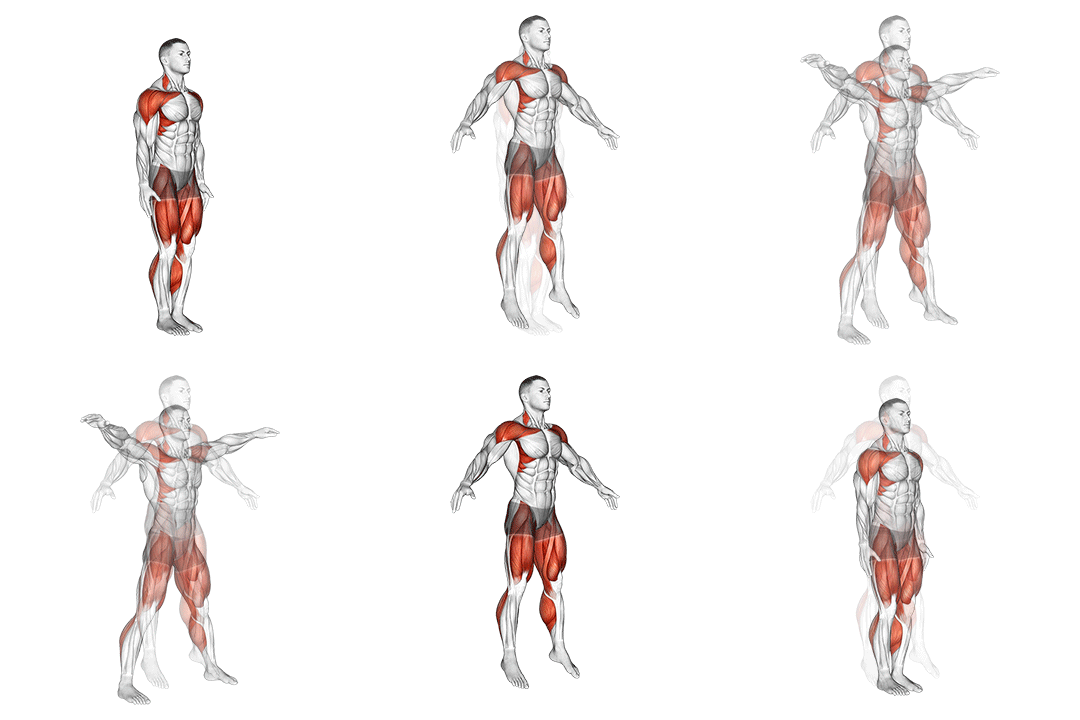
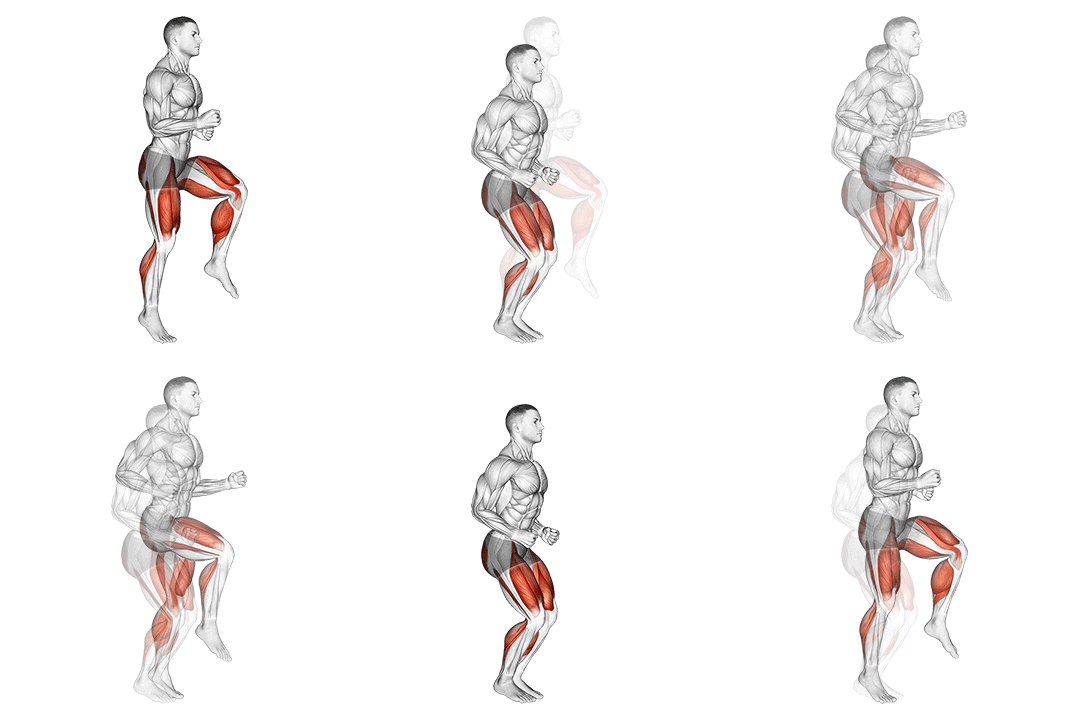
Astride Jumps (male)
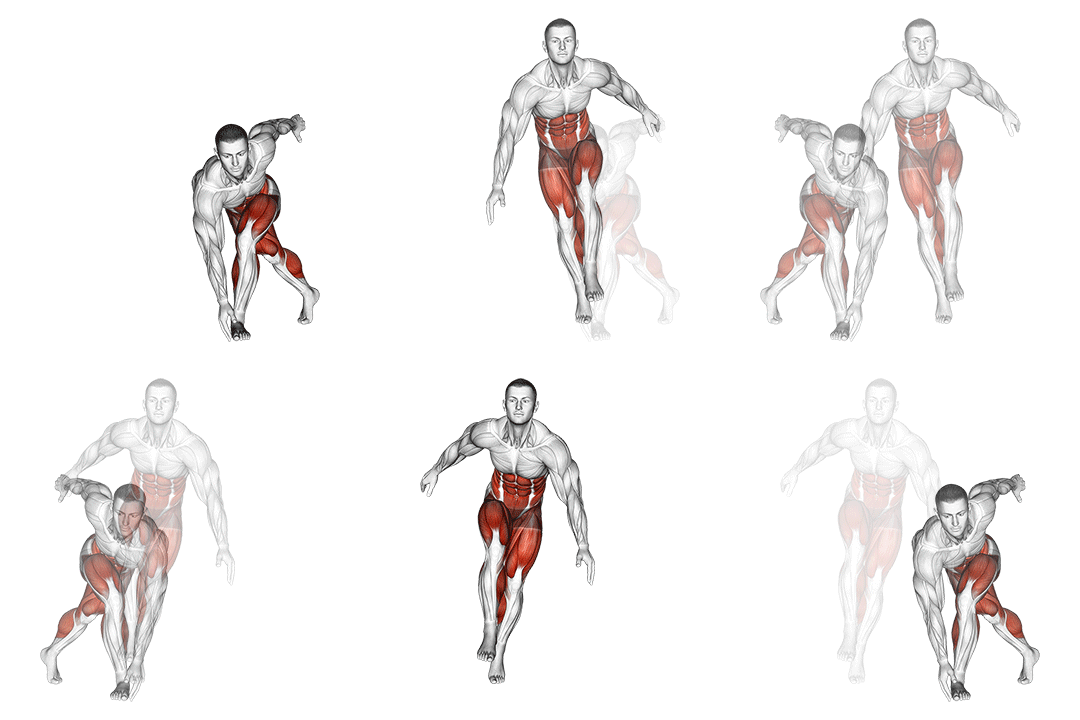
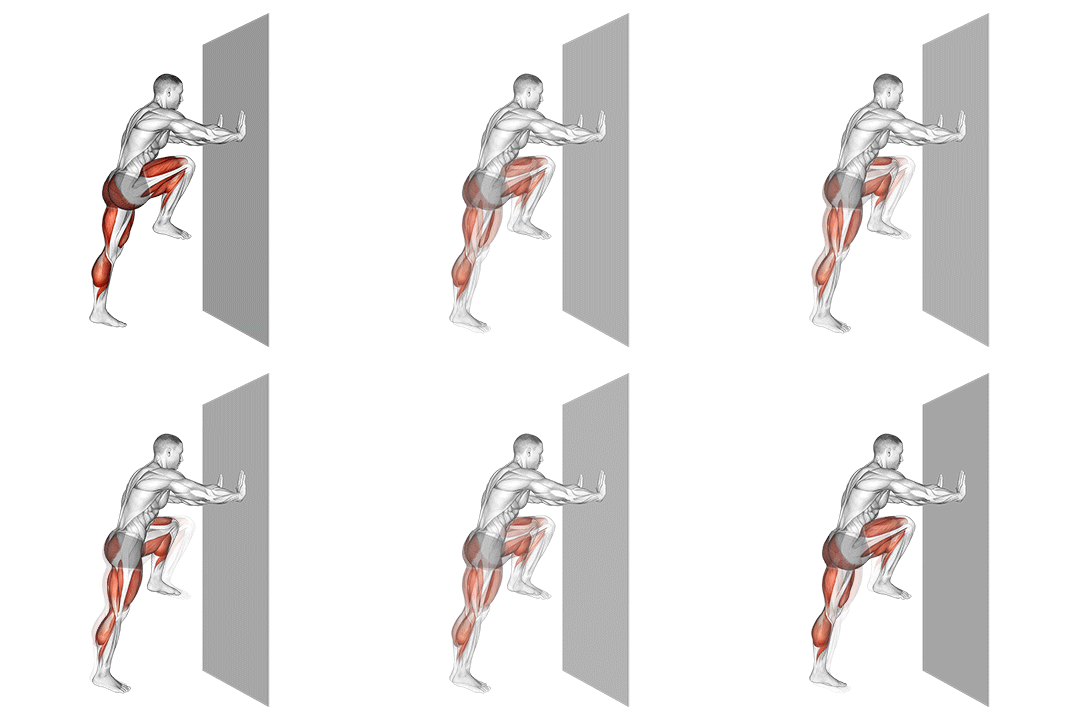
Back And Forth Step
Head-to-Head Comparison
| Attribute | Astride Jumps (male) | Back And Forth Step |
|---|---|---|
| Target Muscle |
Cardiovascular-system
|
Cardiovascular-system
|
| Body Part |
Cardio
|
Cardio
|
| Equipment |
Body-weight
|
Body-weight
|
| Difficulty |
Intermediate
|
Beginner
|
| Movement Type |
Compound
|
Compound
|
| Secondary Muscles |
3
|
4
|
Secondary Muscles Activated
Astride Jumps (male)
Back And Forth Step
Visual Comparison
Overview
Astride Jumps (male) vs Back And Forth Step — which should you choose for your cardio and conditioning? You bring the goal, and I’ll break down how each exercise loads your cardiovascular system, which secondary muscles they recruit, the equipment and space you need, and the safest progressions. Read on for technique cues, rep and interval recommendations (for example 20–40 second intervals or 3 sets of 12–20 reps), and clear guidance so you can pick the movement that matches your fitness level and priorities.
Key Differences
- Difficulty levels differ: Astride Jumps (male) is intermediate, while Back And Forth Step is beginner.
- Both exercises target the Cardiovascular-system using Body-weight. The main differences are in their movement patterns and muscle activation angles.
Pros & Cons
Astride Jumps (male)
+ Pros
- High cardiovascular and power stimulus via stretch-shortening cycles
- Minimal space and no equipment required for quick conditioning sets
- Efficient calorie burn in short intervals (20–40 second work intervals)
- Develops reactive ankle plantarflexion and quick knee extension
− Cons
- Higher impact forces (approx. 2–3x bodyweight on landing) increase risk
- Requires solid landing technique and baseline strength
- Less hip/glute emphasis compared with step variations
Back And Forth Step
+ Pros
- Lower-impact and beginner-friendly stepping pattern
- Greater hip-extensor (glute) recruitment for muscle development
- Easily loaded with step height or weighted vest for strength work
- Better for long-duration intervals and steady-state cardio
− Cons
- Requires more space or a platform for advanced variations
- Lower peak power stimulus compared with plyometric jumps
- May feel monotonous at very high cadences
When Each Exercise Wins
Back And Forth Step produces longer time under tension and greater hip extension, which targets glutes and hamstrings effectively. You can add a 10–20 kg vest or step height to reliably increase mechanical load for 8–15 reps per leg.
When loaded, step variations allow progressive overload with controlled concentric and eccentric phases, producing measurable strength improvements in hip and knee extensors. Use 3–5 sets of 6–12 reps with added resistance to drive strength adaptations.
The step pattern is easier to teach and places lower peak forces on joints, letting you focus on posture and cadence. Start with a 10–20 second tempo and build to 30–60 second sets before adding complexity.
Astride Jumps need minimal space and no platform, so you can do effective cardio intervals in a small area. Short 30–45 second tabata-style rounds deliver high intensity with no gear.
Frequently Asked Questions
Can I do both Astride Jumps (male) and Back And Forth Step in the same workout?
Yes. Pair them strategically: use Back And Forth Step as a lower-impact activation set (2–3 minutes) and follow with 3–5 rounds of 20–30 second Astride Jump intervals for power and conditioning. Keep total session volume manageable to avoid excessive joint stress.
Which exercise is better for beginners?
Back And Forth Step is better for beginners because it uses slower movement patterns and lower peak forces, letting you build coordination and strength first. Start with 30–60 second sets at a moderate pace before progressing to faster or weighted variations.
How do the muscle activation patterns differ?
Astride Jumps rely on rapid stretch-shortening cycles, producing brief, high-amplitude activation in quads and calves with high ground reaction forces. Back And Forth Step produces longer concentric contractions and greater glute and hamstring activation due to larger hip-extension angles and longer time under tension.
Can Back And Forth Step replace Astride Jumps (male)?
It can replace them for cardiovascular conditioning and strength-focused sessions, especially when you add load or increase step height. However, if your goal is to train reactive power or short-duration peak output, Astride Jumps are the preferable choice.
Expert Verdict
Choose Astride Jumps when your goal is short, high-intensity cardio and power training: use 20–40 second intervals, focus on soft landings with knees tracking over toes and 15–30 degrees of knee flexion at touchdown, and only progress once contact time drops below ~200 ms. Pick Back And Forth Step when you want lower-impact conditioning, glute-dominant work, or progressive strength—perform 3–4 sets of 8–15 reps per leg or 30–60 second continuous sets and add load with a vest or higher platform. Both are valid tools; favor the exercise that matches your current strength, landing control, and training phase.
Also Compare
More comparisons with Astride Jumps (male)
Compare More Exercises
Use our free comparison tool to analyze any two exercises head-to-head.
Compare Exercises