

Astride Jumps (male) vs Bear Crawl: Complete Comparison Guide
Astride Jumps (male) vs Bear Crawl is the comparison you need if you want efficient, bodyweight conditioning. You’ll get direct guidance on who should use each move, how they load muscles and joints, and clear programming suggestions. I’ll cover primary and secondary muscle recruitment, equipment and space needs, technique cues (hip hinge, knee angle, scapular position), injury considerations, and progressions so you can pick the better option for your cardio, power, or functional-strength goals.
Exercise Comparison
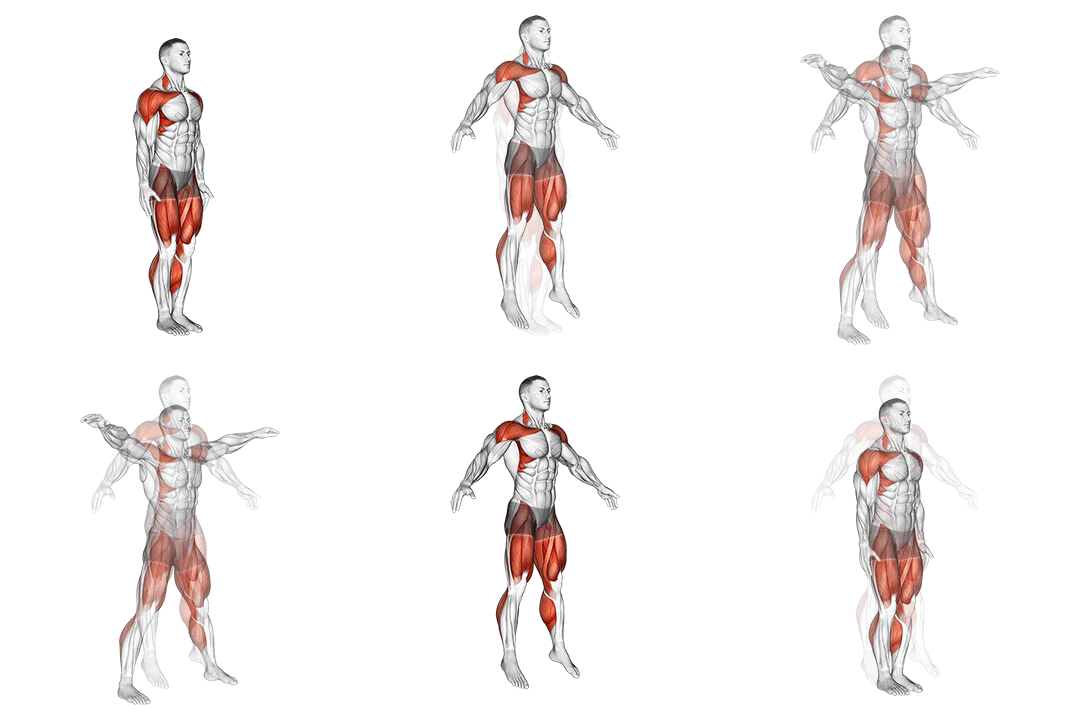
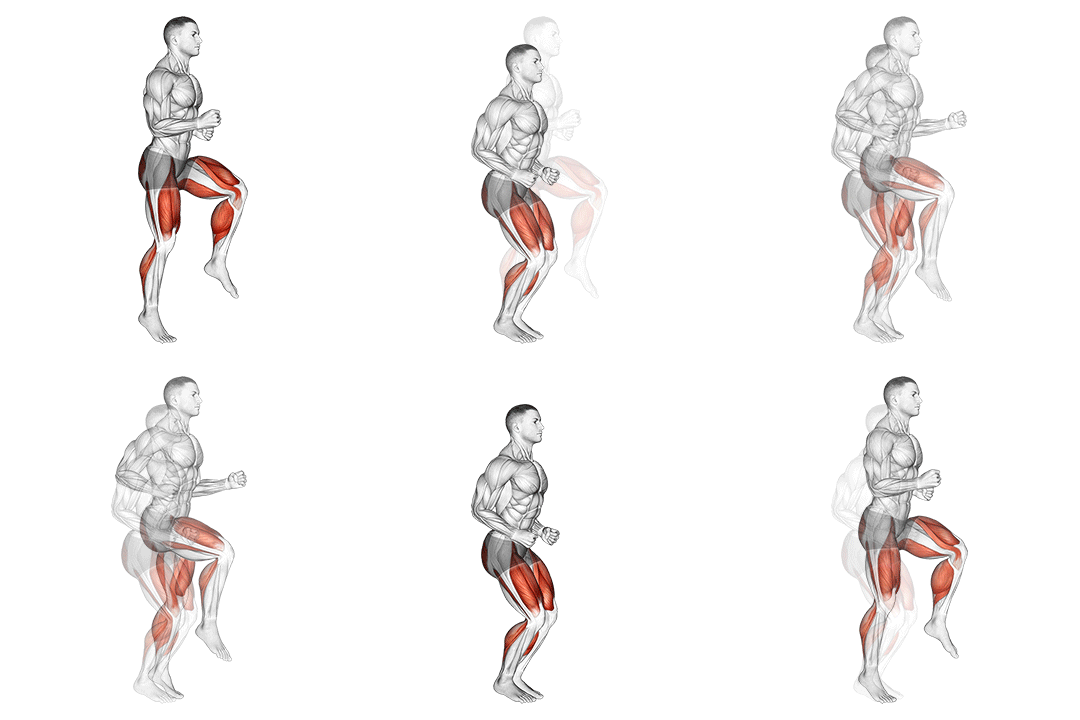
Astride Jumps (male)
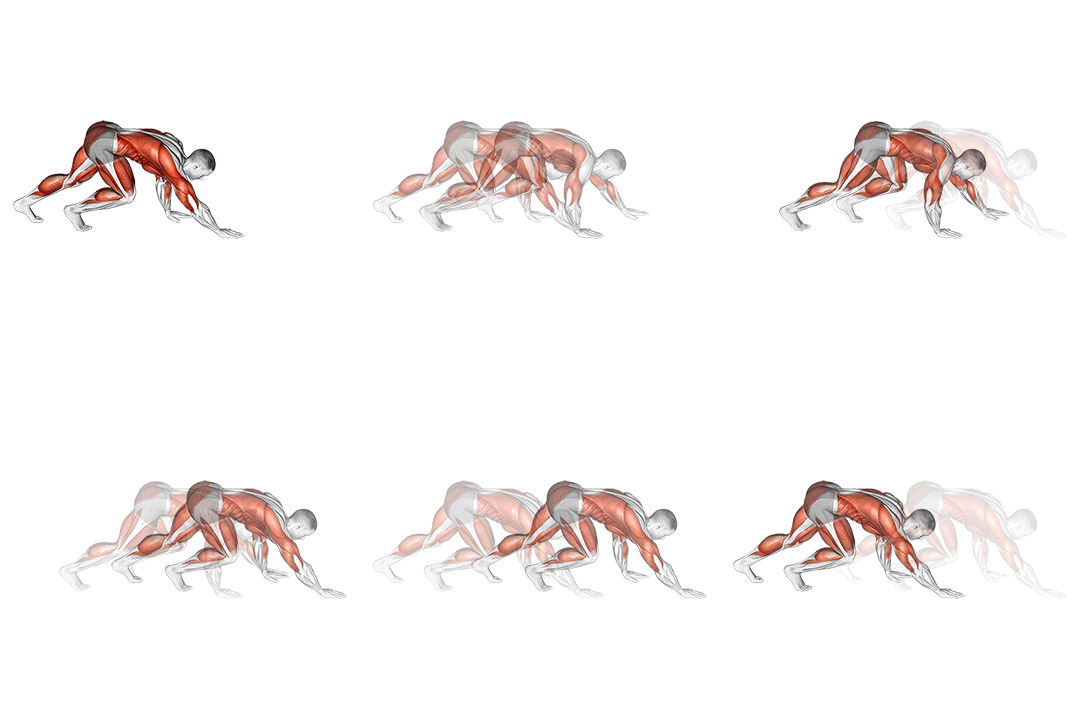
Bear Crawl
Head-to-Head Comparison
| Attribute | Astride Jumps (male) | Bear Crawl |
|---|---|---|
| Target Muscle |
Cardiovascular-system
|
Cardiovascular-system
|
| Body Part |
Cardio
|
Cardio
|
| Equipment |
Body-weight
|
Body-weight
|
| Difficulty |
Intermediate
|
Intermediate
|
| Movement Type |
Compound
|
Compound
|
| Secondary Muscles |
3
|
3
|
Secondary Muscles Activated
Astride Jumps (male)
Bear Crawl
Visual Comparison
Overview
Astride Jumps (male) vs Bear Crawl is the comparison you need if you want efficient, bodyweight conditioning. You’ll get direct guidance on who should use each move, how they load muscles and joints, and clear programming suggestions. I’ll cover primary and secondary muscle recruitment, equipment and space needs, technique cues (hip hinge, knee angle, scapular position), injury considerations, and progressions so you can pick the better option for your cardio, power, or functional-strength goals.
Key Differences
- Both exercises target the Cardiovascular-system using Body-weight. The main differences are in their movement patterns and muscle activation angles.
Pros & Cons
Astride Jumps (male)
+ Pros
- High lower-body power output and explosive conditioning
- Minimal space and no equipment required
- Easily programmed into interval circuits (20–60 s rounds)
- Strong metabolic stimulus for short-duration conditioning
− Cons
- High impact — can aggravate knees/ankles without perfect landing mechanics
- Limited upper-body and core-specific load
- Less long-term strength progression options without external load
Bear Crawl
+ Pros
- Develops shoulder stability and anti-rotation core strength
- Low-impact — sustained metabolic stress without jumping
- Scalable: distance, time, incline, and pauses for progression
- Improves movement quality and contralateral coordination
− Cons
- Requires more floor space and matting for comfort
- Places sustained load on wrists and shoulders — can be tough for people with wrist issues
- More complex motor pattern to learn initially
When Each Exercise Wins
Astride Jumps produce higher eccentric and concentric work in the quads and hamstrings via repeated stretch-shortening cycles; use 3–5 sets of 15–30 reps or 20–40 s intervals to increase time under tension and metabolic stress for lower-body muscle growth.
Bear Crawl builds isometric strength in the core and shoulders and enhances force transfer across the shoulder-hip line. Progress by increasing load (incline or weighted vest), distance (10–30 m), or tempo to increase mechanical tension and control.
Bear Crawl teaches core bracing and contralateral coordination at low impact; start with 10–20 m rounds or 20–30 s sets and focus on a neutral spine and active scapula to build foundational movement quality.
Astride Jumps require the least space and no matting; you can program short, effective conditioning sets (30 s on, 30 s off) even in small living rooms without stressing wrists or needing long lanes.
Frequently Asked Questions
Can I do both Astride Jumps (male) and Bear Crawl in the same workout?
Yes — pairing works well. Use Astride Jumps for short, high-power intervals and follow with Bear Crawl to tax shoulders and core with lower impact; for example, 30 s Astride Jumps then 20 m Bear Crawl for 4–6 rounds.
Which exercise is better for beginners?
Bear Crawl is generally better for beginners because it lowers impact and teaches core and scapular control. Start with short distances (10–20 m) and slow tempo, focusing on a neutral spine and elbow alignment.
How do the muscle activation patterns differ?
Astride Jumps rely on rapid stretch-shortening cycles with high peak power in ~200–300 ms, emphasizing concentric hip and knee extension. Bear Crawl uses alternating limb support with sustained isometric core and shoulder activity, producing steady-state activation rather than short power spikes.
Can Bear Crawl replace Astride Jumps (male)?
Not entirely — Bear Crawl can substitute for conditioning and core work but won’t match the explosive lower-body power and eccentric loading of Astride Jumps. Use Bear Crawl when you need lower impact or to emphasize upper-body and trunk strength.
Expert Verdict
Use Astride Jumps when your priority is explosive lower-body power, high-intensity cardio intervals, or you have limited space. They deliver quick metabolic stress and target quads, hamstrings, and calves through fast stretch-shortening cycles. Choose Bear Crawl when you want to build shoulder endurance, core anti-rotation strength, and movement control; it’s lower-impact and scales well with distance, incline, or added load. For balanced programming, alternate both across sessions: use Astride Jumps for power/cardio days (3–5 rounds of 20–40 s) and Bear Crawl for strength-mobility or conditioning days (4–8 x 10–30 m).
Also Compare
More comparisons with Astride Jumps (male)
Compare More Exercises
Use our free comparison tool to analyze any two exercises head-to-head.
Compare Exercises