

Astride Jumps (male) vs Half Knee Bends (male): Complete Comparison Guide
Astride Jumps (male) vs Half Knee Bends (male) — which should you pick for cardio and lower-body conditioning? You’ll get a direct comparison of primary cardiovascular demand, secondary muscle recruitment (quads, hamstrings, calves, glutes), technique cues, injury risk, and progression options. I’ll show you how each movement loads the hips, knees, and ankles, when to use higher rep ranges versus interval work, and practical tips so you can choose the exercise that matches your goal: endurance, power, or safe beginner conditioning.
Exercise Comparison
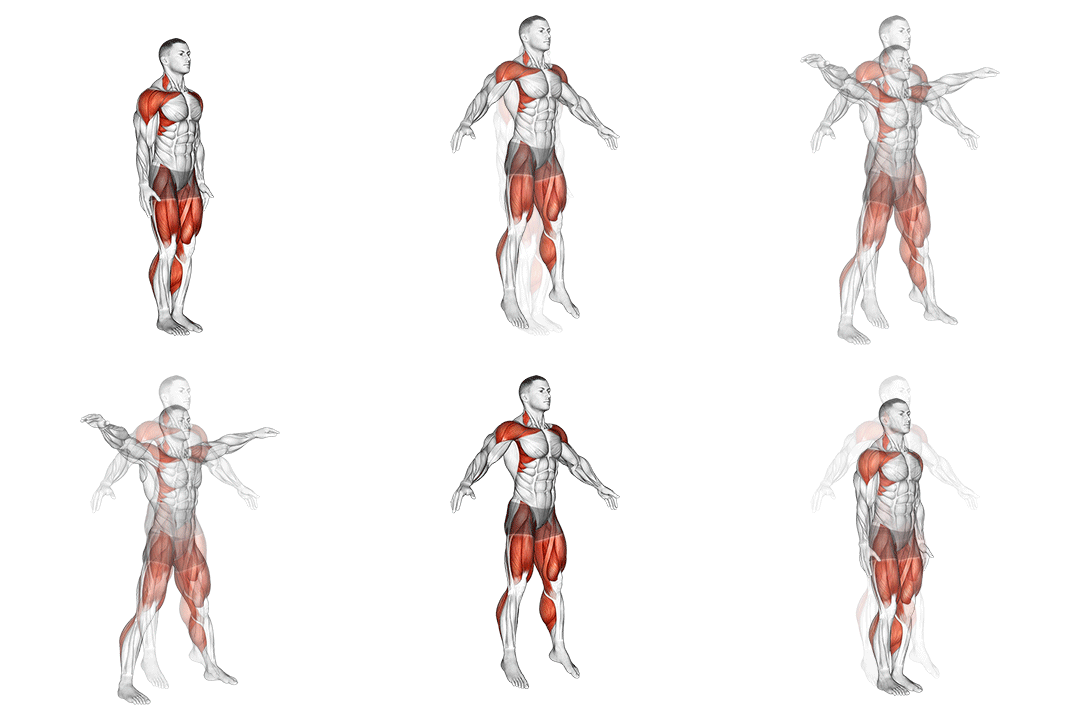
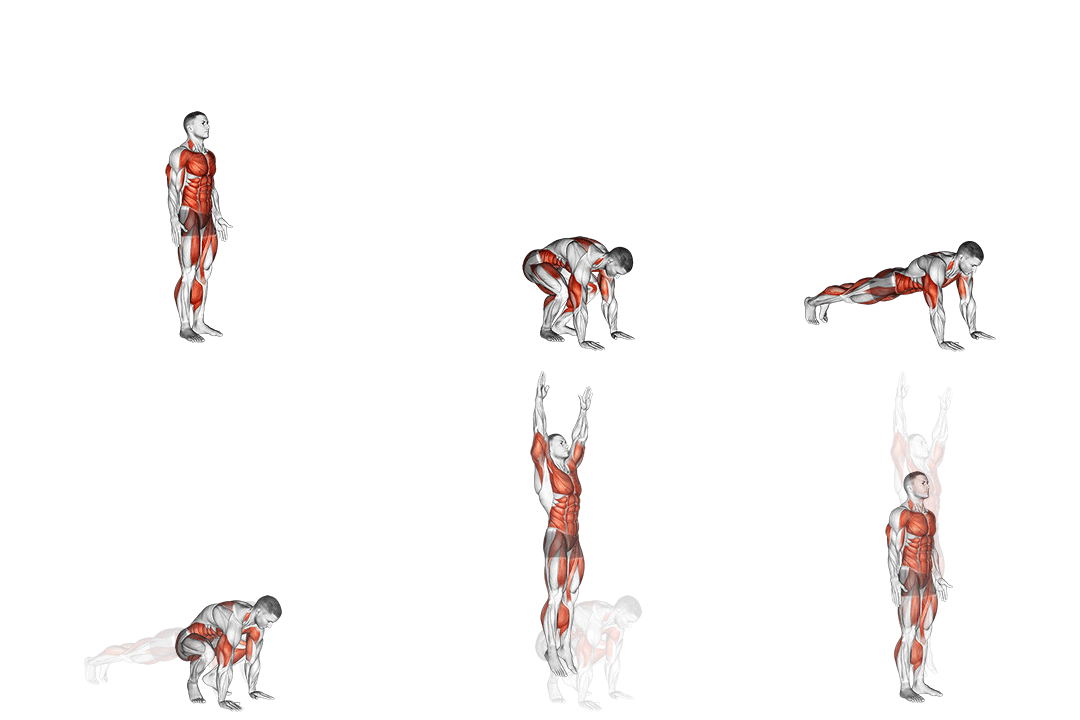
Astride Jumps (male)
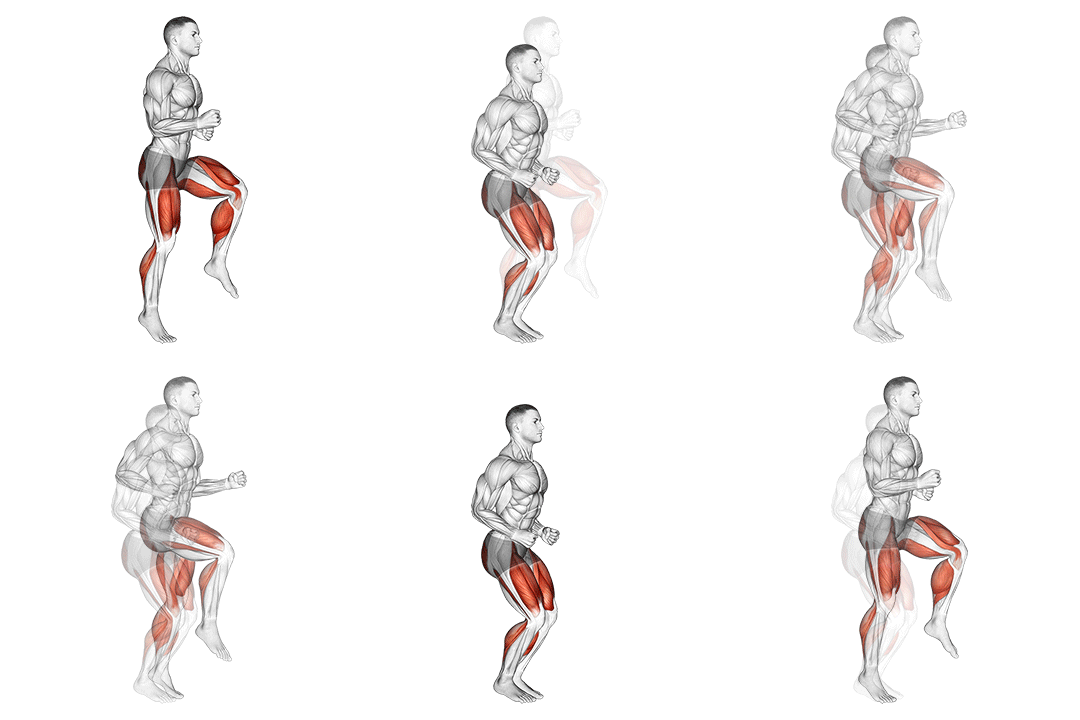
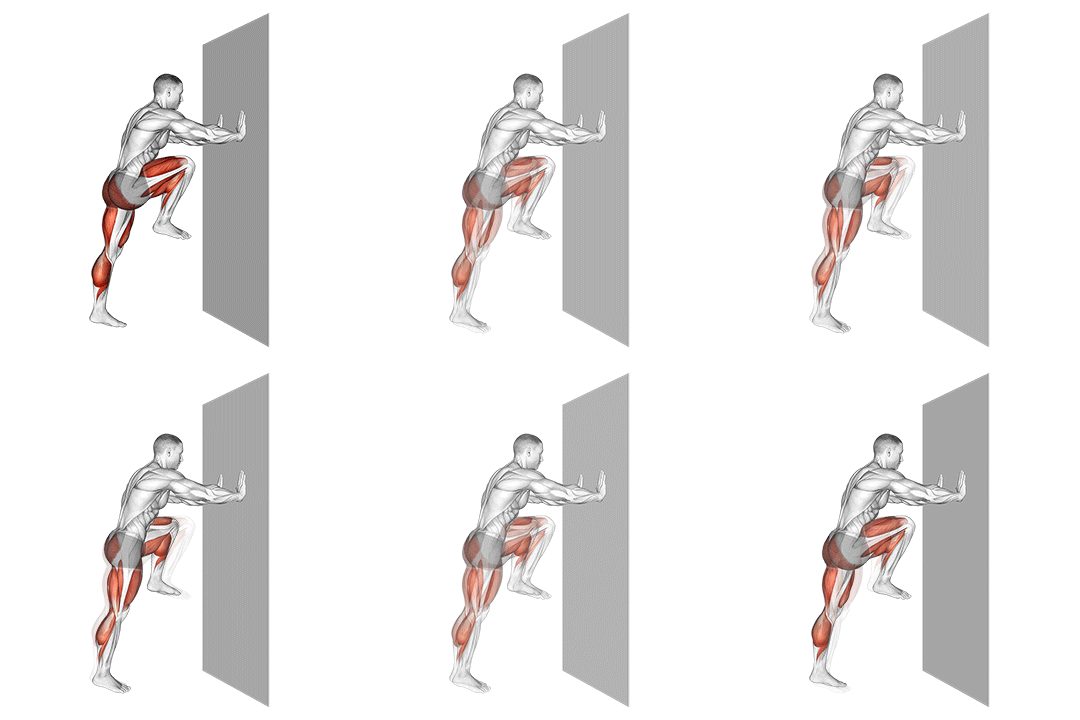
Half Knee Bends (male)
Head-to-Head Comparison
| Attribute | Astride Jumps (male) | Half Knee Bends (male) |
|---|---|---|
| Target Muscle |
Cardiovascular-system
|
Cardiovascular-system
|
| Body Part |
Cardio
|
Cardio
|
| Equipment |
Body-weight
|
Body-weight
|
| Difficulty |
Intermediate
|
Beginner
|
| Movement Type |
Compound
|
Compound
|
| Secondary Muscles |
3
|
3
|
Secondary Muscles Activated
Astride Jumps (male)
Half Knee Bends (male)
Visual Comparison
Overview
Astride Jumps (male) vs Half Knee Bends (male) — which should you pick for cardio and lower-body conditioning? You’ll get a direct comparison of primary cardiovascular demand, secondary muscle recruitment (quads, hamstrings, calves, glutes), technique cues, injury risk, and progression options. I’ll show you how each movement loads the hips, knees, and ankles, when to use higher rep ranges versus interval work, and practical tips so you can choose the exercise that matches your goal: endurance, power, or safe beginner conditioning.
Key Differences
- Difficulty levels differ: Astride Jumps (male) is intermediate, while Half Knee Bends (male) is beginner.
- Both exercises target the Cardiovascular-system using Body-weight. The main differences are in their movement patterns and muscle activation angles.
Pros & Cons
Astride Jumps (male)
+ Pros
- High cardiovascular and power demand for short intervals
- Increases rate of force development via stretch-shortening cycle
- Stronger activation of calves and quads for explosive work
- Easy to scale intensity with speed, distance, or interval length
− Cons
- Higher impact; greater joint loading at landing
- Requires coordination and space for safe execution
- Less continuous time under tension for posterior chain hypertrophy
Half Knee Bends (male)
+ Pros
- Low-impact, beginner-friendly cardio conditioning
- Better for glute and hamstring time under tension
- Easier to control movement tempo and depth (60–90° knee bend)
- Very accessible—minimal space and no special footwear needed
− Cons
- Lower peak power and plyometric benefit
- Less calf activation compared with jumping variations
- Can be too low intensity for advanced cardio goals unless progressed
When Each Exercise Wins
Half Knee Bends produce longer time under tension in the quadriceps and posterior chain at controlled depths (60–90° knee flexion), which favors hypertrophy when using 8–20+ rep ranges and slow eccentrics.
For raw joint-strength development and controlled force production, slow, overloaded Half Knee Bends let you target concentric/eccentric strength through tempo and added load better than high-impact jumps.
Half Knee Bends require less coordination and produce lower impact forces, so beginners can learn hip-knee sequencing safely and build capacity before attempting plyometric Astride Jumps.
Half Knee Bends need minimal space and tolerate slow tempos and higher reps, making them the most practical home cardio/strength choice when floor space or footwear is limited.
Frequently Asked Questions
Can I do both Astride Jumps (male) and Half Knee Bends (male) in the same workout?
Yes — pair them strategically: use Half Knee Bends as a warm-up or strength-set (3–4 sets of 12–20 slow reps), then perform Astride Jumps for 2–4 rounds of 20–30 seconds as a power/cardio finisher. Keep total high-impact volume low to manage joint load.
Which exercise is better for beginners?
Half Knee Bends are better for beginners because they require less coordination and produce lower impact forces. Start with controlled tempo and focus on hip-knee sequencing before progressing to jumps.
How do the muscle activation patterns differ?
Astride Jumps use rapid stretch-shortening cycles with brief, high-amplitude activation bursts in quads and calves, while Half Knee Bends create longer-duration, lower-amplitude contractions with greater posterior chain time under tension, favoring sustained motor unit recruitment.
Can Half Knee Bends (male) replace Astride Jumps (male)?
They can replace Astride Jumps for building strength, hypertrophy, or low-impact cardio, but they won’t fully replicate plyometric power and calf-specific stimulus. If your goal is explosive power or anaerobic peak output, add Astride Jumps once you’ve built capacity.
Expert Verdict
Choose Half Knee Bends if your priority is accessible, low-impact conditioning, posterior chain hypertrophy, or building strength with controlled tempo. They let you manipulate depth (60–90°), tempo (3–4 s eccentrics), and reps (15–40) to target muscle growth and endurance. Use Astride Jumps when you need short, high-intensity intervals, plyometric power, and greater calf and quad stimulation—progress with 20–40 second work intervals and focus on soft, midfoot landings to limit joint stress. If you’re new or have joint concerns, start with Half Knee Bends and add Astride Jumps later once you have solid landing mechanics.
Also Compare
More comparisons with Astride Jumps (male)
Compare More Exercises
Use our free comparison tool to analyze any two exercises head-to-head.
Compare Exercises