

Astride Jumps (male) vs High Knee Against Wall: Complete Comparison Guide
Astride Jumps (male) vs High Knee Against Wall — two bodyweight cardio moves that both tax your cardiovascular system but do so with different mechanics. You’ll learn how each exercise loads the legs, how they alter heart rate and muscular demand, and which one fits your goals: power, conditioning, or low-impact work. I’ll cover movement mechanics, technique cues (landing angles, knee position, hip drive), progression options, and when to pair them in workouts so you can choose the right tool for your program.
Exercise Comparison
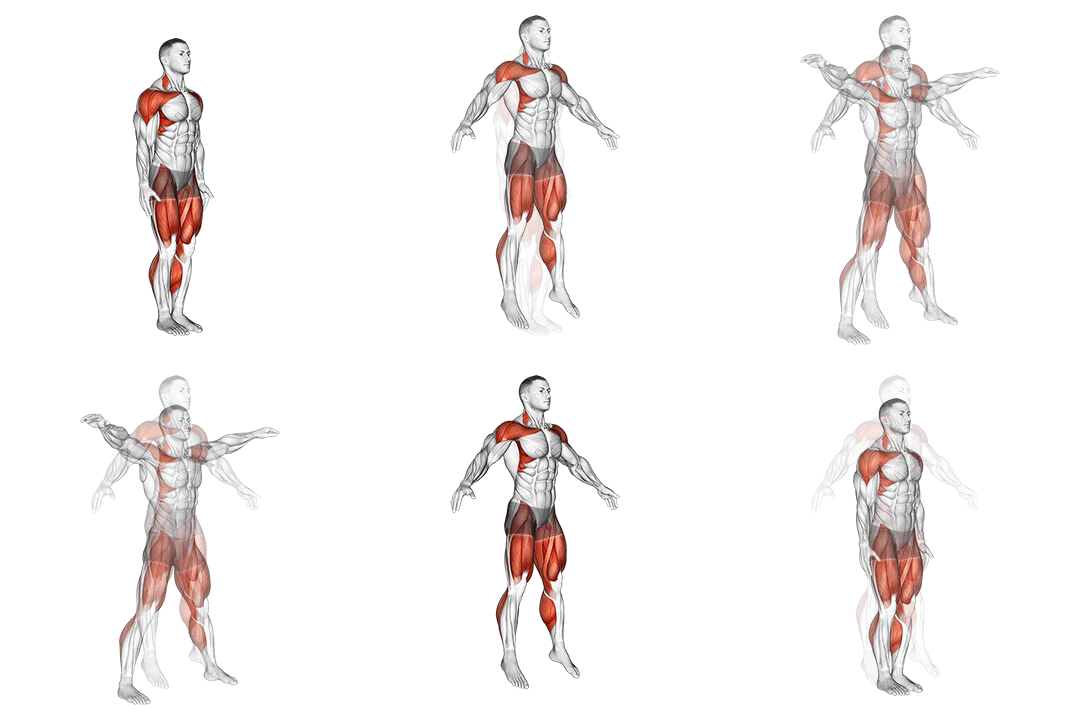
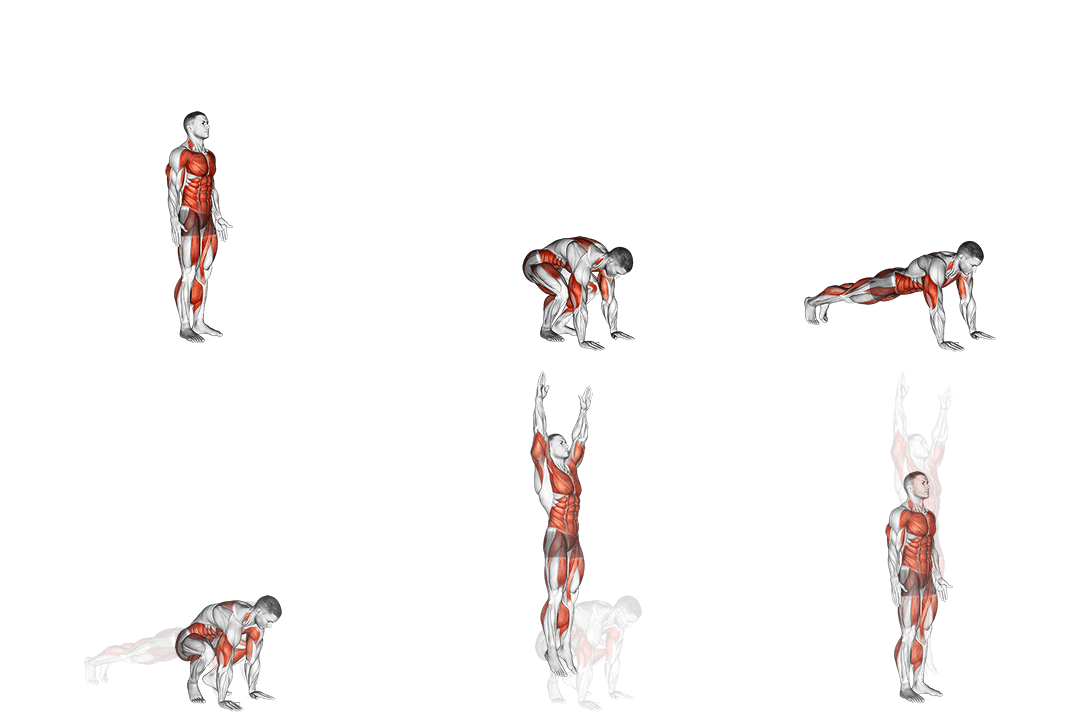
Astride Jumps (male)
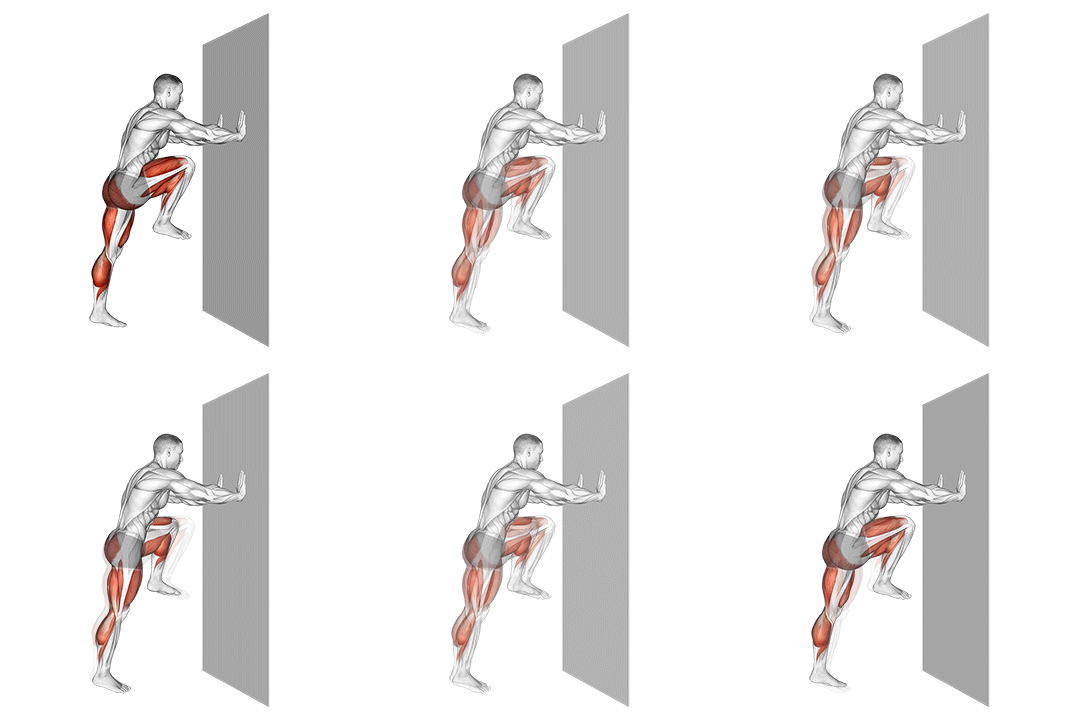
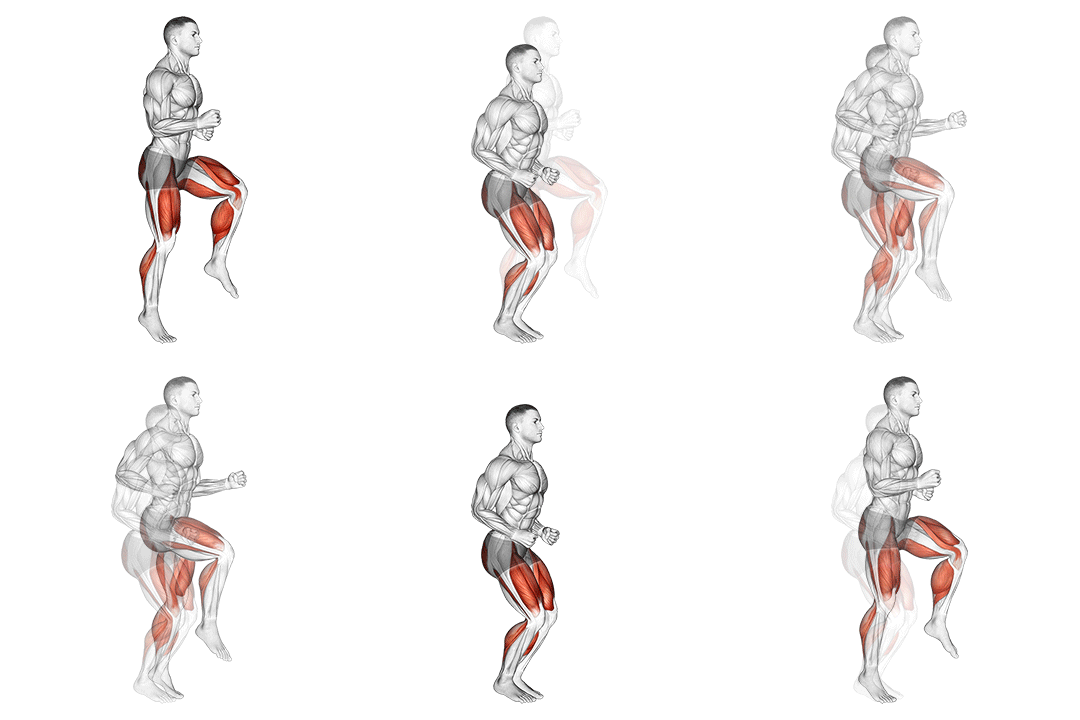
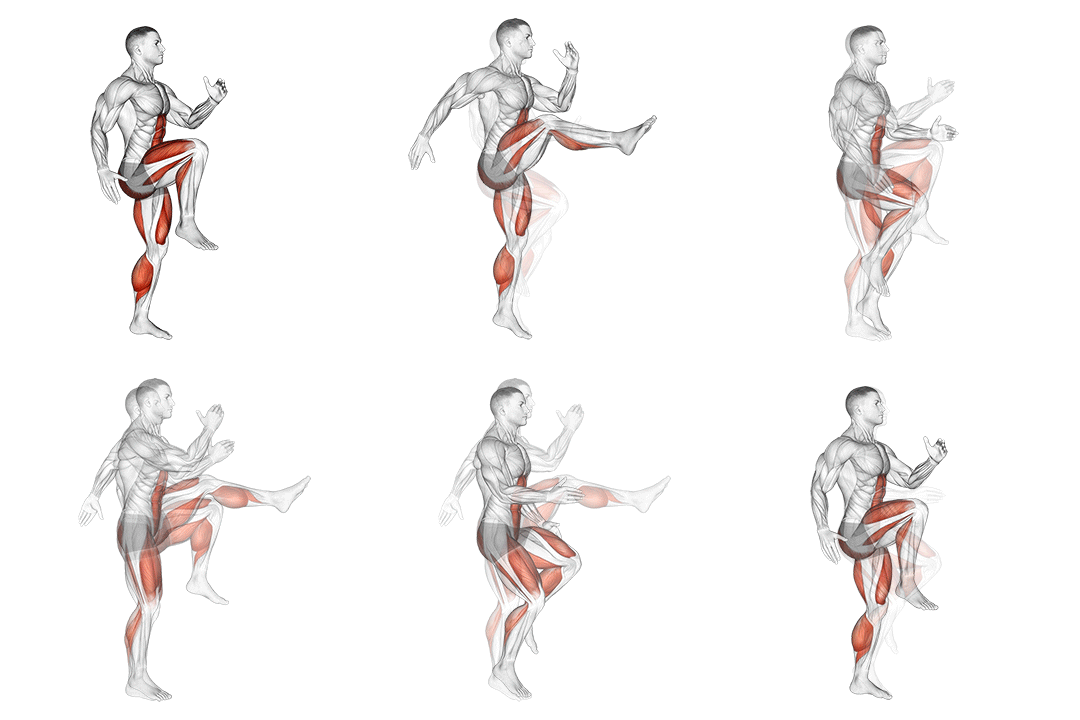
High Knee Against Wall
Head-to-Head Comparison
| Attribute | Astride Jumps (male) | High Knee Against Wall |
|---|---|---|
| Target Muscle |
Cardiovascular-system
|
Cardiovascular-system
|
| Body Part |
Cardio
|
Cardio
|
| Equipment |
Body-weight
|
Body-weight
|
| Difficulty |
Intermediate
|
Beginner
|
| Movement Type |
Compound
|
Compound
|
| Secondary Muscles |
3
|
4
|
Secondary Muscles Activated
Astride Jumps (male)
High Knee Against Wall
Visual Comparison
Overview
Astride Jumps (male) vs High Knee Against Wall — two bodyweight cardio moves that both tax your cardiovascular system but do so with different mechanics. You’ll learn how each exercise loads the legs, how they alter heart rate and muscular demand, and which one fits your goals: power, conditioning, or low-impact work. I’ll cover movement mechanics, technique cues (landing angles, knee position, hip drive), progression options, and when to pair them in workouts so you can choose the right tool for your program.
Key Differences
- Difficulty levels differ: Astride Jumps (male) is intermediate, while High Knee Against Wall is beginner.
- Both exercises target the Cardiovascular-system using Body-weight. The main differences are in their movement patterns and muscle activation angles.
Pros & Cons
Astride Jumps (male)
+ Pros
- High power output and rate-of-force development—good for sprint conditioning and plyometric training
- Greater peak ground reaction forces increase stimulus to quads and calves for muscle growth when volume is sufficient
- Short intervals rapidly elevate heart rate to 80–90% HRmax for efficient conditioning
- Easy to scale by increasing height, speed, or adding a weighted vest
− Cons
- High-impact landings increase knee and ankle stress
- Requires more space and a forgiving surface to perform safely
- Technical demands: poor landing mechanics raise injury risk
High Knee Against Wall
+ Pros
- Low-impact and very space-efficient—ideal for small areas
- Beginner-friendly with simple rhythm and low coordination demand
- Longer continuous sets build aerobic capacity and hip endurance
- Targets hip flexors and glutes with sustained time-under-tension
− Cons
- Lower peak force limits plyometric power development
- Less stimulus for calf and quad hypertrophy compared with explosive jumps
- Can cause hip flexor strain or lumbar discomfort if you overdrive knee height or lose pelvic control
When Each Exercise Wins
Astride Jumps produce higher peak ground reaction forces and stronger eccentric-concentric cycles, increasing mechanical tension on quads and calves. If you perform higher-volume intervals (6–10 sets of 20–30s with 60–90s rest) they provide more hypertrophic stimulus than steady high knees.
Explosive triple-extension in Astride Jumps recruits fast-twitch fibers and improves rate of force development, which transfers to strength and sprint power better than steady knee drives. Progressions like weighted vests or single-leg jumps increase force demands further.
High Knee Against Wall has lower impact, simpler motor pattern, and easier load management—start with 30–45s sets at controlled cadence. This reduces joint stress and builds hip and cardiovascular endurance safely before progressing to plyometrics.
It needs minimal space and no cushioning, so you can maintain intensity without risking noisy, high-impact landings in apartments. Its compact footprint and low equipment needs make it the practical choice for home conditioning.
Frequently Asked Questions
Can I do both Astride Jumps (male) and High Knee Against Wall in the same workout?
Yes. Pair High Knee Against Wall as a longer, lower-impact warm-up (2–3 sets of 30–60s) to raise heart rate and rehearse hip mechanics, then add 3–6 sets of Astride Jumps (20–30s) for power. Keep total high-impact volume limited at first to manage joint load.
Which exercise is better for beginners?
High Knee Against Wall is better for beginners because it reduces impact and isolates knee-drive mechanics, letting you build endurance safely. Start with controlled cadence and short sets before progressing to more explosive work.
How do the muscle activation patterns differ?
Astride Jumps use rapid stretch–shortening cycles that spike eccentric then concentric activation in quads and calves, favoring fast-twitch recruitment. High Knee Against Wall produces repeated concentric hip flexion with steadier activation of hip flexors, glutes, and quads across the movement, increasing time-under-tension rather than peak force.
Can High Knee Against Wall replace Astride Jumps (male)?
Only partly. High Knee Against Wall can maintain cardiovascular fitness and hip endurance but won’t match the plyometric force or rate-of-force development from Astride Jumps. Use High Knees for low-impact conditioning or rehab, and keep Astride Jumps for power-focused training when your technique and joint health allow.
Expert Verdict
Choose Astride Jumps (male) when your priority is power, sprint conditioning, or adding a higher mechanical load to quads and calves. Use short, intense intervals (20–30s on, 60–90s off), land with 20–40 degrees knee flexion, and focus on soft, hip-over-toe landings to protect joints. Choose High Knee Against Wall when you want low-impact conditioning, to teach knee-drive mechanics, or to build hip muscle endurance—perform steady sets (30–90s) with knees driving toward the hip crease (~80–90°) and a neutral spine. Both exercises can complement each other: start beginners with High Knees, then add Astride Jumps for power once technique and joint tolerance improve.
Also Compare
More comparisons with Astride Jumps (male)
Compare More Exercises
Use our free comparison tool to analyze any two exercises head-to-head.
Compare Exercises