

Astride Jumps (male) vs Jack Jump (male): Complete Comparison Guide
Astride Jumps (male) vs Jack Jump (male) — both are bodyweight, compound cardio moves that spike heart rate and condition your lower body. You’ll get a side-by-side look at primary and secondary muscle activation, movement mechanics, difficulty and progression options, plus clear cues so you can perform each safely. I’ll cover force vectors, joint angles to watch (knee flexion ~30–60° on landing, hip flexion up to ~90° in the loading phase), recommended rep ranges for conditioning and power, and which exercise best matches your goals.
Exercise Comparison
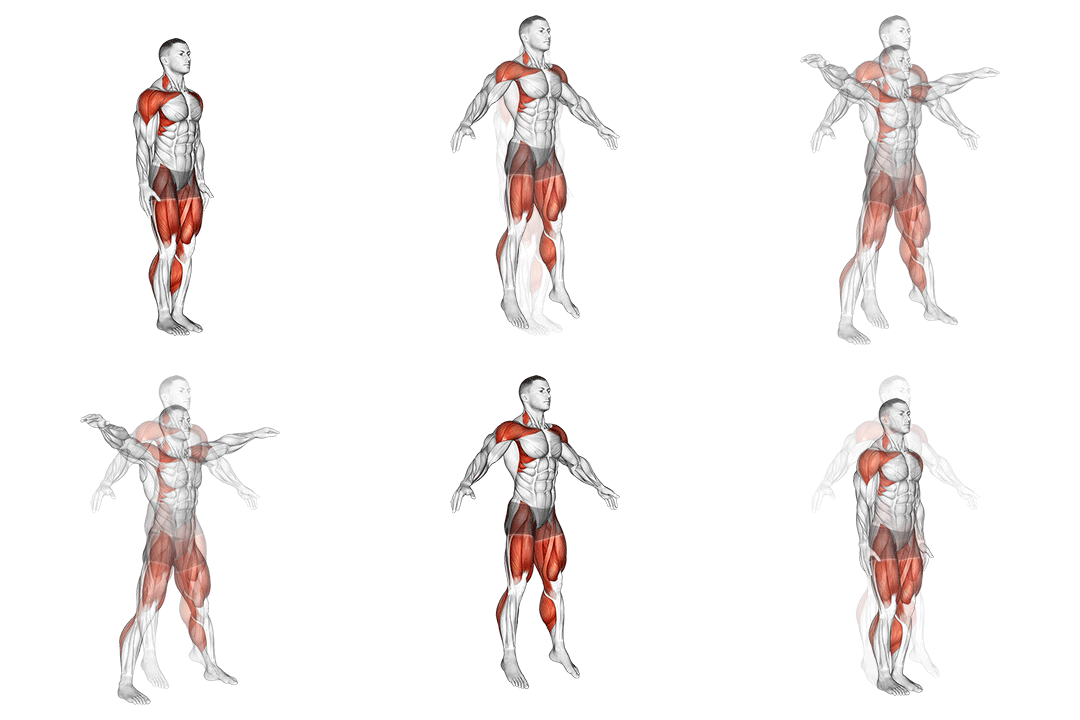
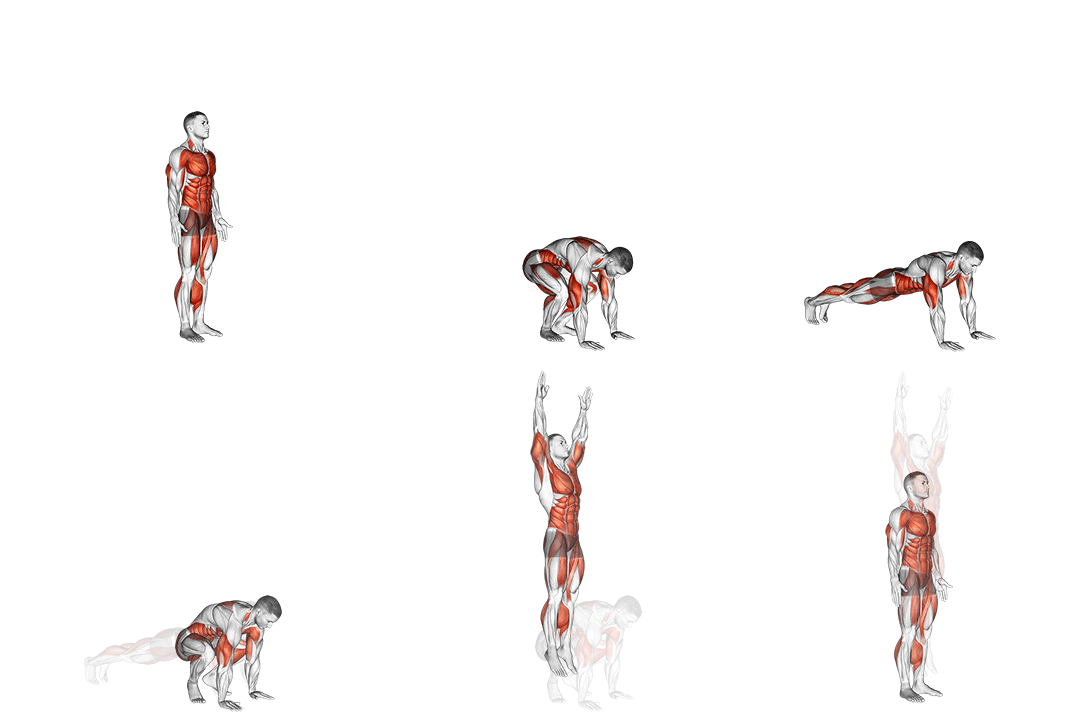
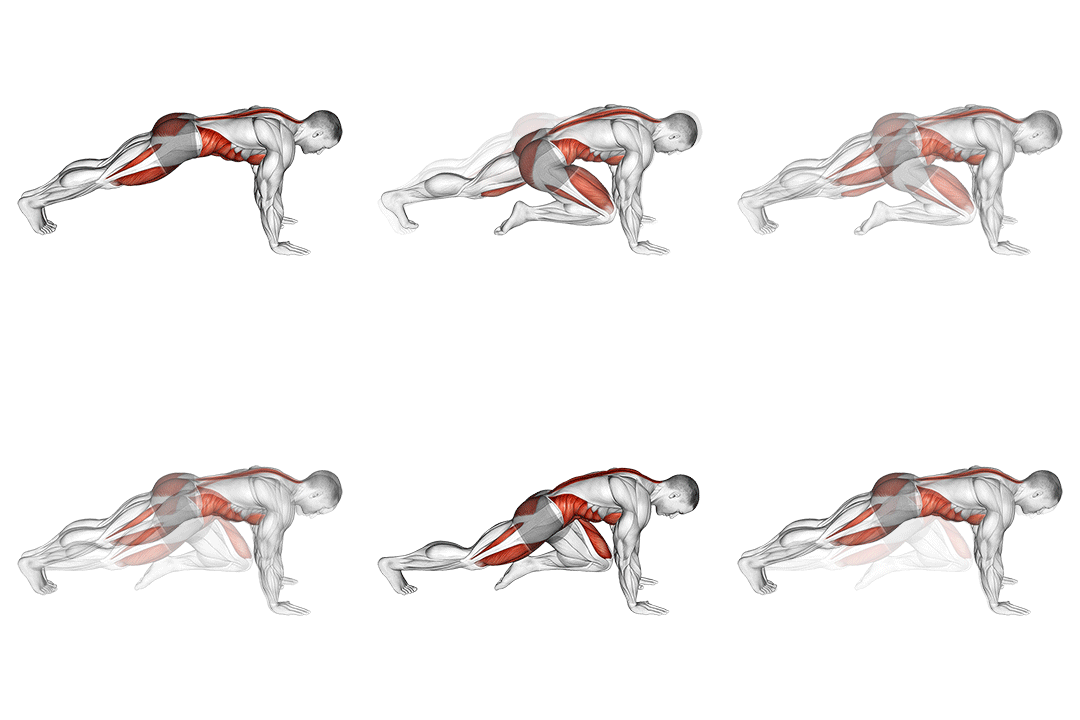
Astride Jumps (male)
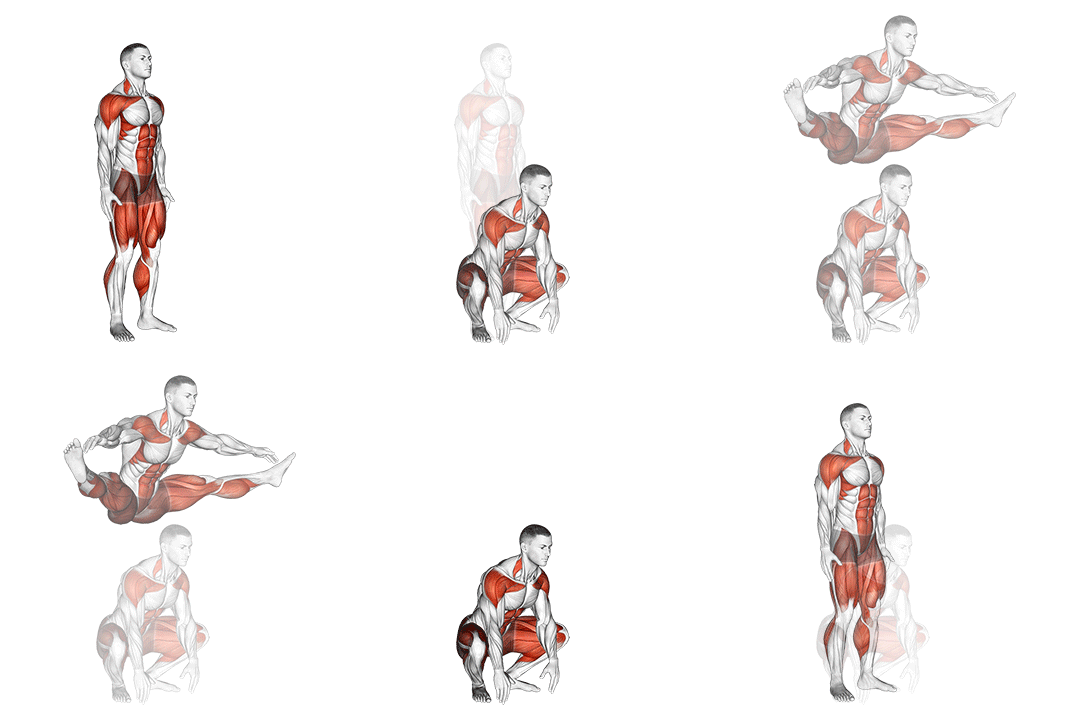
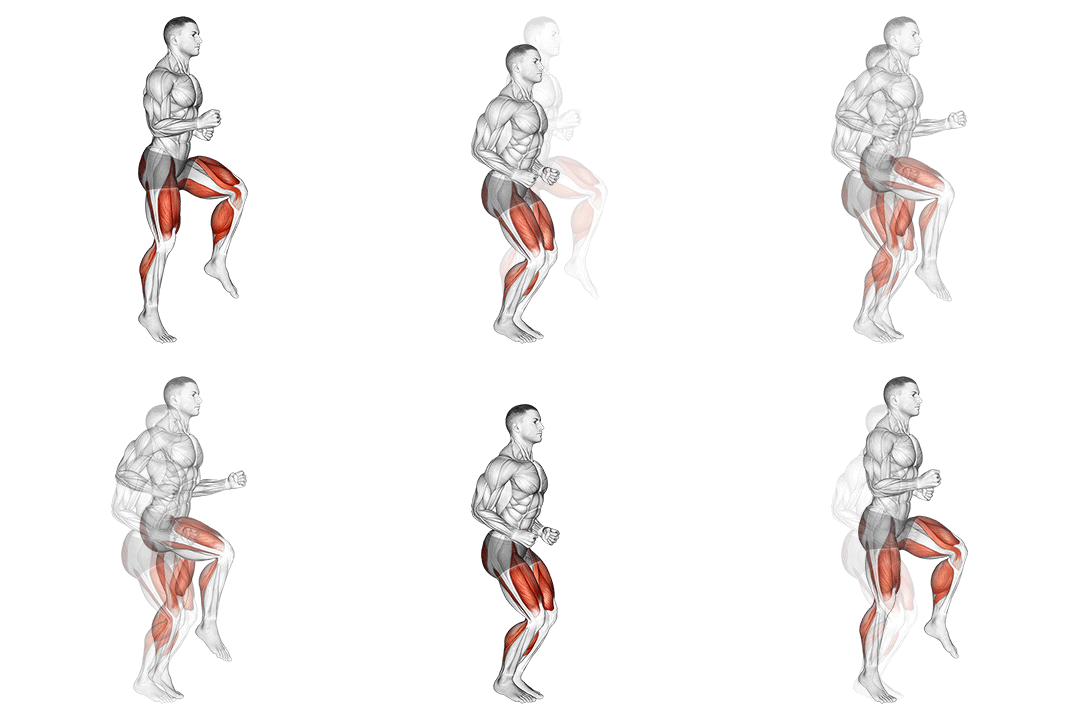
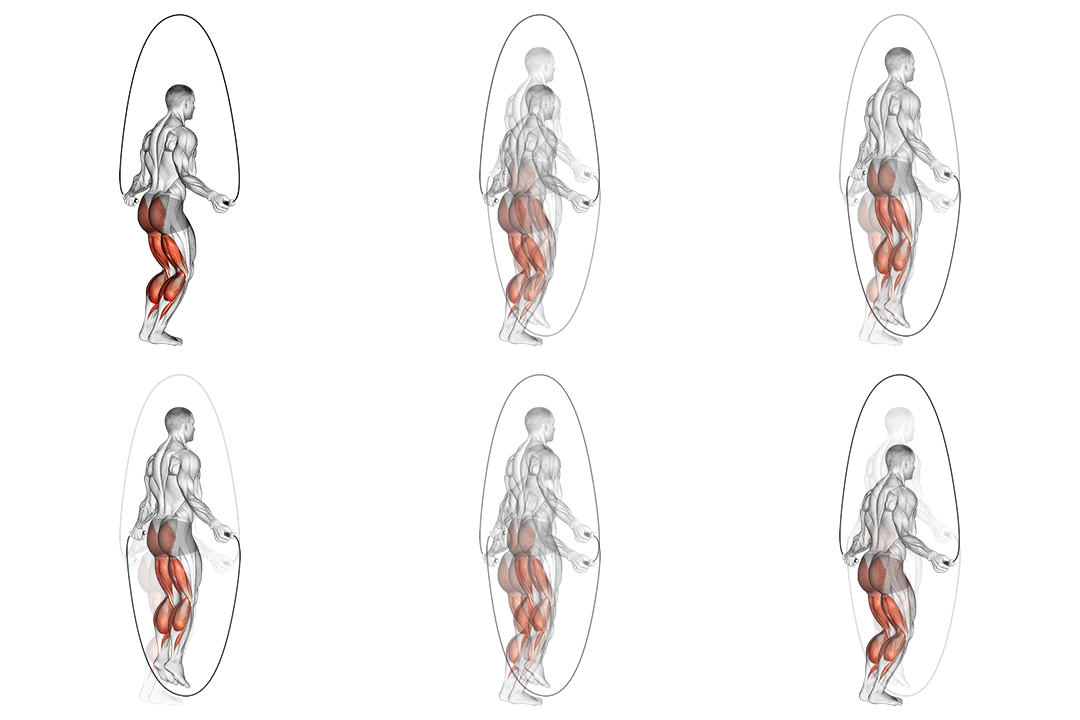
Jack Jump (male)
Head-to-Head Comparison
| Attribute | Astride Jumps (male) | Jack Jump (male) |
|---|---|---|
| Target Muscle |
Cardiovascular-system
|
Cardiovascular
|
| Body Part |
Cardio
|
Cardio
|
| Equipment |
Body-weight
|
Body-weight
|
| Difficulty |
Intermediate
|
Beginner
|
| Movement Type |
Compound
|
Compound
|
| Secondary Muscles |
3
|
2
|
Secondary Muscles Activated
Astride Jumps (male)
Jack Jump (male)
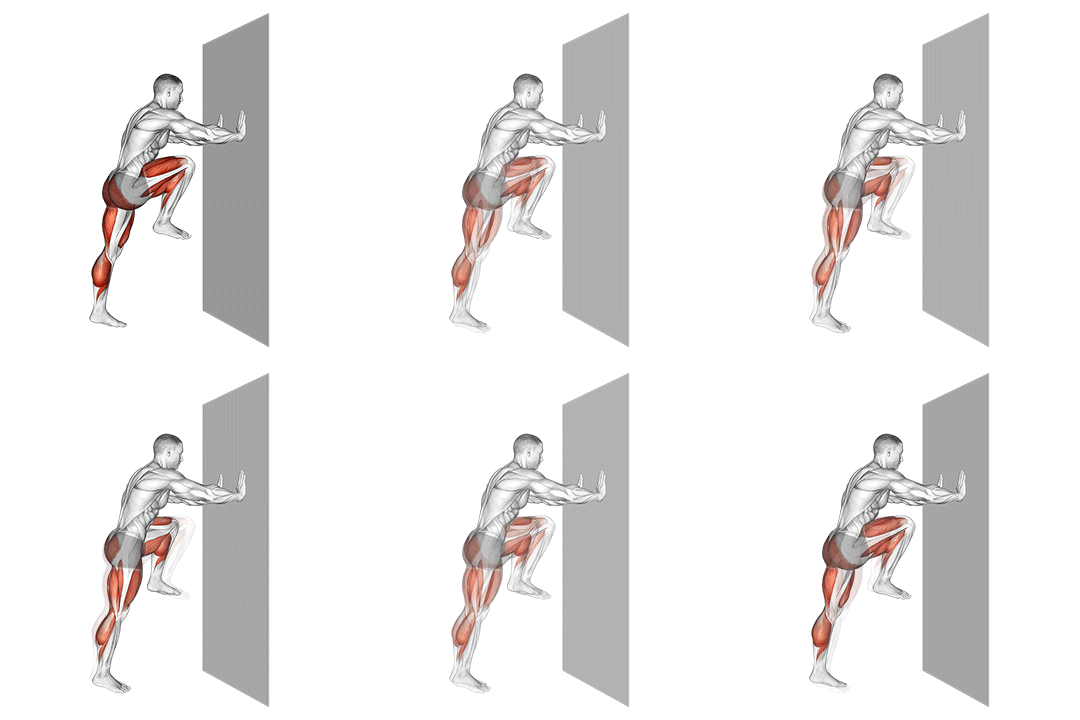
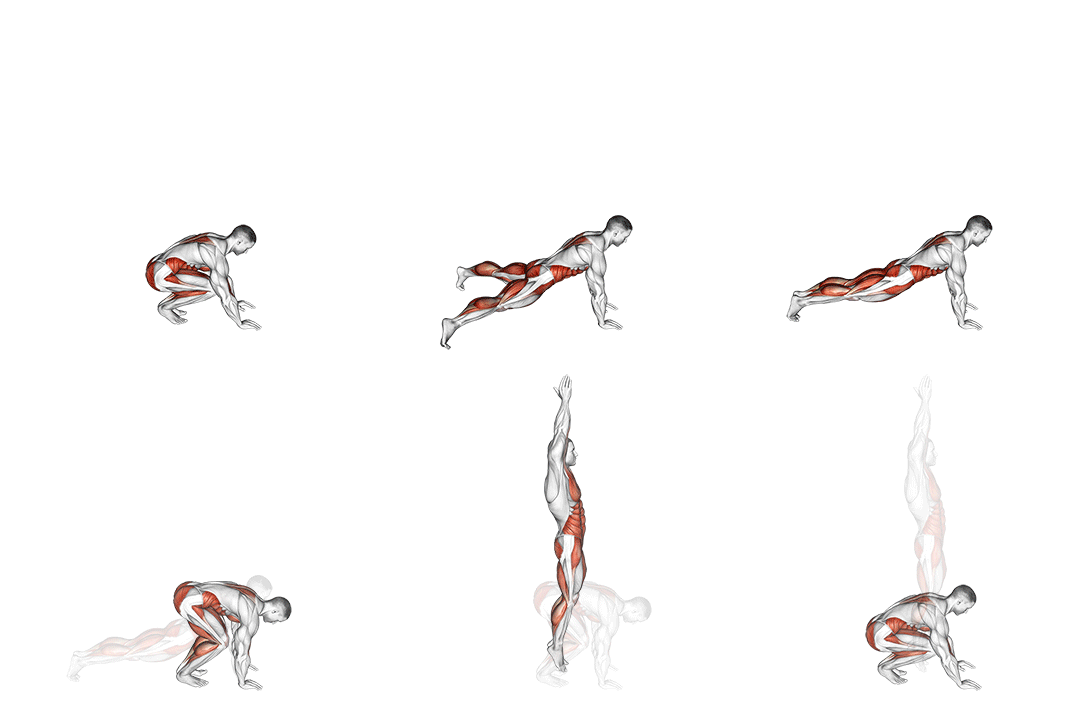
Visual Comparison
Overview
Astride Jumps (male) vs Jack Jump (male) — both are bodyweight, compound cardio moves that spike heart rate and condition your lower body. You’ll get a side-by-side look at primary and secondary muscle activation, movement mechanics, difficulty and progression options, plus clear cues so you can perform each safely. I’ll cover force vectors, joint angles to watch (knee flexion ~30–60° on landing, hip flexion up to ~90° in the loading phase), recommended rep ranges for conditioning and power, and which exercise best matches your goals.
Key Differences
- Astride Jumps (male) primarily targets the Cardiovascular-system, while Jack Jump (male) focuses on the Cardiovascular.
- Difficulty levels differ: Astride Jumps (male) is intermediate, while Jack Jump (male) is beginner.
Pros & Cons
Astride Jumps (male)
+ Pros
- Greater posterior chain (hamstrings, glutes) recruitment for balanced lower-body development
- More progression options for power and unilateral work
- Larger range of motion increases eccentric loading and metabolic cost
- Better for athletes needing lateral stability and change-of-direction preparation
− Cons
- Higher technical demand and coordination required
- Greater lateral forces increase knee/groin injury risk if done poorly
- Requires more landing space and attention to surface
Jack Jump (male)
+ Pros
- Very easy to learn and coach—great for quick conditioning sets
- Smaller footprint makes it ideal for tight spaces and home workouts
- Lower injury risk with controlled landings
- Excellent for steady-state metabolic intervals (20–60 sec) and beginner plyometrics
− Cons
- Less hamstring and hip extensor activation compared to Astride Jumps
- Limited advanced overload options without external load
- Can become monotonous for experienced athletes seeking power variations
When Each Exercise Wins
Astride Jumps induce greater eccentric loading and longer muscle lengths, particularly in the hamstrings and glutes, which raises mechanical tension. Use 3–5 sets of 8–12 powerful reps or 30–45 second intervals to increase time under tension and hypertrophic stimulus.
Because Astride Jumps involve more hip extension and higher posterior chain recruitment, they better transfer to loaded hip-dominant strength. Integrate them as explosive assistance between heavy sets to improve rate of force development.
Jack Jump has simpler sagittal-plane mechanics and lower coordination demands, making it safer and faster to learn for newcomers. Start with 3 sets of 30–45 seconds focusing on soft landings and knee tracking.
Jack Jump requires less horizontal space and is easier to control on limited flooring, making it the practical choice for home conditioning circuits and HIIT sessions.
Frequently Asked Questions
Can I do both Astride Jumps (male) and Jack Jump (male) in the same workout?
Yes. Pair Jack Jump (male) as a warm-up or metabolic primer (30–60 seconds) and use Astride Jumps (male) later for power or targeted posterior-chain work (3–5 sets of 8–12). Keep total plyometric volume moderate to limit cumulative impact—about 50–120 contacts per session.
Which exercise is better for beginners?
Jack Jump (male) is better for beginners due to simpler mechanics and smaller space requirements. Start with short intervals and focus on controlled landings and knee alignment before progressing to more complex Astride Jumps (male).
How do the muscle activation patterns differ?
Astride Jumps (male) increase posterior chain activation through greater hip extension and a longer eccentric phase, shifting force vectors rearward and engaging hamstrings and glutes more. Jack Jump (male) centers force vertically through the ankle and knee, producing stronger quadriceps and calf activation with less hip drive.
Can Jack Jump (male) replace Astride Jumps (male)?
Jack Jump (male) can replace Astride Jumps (male) for general cardio and beginner conditioning, but it won’t match Astride Jumps’ posterior-chain stimulus or lateral stability benefits. If your goal is greater hamstring and hip extensor development, stick with Astride Jumps or supplement Jack Jumps with dedicated posterior-chain exercises.
Expert Verdict
Use Astride Jumps (male) when you want a higher-intensity plyometric that emphasizes the posterior chain and lateral stability—good for athletic power, added eccentric stress, and developing balanced lower-body musculature. Prioritize 8–12 reps for power sets or 20–40 second intervals for conditioning, and focus on soft, knee-tracking landings. Choose Jack Jump (male) when you need an accessible, low-skill cardio plyometric for beginners, small spaces, or high-volume interval work. Coach technique: land with 30–60° knee flexion, keep hips back on descent, and use the arms to drive vertical force. Both have a role; pick based on your coordination, space, and training emphasis.
Also Compare
More comparisons with Astride Jumps (male)
Compare More Exercises
Use our free comparison tool to analyze any two exercises head-to-head.
Compare Exercises