

Astride Jumps (male) vs Mountain Climber: Complete Comparison Guide
Astride Jumps (male) vs Mountain Climber — you’re choosing between a lateral plyometric and a plank-driven cardio move. I’ll walk you through which exercise better serves cardiovascular conditioning, lower-body power, and core stability. You’ll get clear technique cues, biomechanical notes (hip extension angles, ground reaction forces, trunk stabilization), sample rep ranges, and practical recommendations for beginners, home workouts, and progression. Read this to know which exercise to program based on your goals and how to perform each safely and effectively.
Exercise Comparison
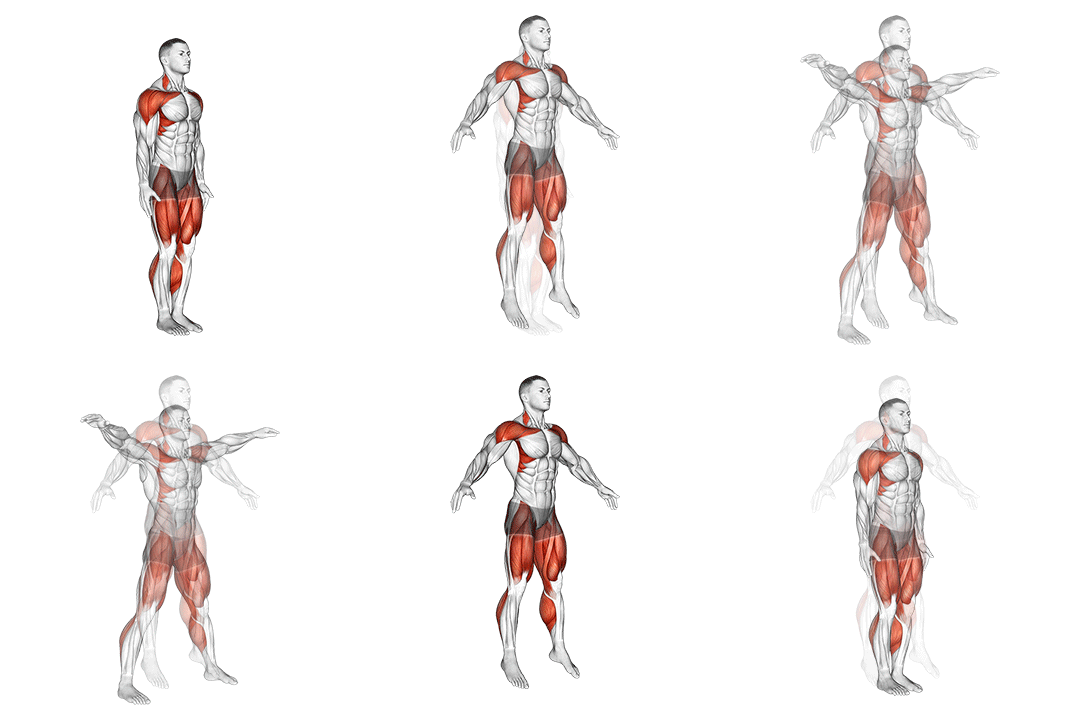
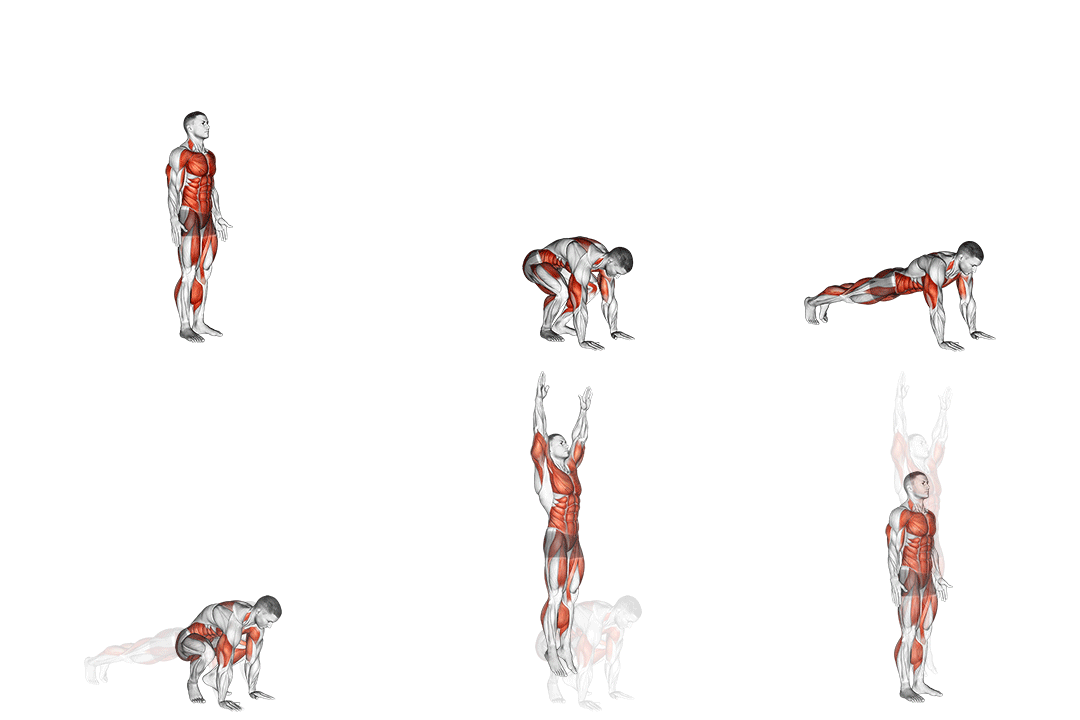
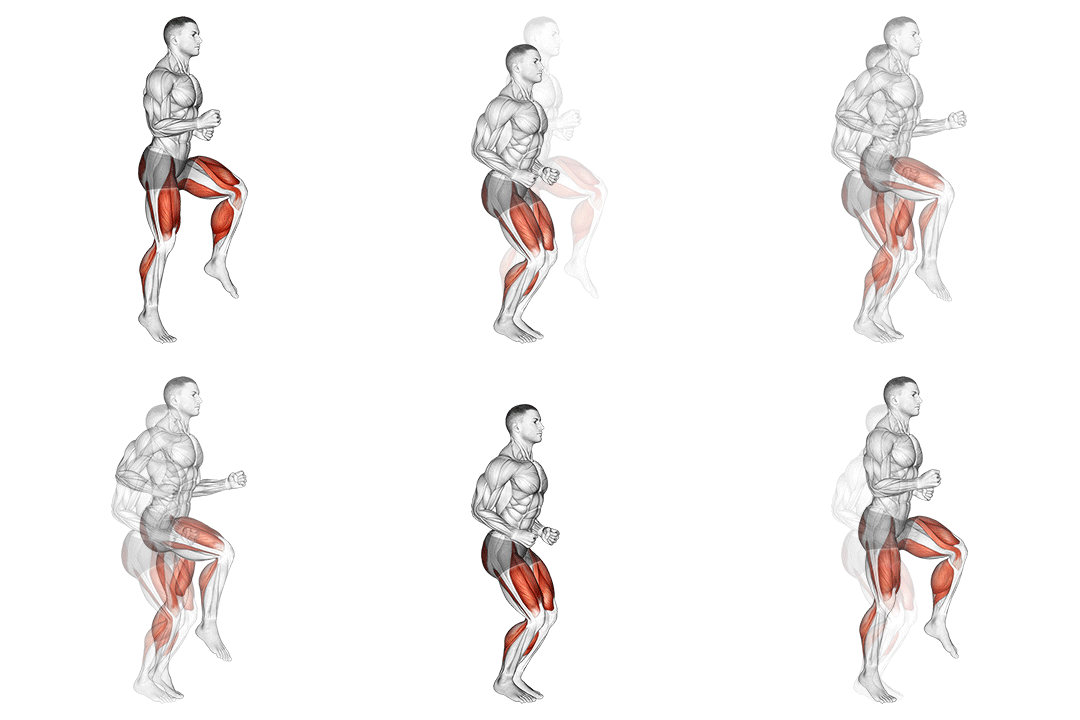
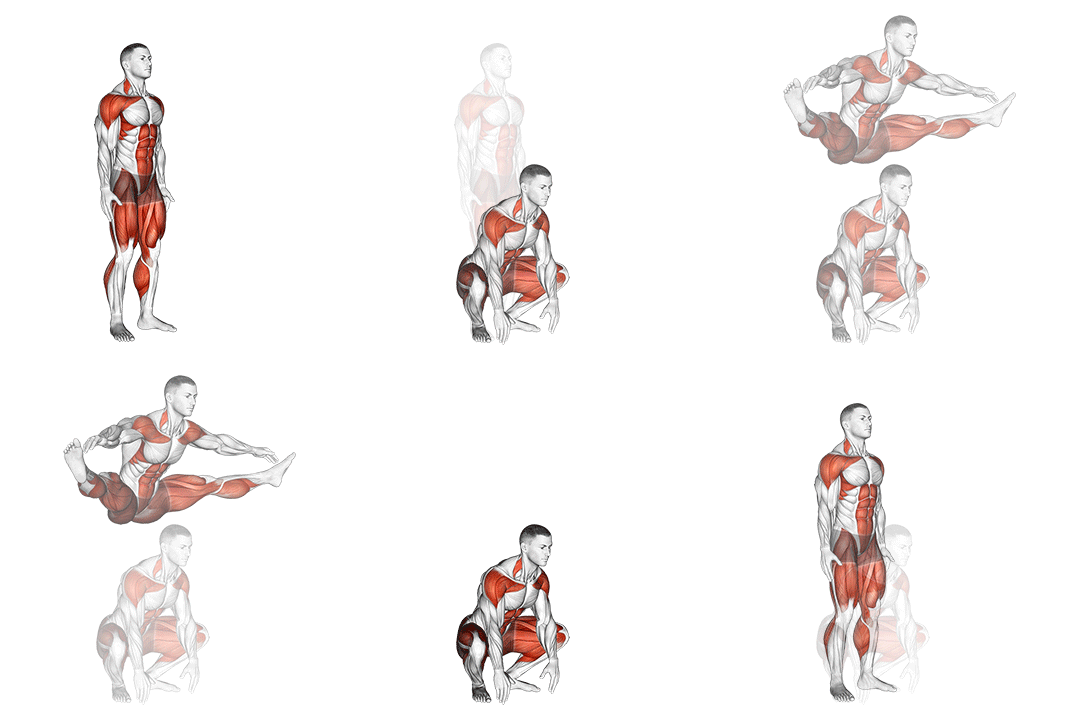
Astride Jumps (male)
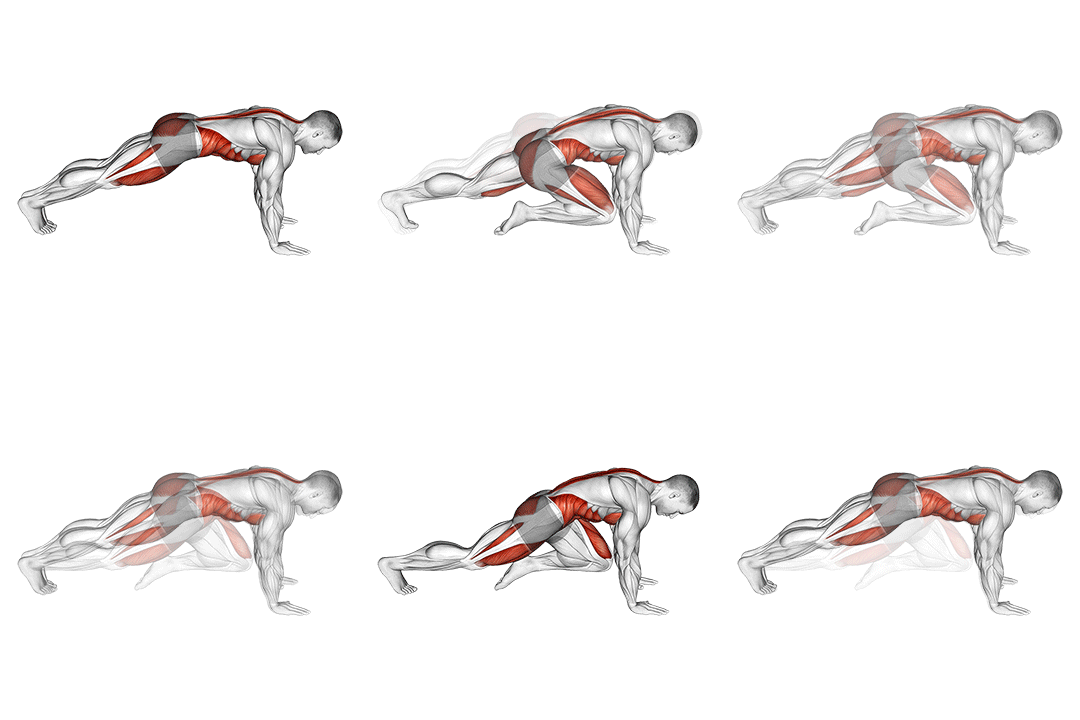
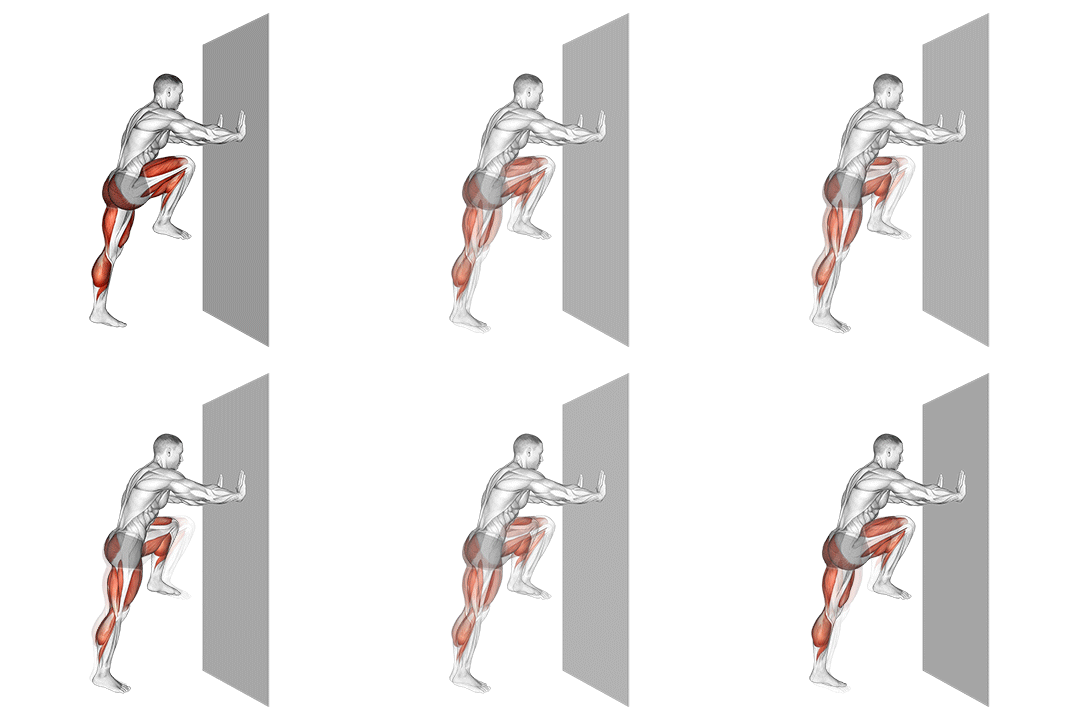
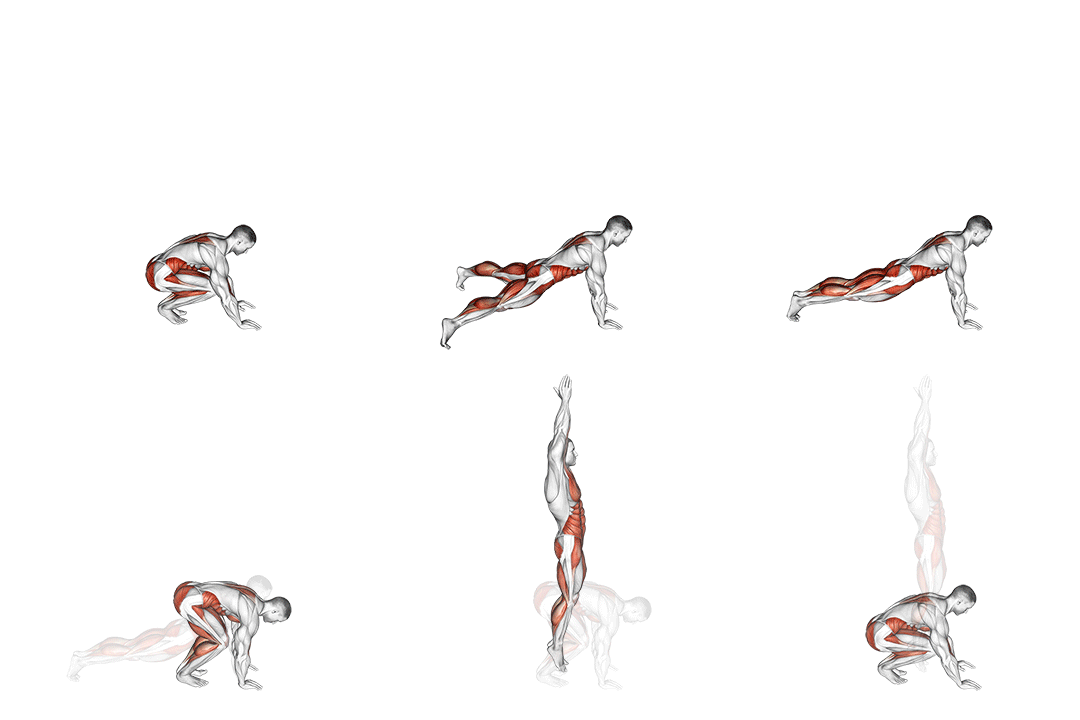
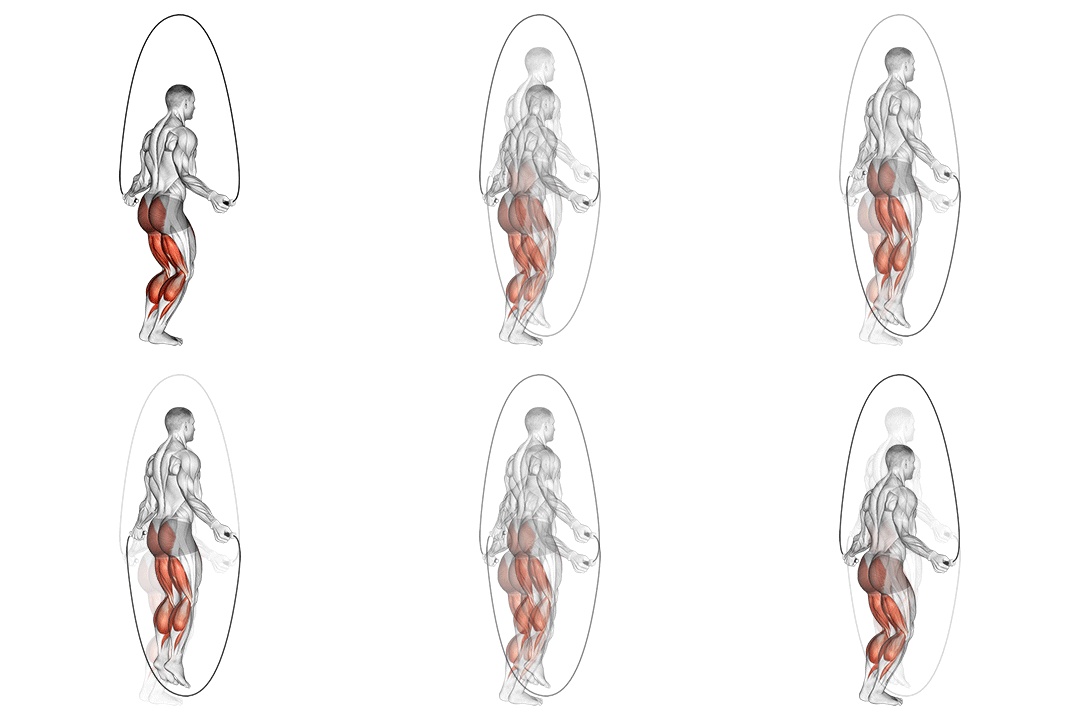
Mountain Climber
Head-to-Head Comparison
| Attribute | Astride Jumps (male) | Mountain Climber |
|---|---|---|
| Target Muscle |
Cardiovascular-system
|
Cardiovascular
|
| Body Part |
Cardio
|
Cardio
|
| Equipment |
Body-weight
|
Body-weight
|
| Difficulty |
Intermediate
|
Intermediate
|
| Movement Type |
Compound
|
Compound
|
| Secondary Muscles |
3
|
3
|
Secondary Muscles Activated
Astride Jumps (male)
Mountain Climber
Visual Comparison
Overview
Astride Jumps (male) vs Mountain Climber — you’re choosing between a lateral plyometric and a plank-driven cardio move. I’ll walk you through which exercise better serves cardiovascular conditioning, lower-body power, and core stability. You’ll get clear technique cues, biomechanical notes (hip extension angles, ground reaction forces, trunk stabilization), sample rep ranges, and practical recommendations for beginners, home workouts, and progression. Read this to know which exercise to program based on your goals and how to perform each safely and effectively.
Key Differences
- Astride Jumps (male) primarily targets the Cardiovascular-system, while Mountain Climber focuses on the Cardiovascular.
Pros & Cons
Astride Jumps (male)
+ Pros
- High lower-body power and plyometric stimulus for hip extensors and calves
- Efficient cardiovascular and anaerobic conditioning when done for intervals
- Easy to overload: increase height, distance, or add single-leg variants
- Transfers to sprint and lateral athletic movements due to lateral force vectors
− Cons
- Higher impact on knees and ankles—landing forces can reach 2–4× bodyweight
- Requires more space and good surface for safe landings
- Technique-sensitive: poor landing mechanics increase injury risk
Mountain Climber
+ Pros
- Compact, low-space cardio plus strong core stabilization demand
- Easy to scale by tempo, hand elevation, or adding sliders
- Lower impact than plyometrics when performed with controlled tempo
- Strengthens shoulder and triceps isometric endurance while conditioning
− Cons
- Less direct lower-extremity power development than plyometrics
- Can overload wrists and shoulders if form deteriorates
- Limited progressive overload options for pure strength without added load
When Each Exercise Wins
Astride Jumps load the quads, hamstrings, and calves with repeated eccentric–concentric cycles that create metabolic and mechanical stimulus; perform 3–5 sets of 8–20 reps or controlled tempo intervals with a vest to increase hypertrophic tension.
For lower-body power and force production, the high ground reaction forces and hip-extension focus of Astride Jumps better stimulate neural adaptation and rate of force development compared with the isometric-dominant Mountain Climber.
Mountain Climbers are easier to scale (slow tempo, elevated hands) and teach core-bracing and shoulder stability before adding plyometric impact, so beginners develop control with lower injury risk.
Mountain Climbers require minimal space and equipment and can be performed quietly on a mat, making them more practical for apartment or small-space training.
Frequently Asked Questions
Can I do both Astride Jumps (male) and Mountain Climber in the same workout?
Yes. Pair them in circuits—e.g., 3 rounds: 10–12 Astride Jumps followed by 30 seconds of Mountain Climbers—to combine plyometric power with core-conditioned cardio. Order by goal: do Astride Jumps early for power, Mountain Climbers later for conditioning and stability.
Which exercise is better for beginners?
Mountain Climbers are better for beginners because you can slow the tempo, elevate hands, and focus on core bracing without high-impact landings. Once you have consistent hip and knee control, add Astride Jump progressions.
How do the muscle activation patterns differ?
Astride Jumps show high phasic activation in quads, hamstrings, and calves due to stretch-shortening cycles and large vertical force vectors; Mountain Climbers show sustained isometric activation in the trunk and scapular stabilizers with dynamic hip flexion, producing alternating core bursts rather than large vertical impulses.
Can Mountain Climber replace Astride Jumps (male)?
Mountain Climbers can replace Astride Jumps if your goal is cardio and core conditioning or if you need to reduce impact. They do not replace Astride Jumps for developing lateral plyometric power and high-rate force production in the lower body.
Expert Verdict
Use Astride Jumps when your priority is lower-body power, anaerobic conditioning, and boosting hip-extension force—program them for 6–20 reps, focus on soft, hip-led landings, and keep knees tracking over toes to avoid valgus. Choose Mountain Climbers when you want compact, high-cadence cardio plus core and shoulder endurance; perform 20–60 alternating reps or interval sets (20s on/40s off) with tight plank alignment (neutral spine, hips level, shoulders over wrists). For balanced conditioning, pair brief Astride Jump sets with longer Mountain Climber rounds: that combination targets lower-body rate-of-force development and core stability while managing cumulative impact.
Also Compare
More comparisons with Astride Jumps (male)
Compare More Exercises
Use our free comparison tool to analyze any two exercises head-to-head.
Compare Exercises