

Astride Jumps (male) vs Push To Run: Complete Comparison Guide
Astride Jumps (male) vs Push To Run — two bodyweight, compound cardio moves that tax your legs and lungs differently. You’ll get a clear breakdown of primary and secondary muscle activation, technique cues (hip hinge, knee angle, ground contact time), equipment needs, injury risk, and how to pick between them for power, endurance, or home workouts. I’ll also give rep/time ranges and progression options so you can plug either exercise into intervals, circuits, or plyometric sets and track measurable progress.
Exercise Comparison
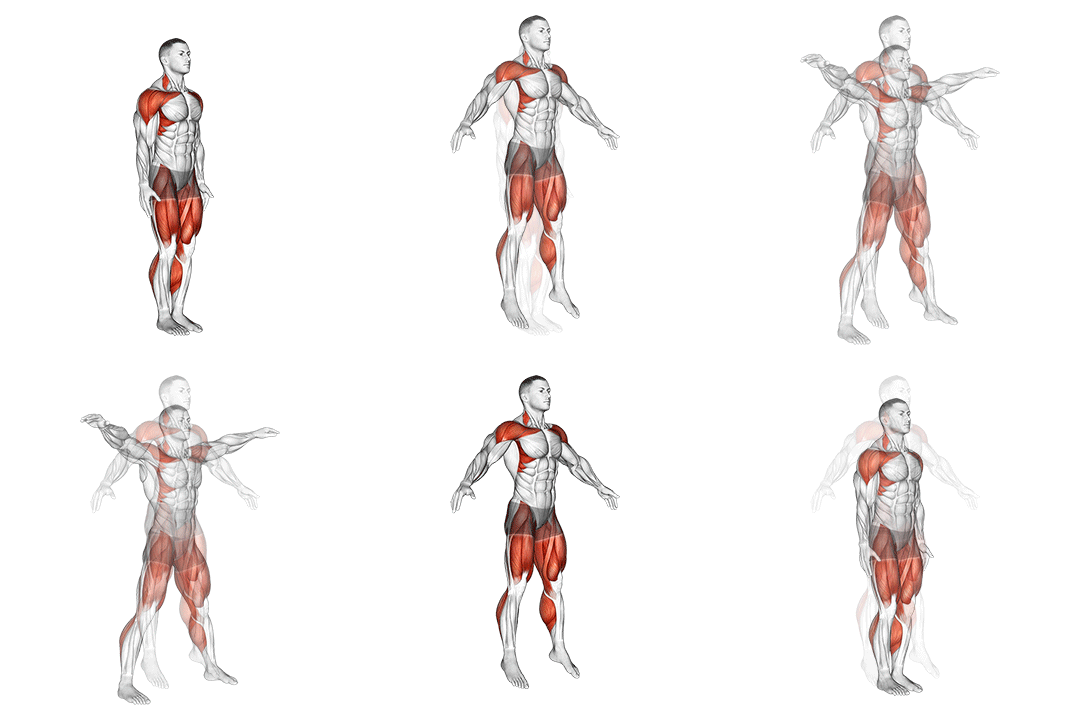
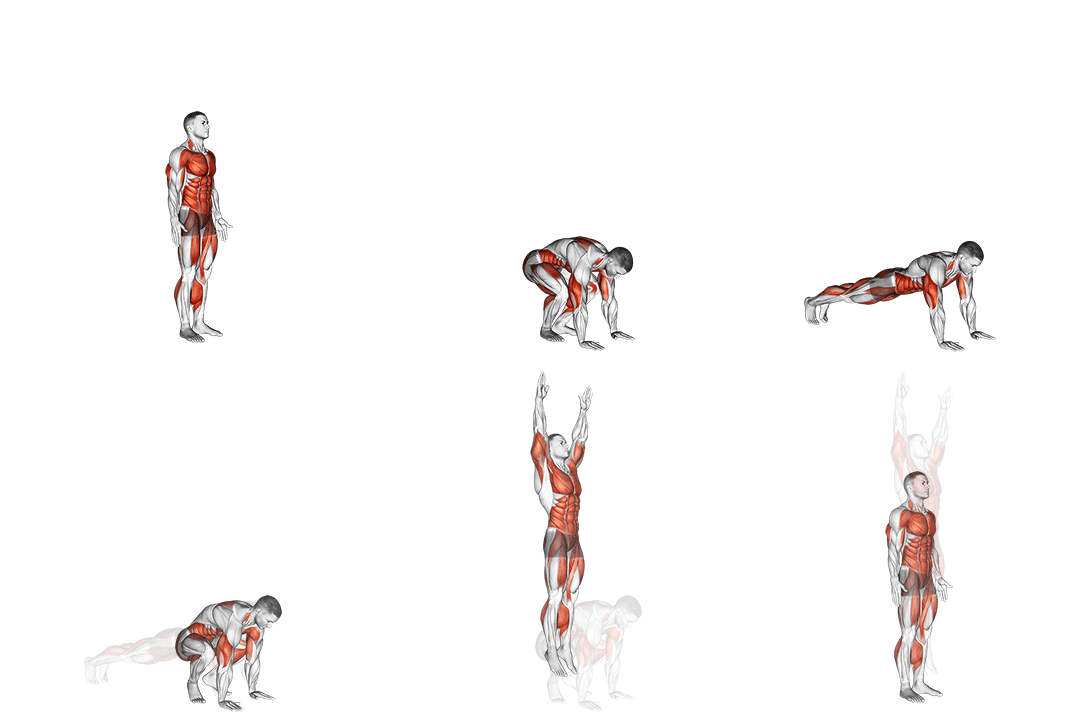
Astride Jumps (male)
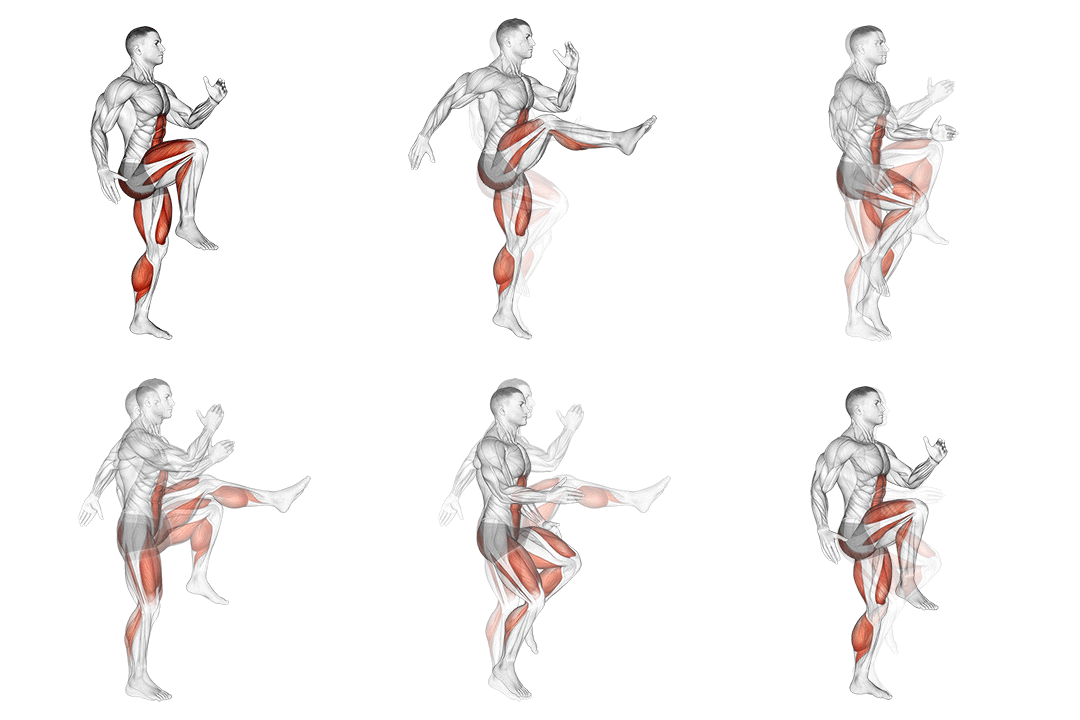
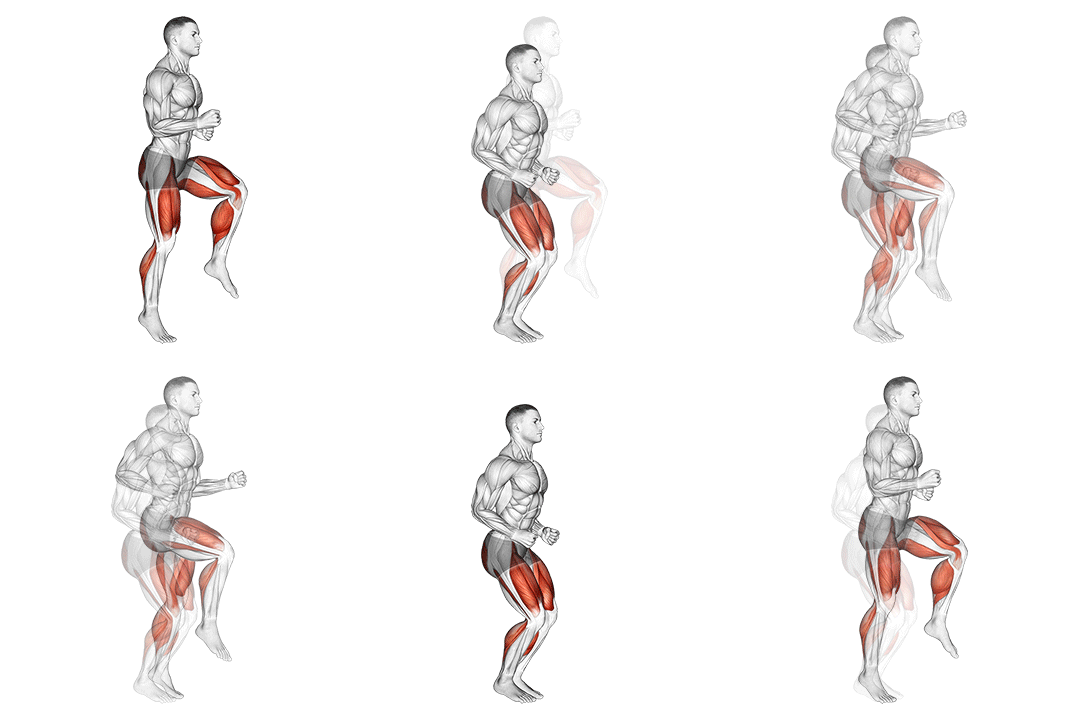
Push To Run
Head-to-Head Comparison
| Attribute | Astride Jumps (male) | Push To Run |
|---|---|---|
| Target Muscle |
Cardiovascular-system
|
Cardiovascular-system
|
| Body Part |
Cardio
|
Cardio
|
| Equipment |
Body-weight
|
Body-weight
|
| Difficulty |
Intermediate
|
Intermediate
|
| Movement Type |
Compound
|
Compound
|
| Secondary Muscles |
3
|
3
|
Secondary Muscles Activated
Astride Jumps (male)
Push To Run
Visual Comparison
Overview
Astride Jumps (male) vs Push To Run — two bodyweight, compound cardio moves that tax your legs and lungs differently. You’ll get a clear breakdown of primary and secondary muscle activation, technique cues (hip hinge, knee angle, ground contact time), equipment needs, injury risk, and how to pick between them for power, endurance, or home workouts. I’ll also give rep/time ranges and progression options so you can plug either exercise into intervals, circuits, or plyometric sets and track measurable progress.
Key Differences
- Both exercises target the Cardiovascular-system using Body-weight. The main differences are in their movement patterns and muscle activation angles.
Pros & Cons
Astride Jumps (male)
+ Pros
- Highly effective for developing explosive power and short-duration anaerobic capacity
- Short sets produce big cardiovascular and neuromuscular stimulus (20–40 s intervals)
- Easy to program into circuits and plyometric blocks
- Requires no equipment and little space when done in place
− Cons
- Higher impact on joints if landing mechanics are poor
- Requires solid coordination and eccentric control
- Less effective for sustained aerobic endurance compared with running
Push To Run
+ Pros
- Naturally scalable from easy jog to maximal sprints for a wide aerobic spectrum
- Low technical barrier — you can start immediately with cadence and posture cues
- Better for sustained calorie burn and aerobic base building
- Highly accessible outdoors, on treadmills, or in short indoor spaces
− Cons
- Repetitive loading increases overuse injury risk with excessive volume
- Less emphasis on explosive vertical power per rep
- Requires more time/distance for the same anaerobic stimulus that a few plyo sets provide
When Each Exercise Wins
Push To Run supports higher total time-under-tension and volume, especially when you build intervals or tempo runs that tax quadriceps and hamstrings over minutes rather than seconds. Longer work durations (5–20 minutes per set) drive metabolic stress and hypertrophic signaling more reliably than short plyo bursts.
Astride Jumps produce high instantaneous force and recruit fast-twitch fibers via the stretch-shortening cycle, improving rate of force development. Progressions like single-leg jumps and weighted vests directly transfer to improved lower-body power and maximal force output.
Running mechanics are intuitive and easier to scale by pace and duration; start with 20–30 second intervals or brisk 10–20 minute sessions. Astride Jumps demand landing technique and eccentric control that novice athletes typically need time to develop.
Push To Run adapts cleanly to limited space (in-place high knees or treadmill) and allows long-duration aerobic work without repeated high-impact landings. Astride Jumps are doable but require careful surface selection to protect joints.
Frequently Asked Questions
Can I do both Astride Jumps (male) and Push To Run in the same workout?
Yes. Pair them by putting Astride Jumps early for power (after a dynamic warm-up) and Push To Run later for aerobic intervals. Example: 4×8 Astride Jumps, 4×200 m Push To Run with 90–120 s rest.
Which exercise is better for beginners?
Push To Run is better for most beginners because it’s more intuitive and scalable via pace and distance. If you choose Astride Jumps, start with low volume, focus on knee alignment and soft landings, and progress slowly to reduce injury risk.
How do the muscle activation patterns differ?
Astride Jumps produce brief, high-amplitude activation of quads and calves during the takeoff and eccentric control on landing, leveraging the stretch-shortening cycle. Push To Run spreads activation cyclically: hip extensors drive propulsion during stance while dorsiflexors and calves work eccentrically/ concentrically across many repeated steps.
Can Push To Run replace Astride Jumps (male)?
Only partially. Push To Run can substitute for general cardio and endurance work, but it won’t replicate the high-rate, vertical power stimulus of Astride Jumps. Use Push To Run for volume and endurance, and keep Astride Jumps when you need explosive power development.
Expert Verdict
Choose Astride Jumps (male) when your goal is short-duration power, improved rate of force development, or to emphasize plyometric stimulus in circuits — aim for 3–6 sets of 6–12 reps or 20–40 second all-out rounds and focus on soft landings with ~30–60 seconds rest. Choose Push To Run when you want scalable aerobic conditioning, longer intervals, or progressive endurance — use tempo runs, 30–120 second sprints, or 400 m repeats to build capacity. Both are valuable: prioritize Astride Jumps in power/athletic blocks and Push To Run for aerobic, hypertrophy, and general conditioning phases.
Also Compare
More comparisons with Astride Jumps (male)
Compare More Exercises
Use our free comparison tool to analyze any two exercises head-to-head.
Compare Exercises