

Back And Forth Step vs Bear Crawl: Complete Comparison Guide
Back And Forth Step vs Bear Crawl — you want efficient cardio that also challenges muscles and movement quality, and I'll help you choose. In this comparison you'll get clear technique cues, biomechanics-based differences, and practical progressions. I'll cover primary cardiovascular stimulus, secondary muscle recruitment (quads, glutes, core, shoulders), how force vectors and joint angles change activation, safety considerations, and which drill fits your goal: muscle growth, strength, beginner conditioning, or a compact home workout.
Exercise Comparison
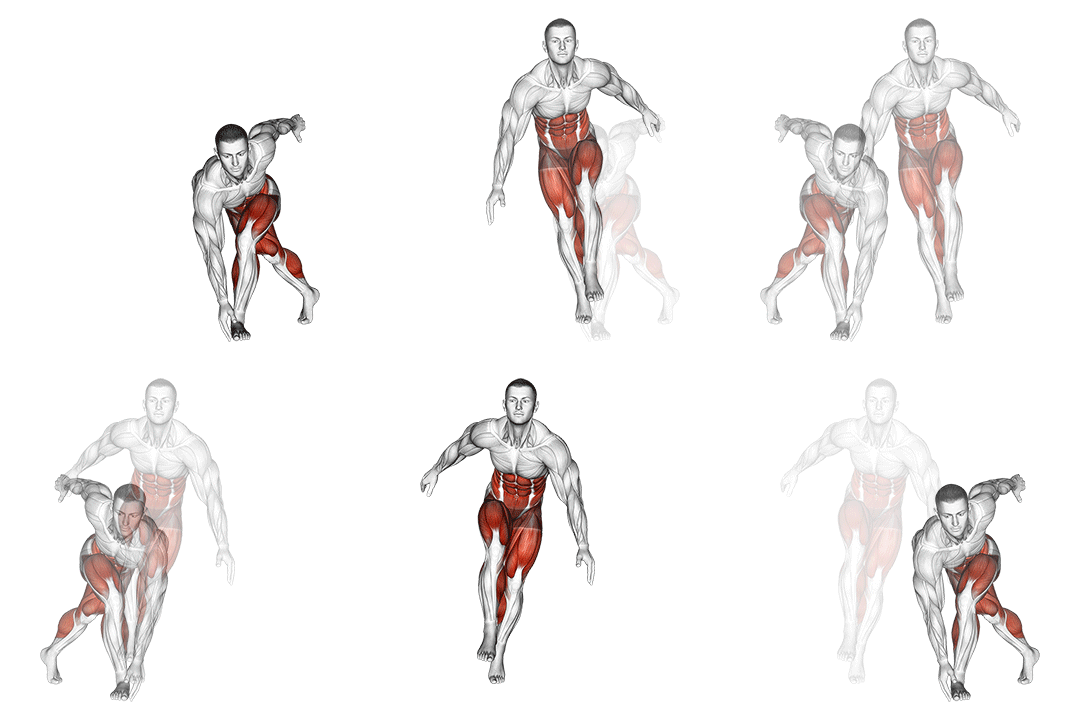
Back And Forth Step
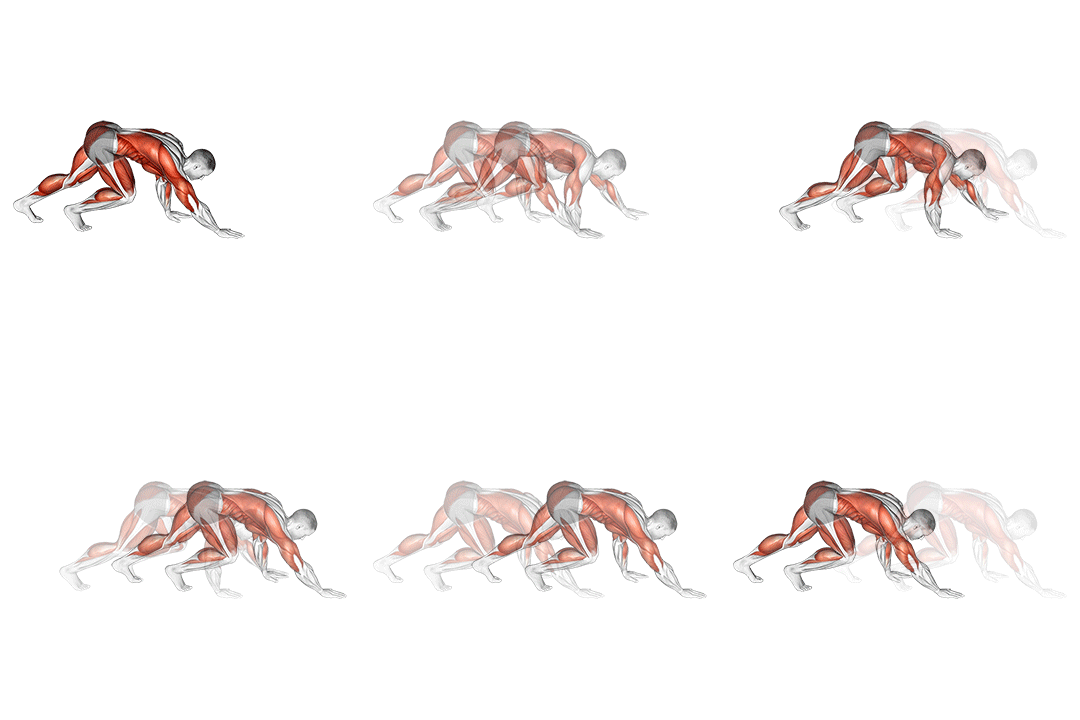
Bear Crawl
Head-to-Head Comparison
| Attribute | Back And Forth Step | Bear Crawl |
|---|---|---|
| Target Muscle |
Cardiovascular-system
|
Cardiovascular-system
|
| Body Part |
Cardio
|
Cardio
|
| Equipment |
Body-weight
|
Body-weight
|
| Difficulty |
Beginner
|
Intermediate
|
| Movement Type |
Compound
|
Compound
|
| Secondary Muscles |
4
|
3
|
Secondary Muscles Activated
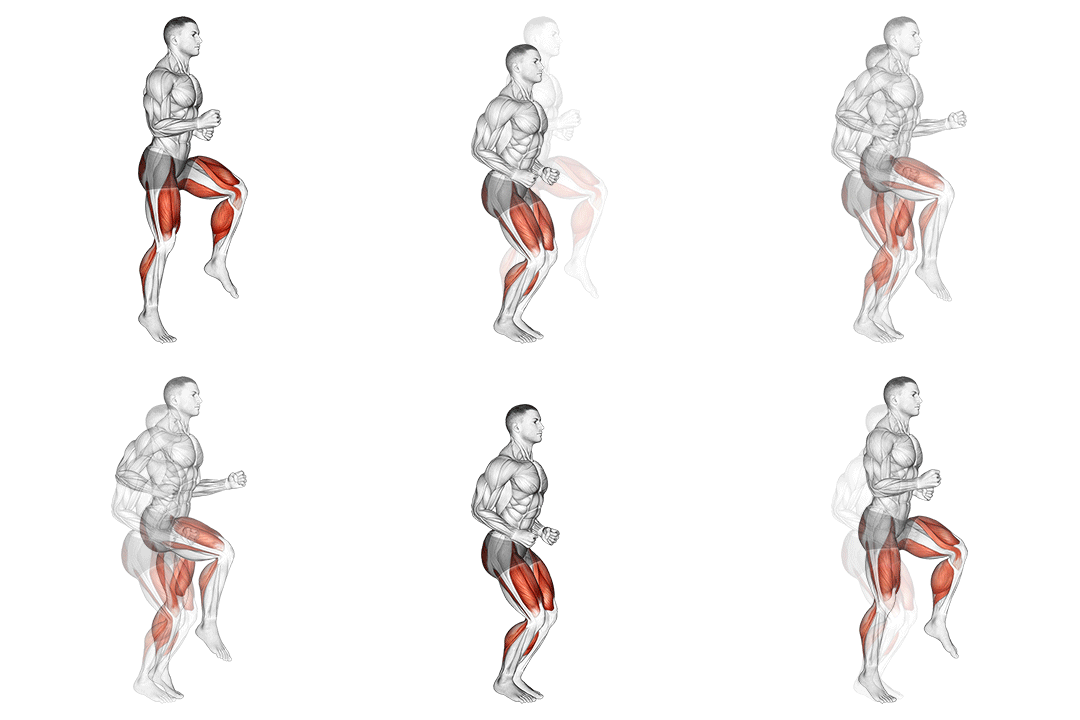
Back And Forth Step
Bear Crawl
Visual Comparison
Overview
Back And Forth Step vs Bear Crawl — you want efficient cardio that also challenges muscles and movement quality, and I'll help you choose. In this comparison you'll get clear technique cues, biomechanics-based differences, and practical progressions. I'll cover primary cardiovascular stimulus, secondary muscle recruitment (quads, glutes, core, shoulders), how force vectors and joint angles change activation, safety considerations, and which drill fits your goal: muscle growth, strength, beginner conditioning, or a compact home workout.
Key Differences
- Difficulty levels differ: Back And Forth Step is beginner, while Bear Crawl is intermediate.
- Both exercises target the Cardiovascular-system using Body-weight. The main differences are in their movement patterns and muscle activation angles.
Pros & Cons
Back And Forth Step
+ Pros
- Simple sagittal-plane movement with easy coaching cues (drive through heel, extend hip fully)
- Easily progressive by increasing step height or adding external load
- Targets lower-limb hypertrophy and strength with repeatable sets (8–15 reps per leg)
- Requires minimal space and low technical demand for beginners
− Cons
- Limited upper-body and core loading compared with animal-based crawls
- Improper knee tracking or high step heights raise knee joint stress
- Less carryover to multi-planar coordination and shoulder stability
Bear Crawl
+ Pros
- High core and shoulder activation through anti-rotation and scapular control
- Excellent metabolic conditioning and coordination under alternating limb support
- Versatile progressions for tempo, distance, and unilateral variations
- Develops horizontal force production and full-body connectivity
− Cons
- Steeper learning curve; requires good scapular mobility and core stability
- Can stress wrists, shoulders, and lumbar spine if technique breaks down
- Less direct overload option for lower-body hypertrophy compared with loaded step variations
When Each Exercise Wins
Because you can apply progressive overload and control time-under-tension with higher step heights and added weight, the step better stimulates quadriceps and glute hypertrophy via repeated concentric/eccentric cycles (aim 8–15 reps per leg, 3–5 sets).
The vertical force vector and ability to load with dumbbells or a barbell vest enable heavier external resistance and low-rep strength work (4–8 reps), producing greater maximal force improvements in the lower body.
With simple cues, low coordination demand, and scalable step heights, the step lets you build confidence and joint control before adding complex crawling patterns that require core and shoulder stability.
It needs minimal space and equipment, adapts to short intervals (30–60 seconds) or set-based work, and scales easily with household weights, making it the most practical home choice.
Frequently Asked Questions
Can I do both Back And Forth Step and Bear Crawl in the same workout?
Yes. Pair the step as a strength or hypertrophy element (3–5 sets of 8–15 reps per leg) and use bear crawls as a conditioning or core finisher (30–60 seconds or 10–20 m). Sequence them so technical, loaded work comes first and crawls follow when fatigue is acceptable.
Which exercise is better for beginners?
Back And Forth Step is better for most beginners because it has fewer coordination demands and clear joint mechanics. Start with a low step (15–20 cm), focus on knee tracking and full hip extension, then increase height or load as technique holds.
How do the muscle activation patterns differ?
The step emphasizes concentric/eccentric hip and knee extension with a largely vertical force vector and higher quadriceps/glute activation. The bear crawl creates alternating limb support, horizontal/diagonal force vectors, and elevated isometric core and shoulder activation through anti-rotation and scapular control.
Can Bear Crawl replace Back And Forth Step?
Not completely. If your goal is targeted lower-body hypertrophy or heavy strength, the bear crawl won't replace the step because it lacks easy external overload. For conditioning, core and shoulder endurance, or movement skill, the crawl is a superior replacement.
Expert Verdict
Choose Back And Forth Step when your priority is lower-body strength, hypertrophy, easy scaling, or beginner-friendly conditioning. It places a stronger vertical load on quadriceps and glutes and accepts external weight for progressive overload (use 8–15 reps per leg for hypertrophy or 4–8 for strength). Pick Bear Crawl when you want high-core demand, shoulder stability, and metabolic conditioning that trains interlimb coordination and horizontal force production; use 20–60 second intervals or 10–30 m shuttles for conditioning. Combine both in a program: use steps for targeted lower-limb overload and crawls for conditioning and movement quality to get complementary adaptations.
Also Compare
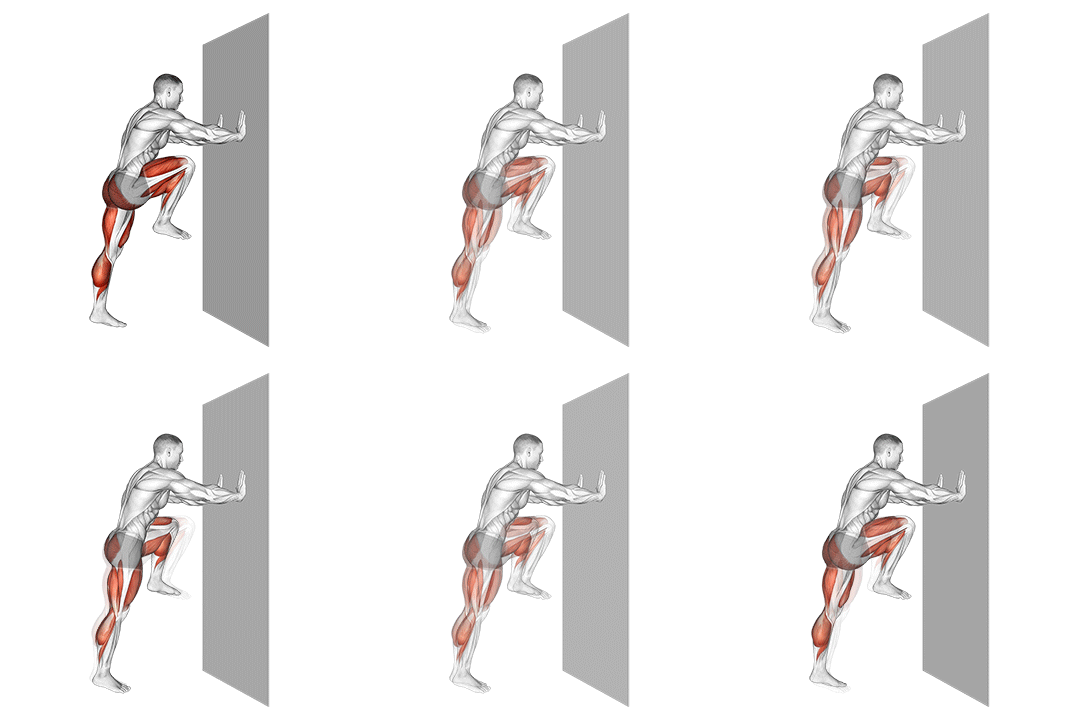
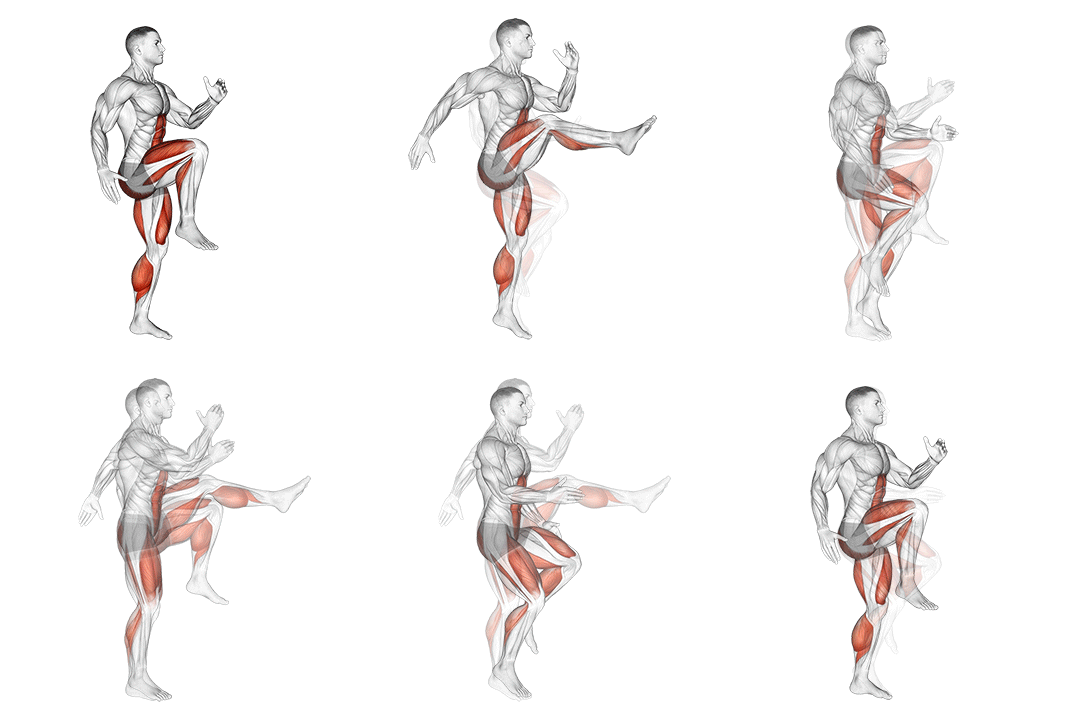
More comparisons with Back And Forth Step
Compare More Exercises
Use our free comparison tool to analyze any two exercises head-to-head.
Compare Exercises