

Back And Forth Step vs Burpee: Complete Comparison Guide
Back And Forth Step vs Burpee is a practical comparison to help you choose the best cardio compound movement for your goals. {Exercise1} vs {Exercise2} will appear through this guide so you can see differences in muscle recruitment, technique, injury risk, and programming. You’ll get clear cues for safe execution, numeric rep and interval ranges, and biomechanical explanations—like force vectors and joint angles—so you know which exercise fits cardio conditioning, fat loss, or supplemental conditioning for strength work. Read on and pick the move that suits your current training level and goals.
Exercise Comparison
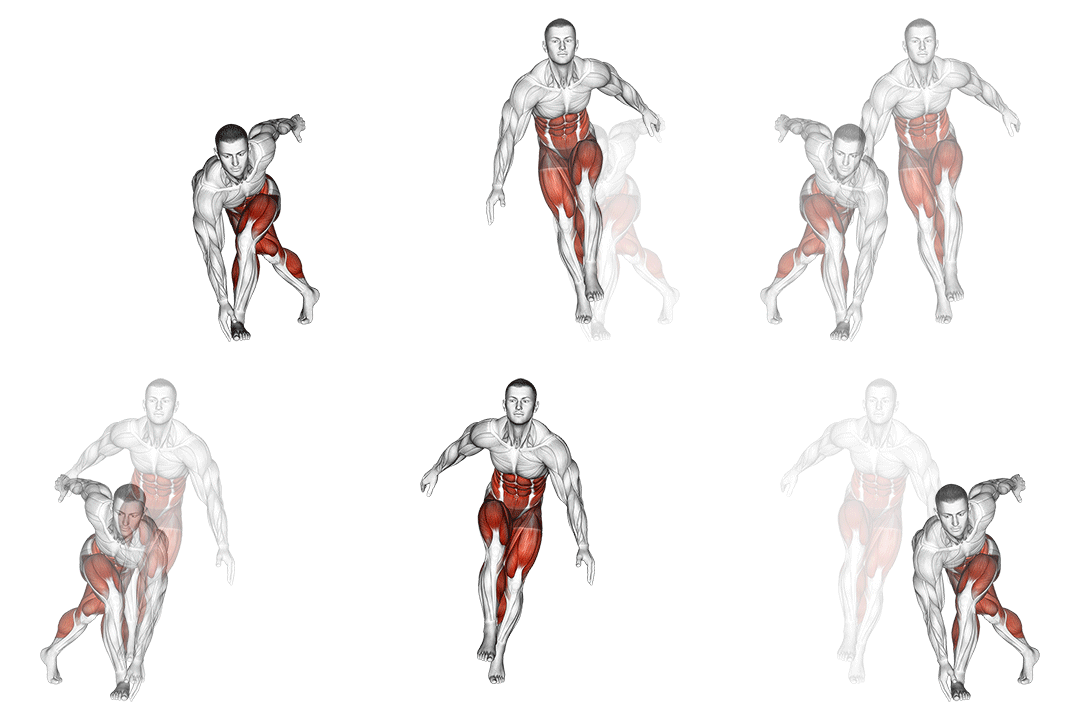
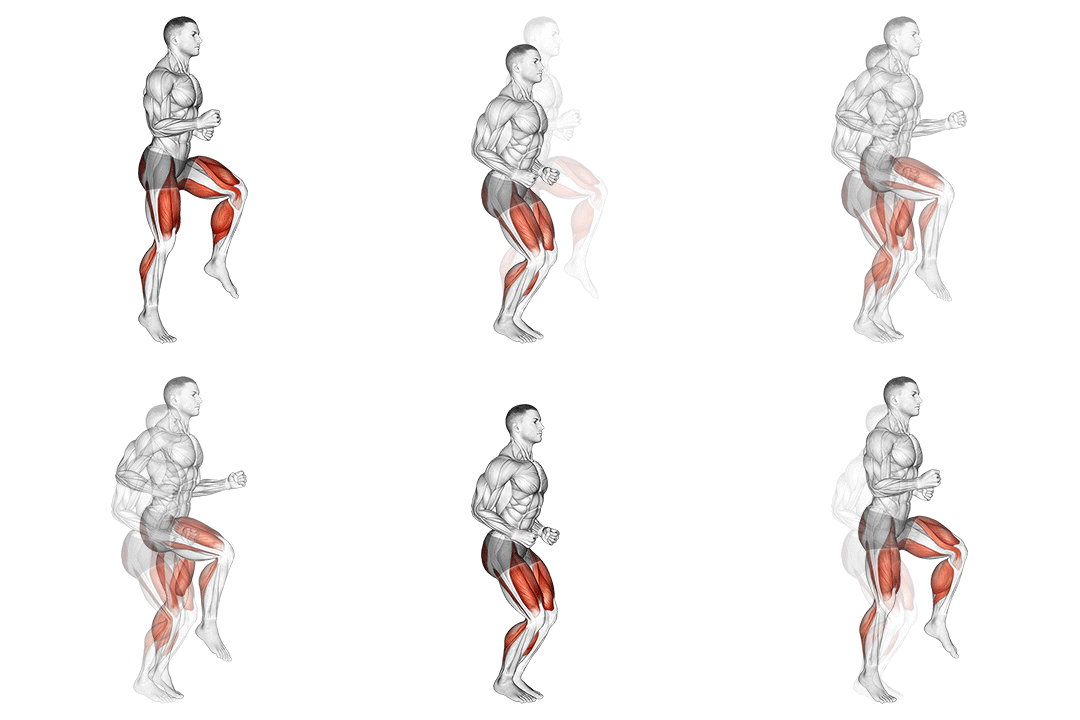
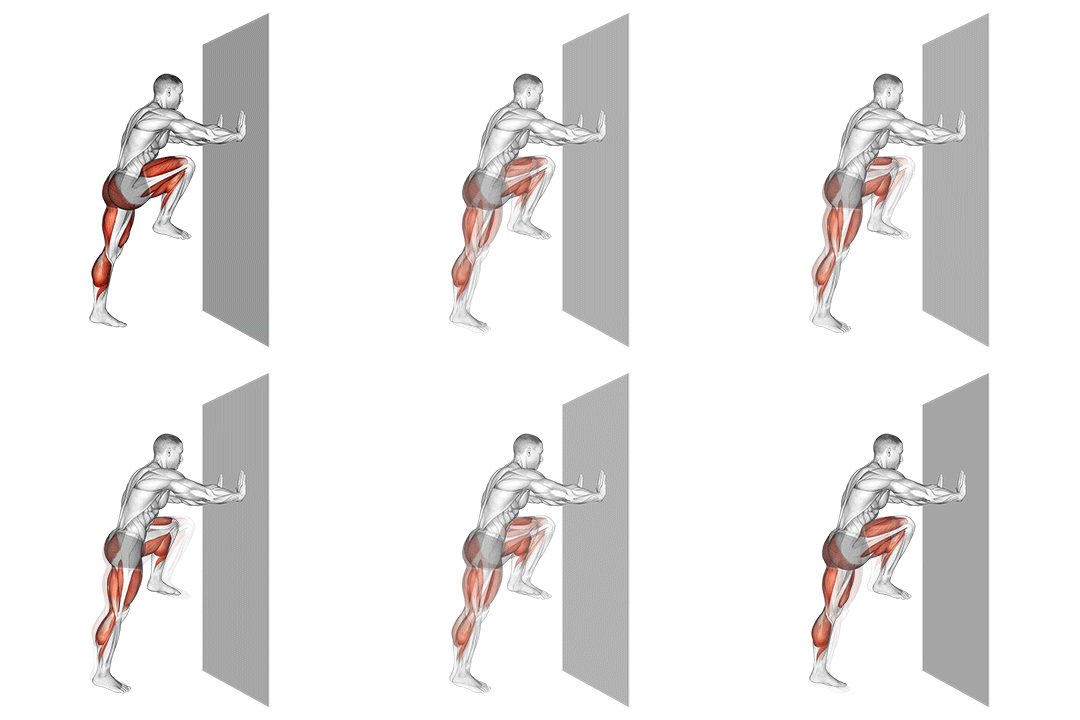
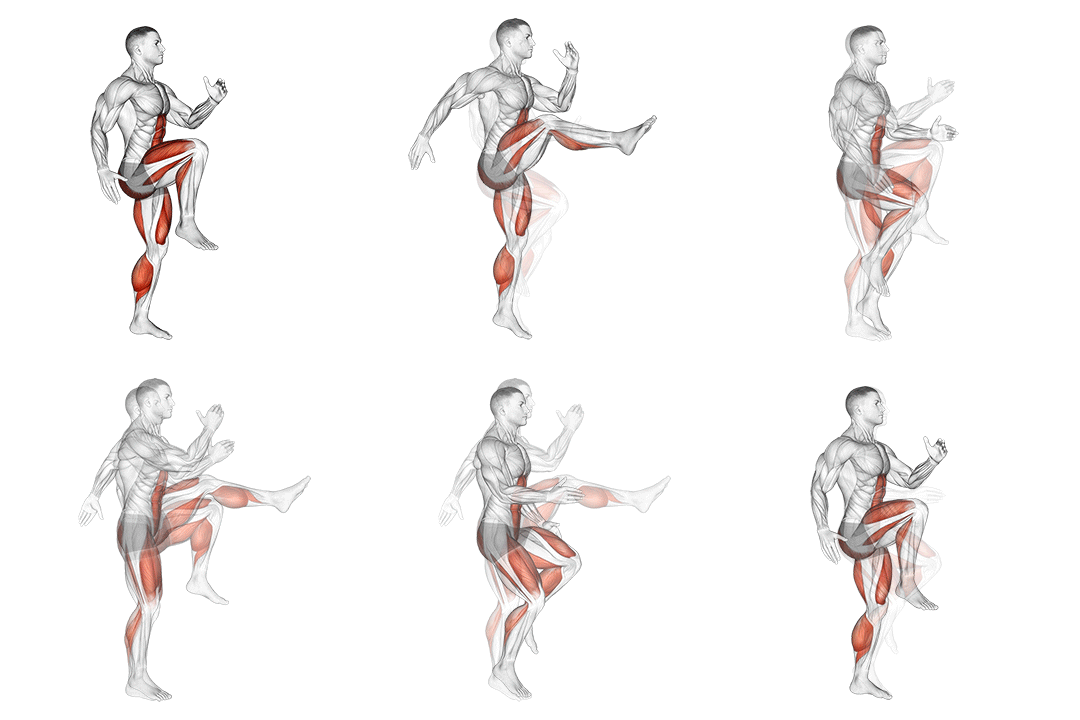
Back And Forth Step
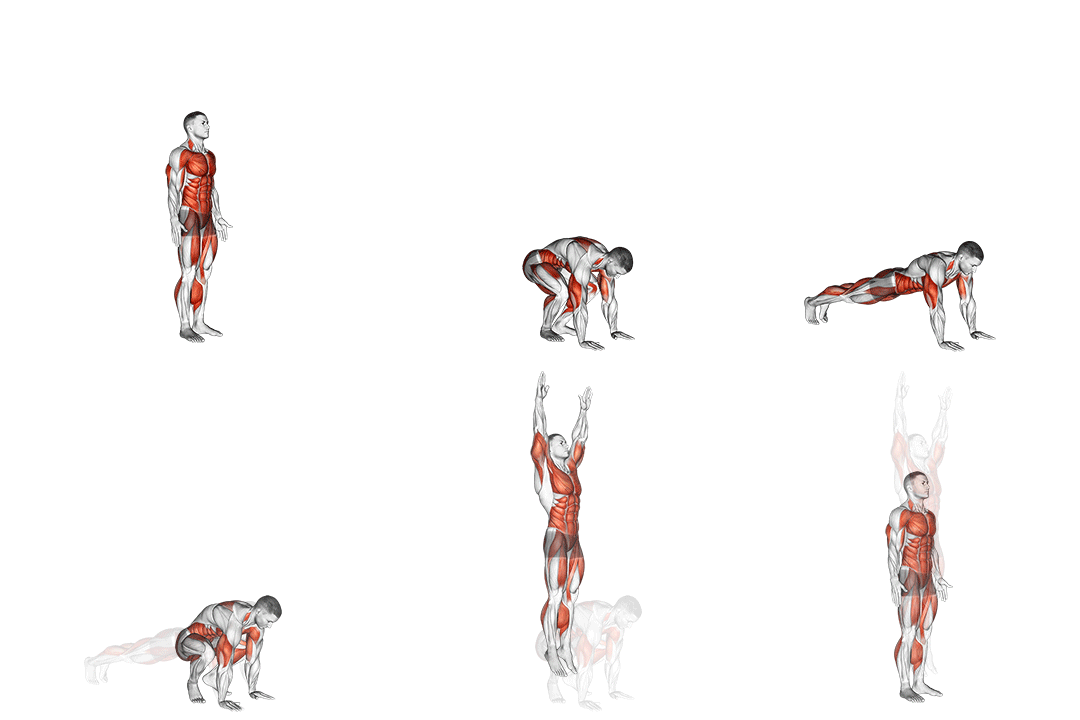
Burpee
Head-to-Head Comparison
| Attribute | Back And Forth Step | Burpee |
|---|---|---|
| Target Muscle |
Cardiovascular-system
|
Cardiovascular-system
|
| Body Part |
Cardio
|
Cardio
|
| Equipment |
Body-weight
|
Body-weight
|
| Difficulty |
Beginner
|
Intermediate
|
| Movement Type |
Compound
|
Compound
|
| Secondary Muscles |
4
|
5
|
Secondary Muscles Activated
Back And Forth Step
Burpee
Visual Comparison
Overview
Back And Forth Step vs Burpee is a practical comparison to help you choose the best cardio compound movement for your goals. {Exercise1} vs {Exercise2} will appear through this guide so you can see differences in muscle recruitment, technique, injury risk, and programming. You’ll get clear cues for safe execution, numeric rep and interval ranges, and biomechanical explanations—like force vectors and joint angles—so you know which exercise fits cardio conditioning, fat loss, or supplemental conditioning for strength work. Read on and pick the move that suits your current training level and goals.
Key Differences
- Difficulty levels differ: Back And Forth Step is beginner, while Burpee is intermediate.
- Both exercises target the Cardiovascular-system using Body-weight. The main differences are in their movement patterns and muscle activation angles.
Pros & Cons
Back And Forth Step
+ Pros
- Low impact with steady-state cardiovascular stimulus
- Very beginner-friendly and easy to teach
- Highly scalable by changing step height and cadence
- Minimal risk to shoulders and spine compared to plyometric moves
− Cons
- Less upper-body recruitment and metabolic peak power
- Limited hypertrophy stimulus for larger muscle groups
- Can become monotonous at high volume without variation
Burpee
+ Pros
- High metabolic output and rapid heart-rate increase
- Full-body compound pattern including chest and shoulders
- Easy to scale intensity with speed or added load
- Short sets produce large conditioning stimulus (20–40s intervals)
− Cons
- Higher impact and peak forces increase injury risk
- Technically demanding for beginners—coordination needed
- Shoulder and lower back stress from repeated plank-to-jump transitions
When Each Exercise Wins
Burpees engage more total-body muscle mass, including chest and shoulders, and produce higher peak forces that increase mechanical stimulus. While not optimal alone for hypertrophy, higher-intensity burpee variations and added load (vest/dumbbells) provide a stronger anabolic signal than steady stepping.
Burpees include explosive hip extension, vertical propulsion, and upper-body pressing that challenge rate of force development and functional strength. Progressions like weighted vest burpees better transfer to strength and power than a low-intensity stepping pattern.
Back And Forth Step uses simple, repeatable movement patterns with lower peak forces and easier pacing control, making it safer for someone new to structured conditioning. You can quickly teach cadence, posture, and breathing without complex transitions.
Both require no equipment, but Back And Forth Step is more space- and ceiling-friendly and reduces impact on joints and floors. It's easier to integrate into short circuits (e.g., 3 sets of 60s work) without worrying about high-impact landings.
Frequently Asked Questions
Can I do both Back And Forth Step and Burpee in the same workout?
Yes. Pair them strategically: use Back And Forth Step for warm-up and steady-state blocks (2–4 x 60s) and reserve Burpees for high-intensity intervals (6–10 x 20–30s). That sequencing reduces injury risk while leveraging both steady endurance and explosive conditioning.
Which exercise is better for beginners?
Back And Forth Step is better for most beginners because it has simpler coordination demands and lower impact peaks. Start with 3–5 minute sets at a controlled cadence before progressing to faster tempos or introducing burpee components.
How do the muscle activation patterns differ?
Back And Forth Step produces prolonged, submaximal activation of plantarflexors, quads, and glutes with repetitive knee/hip cycles at mid-range lengths. Burpees create short, high-intensity bursts: rapid hip extension for jump power and an anterior force vector during push-ups that recruits chest and shoulders intensely.
Can Burpee replace Back And Forth Step?
Burpees can replace stepping if your goal is maximum metabolic and muscular stimulus in less time, but they increase impact and technical demand. If you need lower joint stress, longer-duration endurance, or simpler progression, keep Back And Forth Step in the program instead of swapping it out entirely.
Expert Verdict
Choose Back And Forth Step when you need an accessible, lower-impact cardio option that still taxes the quadriceps, hamstrings, glutes, and calves with repeated hip and knee cycles. Program it for steady intervals (30–90 seconds work, 15–45 seconds rest) or tempo stepping for endurance. Pick Burpee when you want a higher-intensity, full-body conditioning movement that also challenges upper-body pressing and explosive hip extension—use sets of 8–20 reps or 20–40 second all-out intervals and add a weighted vest to increase mechanical load. Use steps for safe volume and burpees for power and time-efficient conditioning.
Also Compare
More comparisons with Back And Forth Step
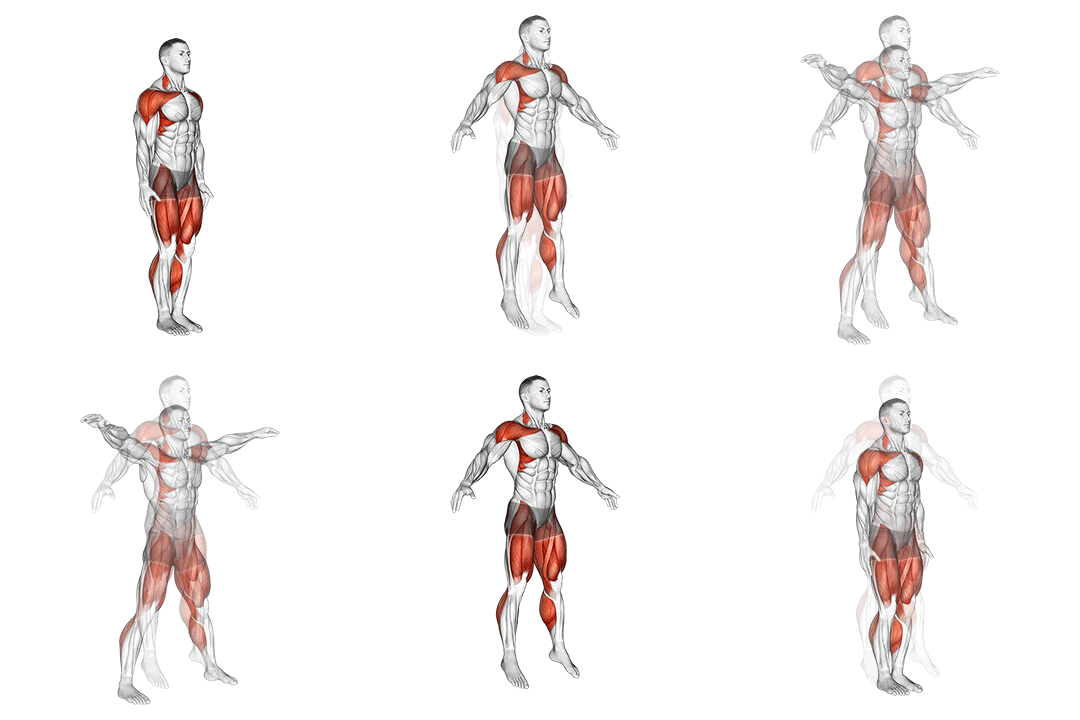
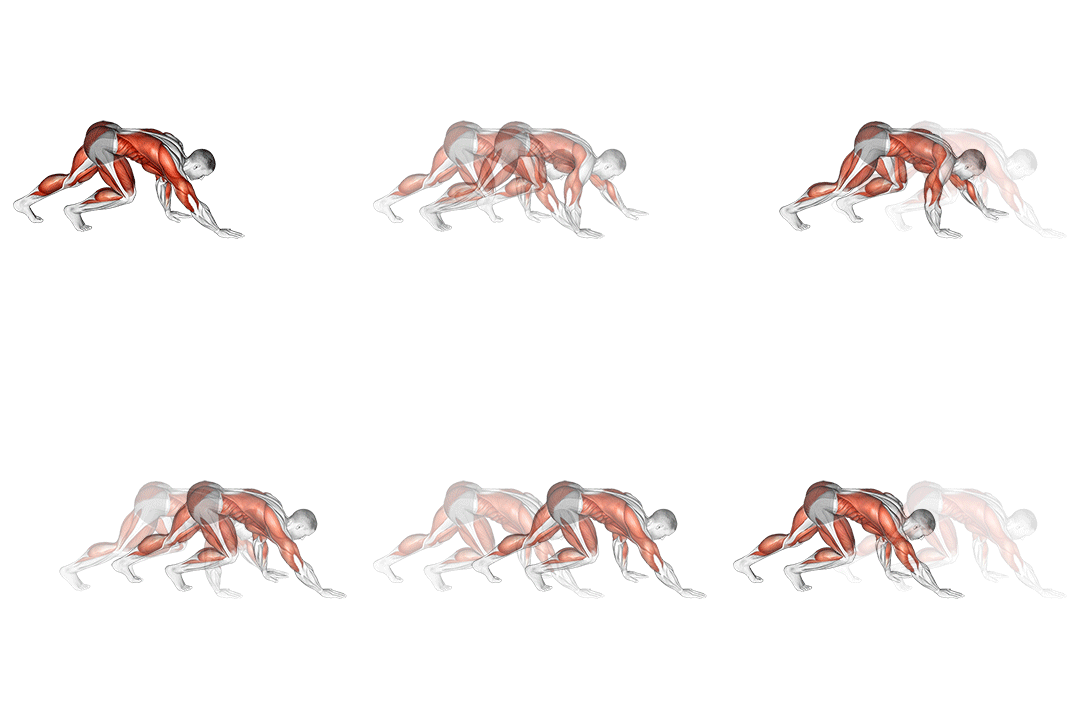
Compare More Exercises
Use our free comparison tool to analyze any two exercises head-to-head.
Compare Exercises