

Back And Forth Step vs High Knee Against Wall: Complete Comparison Guide
Back And Forth Step vs High Knee Against Wall — if you want efficient, low-equipment cardio that also taxes your legs, this head-to-head helps you choose. You’ll get clear technique cues, biomechanics explaining why each move stresses quads, glutes, hamstrings and calves differently, and practical recommendations for reps, intervals (20–60 seconds), and progressions. I’ll cover muscle activation patterns, equipment needs, learning curve, injury risk, and which exercise wins for specific goals so you can pick the one that fits your program and environment.
Exercise Comparison
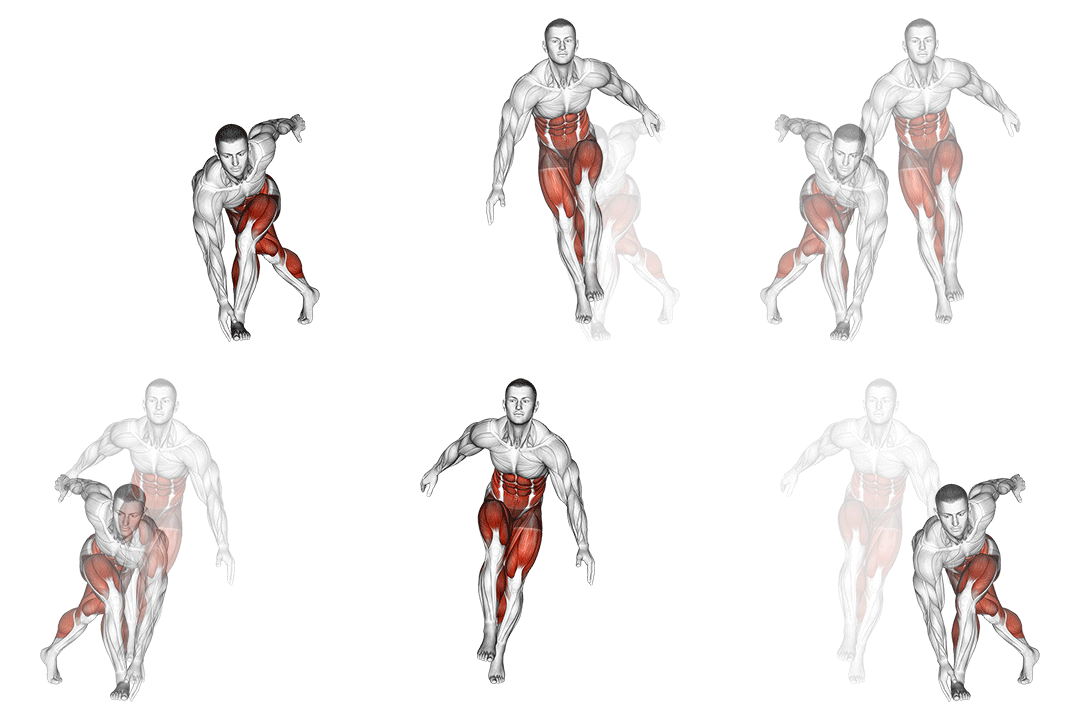
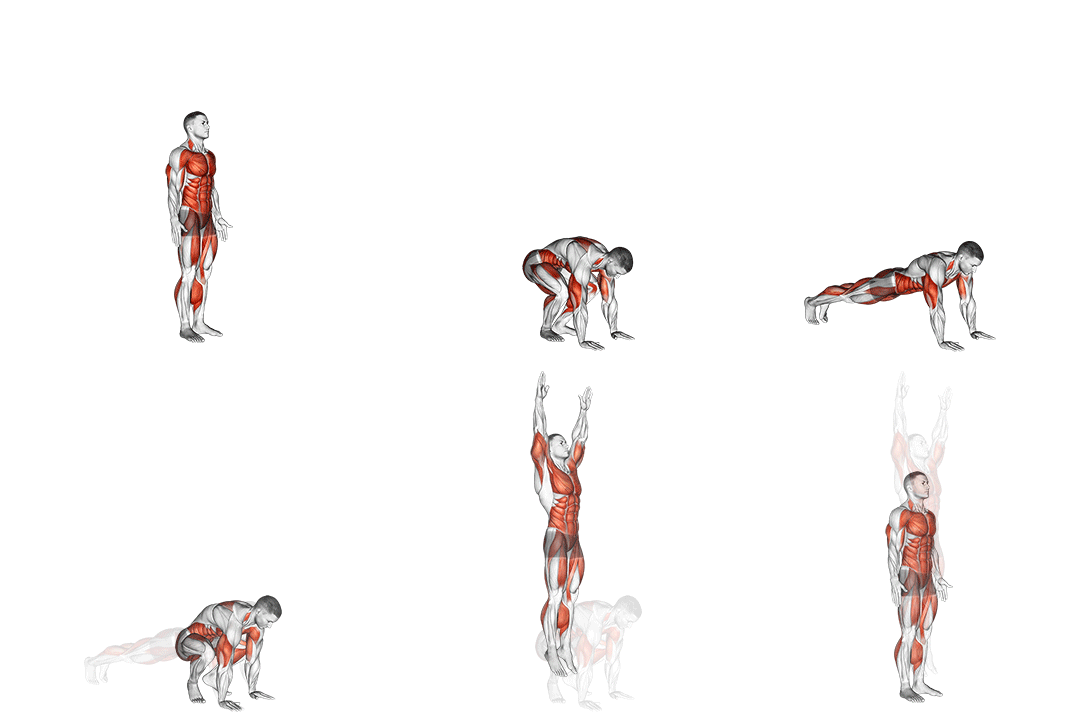
Back And Forth Step
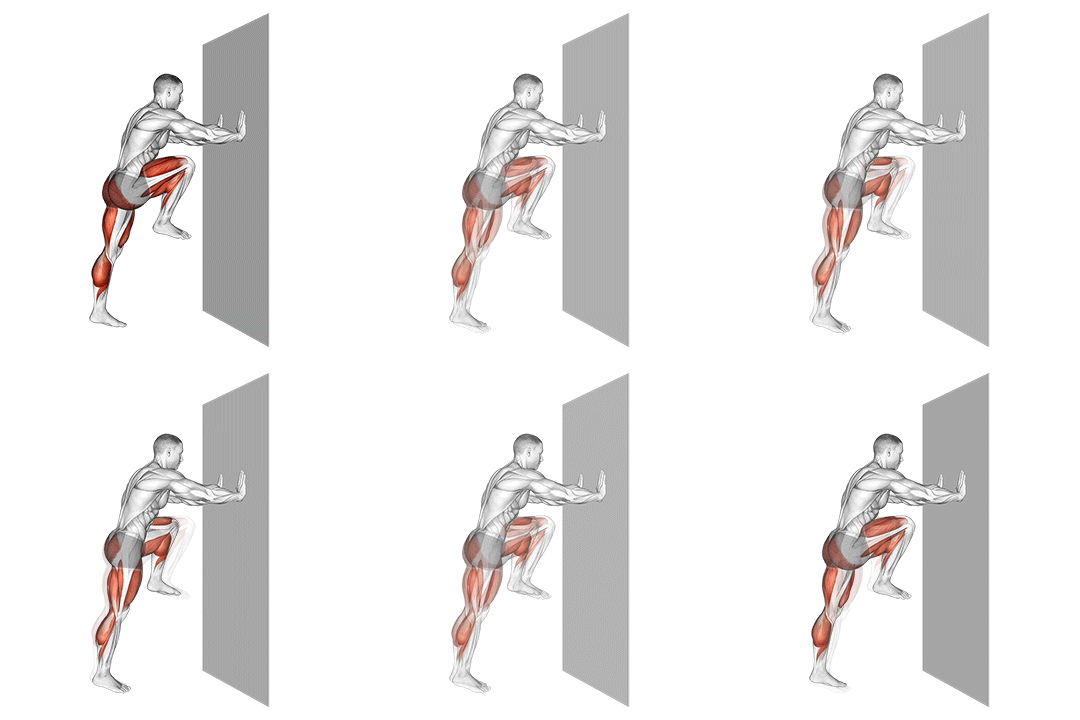
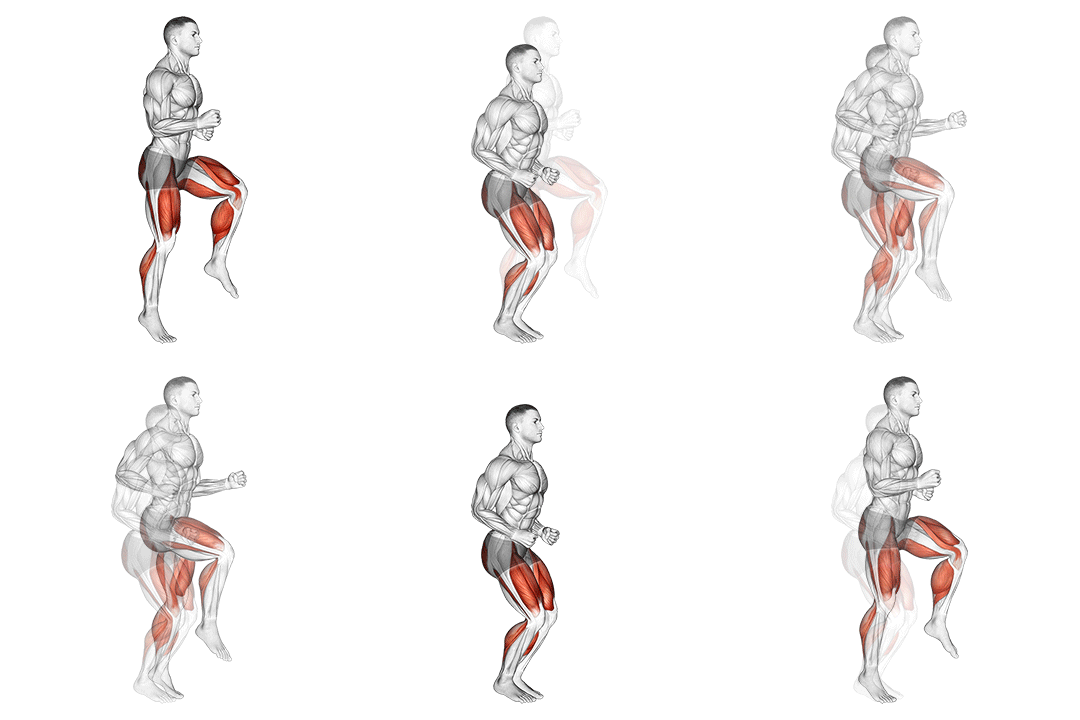
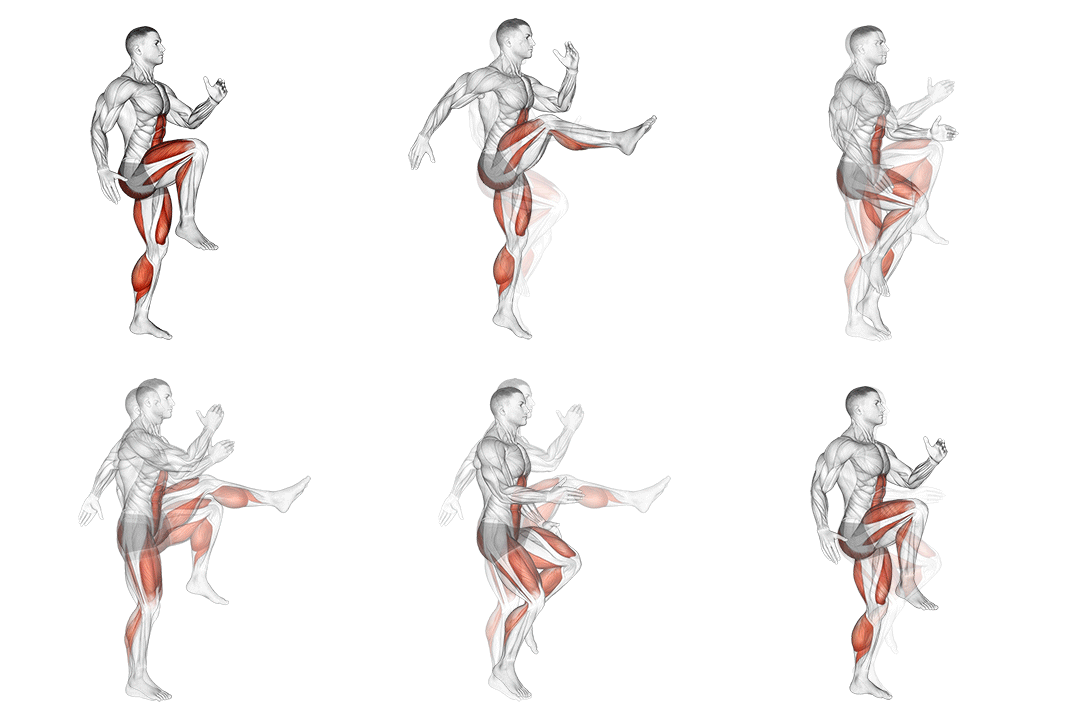
High Knee Against Wall
Head-to-Head Comparison
| Attribute | Back And Forth Step | High Knee Against Wall |
|---|---|---|
| Target Muscle |
Cardiovascular-system
|
Cardiovascular-system
|
| Body Part |
Cardio
|
Cardio
|
| Equipment |
Body-weight
|
Body-weight
|
| Difficulty |
Beginner
|
Beginner
|
| Movement Type |
Compound
|
Compound
|
| Secondary Muscles |
4
|
4
|
Secondary Muscles Activated
Back And Forth Step
High Knee Against Wall
Visual Comparison
Overview
Back And Forth Step vs High Knee Against Wall — if you want efficient, low-equipment cardio that also taxes your legs, this head-to-head helps you choose. You’ll get clear technique cues, biomechanics explaining why each move stresses quads, glutes, hamstrings and calves differently, and practical recommendations for reps, intervals (20–60 seconds), and progressions. I’ll cover muscle activation patterns, equipment needs, learning curve, injury risk, and which exercise wins for specific goals so you can pick the one that fits your program and environment.
Key Differences
- Both exercises target the Cardiovascular-system using Body-weight. The main differences are in their movement patterns and muscle activation angles.
Pros & Cons
Back And Forth Step
+ Pros
- Stronger glute and hamstring recruitment through eccentric control and hip extension
- Easy to increase mechanical load by raising step height or adding weight
- Good transfer to gait and single-leg stability because of weight transfer mechanics
- Longer ground contact time improves capacity for force production and tempo work
− Cons
- Requires a stable step and slightly more space
- Higher technical demand—risk of poor knee tracking or unstable landings
- Less portable than wall-based drills
High Knee Against Wall
+ Pros
- Extremely portable and minimal setup—just a wall and flat floor
- Fast cadence builds cardiovascular power and ankle stiffness
- Lower coordination barrier; easy to scale tempo and interval length
- Short ground contact times improve reactive conditioning and cadence
− Cons
- Limited mechanical overload options for long-term strength progression
- Can overwork hip flexors or produce lumbar compensation if form slips
- Less eccentric glute/hamstring stimulus compared to stepping
When Each Exercise Wins
Back And Forth Step offers more eccentric loading and longer time under tension for glutes and hamstrings, and you can increase step height or add external load to create progressive mechanical overload required for muscle growth.
The step allows higher force production through longer ground contact and single-leg transfer, which you can amplify with added weight to improve hip and knee extension strength more effectively than rapid high-knee repetitions.
High Knee Against Wall involves simpler movement patterns, minimal equipment, and lower coordination demands; it’s easier to teach an upright posture, 60–90° knee drive and controlled tempo for safe initial conditioning.
High Knee Against Wall requires virtually no equipment and minimal space, making it ideal for quick conditioning circuits at home when you can’t set up a stable platform or step.
Frequently Asked Questions
Can I do both Back And Forth Step and High Knee Against Wall in the same workout?
Yes. Pair them as a circuit—use Back And Forth Step for 30–45 seconds to emphasize strength and single-leg control, then do 20–40 seconds of High Knee Against Wall for high-cadence cardio. That alternation combines eccentric muscle stimulus with short, reactive cardiovascular work.
Which exercise is better for beginners?
High Knee Against Wall is better for most beginners because it simplifies posture and reduces coordination demands. Start with short intervals (20–30 seconds) and focus on neutral pelvis and 60–75° knee drive before increasing tempo.
How do the muscle activation patterns differ?
Back And Forth Step increases eccentric hip-extensor work and glute/hamstring activation due to horizontal force transfer and controlled descent, while High Knee Against Wall emphasizes concentric hip flexion and rapid knee drive with higher quad and calf pulses during quick ground contacts.
Can High Knee Against Wall replace Back And Forth Step?
If your aim is purely cardiovascular conditioning and portability, yes. But it won’t replace the eccentric glute/hamstring overload or single-leg strength potential of the step if muscle development or strength is a priority.
Expert Verdict
Choose High Knee Against Wall when you need a portable, low-setup cardio drill to raise heart rate quickly and build cadence, or when you’re introducing a beginner to hip flexion mechanics and upright posture. Pick Back And Forth Step when your goal includes progressive lower-body overload, single-leg stability, and greater glute/hamstring stimulus—raise step height by 2–6 inches or add a 5–20 lb vest for clear progression. Both moves improve cardio; use intervals (20–60 seconds work with 1:1–1:2 rest) and alternate them within sessions to balance metabolic conditioning with targeted muscular work.
Also Compare
More comparisons with Back And Forth Step
Compare More Exercises
Use our free comparison tool to analyze any two exercises head-to-head.
Compare Exercises