

Back And Forth Step vs Mountain Climber: Complete Comparison Guide
Back And Forth Step vs Mountain Climber — you’re comparing two body-weight, compound cardio moves that demand different movement patterns and muscle emphasis. In this guide you’ll get clear technique cues, biomechanical differences, and practical recommendations for when to use each. I’ll cover primary and secondary muscle activation, equipment and accessibility, learning curve and progression options, plus specific rep and interval ranges so you can pick the better exercise for conditioning, core work, or beginner programming.
Exercise Comparison
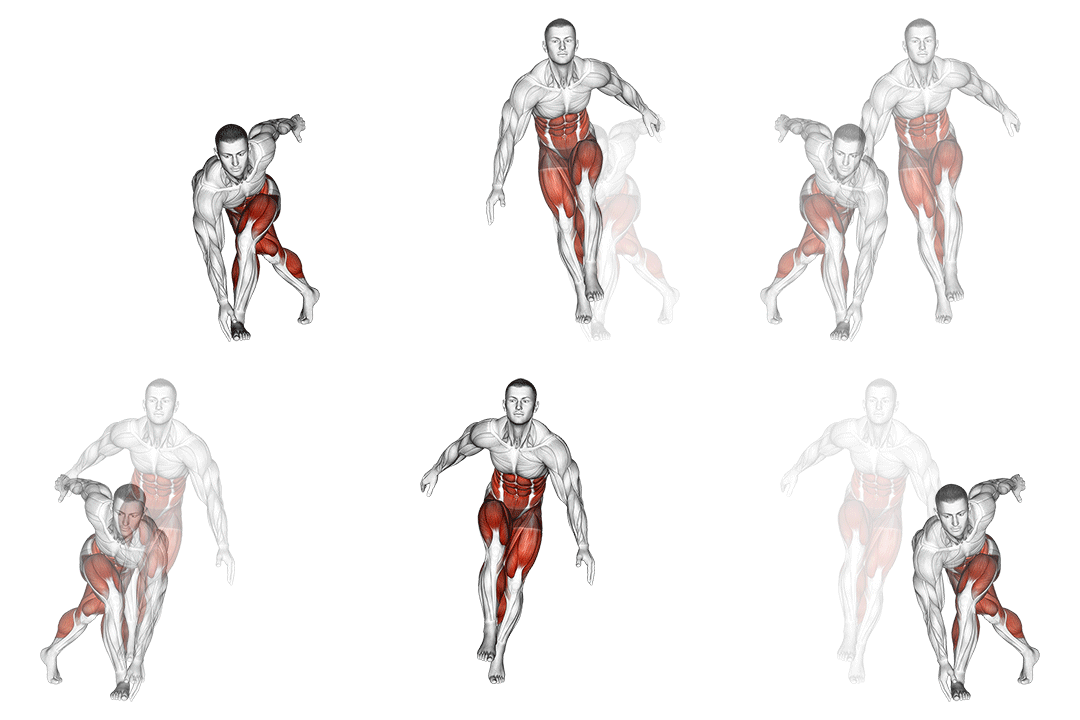
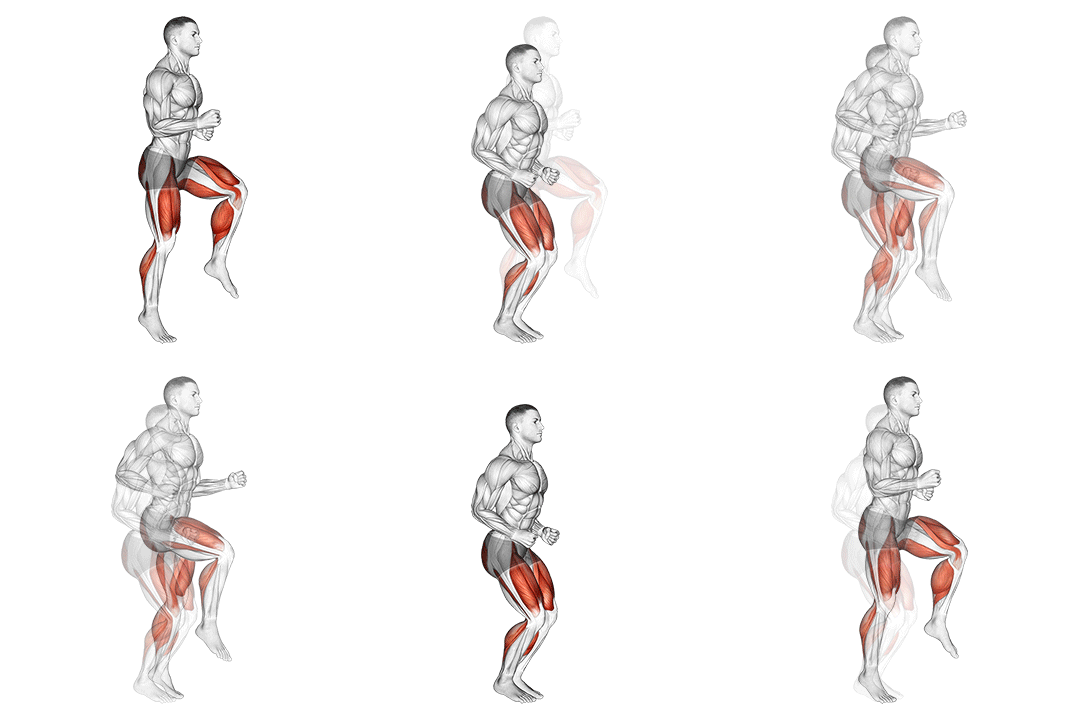
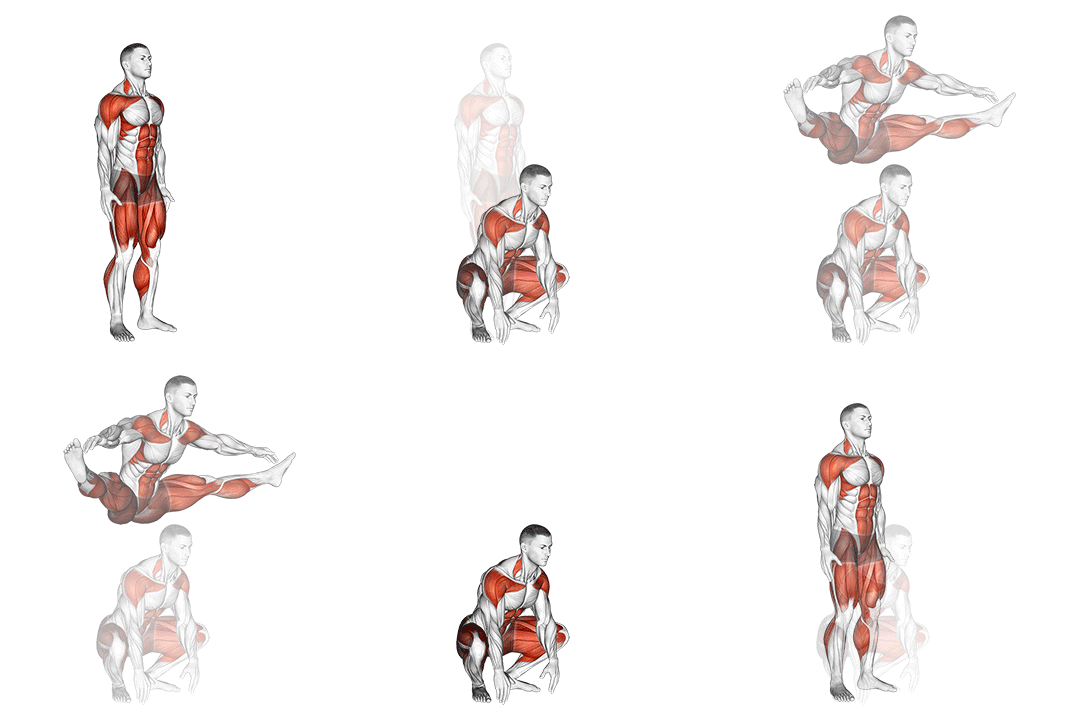
Back And Forth Step
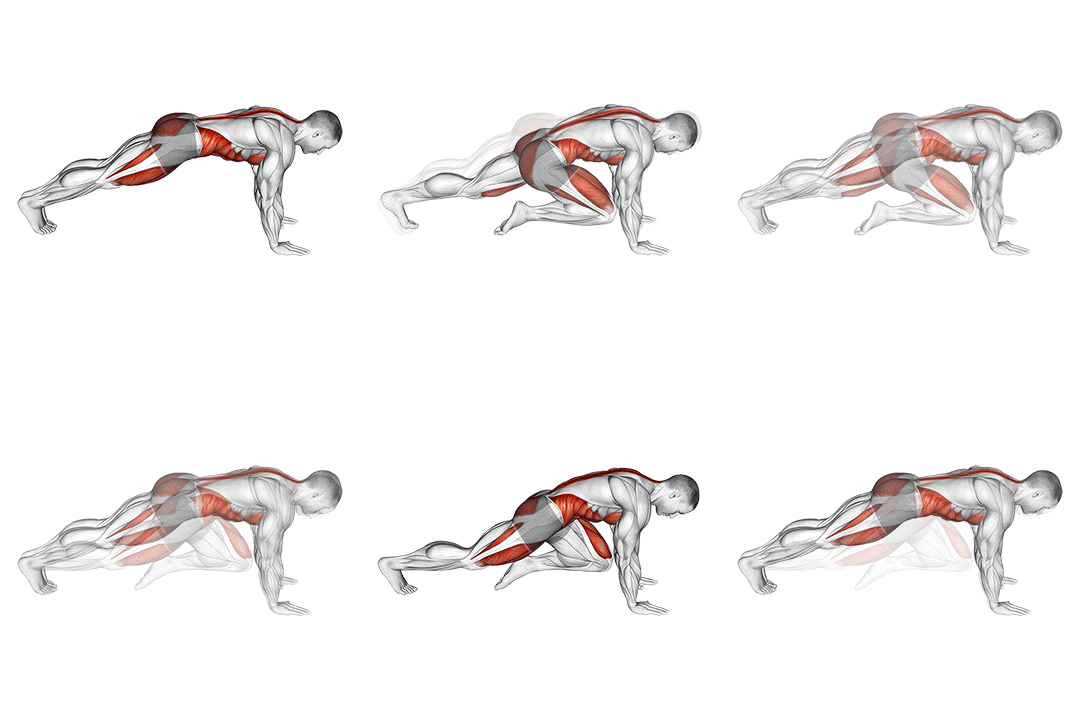
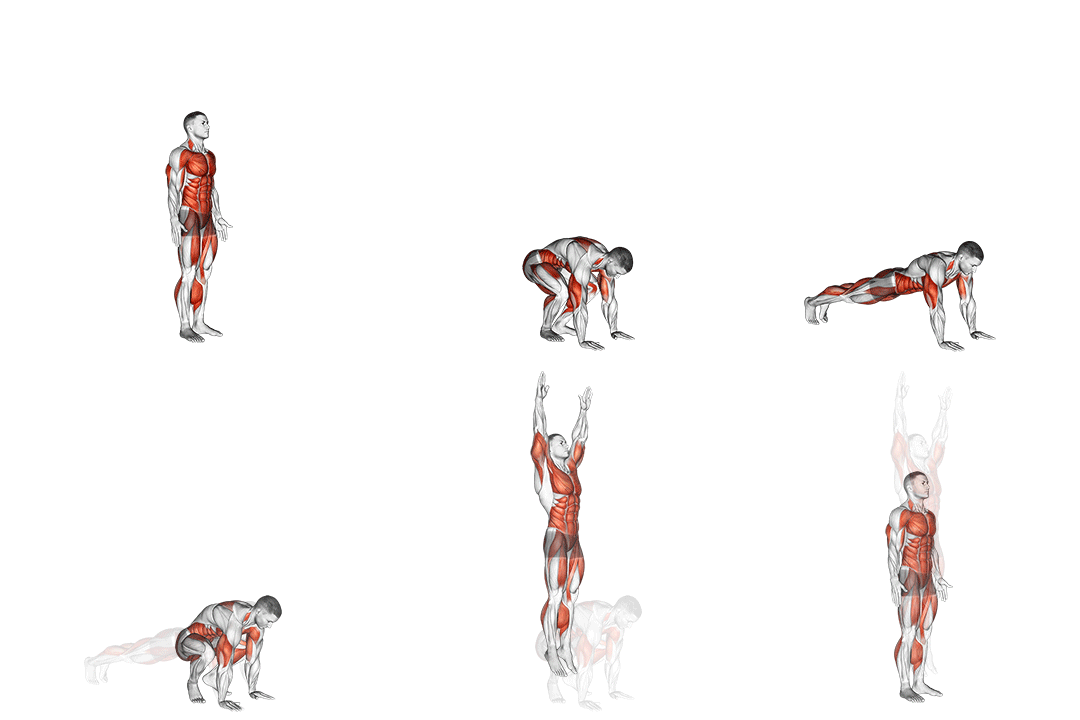
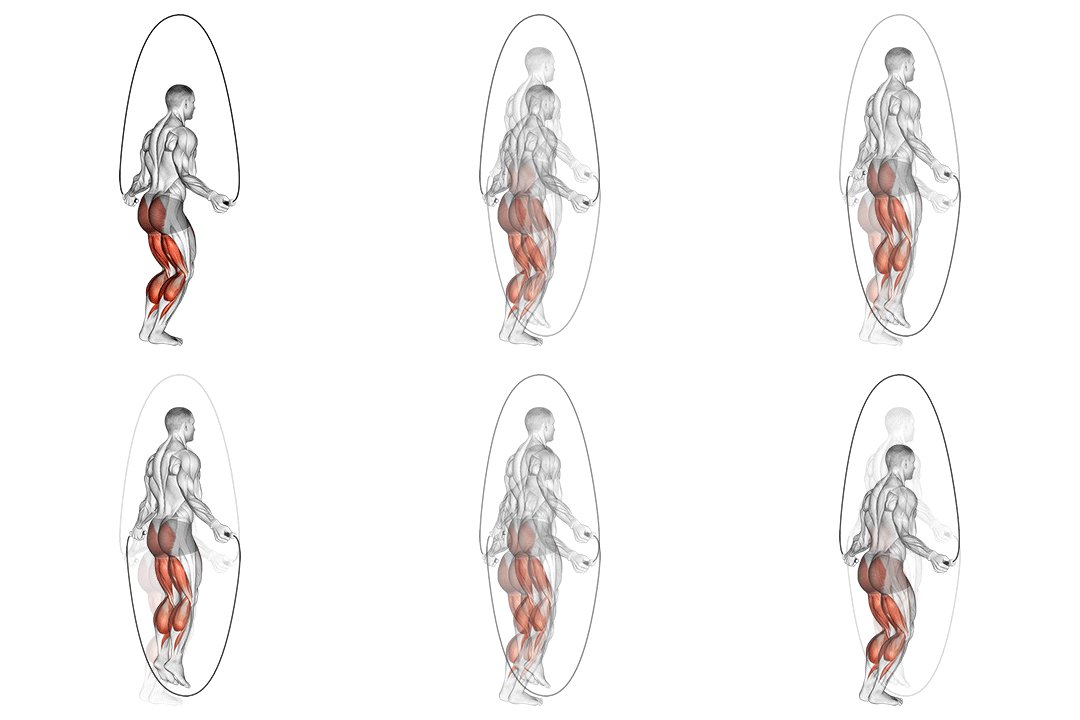
Mountain Climber
Head-to-Head Comparison
| Attribute | Back And Forth Step | Mountain Climber |
|---|---|---|
| Target Muscle |
Cardiovascular-system
|
Cardiovascular
|
| Body Part |
Cardio
|
Cardio
|
| Equipment |
Body-weight
|
Body-weight
|
| Difficulty |
Beginner
|
Intermediate
|
| Movement Type |
Compound
|
Compound
|
| Secondary Muscles |
4
|
3
|
Secondary Muscles Activated
Back And Forth Step
Mountain Climber
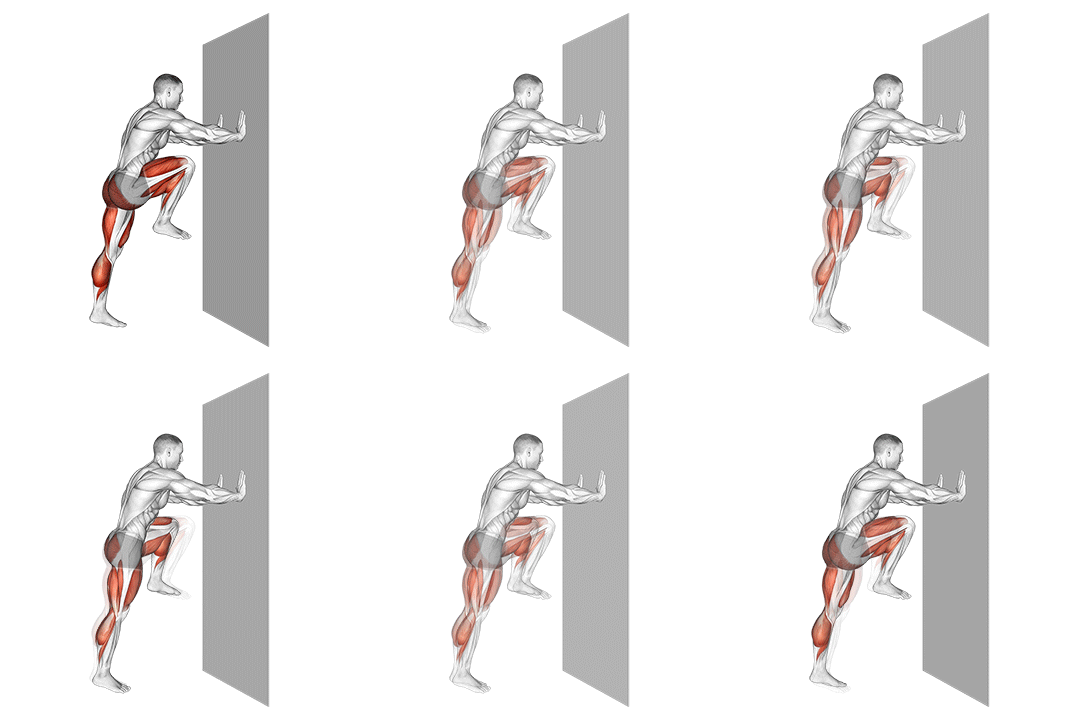
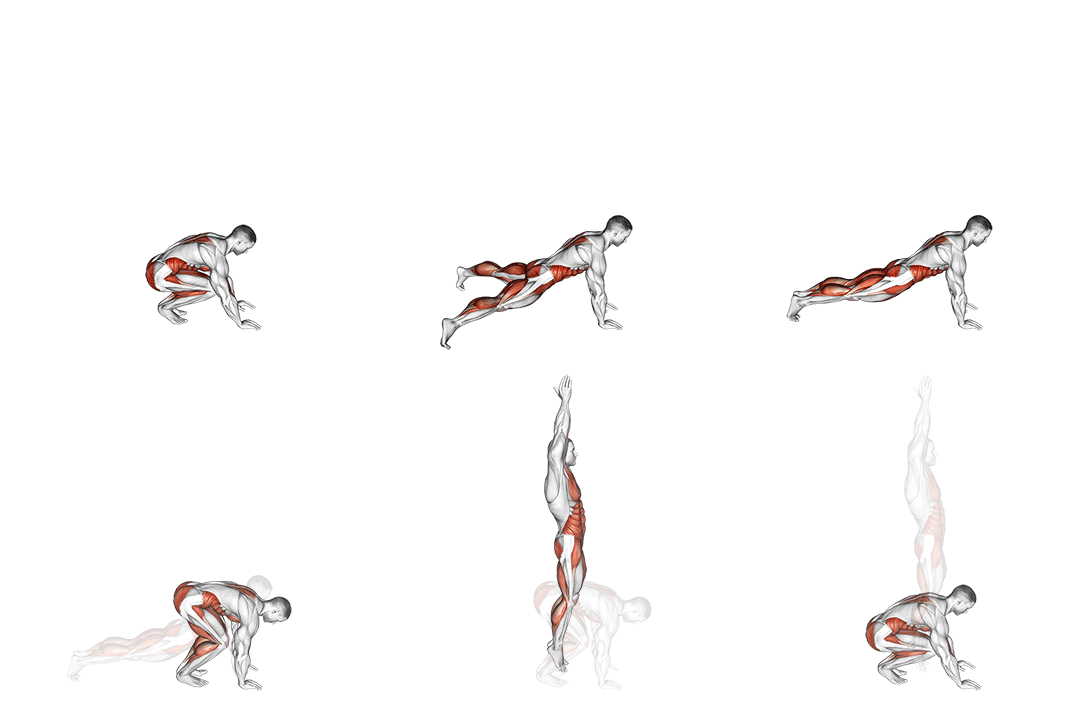
Visual Comparison
Overview
Back And Forth Step vs Mountain Climber — you’re comparing two body-weight, compound cardio moves that demand different movement patterns and muscle emphasis. In this guide you’ll get clear technique cues, biomechanical differences, and practical recommendations for when to use each. I’ll cover primary and secondary muscle activation, equipment and accessibility, learning curve and progression options, plus specific rep and interval ranges so you can pick the better exercise for conditioning, core work, or beginner programming.
Key Differences
- Back And Forth Step primarily targets the Cardiovascular-system, while Mountain Climber focuses on the Cardiovascular.
- Difficulty levels differ: Back And Forth Step is beginner, while Mountain Climber is intermediate.
Pros & Cons
Back And Forth Step
+ Pros
- Beginner-friendly tempo and easy to scale by adjusting step height
- Strong lower-body metabolic stimulus targeting quads, glutes and calves
- Low upper-body and wrist demand—good if you have shoulder limitations
- Simple to program into circuits or steady-state intervals (30–90 sec)
− Cons
- Less core and upper-body engagement compared to dynamic plank-based moves
- Limited high-speed hip flexion work for sprint-like conditioning
- Can stress knees if step height or landing mechanics are improper
Mountain Climber
+ Pros
- High core activation with anti-extension and anti-rotation demand
- Efficient total-body cardio conditioning with high metabolic cost per minute
- Easy to modify intensity by changing cadence (e.g., 50–120 rpm)
- Many progressions and sport-specific variations (cross-body, sliders)
− Cons
- Higher wrist and shoulder load may limit use for some trainees
- Requires better core control and plank strength—harder for beginners
- Fast variants can compromise spinal neutrality if form breaks down
When Each Exercise Wins
Back And Forth Step produces more repeated concentric-eccentric loading on the glutes and quadriceps, which supports localized muscle growth when loaded or performed for higher volume (8–15 reps per leg or 3–5 sets of 30–60 seconds). The vertical force vector and longer time under tension favor hypertrophy in the lower body.
For pure lower-body strength you can add external load (dumbbells or vest) and emphasize controlled eccentric phases; this provides clear overload for knee and hip extensors. Mountain Climbers are primarily conditioning and offer limited progressive overload for maximal strength.
Its slow, repeatable pattern and minimal upper-body demands let beginners focus on hip/knee mechanics and breathing. You can start with 20–30 second intervals and build to longer sets without exposing the shoulders to sustained axial load.
Mountain Climbers require zero props and pack a lot of metabolic work into small time windows (e.g., 20–40 seconds on, 20 seconds off), making them ideal for compact, equipment-free home circuits. They also improve core stability and conditioning simultaneously.
Frequently Asked Questions
Can I do both Back And Forth Step and Mountain Climber in the same workout?
Yes. Pair Back And Forth Step as the primary lower-body work (3–5 sets of 30–60 sec) and finish with Mountain Climbers as a metabolic/conditioning finisher (4 rounds of 20–30 sec). This sequence preserves lower-body force output while adding a high-core, high-cadence interval.
Which exercise is better for beginners?
Back And Forth Step is better for most beginners because it has a slower tempo and lower upper-body demand. Start with a 6–8 inch step and 20–30 second intervals, focusing on knee alignment and hip hinge to build mechanics.
How do the muscle activation patterns differ?
Back And Forth Step emphasizes cyclic concentric-eccentric activation of the hip and knee extensors with vertical force vectors, while Mountain Climbers combine rapid hip flexion with sustained isometric shoulder and anti-extension core demands. In short, lower-limb concentric work versus core/shoulder stabilization plus hip flexor velocity.
Can Mountain Climber replace Back And Forth Step?
Not entirely. Mountain Climbers can replace Back And Forth Step for cardio and core conditioning but won’t provide the same targeted eccentric-concentric loading for quad and glute muscle growth. Use Mountain Climbers for conditioning and Back And Forth Step when you need lower-body overload.
Expert Verdict
Choose Back And Forth Step when your goal is lower-body conditioning, muscle growth, or when you need a low-wrist, beginner-friendly option. It gives repeatable concentric-eccentric loading to quadriceps, glutes and hamstrings and scales well with step height or added load. Choose Mountain Climber when you want compact, high-intensity conditioning plus core and shoulder endurance; it’s superior for time-efficient metabolic work and anti-extension core training. Program both: use Back And Forth Step for strength or hypertrophy-focused blocks and Mountain Climbers for metabolic finisher sets or interval conditioning.
Also Compare
More comparisons with Back And Forth Step
Compare More Exercises
Use our free comparison tool to analyze any two exercises head-to-head.
Compare Exercises