

Back And Forth Step vs Push To Run: Complete Comparison Guide
Back And Forth Step vs Push To Run — two body-weight cardio movers that tax your legs and cardiovascular system in different ways. If you want clear guidance on which to choose, you’re in the right place: I’ll compare muscle activation, biomechanics, equipment needs, difficulty, injury risk, and practical programming. You’ll get technique cues, sample rep/time ranges, and situations where one exercise beats the other. Read on so you can pick the exercise that matches your goals—whether that’s steady-state conditioning, interval power work, or a safe home routine.
Exercise Comparison
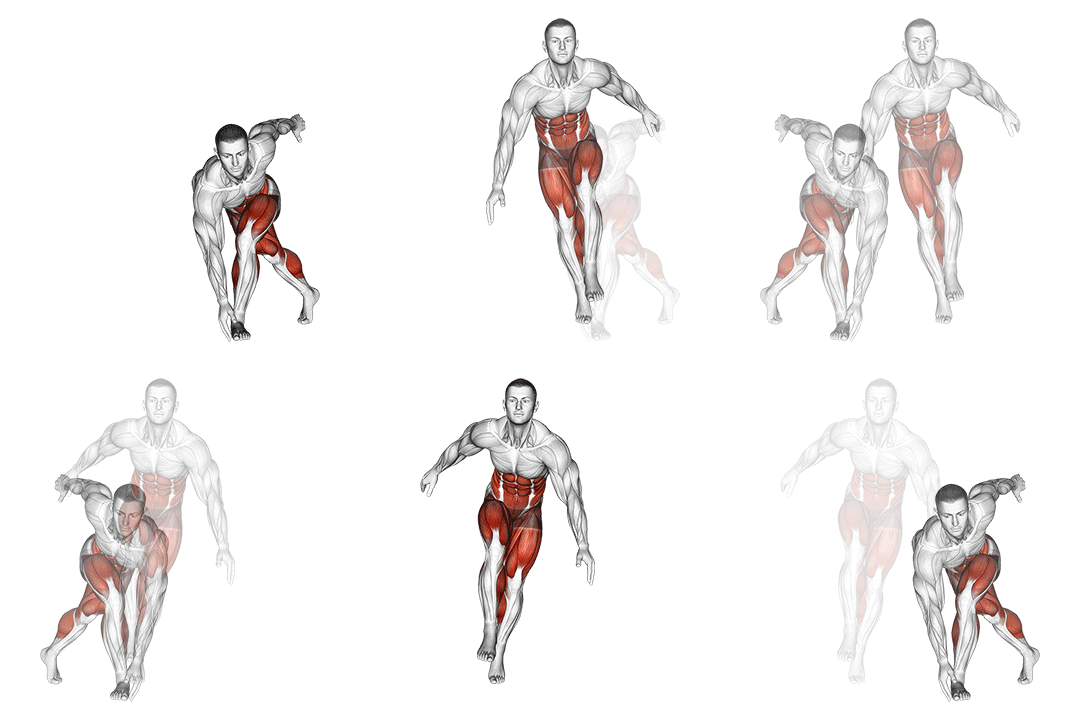
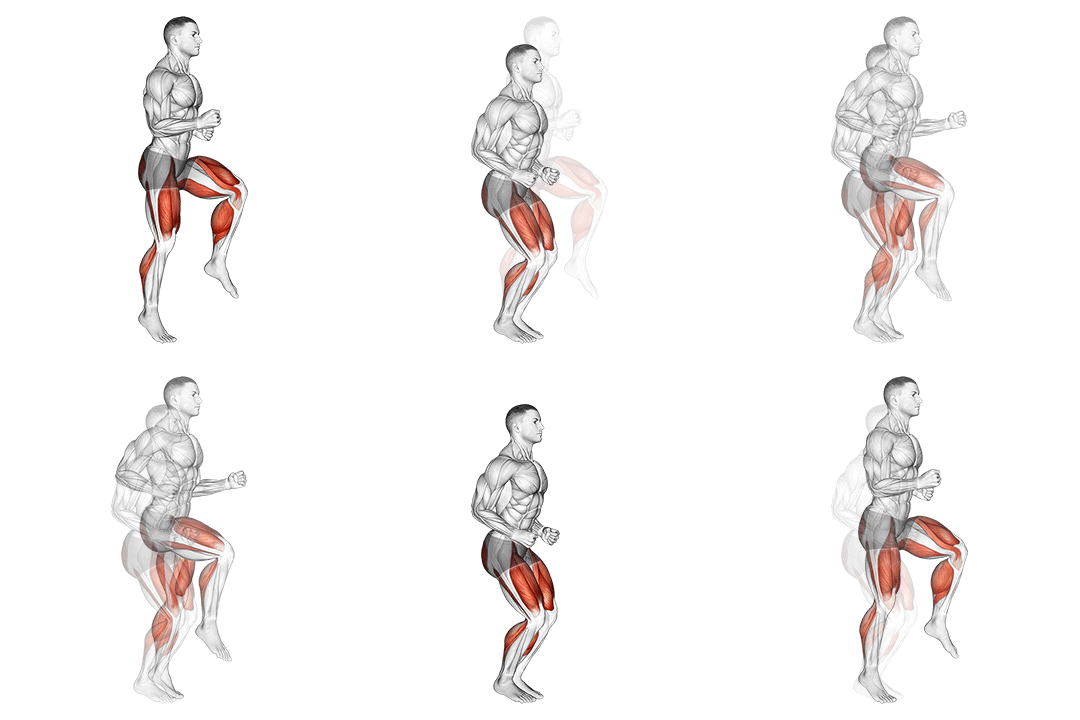
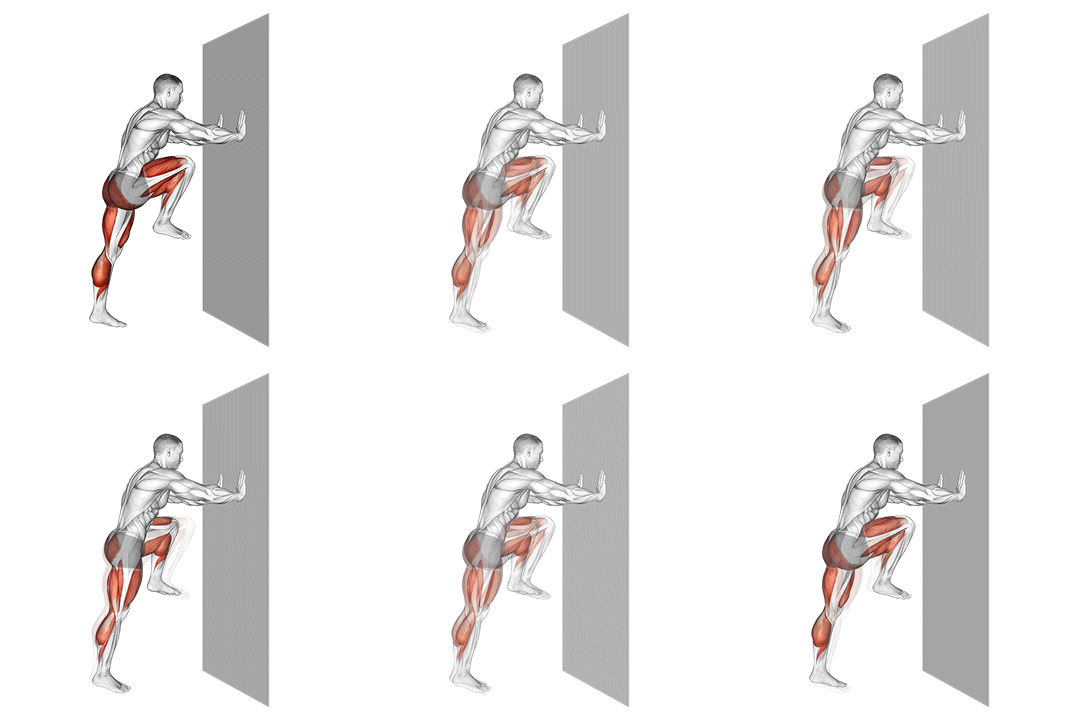
Back And Forth Step
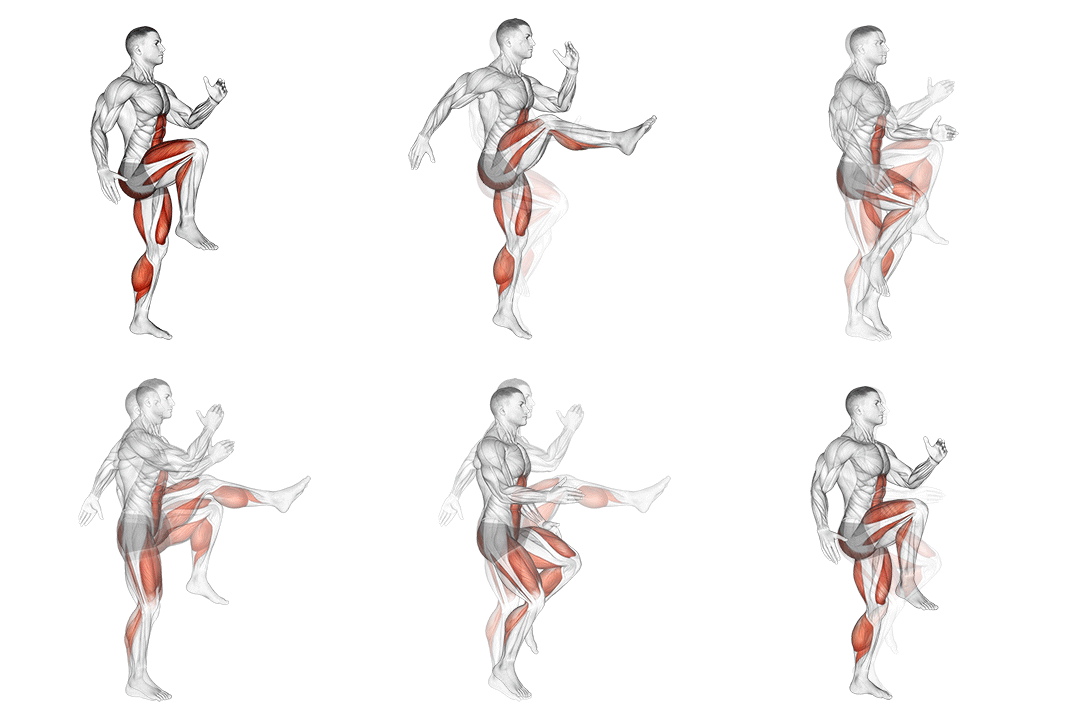
Push To Run
Head-to-Head Comparison
| Attribute | Back And Forth Step | Push To Run |
|---|---|---|
| Target Muscle |
Cardiovascular-system
|
Cardiovascular-system
|
| Body Part |
Cardio
|
Cardio
|
| Equipment |
Body-weight
|
Body-weight
|
| Difficulty |
Beginner
|
Intermediate
|
| Movement Type |
Compound
|
Compound
|
| Secondary Muscles |
4
|
3
|
Secondary Muscles Activated
Back And Forth Step
Push To Run
Visual Comparison
Overview
Back And Forth Step vs Push To Run — two body-weight cardio movers that tax your legs and cardiovascular system in different ways. If you want clear guidance on which to choose, you’re in the right place: I’ll compare muscle activation, biomechanics, equipment needs, difficulty, injury risk, and practical programming. You’ll get technique cues, sample rep/time ranges, and situations where one exercise beats the other. Read on so you can pick the exercise that matches your goals—whether that’s steady-state conditioning, interval power work, or a safe home routine.
Key Differences
- Difficulty levels differ: Back And Forth Step is beginner, while Push To Run is intermediate.
- Both exercises target the Cardiovascular-system using Body-weight. The main differences are in their movement patterns and muscle activation angles.
Pros & Cons
Back And Forth Step
+ Pros
- Beginner-friendly with minimal technical skill required
- Low space and equipment needs—can be done indoors
- Longer stance phases reduce peak impact, safer for joints
- Easily paced for steady-state or moderate intervals (20–60s)
− Cons
- Lower peak power output compared to sprint-style moves
- Less stimulus for explosive hip extension and ankle plantarflexion
- May feel monotonous at high volumes without tempo variation
Push To Run
+ Pros
- Higher peak power and faster force production for anaerobic conditioning
- Greater recruitment of hip extensors and calves for propulsion
- Easily progressed by increasing speed, incline, or distance
- Efficient for short, high-intensity interval training (10–30s sprints)
− Cons
- Higher impact and technical demand increase injury risk
- Requires more space and good surface traction
- Not ideal for absolute beginners or those with joint issues
When Each Exercise Wins
For hypertrophy you want longer time under tension and consistent loading. Use 3–5 sets of 30–60 second stepping intervals or 8–12 controlled step reps to drive metabolic stress in the quads and glutes; Back And Forth Step is easier to manipulate for volume without excessive peak impact.
Strength and power respond to high-rate force production and overloaded hip extension. Short, intense Push To Run intervals (8–20 seconds, full effort) increase peak ground reaction forces and recruit fast-twitch fibers, making it better for improving lower-body power and force output.
Beginners benefit from low technical demand and lower impact. The step lets you control cadence, maintain knee angles around 60°–90°, and build aerobic base safely before introducing faster ground contact and higher loading patterns.
Home workouts often lack space and safe running surfaces. Back And Forth Step requires minimal room and no footwear beyond comfortable shoes, making it the practical choice for indoor conditioning and circuit work.
Frequently Asked Questions
Can I do both Back And Forth Step and Push To Run in the same workout?
Yes. Pair a Back And Forth Step warm-up (3–5 minutes at moderate pace) with 3–6 Push To Run intervals later in the session. Use the step for low-impact accumulation and the sprints for short power efforts, keeping overall session volume and joint load in check.
Which exercise is better for beginners?
Back And Forth Step is better for beginners because it has lower technical demand and reduced peak impact. Start with 20–40 second intervals and focus on controlled knee extension and neutral spine before progressing to faster, higher-impact movements.
How do the muscle activation patterns differ?
Back And Forth Step emphasizes longer-duration concentric/eccentric work in the quads and glutes with moderate ankle action, while Push To Run shifts to rapid hip extension and explosive plantarflexion, increasing stretch-shortening cycle use and peak hamstring/calf activation.
Can Push To Run replace Back And Forth Step?
Push To Run can replace Back And Forth Step if your goal is power and you have the space and joint resilience. For hypertrophy, volume accumulation, or beginner programming, Back And Forth Step remains the better primary choice.
Expert Verdict
Choose Back And Forth Step when you need a low-tech, low-impact way to build aerobic capacity, accumulate volume for muscle growth, or teach basic movement patterns. It’s the safer, more accessible option for beginners and home training. Choose Push To Run when your goal is to develop lower-body power, sprint-specific conditioning, or higher-intensity anaerobic work—use short, maximal efforts (8–30s) and allow full recovery. Program both: start clients on Back And Forth Step for base conditioning, then add Push To Run intervals once technique and joint tolerance are solid to maximize power and performance.
Also Compare
More comparisons with Back And Forth Step
Compare More Exercises
Use our free comparison tool to analyze any two exercises head-to-head.
Compare Exercises