

Back Pec Stretch vs Pull-up: Complete Comparison Guide
Back Pec Stretch vs Pull-up — if you want clearer choices for back work, you’re in the right place. I’ll show you how each move loads the lats, how secondary muscles join the action, and which one fits your goals, equipment, and skill level. You’ll get concrete technique cues, numbers for reps and hold times, and quick biomechanical takeaways about length-tension and force vectors. Read on to decide which move to prioritize in your sessions and how to program either exercise for strength, muscle growth, mobility, or rehab.
Exercise Comparison
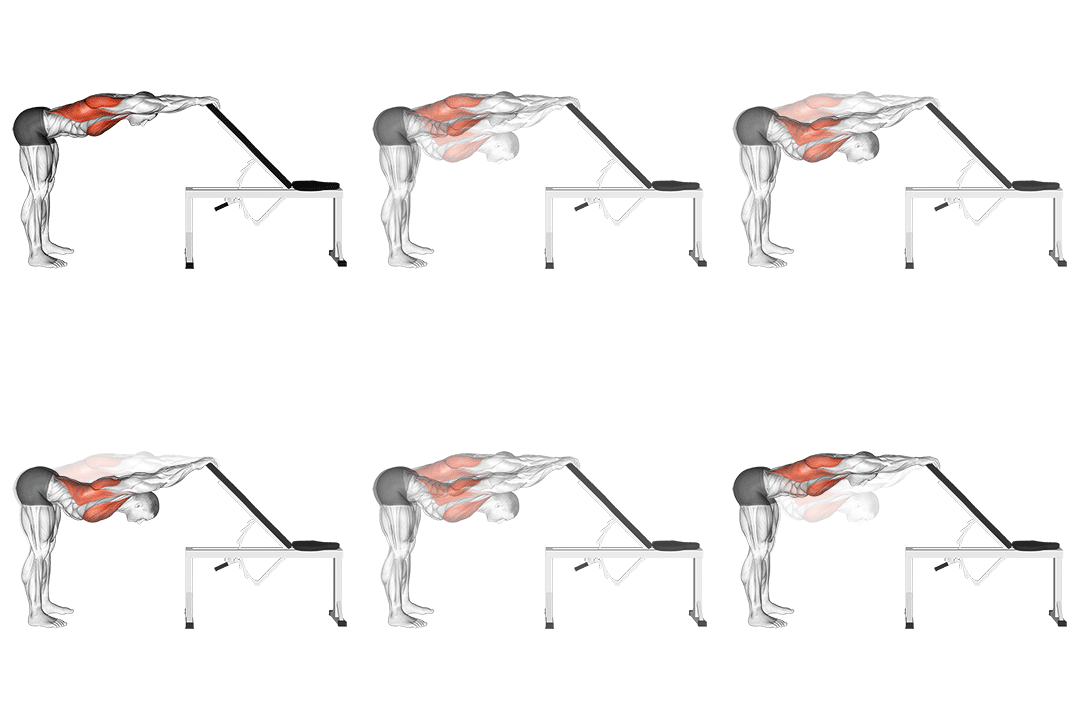
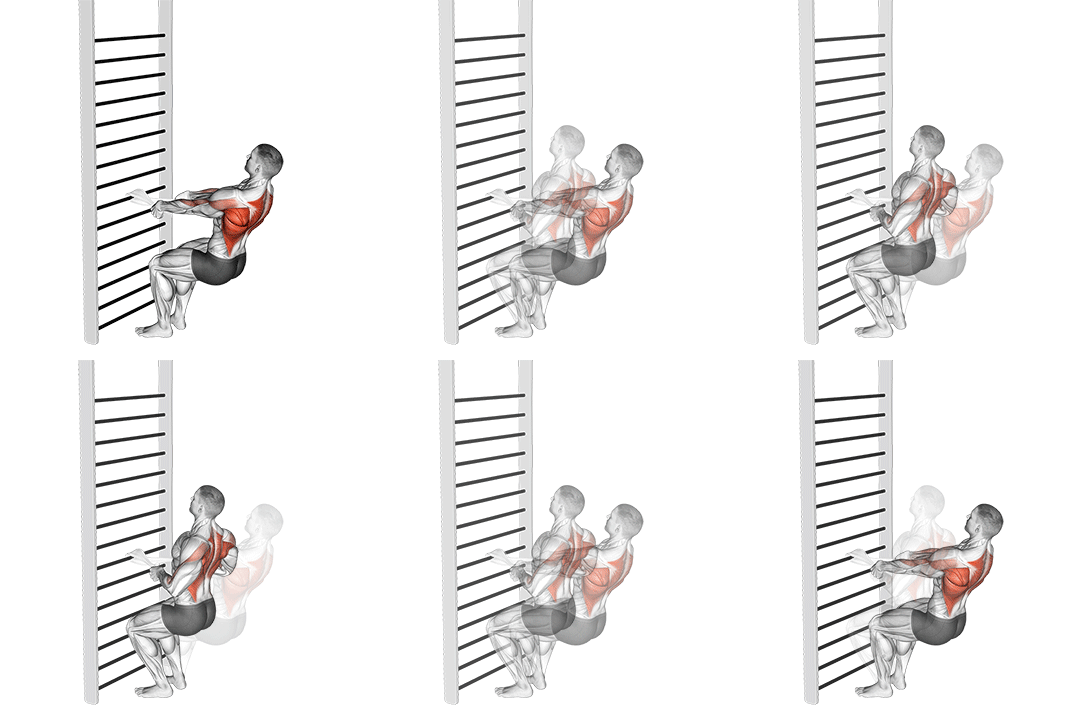
Back Pec Stretch
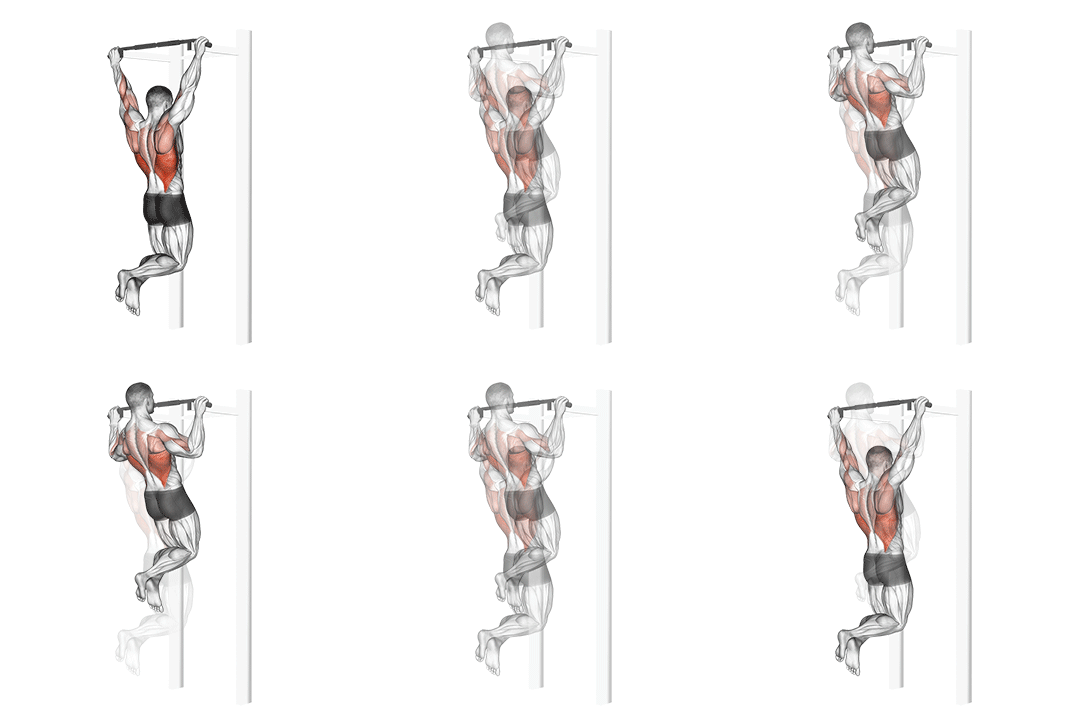
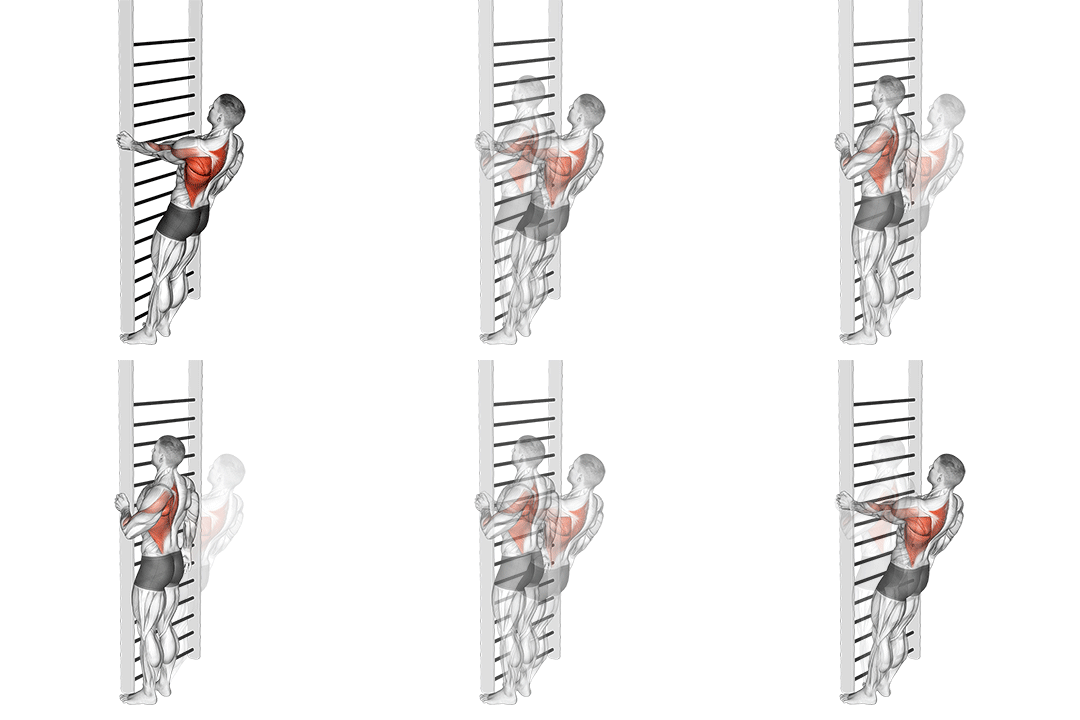
Pull-up
Head-to-Head Comparison
| Attribute | Back Pec Stretch | Pull-up |
|---|---|---|
| Target Muscle |
Lats
|
Lats
|
| Body Part |
Back
|
Back
|
| Equipment |
Body-weight
|
Body-weight
|
| Difficulty |
Beginner
|
Advanced
|
| Movement Type |
Isolation
|
Compound
|
| Secondary Muscles |
2
|
2
|
Secondary Muscles Activated
Back Pec Stretch
Pull-up
Visual Comparison
Overview
Back Pec Stretch vs Pull-up — if you want clearer choices for back work, you’re in the right place. I’ll show you how each move loads the lats, how secondary muscles join the action, and which one fits your goals, equipment, and skill level. You’ll get concrete technique cues, numbers for reps and hold times, and quick biomechanical takeaways about length-tension and force vectors. Read on to decide which move to prioritize in your sessions and how to program either exercise for strength, muscle growth, mobility, or rehab.
Key Differences
- Back Pec Stretch is an isolation exercise, while Pull-up is a compound movement.
- Difficulty levels differ: Back Pec Stretch is beginner, while Pull-up is advanced.
- Both exercises target the Lats using Body-weight. The main differences are in their movement patterns and muscle activation angles.
Pros & Cons
Back Pec Stretch
+ Pros
- Requires no equipment — usable anywhere
- Improves lat length and thoracic mobility when held 30–90 seconds
- Low fatigue — suitable for warm-ups and rehab
- Easy to teach and scale for beginners
− Cons
- Produces minimal mechanical tension for muscle growth
- Limited progression options for strength
- Can be performed poorly and create compensatory shoulder strain
Pull-up
+ Pros
- High mechanical tension — excellent for strength and muscle growth
- Engages multiple joints and muscle groups (lats, biceps, forearms, scapular retractors)
- Easily progressive (assistance to added weight)
- Straightforward testing tool for upper-body pulling strength
− Cons
- Requires a bar and sufficient baseline strength
- Higher technical demand and injury risk with poor form
- Can overuse biceps and forearms if lat engagement is weak
When Each Exercise Wins
Pull-ups generate greater mechanical tension across the lats and allow progressive overload with added weight, which drives muscle growth better than a passive stretch. Aim for 6–12 reps with controlled eccentrics to maximize hypertrophy.
Pull-ups load the vertical pulling pattern and can be trained in low-rep, high-load ranges (3–6 reps) or with weighted variations, producing measurable increases in pulling strength and force production.
The Back Pec Stretch is beginner-friendly: it builds shoulder mobility and lat length without demanding pulling strength. It prepares the thoracic spine and scapula for future pull-up work while reducing early overload risk.
Most homes lack a stable pull-up bar, so the Back Pec Stretch wins on accessibility. It still improves range of motion and can be combined with band-assisted rows for posterior development.
Frequently Asked Questions
Can I do both Back Pec Stretch and Pull-up in the same workout?
Yes. Use the Back Pec Stretch as a mobility primer for 2–3 sets of 30–60 seconds to improve shoulder and thoracic position, then perform pull-ups or progressions. The stretch enhances range of motion so you can achieve fuller, safer pull-up reps.
Which exercise is better for beginners?
For absolute beginners the Back Pec Stretch is better because it requires minimal strength and teaches shoulder positioning. Once you develop scapular control and some pulling strength, progress into assisted pull-ups and negatives.
How do the muscle activation patterns differ?
The Back Pec Stretch emphasizes passive lengthening of the lats at long muscle lengths with low EMG, while pull-ups produce active concentric and eccentric lat contractions with peak activation near the top of the pull. Pull-ups also load elbow flexors heavily, which the stretch does not.
Can Pull-up replace Back Pec Stretch?
No — pull-ups do not replace the mobility benefits of the Back Pec Stretch. Pull-ups build strength and hypertrophy, but you should still use targeted stretches or mobility drills to restore and maintain shoulder and thoracic range of motion.
Expert Verdict
Use the Back Pec Stretch when your goal is mobility, rehab, or a low-load way to prepare the posterior chain and shoulders for loaded work. It’s a beginner-friendly, equipment-free option that helps you achieve better thoracic extension and lat length. Use Pull-ups when you want measurable strength and muscle growth; they deliver high mechanical tension and scalable overload. Program them together: start sessions with the stretch to prime range of motion, then perform pull-ups or progressions for sets in the 3–12 rep range depending on strength or hypertrophy goals. Prioritize scapular control and a slow eccentric for safest progress.
Also Compare
More comparisons with Back Pec Stretch

Compare More Exercises
Use our free comparison tool to analyze any two exercises head-to-head.
Compare Exercises