

Back Pec Stretch vs Pullups: Complete Comparison Guide
Back Pec Stretch vs Pullups — you want a clear take on which movement serves your back training goals. {Exercise1} vs {Exercise2} is a useful shorthand, but here we'll break down how the Back Pec Stretch (a bodyweight isolation move) and Pullups (a compound bodyweight pull) load the lats, recruit secondary muscles, and fit into your program. I’ll cover biomechanics, technique cues, rep ranges, progression options, and when to choose one or combine both so you can build strength, size, or mobility efficiently.
Exercise Comparison
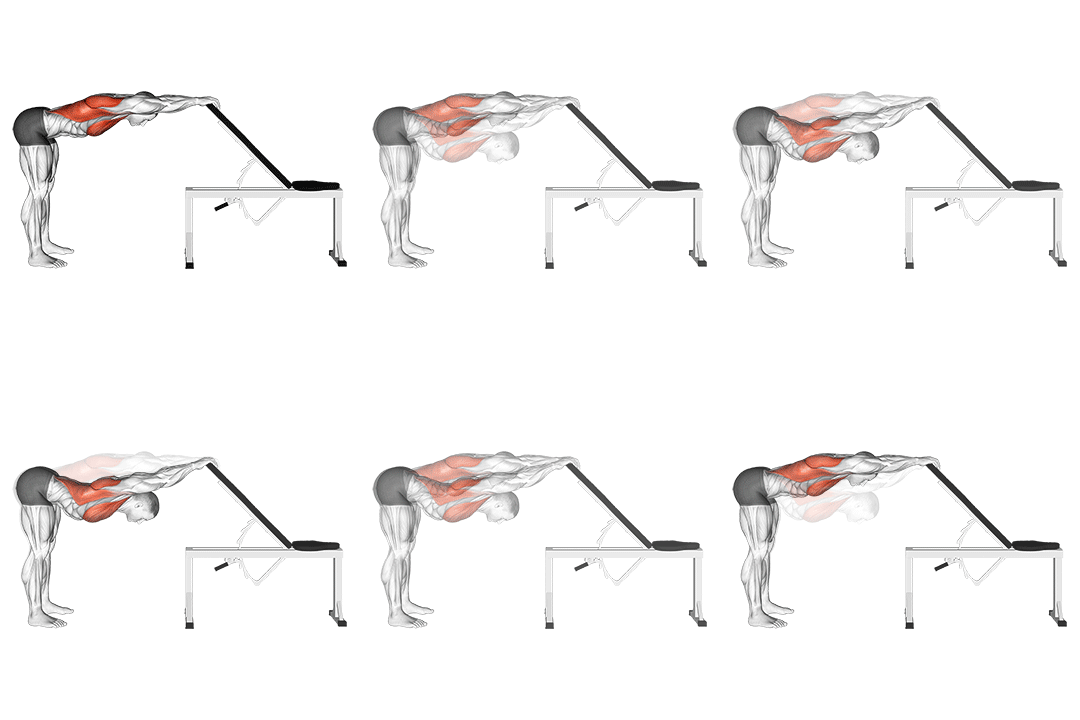
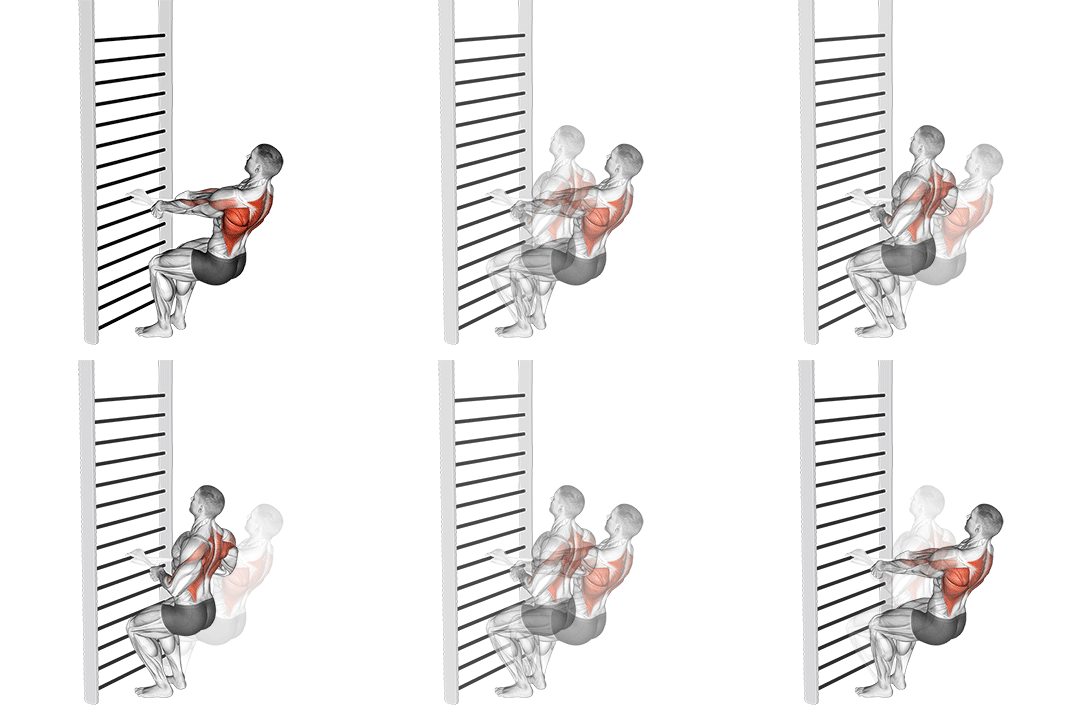
Back Pec Stretch
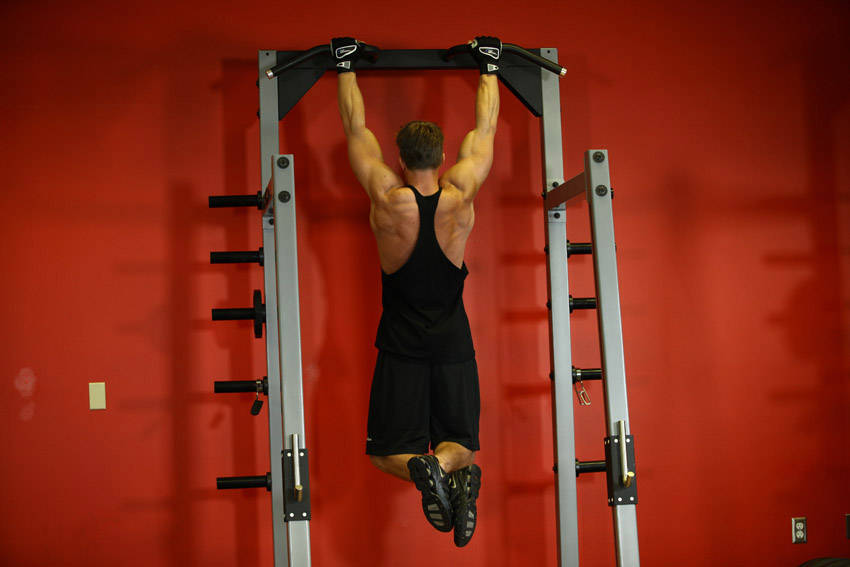
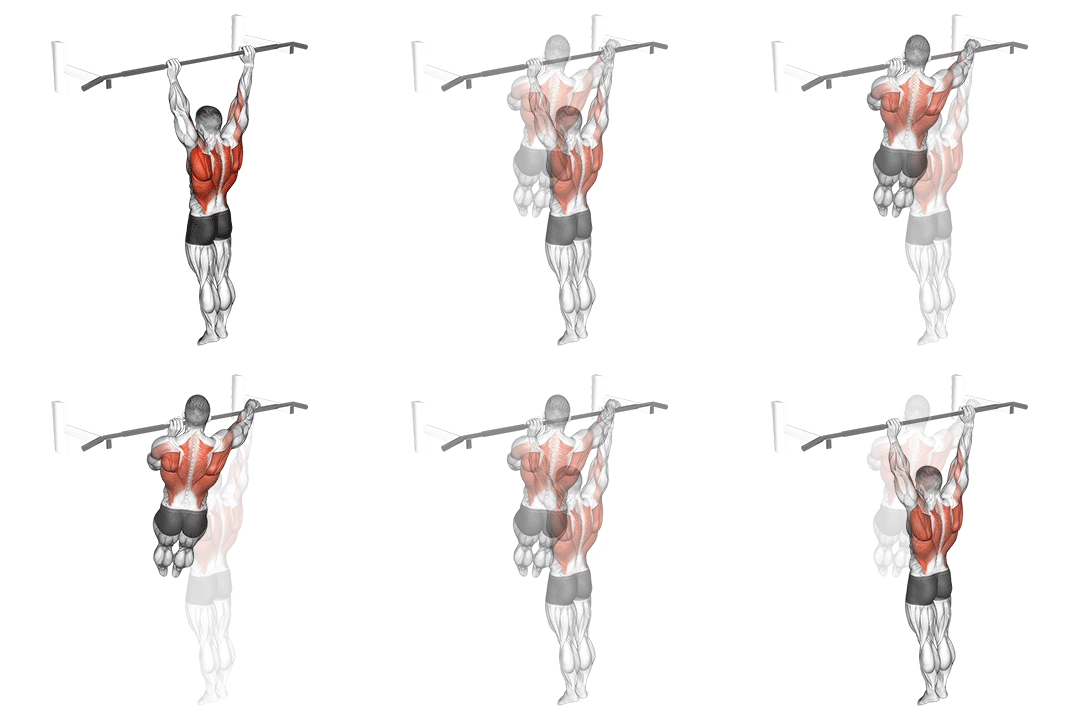
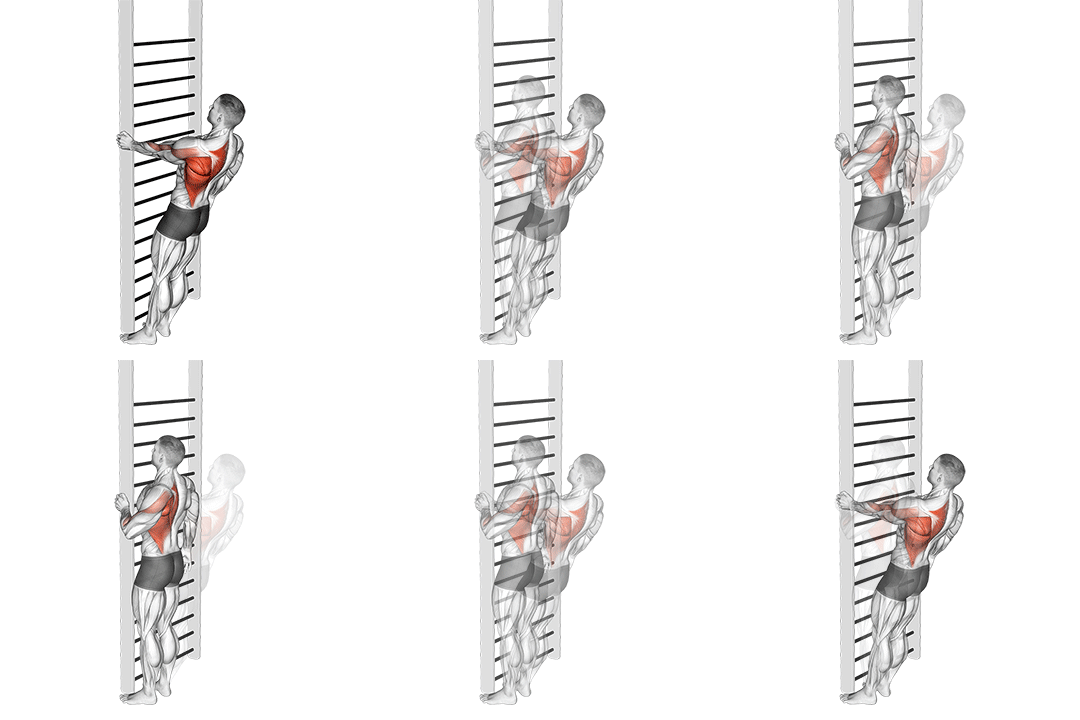
Pullups
Head-to-Head Comparison
| Attribute | Back Pec Stretch | Pullups |
|---|---|---|
| Target Muscle |
Lats
|
Lats
|
| Body Part |
Back
|
Back
|
| Equipment |
Body-weight
|
Body-weight
|
| Difficulty |
Beginner
|
Intermediate
|
| Movement Type |
Isolation
|
Compound
|
| Secondary Muscles |
2
|
2
|
Secondary Muscles Activated
Back Pec Stretch
Pullups
Visual Comparison
Overview
Back Pec Stretch vs Pullups — you want a clear take on which movement serves your back training goals. {Exercise1} vs {Exercise2} is a useful shorthand, but here we'll break down how the Back Pec Stretch (a bodyweight isolation move) and Pullups (a compound bodyweight pull) load the lats, recruit secondary muscles, and fit into your program. I’ll cover biomechanics, technique cues, rep ranges, progression options, and when to choose one or combine both so you can build strength, size, or mobility efficiently.
Key Differences
- Back Pec Stretch is an isolation exercise, while Pullups is a compound movement.
- Difficulty levels differ: Back Pec Stretch is beginner, while Pullups is intermediate.
- Both exercises target the Lats using Body-weight. The main differences are in their movement patterns and muscle activation angles.
Pros & Cons
Back Pec Stretch
+ Pros
- Highly accessible — no bar or gym needed
- Improves lat length-tension and shoulder mobility
- Low acute load, beginner-friendly
- Useful for pre-activation and cooldowns
− Cons
- Minimal concentric loading for muscle growth
- Limited progression for strength
- Can overstretch shoulders if done with poor scapular mechanics
Pullups
+ Pros
- High active lat loading for strength and hypertrophy
- Lots of progression options (bodyweight to heavy weighted)
- Also trains biceps and mid-back for compound transfer
- Improves pulling mechanics and scapular control when done correctly
− Cons
- Requires a pull-up bar or rings
- Steeper learning curve for untrained athletes
- Higher injury risk if scapular control and core stability are poor
When Each Exercise Wins
Pullups provide active concentric and eccentric loading across the full ROM, allowing progressive overload (6–12 reps for hypertrophy, 3–5 sets). The lats receive high mechanical tension and metabolic stress needed for muscle growth.
Pullups let you add external load and manipulate rep ranges (3–6 reps for strength), directly improving force production in the pulling vector—critical for transferable strength.
As a low-load, beginner-friendly movement, the Back Pec Stretch teaches you scapular mobility and lat length without demanding high strength. Use it to build mobility and pre-activate before progressing to assisted pull variants.
No bar or gym access needed makes the Back Pec Stretch ideal at home. If you have a sturdy door frame or resistance band, you can still use assisted pull variations, but the stretch wins for pure accessibility.
Frequently Asked Questions
Can I do both Back Pec Stretch and Pullups in the same workout?
Yes. Start sessions with 2–3 sets of Back Pec Stretch (30–60s) to improve scapular mobility and lat length, then perform pullup sets (3–5 sets) for strength or hypertrophy. Doing the stretch first primes the muscle’s length-tension curve and can improve pullup ROM.
Which exercise is better for beginners?
For absolute beginners the Back Pec Stretch is better because it requires no strength and teaches shoulder/scapular positioning. Use it alongside assisted pull variations (band-assisted or negative reps) as you build the strength for unassisted pullups.
How do the muscle activation patterns differ?
Pullups produce high phasic activation—concentric and eccentric contractions as you pull and lower—loading the lats and biceps. The Back Pec Stretch produces low-level, sustained activation and passive tension at long muscle lengths, improving flexibility and end-range motor control rather than producing high force.
Can Pullups replace Back Pec Stretch?
Not fully. Pullups replace active loading needs but don’t deliver the same passive lengthening and mobility benefits as the Back Pec Stretch. If your goal is both strength and range, include stretch work in your warm-up or cooldown in addition to pullups.
Expert Verdict
Use Pullups when your goal is muscle growth or strength because they place the lats under active, progressive load and recruit biceps and mid-back for compound transfer. Aim for 3–5 sets of 6–12 reps for hypertrophy and 3–6 reps with added weight for strength. Reserve the Back Pec Stretch for mobility work, pre-activation, and recovery—perform 2–3 sets of 30–90 second holds with the shoulder at roughly 90°–135° of flexion to improve lat length-tension and scapular mechanics. Combine both: stretch and mobilize first, then load with pullups to optimize range and force production.
Also Compare
More comparisons with Back Pec Stretch
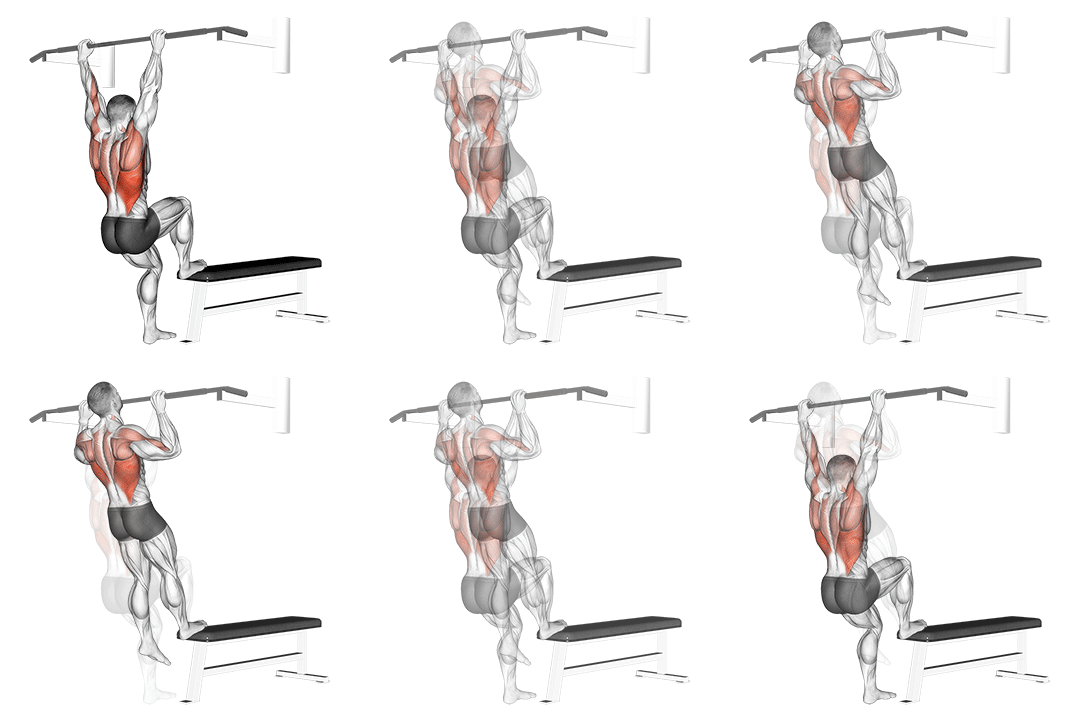

Compare More Exercises
Use our free comparison tool to analyze any two exercises head-to-head.
Compare Exercises