

Backward Jump vs Balance Board: Complete Comparison Guide
Backward Jump vs Balance Board — you want a clear pick for quad development, stability, and practical use. I’ll walk you through how each move loads the quads, which secondary muscles kick in, what equipment and space you need, and the relative injury risks. You’ll get technique cues (knee angle, trunk position), rep ranges for power and hypertrophy, and straightforward recommendations so you can choose the exercise that matches your goal—strength, muscle growth, balance, or home convenience.
Exercise Comparison
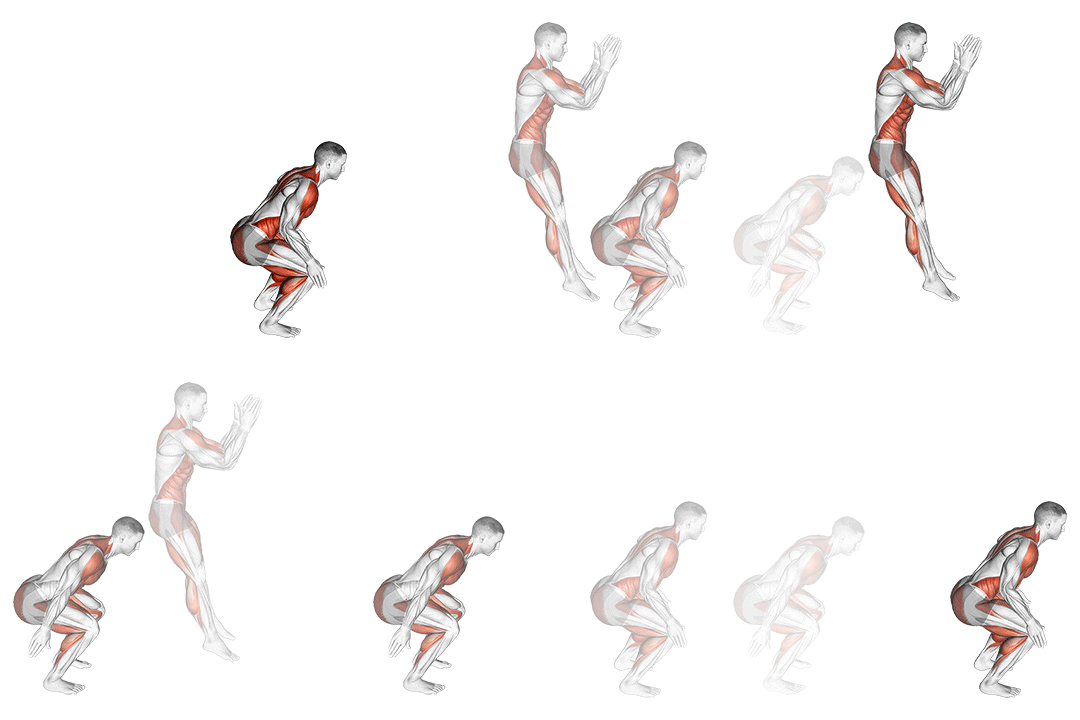
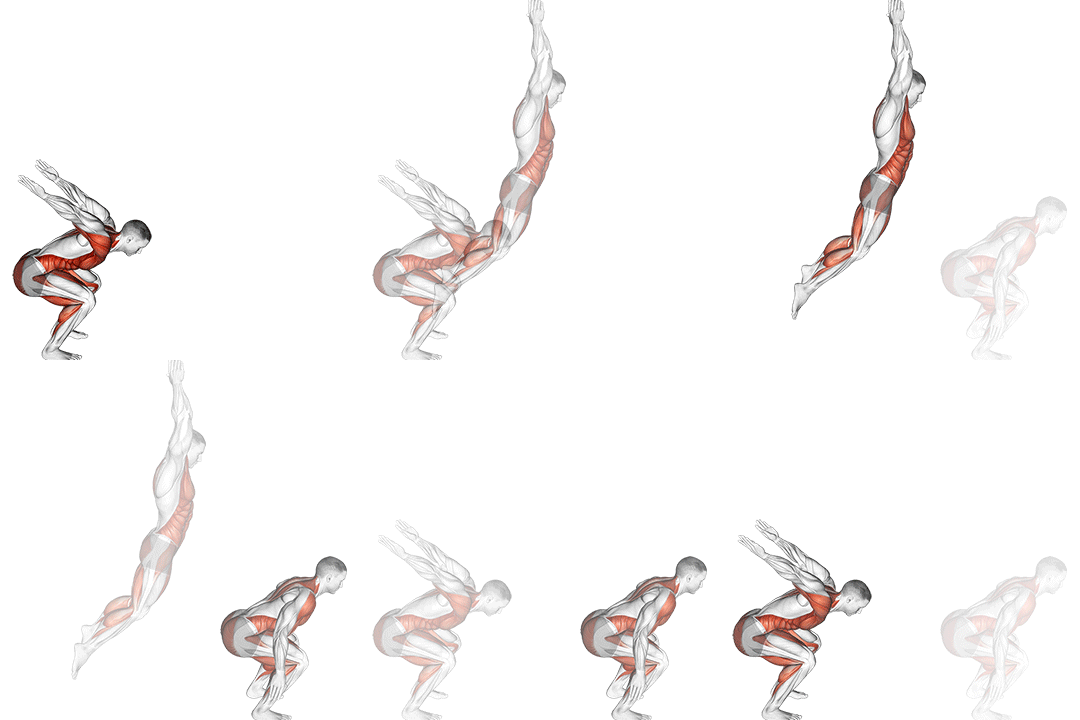
Backward Jump
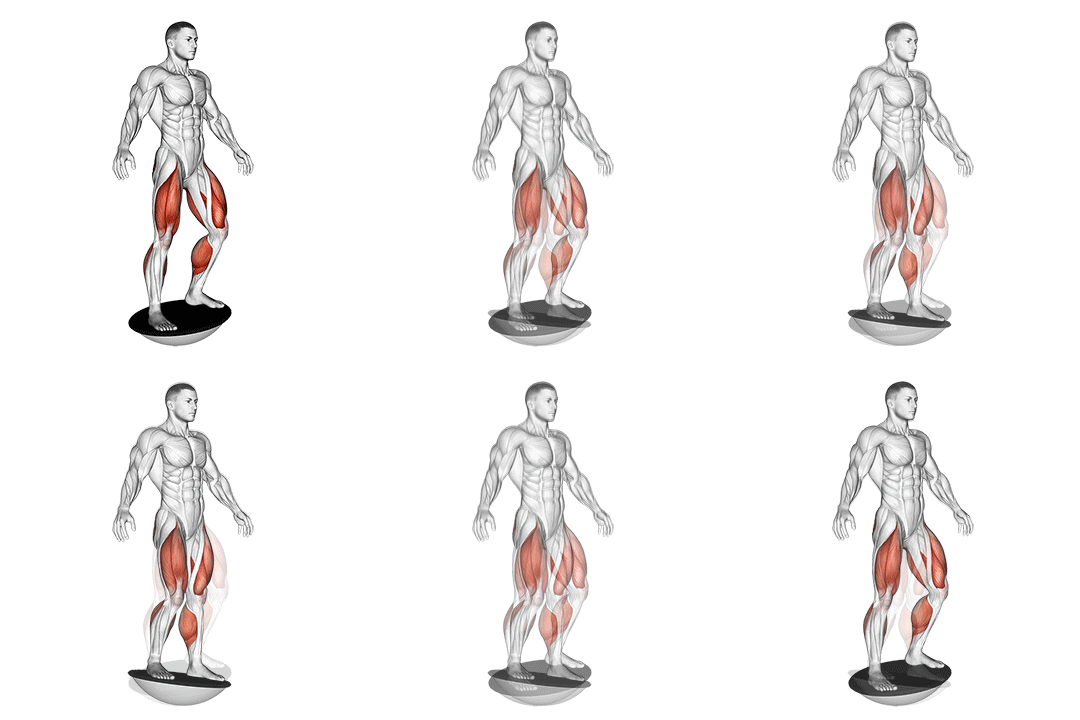
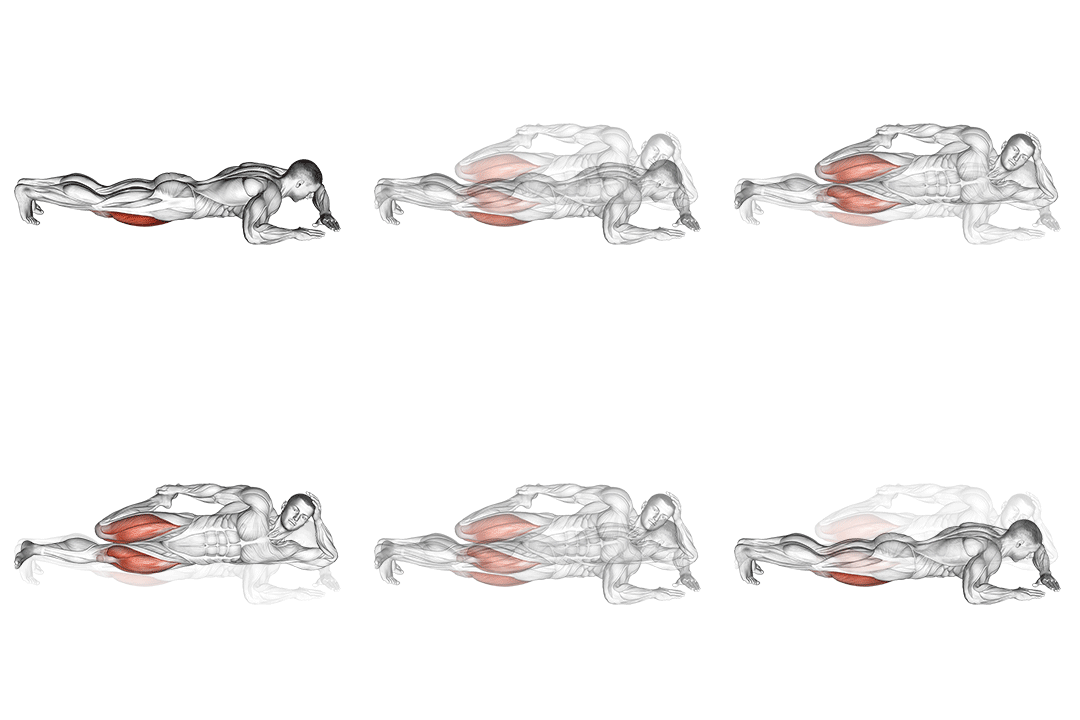
Balance Board
Head-to-Head Comparison
| Attribute | Backward Jump | Balance Board |
|---|---|---|
| Target Muscle |
Quads
|
Quads
|
| Body Part |
Upper-legs
|
Upper-legs
|
| Equipment |
Body-weight
|
Body-weight
|
| Difficulty |
Intermediate
|
Intermediate
|
| Movement Type |
Compound
|
Compound
|
| Secondary Muscles |
3
|
3
|
Secondary Muscles Activated
Backward Jump
Balance Board
Visual Comparison
Overview
Backward Jump vs Balance Board — you want a clear pick for quad development, stability, and practical use. I’ll walk you through how each move loads the quads, which secondary muscles kick in, what equipment and space you need, and the relative injury risks. You’ll get technique cues (knee angle, trunk position), rep ranges for power and hypertrophy, and straightforward recommendations so you can choose the exercise that matches your goal—strength, muscle growth, balance, or home convenience.
Key Differences
- Both exercises target the Quads using Body-weight. The main differences are in their movement patterns and muscle activation angles.
Pros & Cons
Backward Jump
+ Pros
- High peak concentric quad and hip extensor force for power and strength
- Develops stretch–shortening cycle efficiency and reactive ability
- Easy to scale intensity with jump height, single-leg, or added load
- Short duration sets (3–6 reps) produce strong neuromuscular stimulus
− Cons
- Higher impact on knees and ankles—requires precise landing mechanics
- Needs clear space and a safe landing surface
- Greater motor-learning demand; poor form quickly reduces effectiveness
Balance Board
+ Pros
- Compact and low-cost; usable in tight spaces
- Enhances proprioception and ankle-calf recruitment
- Low-impact option for long time-under-tension quad control
- Easy to scale from supported holds to dynamic perturbations
− Cons
- Lower peak quad force—less effective for maximal strength or power
- Progression for hypertrophy is limited without external load
- Risk of sudden fall or ankle twist if performed unsafely
When Each Exercise Wins
Backward Jump produces higher peak quad force and eccentric loading that stimulates muscle remodeling; program 3–6 sets of 6–12 explosive reps or pair with tempo eccentric squats (3–4 s) to increase mechanical tension.
The higher concentric force and ability to progressively overload (height, single-leg, weight) make Backward Jump superior for improving knee extension torque and explosive strength.
Balance Board allows gradual exposure to load via supported holds and short bouts (20–60 s), reduces impact, and teaches ankle/hip stability before introducing high-impact plyometrics.
A balance board fits small spaces, requires minimal setup, and lowers impact—so you can train quad control and proprioception safely without large open areas or mats.
Frequently Asked Questions
Can I do both Backward Jump and Balance Board in the same workout?
Yes — pair them strategically: use the balance board as an activation or mobility tool (2–3 sets of 30–60 seconds) before performing Backward Jumps to prime ankle and hip stabilizers. Perform the jumps early when you’re fresh to maximize power and reduce fatigue-related injury risk.
Which exercise is better for beginners?
Balance Board is better for beginners because it lowers impact and lets you develop ankle and hip stability with supported progressions. Once you can hold single-leg balance for 20–30 seconds and demonstrate controlled knee alignment, introduce low-volume Backward Jumps.
How do the muscle activation patterns differ?
Backward Jump features a rapid eccentric-to-concentric activation with high phasic quadriceps and glute recruitment during push-off and strong eccentric action on landing. Balance Board produces sustained, lower-amplitude quadriceps and calf activation with frequent corrective spikes driven by proprioceptive reflexes.
Can Balance Board replace Backward Jump?
Not entirely — if your goal is maximal quad power or strength, balance board work won’t provide the same peak force or eccentric overload. For stability, rehab, or space-restricted training the balance board can substitute, but keep plyometric jumps in the program when you need force production.
Expert Verdict
Choose Backward Jump when you want to develop quad power, increase peak knee-extension torque, and progress toward single-leg explosive strength—use controlled landings with 30–45° knee flexion and 2–3 minutes rest between intense sets. Pick Balance Board when your priority is ankle-calf stability, proprioception, and low-impact quad control, or when space and equipment are limited. For a balanced program, start novices on the balance board for 2–4 weeks, then introduce low-volume backward jumps (3–5 sets of 3–6 reps) once landing mechanics are solid to combine stability and force production.
Also Compare
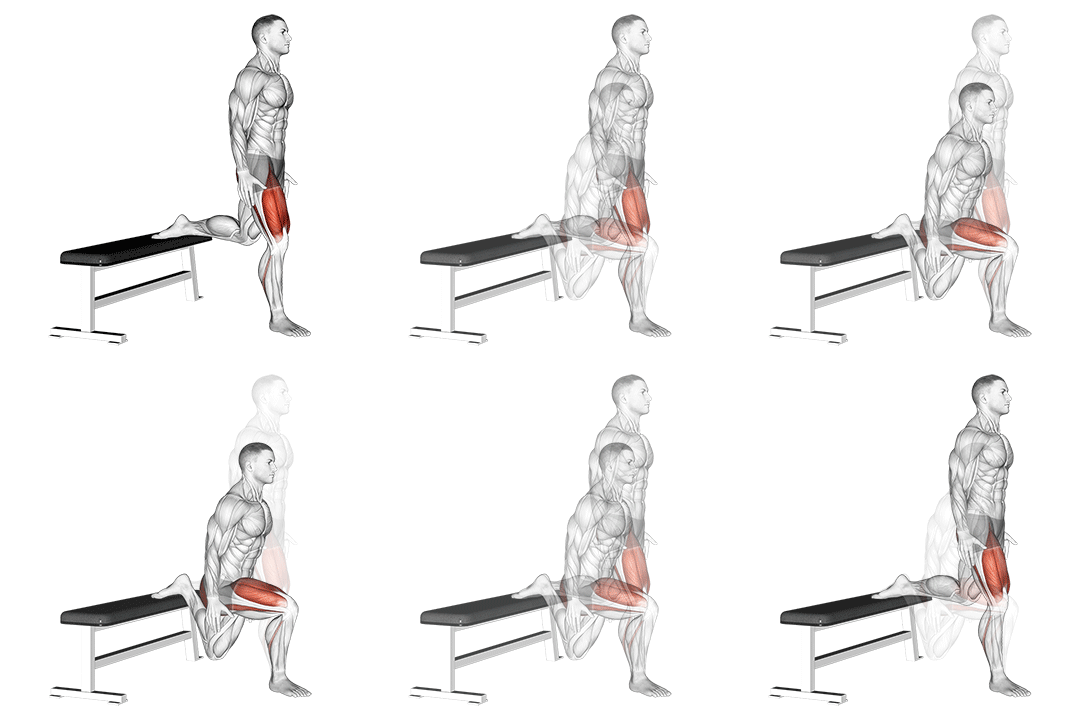
More comparisons with Backward Jump
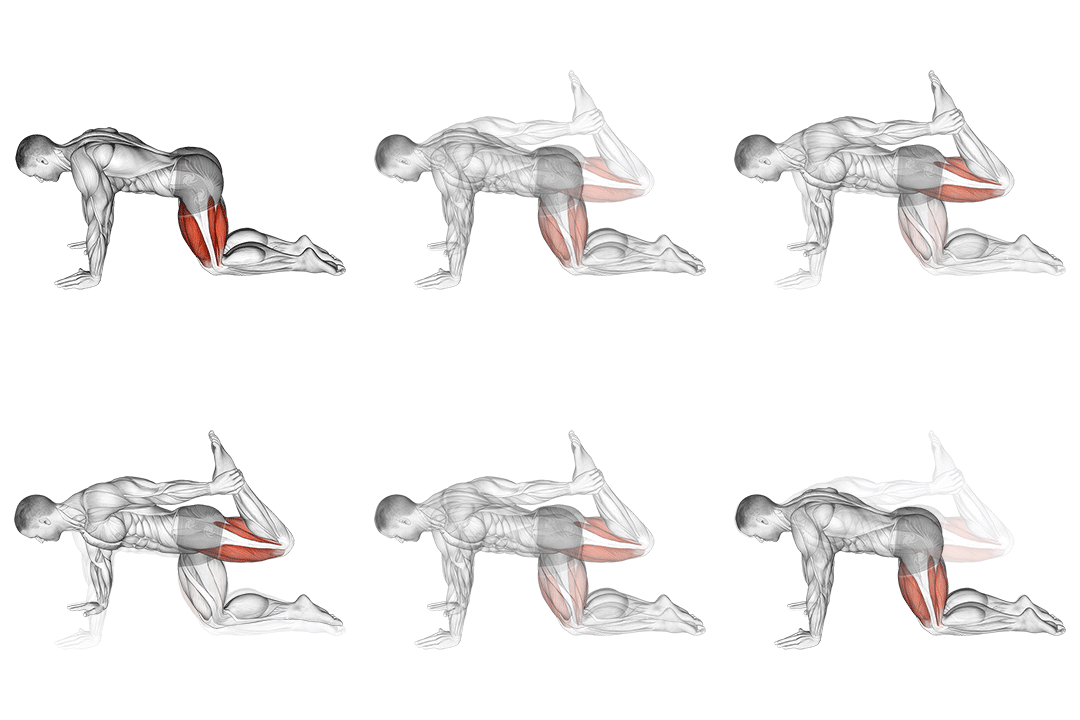
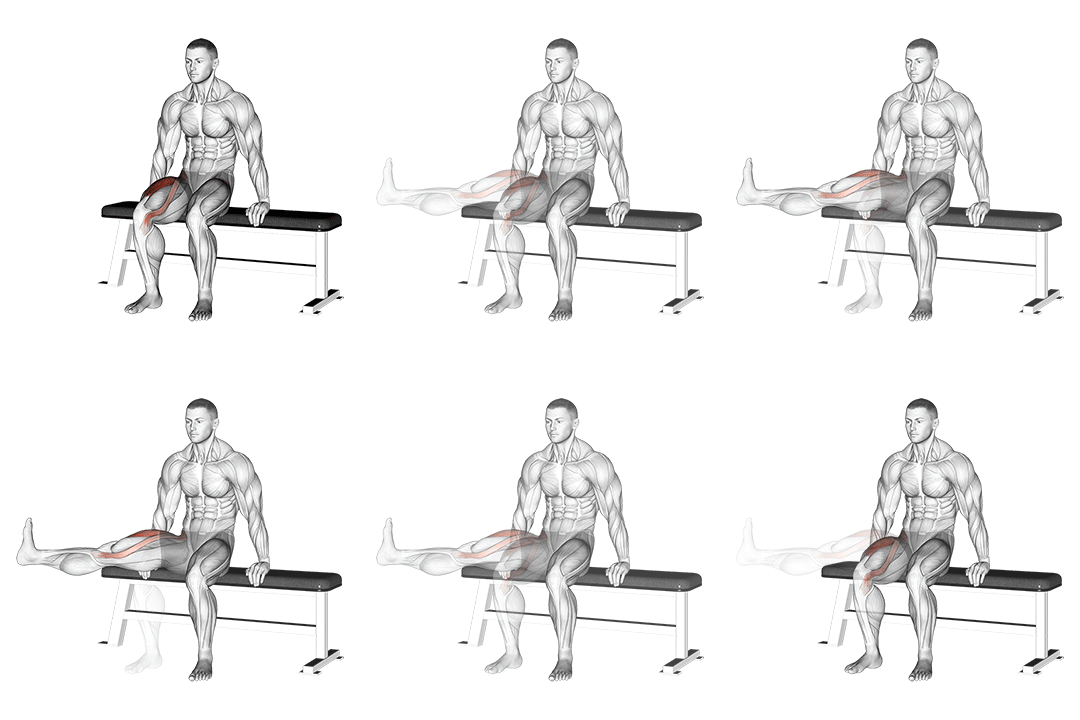
Compare More Exercises
Use our free comparison tool to analyze any two exercises head-to-head.
Compare Exercises