

Backward Jump vs Forward Jump: Complete Comparison Guide
Backward Jump vs Forward Jump — you want to know which one to use in your training. In this guide you’ll get a direct comparison of technique, muscle targets, injury considerations, and how each exercise loads your quads. You’ll learn specific cues (knee angles, contact times, rep ranges), the biomechanics behind differences in force vectors and muscle length-tension, and clear recommendations for hypertrophy, strength, beginners, and home workouts. Read on so you can pick the jump that fits your program and apply concrete progressions right away.
Exercise Comparison
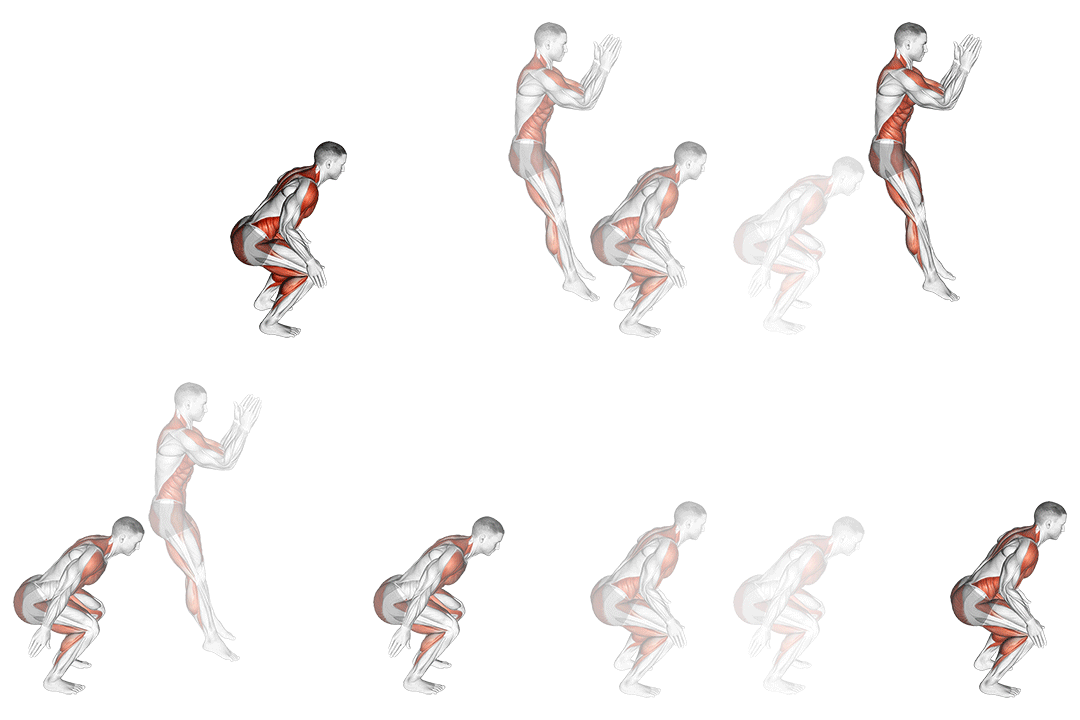
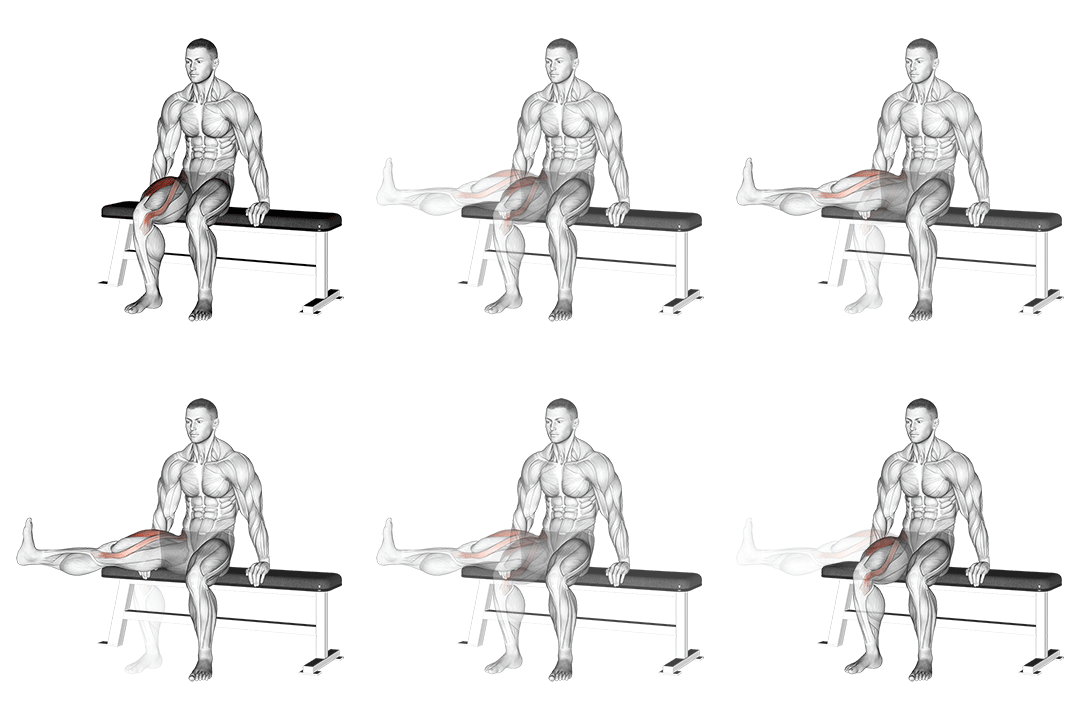
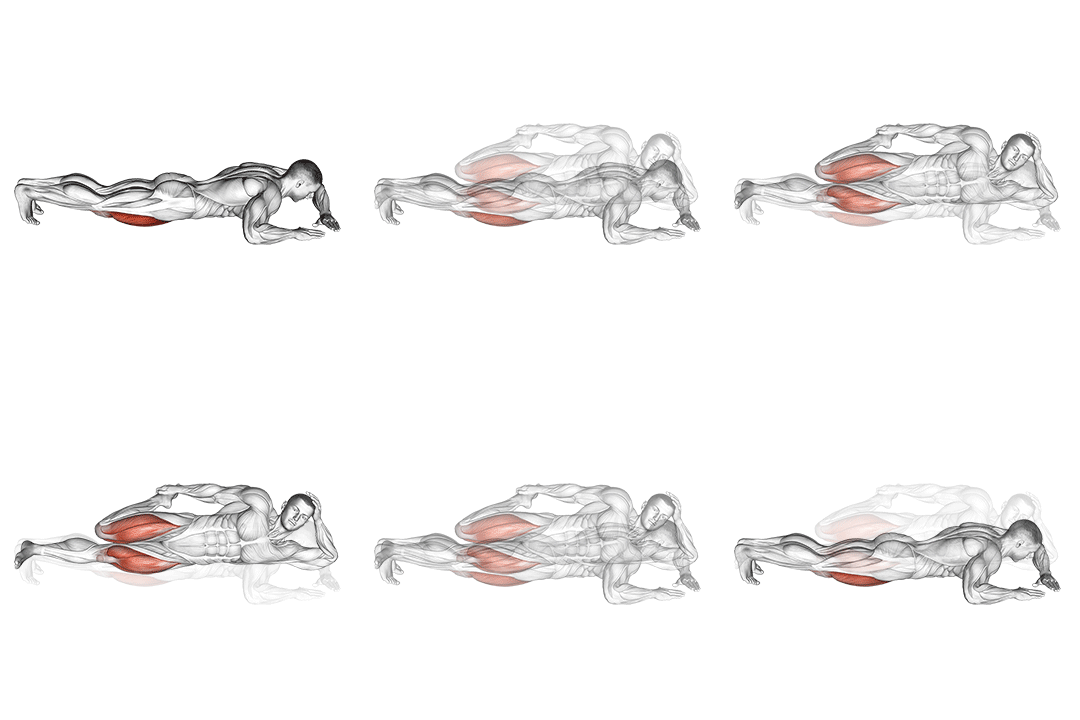
Backward Jump
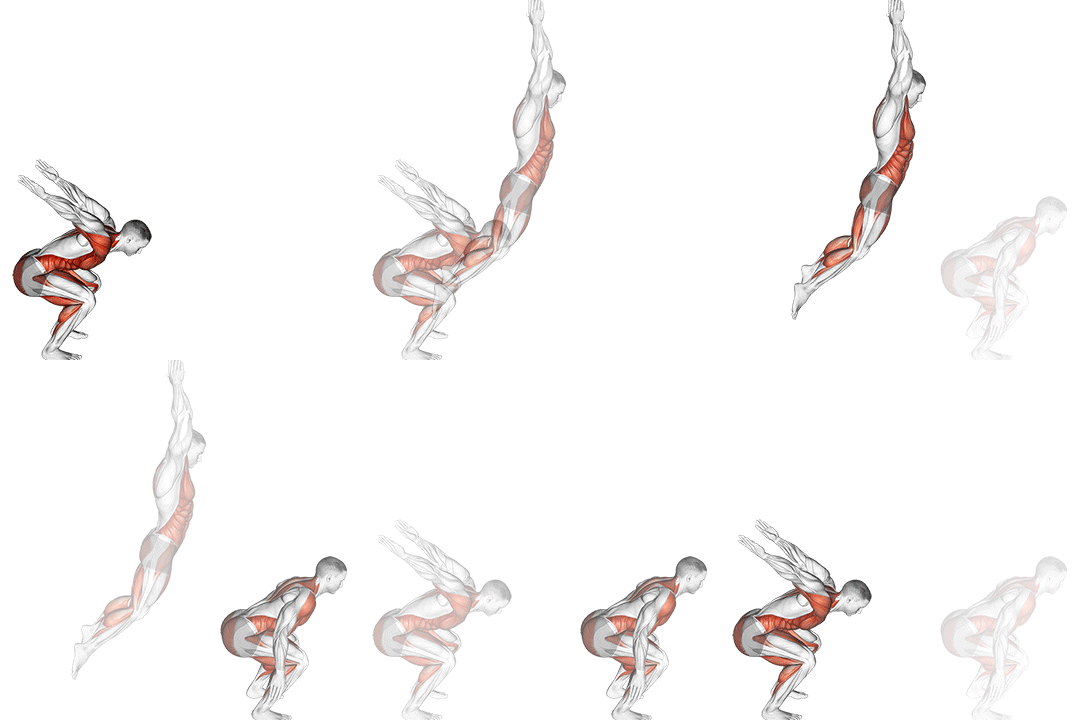
Forward Jump
Head-to-Head Comparison
| Attribute | Backward Jump | Forward Jump |
|---|---|---|
| Target Muscle |
Quads
|
Quads
|
| Body Part |
Upper-legs
|
Upper-legs
|
| Equipment |
Body-weight
|
Body-weight
|
| Difficulty |
Intermediate
|
Intermediate
|
| Movement Type |
Compound
|
Compound
|
| Secondary Muscles |
3
|
3
|
Secondary Muscles Activated
Backward Jump
Forward Jump
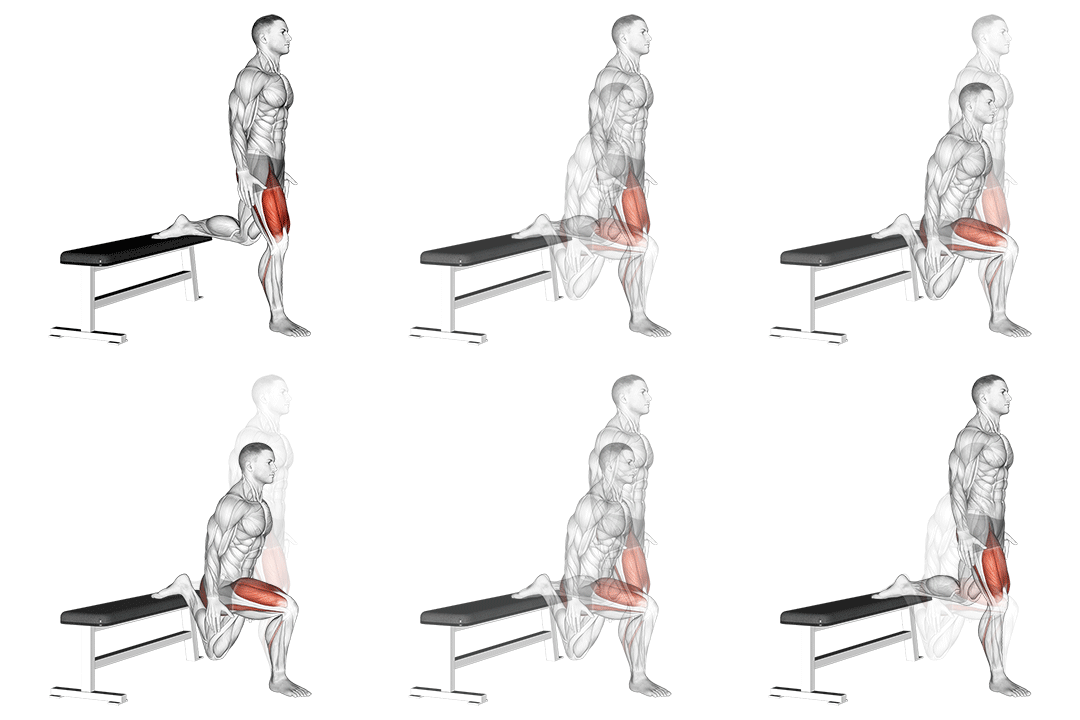
Visual Comparison
Overview
Backward Jump vs Forward Jump — you want to know which one to use in your training. In this guide you’ll get a direct comparison of technique, muscle targets, injury considerations, and how each exercise loads your quads. You’ll learn specific cues (knee angles, contact times, rep ranges), the biomechanics behind differences in force vectors and muscle length-tension, and clear recommendations for hypertrophy, strength, beginners, and home workouts. Read on so you can pick the jump that fits your program and apply concrete progressions right away.
Key Differences
- Both exercises target the Quads using Body-weight. The main differences are in their movement patterns and muscle activation angles.
Pros & Cons
Backward Jump
+ Pros
- Increases eccentric quad control and deceleration capacity
- Challenges proprioception and balance, improving neuromuscular control
- Useful for rehabilitating directional change and posterior COM control
- No equipment required
− Cons
- Higher spatial and balance demand increases fall risk
- Harder to progressively overload with external load
- Less intuitive for beginners; longer learning curve
Forward Jump
+ Pros
- Easier to learn and scale for most athletes
- More straightforward progression options (distance, load, height)
- Better for power development because of greater forward impulse
- Low equipment needs and safer visual landing
− Cons
- Can increase anterior knee stress at deep knee flexion angles
- Less emphasis on eccentric deceleration control
- May rely more on calves and glutes, slightly reducing pure quad isolation
When Each Exercise Wins
Forward Jump is the winner because it is easier to progressively overload (distance, vest, box targets) and permits higher repeated concentric loading of the quads in sets of 6–12 reps to stimulate muscle growth.
Forward Jump better translates to net force production and can be loaded externally for higher-resistance sets (3–6 reps or heavy plyo pairings), making it more useful for building force capacity in the knee and hip extensors.
Forward Jump is more intuitive, offers clear visual feedback for landing, and typically requires fewer corrective drills — you can master safe technique in fewer practice reps.
Forward Jump wins because it needs minimal space, is safer to perform without a spotter, and scales well with simple equipment like a weighted vest or small step.
Frequently Asked Questions
Can I do both Backward Jump and Forward Jump in the same workout?
Yes. Pair them strategically: use Forward Jumps early in a session for power and force production (3–6 sets of 3–6 reps), then add Backward Jumps later for eccentric control and proprioception (2–4 sets of 4–8 reps). Keep total high-impact volume under control to avoid CNS and joint overload.
Which exercise is better for beginners?
Forward Jump is better for beginners because it offers clear visual landing cues and a shorter learning curve. Start with low heights or short distances, focus on 80°–100° knee flexion in the dip, and keep contact times short to train power safely.
How do the muscle activation patterns differ?
Forward Jump produces larger forward-directed ground reaction forces with earlier plantarflexor and glute activation and a brief concentric emphasis. Backward Jump shifts demand toward longer eccentric quad contractions and greater hamstring/glute stabilization during landing, increasing deceleration control.
Can Forward Jump replace Backward Jump?
Yes for most programming needs — Forward Jump replaces Backward Jump when your goal is power, hypertrophy, or easy progression. Keep Backward Jumps as a supplementary tool when you need to improve eccentric control, balance, or sport-specific posterior COM skills.
Expert Verdict
Both jumps train the quads through rapid knee extension and the stretch–shortening cycle, but Forward Jump is the more practical default for most trainees. It’s easier to learn, scale, and overload, so choose it for hypertrophy, strength, and home programs. Use Backward Jump selectively to improve eccentric quad control, proprioception, and deceleration capacity — for example, as a corrective or sport-specific drill (2–4 sets of 4–8 reps focusing on soft, controlled landings). Prioritize contact times <200 ms for power work or lengthen absorption to 300–600 ms when you want eccentric stimulus or motor control work.
Also Compare
More comparisons with Backward Jump
Compare More Exercises
Use our free comparison tool to analyze any two exercises head-to-head.
Compare Exercises