

Backward Jump vs Lying (side) Quads Stretch: Complete Comparison Guide
Backward Jump vs Lying (side) Quads Stretch — two very different ways to work your quads. Which one you pick should match your goal: power and dynamic loading, or mobility and targeted lengthening. In this guide you’ll get clear technique cues, biomechanical explanations (length–tension, force vectors, concentric vs. eccentric roles), rep and hold recommendations, and scenarios that name a winner for hypertrophy, strength, beginners, and home workouts. Read on so you can choose the drill that moves your training forward and keeps your knees healthy.
Exercise Comparison
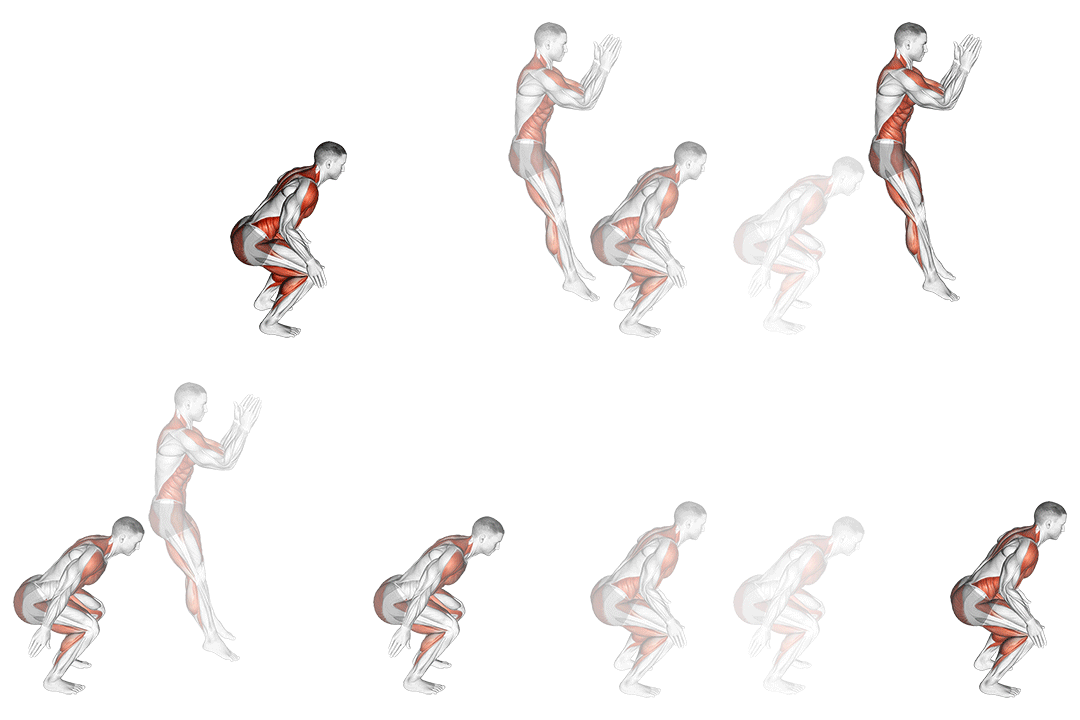
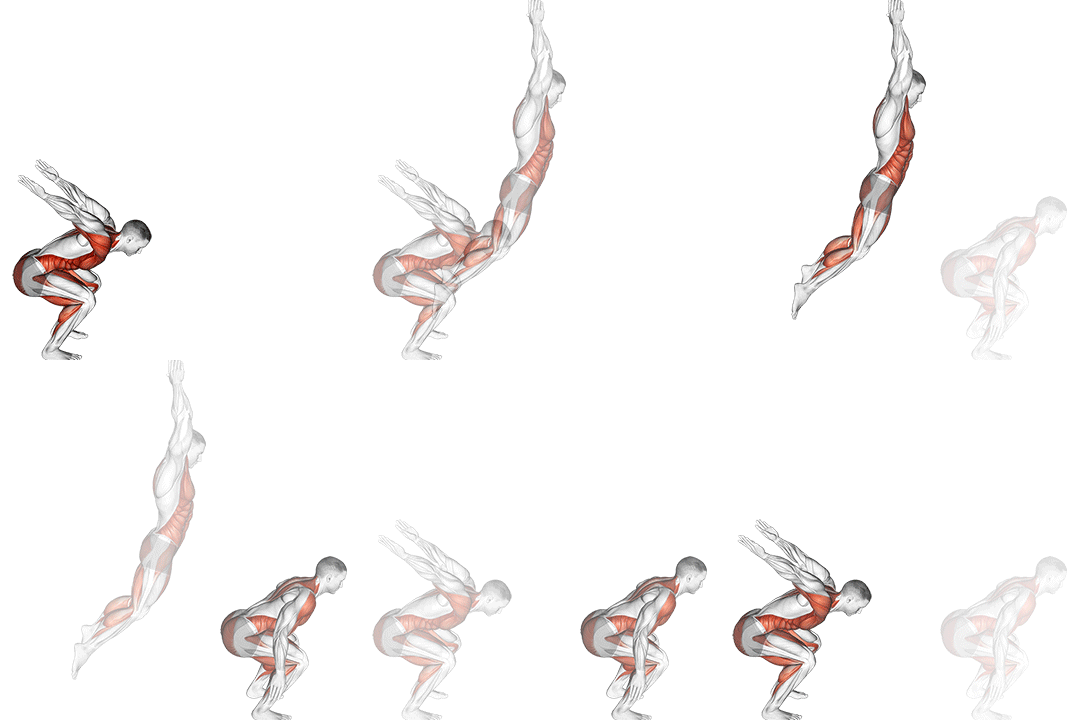
Backward Jump
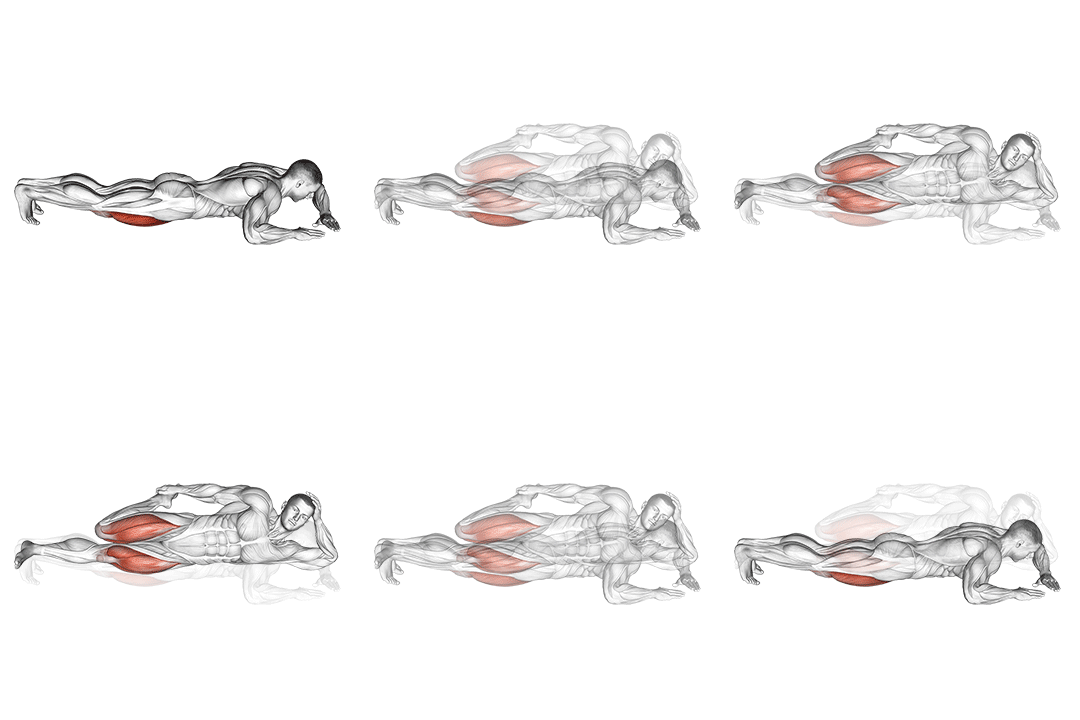
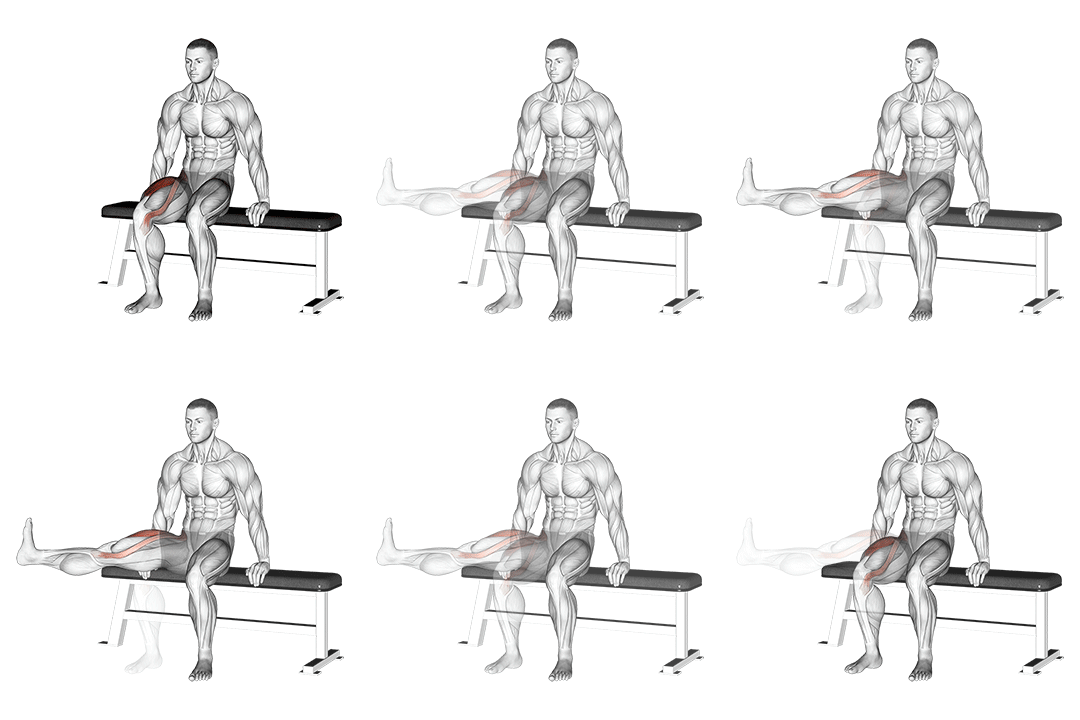
Lying (side) Quads Stretch
Head-to-Head Comparison
| Attribute | Backward Jump | Lying (side) Quads Stretch |
|---|---|---|
| Target Muscle |
Quads
|
Quads
|
| Body Part |
Upper-legs
|
Upper-legs
|
| Equipment |
Body-weight
|
Body-weight
|
| Difficulty |
Intermediate
|
Beginner
|
| Movement Type |
Compound
|
Isolation
|
| Secondary Muscles |
3
|
1
|
Secondary Muscles Activated
Backward Jump
Lying (side) Quads Stretch
Visual Comparison
Overview
Backward Jump vs Lying (side) Quads Stretch — two very different ways to work your quads. Which one you pick should match your goal: power and dynamic loading, or mobility and targeted lengthening. In this guide you’ll get clear technique cues, biomechanical explanations (length–tension, force vectors, concentric vs. eccentric roles), rep and hold recommendations, and scenarios that name a winner for hypertrophy, strength, beginners, and home workouts. Read on so you can choose the drill that moves your training forward and keeps your knees healthy.
Key Differences
- Backward Jump is a compound movement, while Lying (side) Quads Stretch is an isolation exercise.
- Difficulty levels differ: Backward Jump is intermediate, while Lying (side) Quads Stretch is beginner.
- Both exercises target the Quads using Body-weight. The main differences are in their movement patterns and muscle activation angles.
Pros & Cons
Backward Jump
+ Pros
- Develops explosive knee extension and reactive strength for power work
- Provides concentric and eccentric quad loading—useful for strength and hypertrophy stimulus
- Recruits glutes and calves for integrated lower-body force production
- Short sets (3–5 reps) create high neural drive and strong motor learning
− Cons
- Higher impact and greater injury risk if landing mechanics are poor
- Requires space and a safe surface to perform correctly
- Less useful for increasing passive range of motion or targeted flexibility
Lying (side) Quads Stretch
+ Pros
- Targets quad lengthening and restores rectus femoris flexibility
- Very low equipment and space needs—easy to add to warm-ups or cooldowns
- Low impact and safe for most populations when done with care
- Helps shift the muscle length–tension relationship to improve knee flexion range (useful for squats and cycling)
− Cons
- Doesn't provide meaningful mechanical tension for muscle growth
- Minimal secondary muscle recruitment—limited carryover to power or strength
- Can be misapplied (too forceful or short holds) and not produce lasting range improvements
When Each Exercise Wins
Backward Jump produces concentric and eccentric loading across the knee and hip and can generate higher metabolic and mechanical stimulus than a passive stretch. Use sets of 6–12 slow-tempo repeated hops or paired eccentric-focused landings to increase time under tension for hypertrophy.
The ballistic nature develops rate of force development and eccentric control important for strength. Program 3–5 sets of 3–6 reps focusing on maximal intent and soft, 60–90° knee flexion on landing to train force absorption.
Beginners benefit from low-risk mobility and muscle lengthening before adding impact. Hold 20–40 seconds per side and combine with basic closed-chain movements before progressing to jumping.
It needs minimal space and no safe landing area. It’s practical for daily mobility sessions, while Backward Jumps require clearance and a surface that reduces impact on floors and joints.
Frequently Asked Questions
Can I do both Backward Jump and Lying (side) Quads Stretch in the same workout?
Yes. Do Backward Jumps early in the session when you're fresh to preserve power (3–5 sets of 3–6 reps), then use the Lying (side) Quads Stretch in your cooldown—hold 20–40 seconds to reduce passive stiffness and aid recovery.
Which exercise is better for beginners?
Lying (side) Quads Stretch is better for beginners because it’s low-risk and builds flexibility. Start with mobility and basic closed-chain strength before adding plyometric loading like Backward Jumps.
How do the muscle activation patterns differ?
Backward Jumps create short, high-amplitude concentric spikes during takeoff and high eccentric activation on landing (rapid force cycles). The lying stretch produces low, sustained activation and passive tension that lengthens muscle fibers without high force production.
Can Lying (side) Quads Stretch replace Backward Jump?
No, if your goal is strength, power, or high mechanical loading—stretching cannot replace the concentric/eccentric stimulus of jumps. For flexibility or prehab it’s a valid substitute, but not for building power or substantial muscle overload.
Expert Verdict
Use Backward Jump when your goal is power, integrated quad loading, or improving eccentric control—program it in short sets (3–5 sets of 3–8 reps) with rest and emphasize hip-driven takeoff and soft 60–90° knee flexion on landing. Use Lying (side) Quads Stretch for mobility, recovery, and to improve rectus femoris length before or after training—hold 20–40 seconds for 2–3 sets per side. If you want both outcomes, follow a session that prioritizes safe plyometrics first, then use the lying stretch in cooldowns to restore range of motion and reduce passive stiffness.
Also Compare
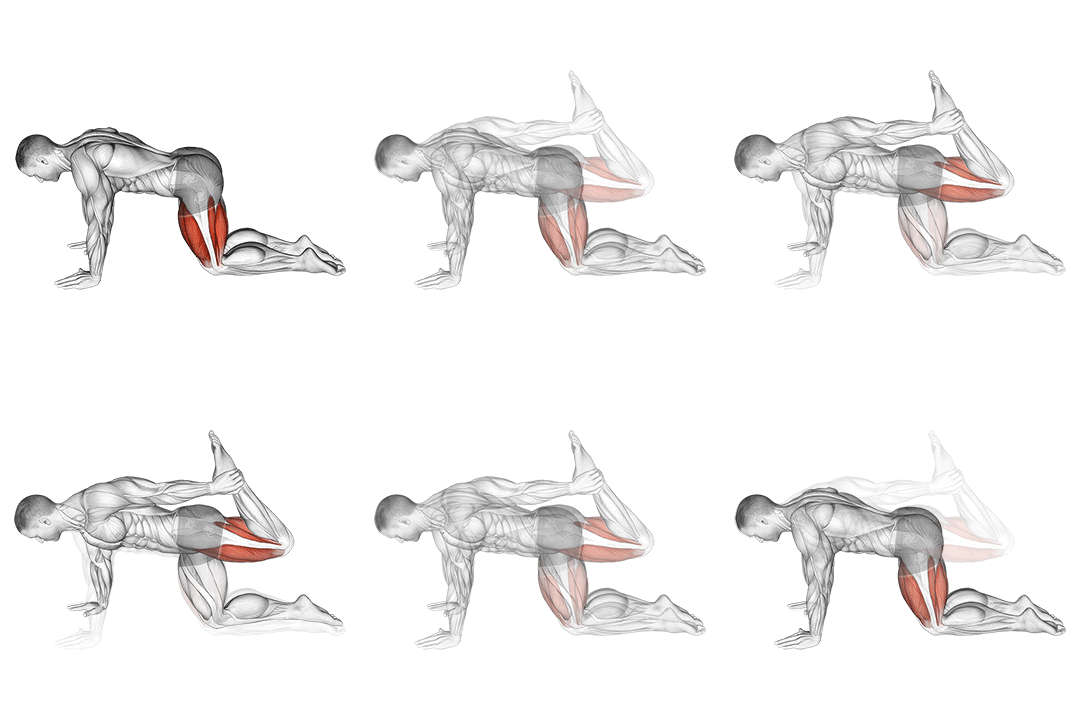
More comparisons with Backward Jump
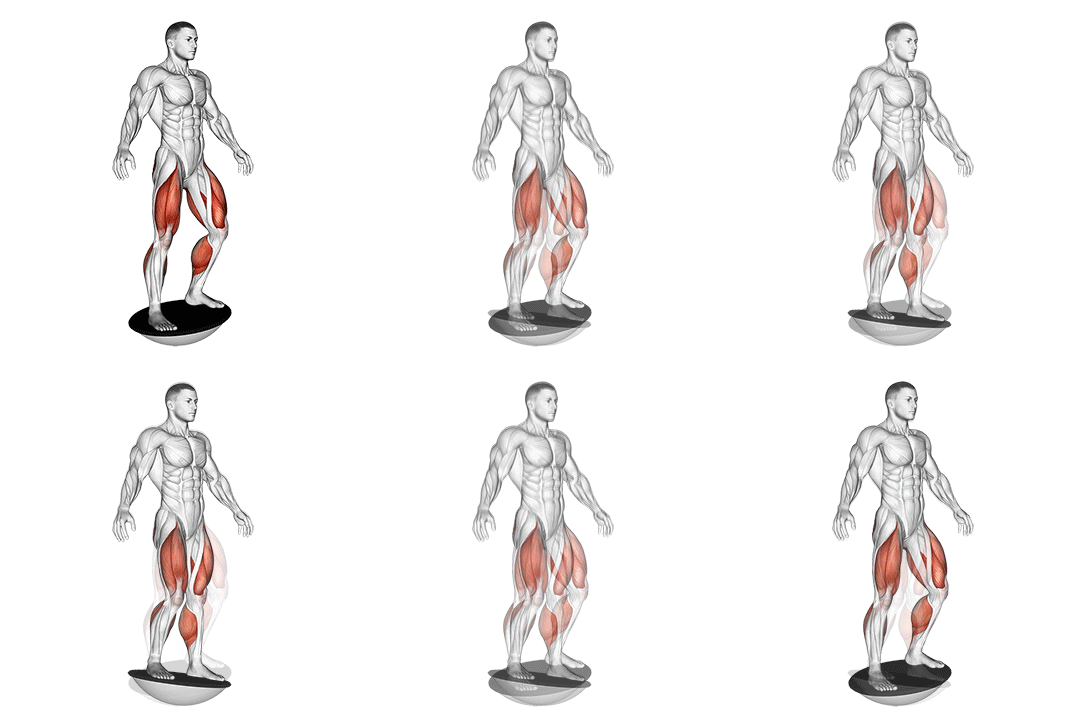
More comparisons with Lying (side) Quads Stretch
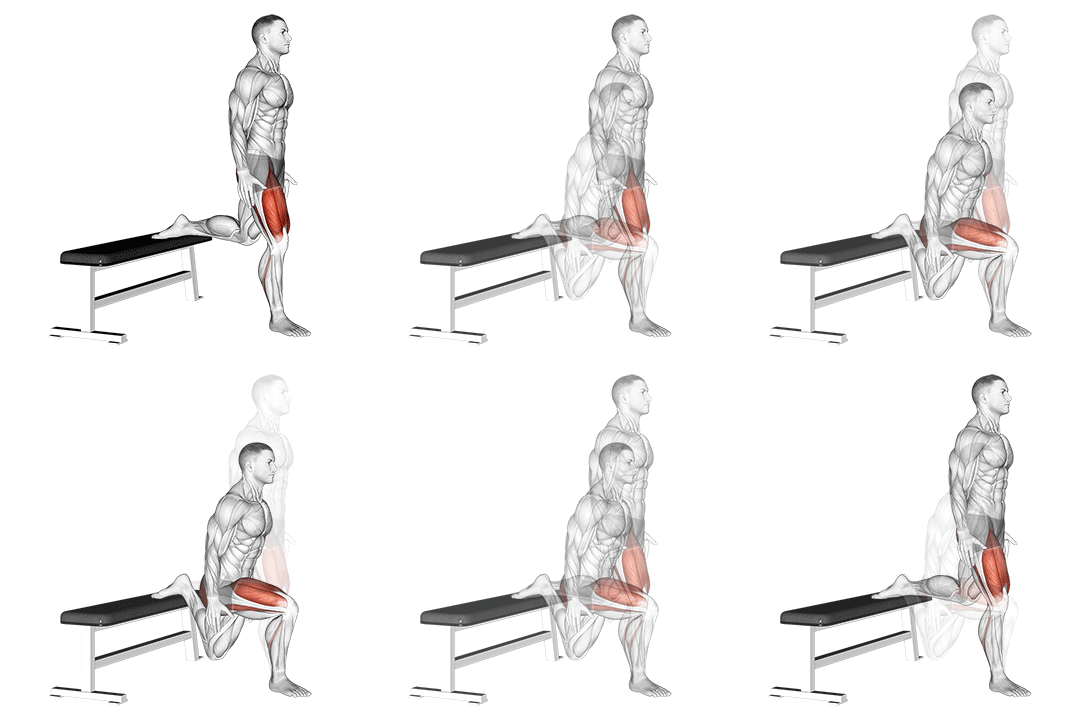
Compare More Exercises
Use our free comparison tool to analyze any two exercises head-to-head.
Compare Exercises