

Backward Jump vs Quads: Complete Comparison Guide
Backward Jump vs Quads {Exercise1} vs {Exercise2} — you’re choosing between an explosive plyometric and a more controlled quad-dominant movement. I’ll walk you through how each stresses the quadriceps, how hamstrings, glutes and calves contribute, what equipment and space you need, the learning curve, and which one to pick for hypertrophy, strength, power or home training. Read on for technique cues, rep ranges (3–6 for power, 8–15 for muscle growth), and clear recommendations so you can pick the right tool for your program.
Exercise Comparison
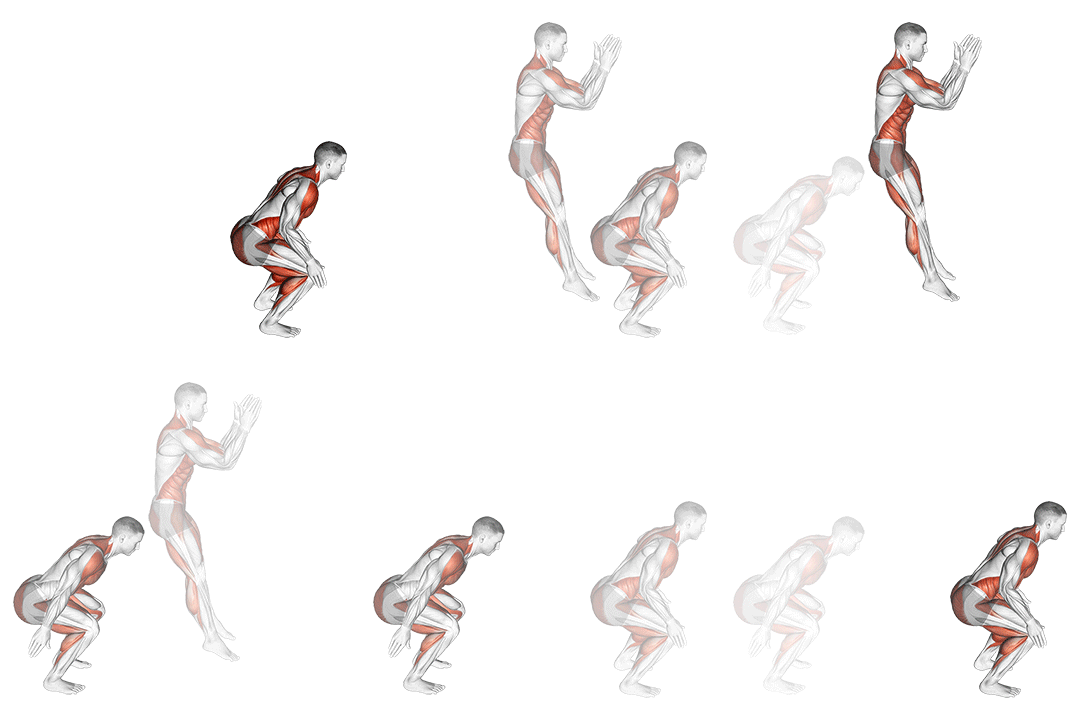
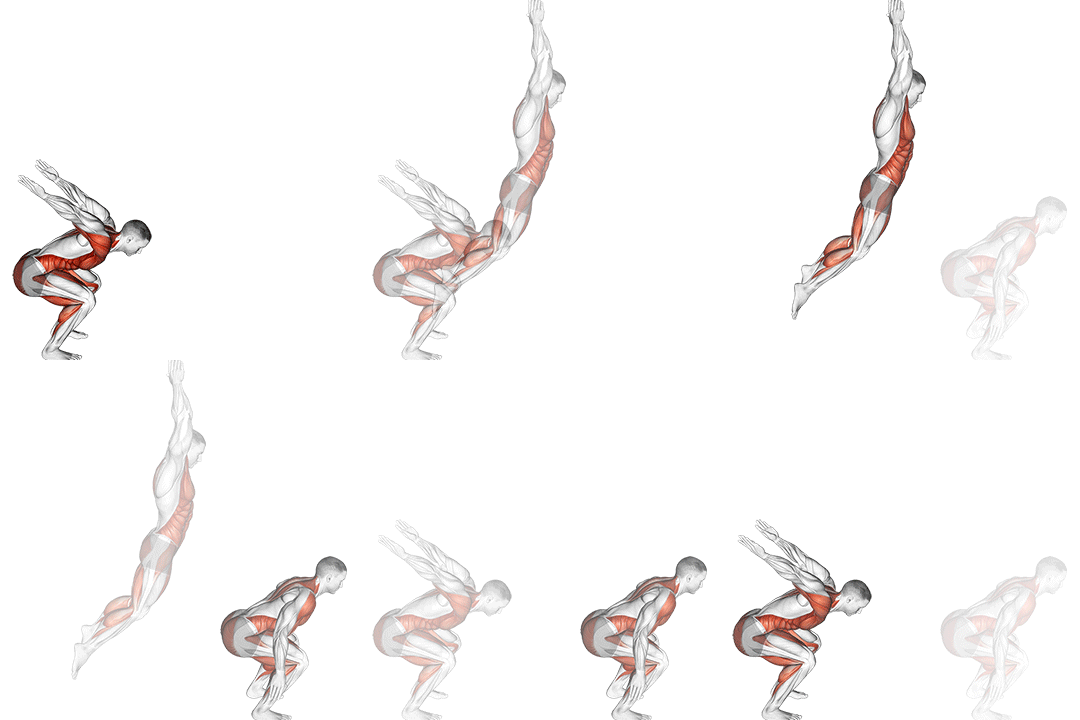
Backward Jump
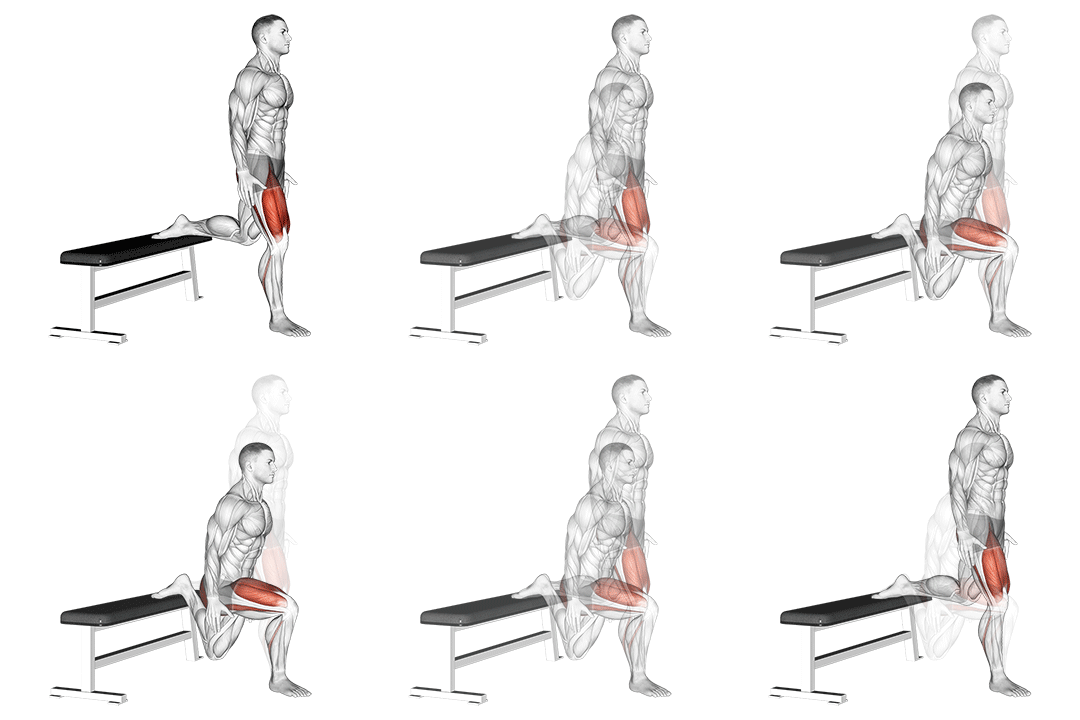
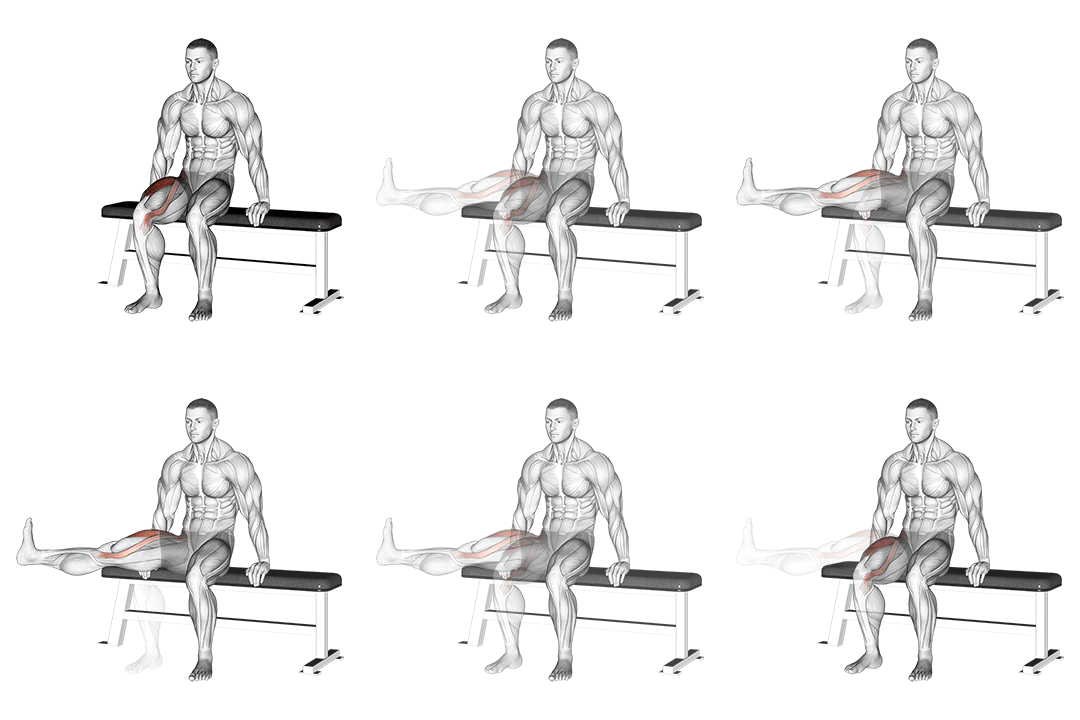
Quads
Head-to-Head Comparison
| Attribute | Backward Jump | Quads |
|---|---|---|
| Target Muscle |
Quads
|
Quads
|
| Body Part |
Upper-legs
|
Upper-legs
|
| Equipment |
Body-weight
|
Body-weight
|
| Difficulty |
Intermediate
|
Beginner
|
| Movement Type |
Compound
|
Compound
|
| Secondary Muscles |
3
|
2
|
Secondary Muscles Activated
Backward Jump
Quads
Visual Comparison
Overview
Backward Jump vs Quads {Exercise1} vs {Exercise2} — you’re choosing between an explosive plyometric and a more controlled quad-dominant movement. I’ll walk you through how each stresses the quadriceps, how hamstrings, glutes and calves contribute, what equipment and space you need, the learning curve, and which one to pick for hypertrophy, strength, power or home training. Read on for technique cues, rep ranges (3–6 for power, 8–15 for muscle growth), and clear recommendations so you can pick the right tool for your program.
Key Differences
- Difficulty levels differ: Backward Jump is intermediate, while Quads is beginner.
- Both exercises target the Quads using Body-weight. The main differences are in their movement patterns and muscle activation angles.
Pros & Cons
Backward Jump
+ Pros
- Builds explosive power and rate of force development
- Integrates calves, hamstrings and glutes for athletic transfer
- Improves reactive strength via the stretch-shortening cycle
- Minimal equipment — scalable with height or added load
− Cons
- Higher impact and landing stress on joints
- Requires space and solid surface for safety
- Harder to accumulate high time-under-tension for hypertrophy
Quads
+ Pros
- Easy to learn and safe for most lifters
- Excellent for accumulating time-under-tension for muscle growth
- Requires virtually no space or equipment
- Simple progressions: tempo, reps, unilateral work, external load
− Cons
- Less carryover to explosive power and reactive performance
- May place repetitive stress on patellofemoral joint if done with poor knee tracking
- Fewer immediate options for high-velocity training without added equipment
When Each Exercise Wins
Quads allows controlled tempo, longer time-under-tension and easy volume accumulation (8–15 reps, 3–5 sets), which targets sarcomere adaptation and muscle growth better than short, high-peak efforts.
Quads permits heavy, slow-loaded progressions and higher total mechanical work per session, producing consistent increases in maximal voluntary contraction and joint torque compared with low-rep plyometrics.
Quads is lower-impact, teaches joint control and knee/alignment cues, and scales easily with tempo and unilateral variations, making it safer and more productive for new trainees.
Quads needs minimal space and zero landing safety considerations, so you can perform high-rep sets, tempo work, or single-leg variants at home without risk of hitting objects or hard landings.
Frequently Asked Questions
Can I do both Backward Jump and Quads in the same workout?
Yes — sequence matters. Do Backward Jump early when you’re fresh to maximize power (3–6 reps, 3–5 sets). Follow with Quads for hypertrophy or strength work (8–15 reps or 4–6 heavy sets) to accumulate volume without compromising landing mechanics.
Which exercise is better for beginners?
Quads is the better starter: it teaches controlled knee-extension mechanics, builds baseline strength and muscle growth, and avoids high-impact landings. Introduce Backward Jump only after the trainee demonstrates solid single-leg control and squat mechanics.
How do the muscle activation patterns differ?
Backward Jump produces short, high-amplitude activations with rapid eccentric braking then explosive concentric firing, leveraging the stretch-shortening cycle. Quads produces longer-duration, steady activation at mid-range joint angles, optimizing time-under-tension and sustained force.
Can Quads replace Backward Jump?
Quads can replace Backward Jump for hypertrophy and general strength, but it won’t replicate the high-velocity stretch-shortening benefits or reactive power improvements. If you need explosive performance, include plyometrics alongside Quads rather than swap entirely.
Expert Verdict
Use Quads as your foundation when the goal is muscle growth, strength, safety or limited space — it provides consistent knee-extension loading, long time-under-tension, and simple progression options. Use Backward Jump when you want to develop explosive power, reactive strength and athleticism: program it in short sets (3–6 explosive reps), pair with low-volume strength work, and ensure good landing mechanics (soft knees, hip hinge on deceleration). For most trainees, prioritize Quads for base development and add Backward Jump later in blocks focused on power, plyometrics and RFD improvements.
Also Compare
More comparisons with Backward Jump
Compare More Exercises
Use our free comparison tool to analyze any two exercises head-to-head.
Compare Exercises