

Balance Board vs Forward Jump: Complete Comparison Guide
Balance Board vs Forward Jump puts two quads-focused, bodyweight compound movements side-by-side so you can pick the right tool for your goals. I'll walk you through primary and secondary muscle recruitment, technique cues, biomechanics like force vectors and the stretch–shortening cycle, progression options, and injury risk. Read this if you want clear guidance—rep ranges, joint angles, and when to prioritize stability versus explosive power. By the end you'll know which exercise to use for muscle growth, strength, balance training, or home programming.
Exercise Comparison
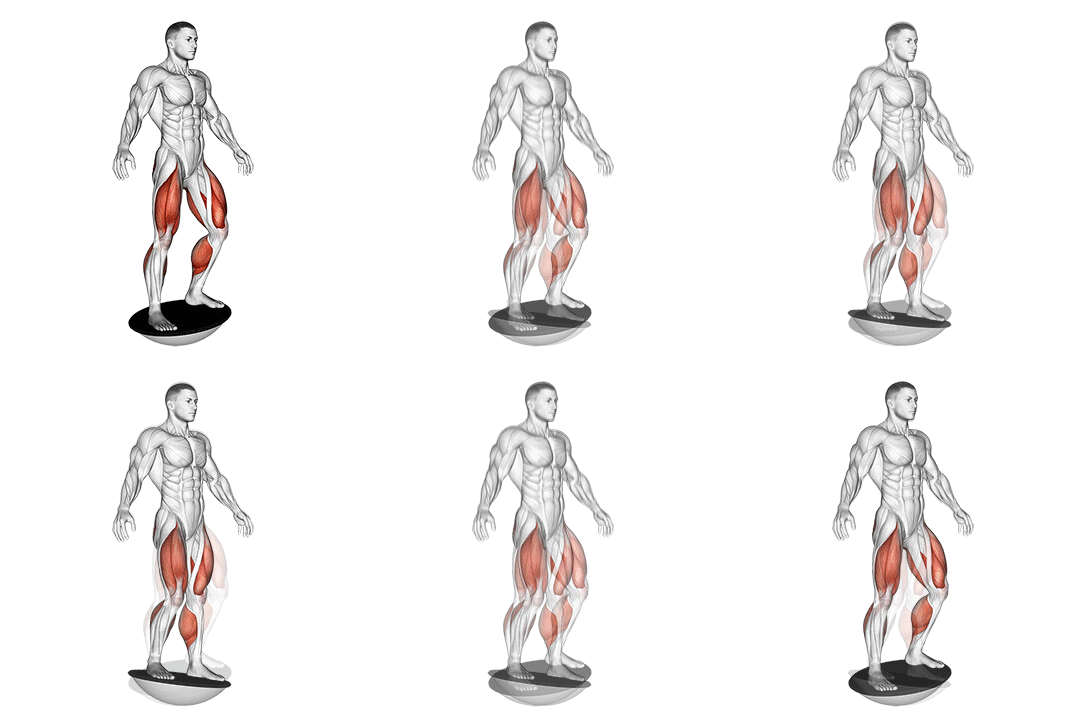
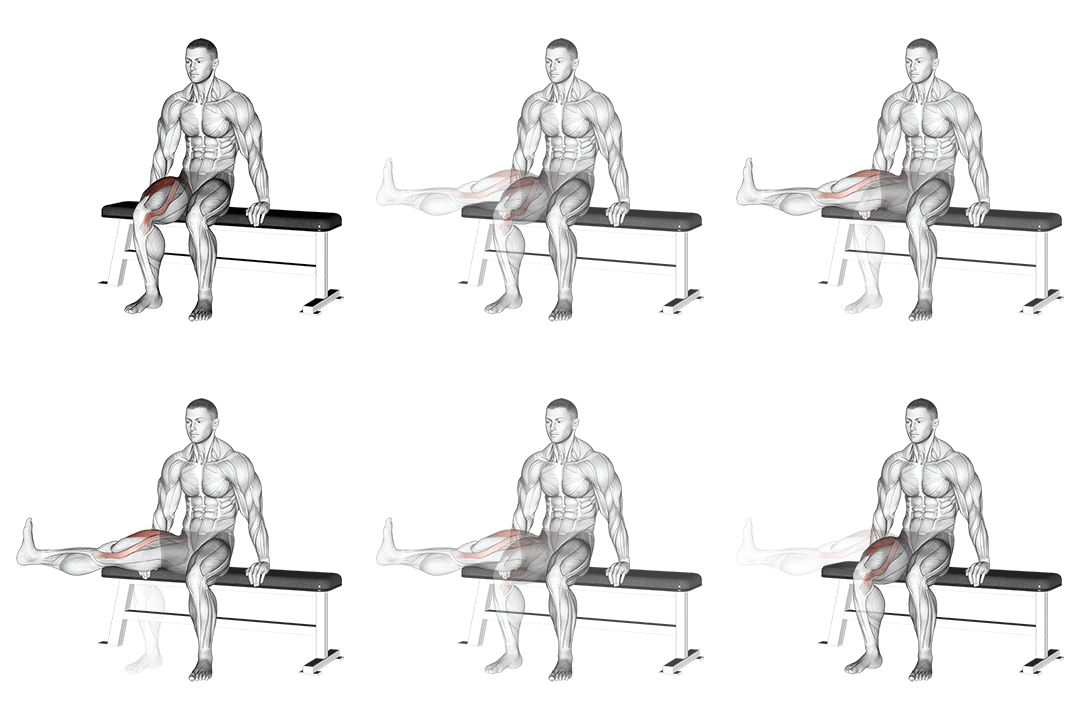
Balance Board
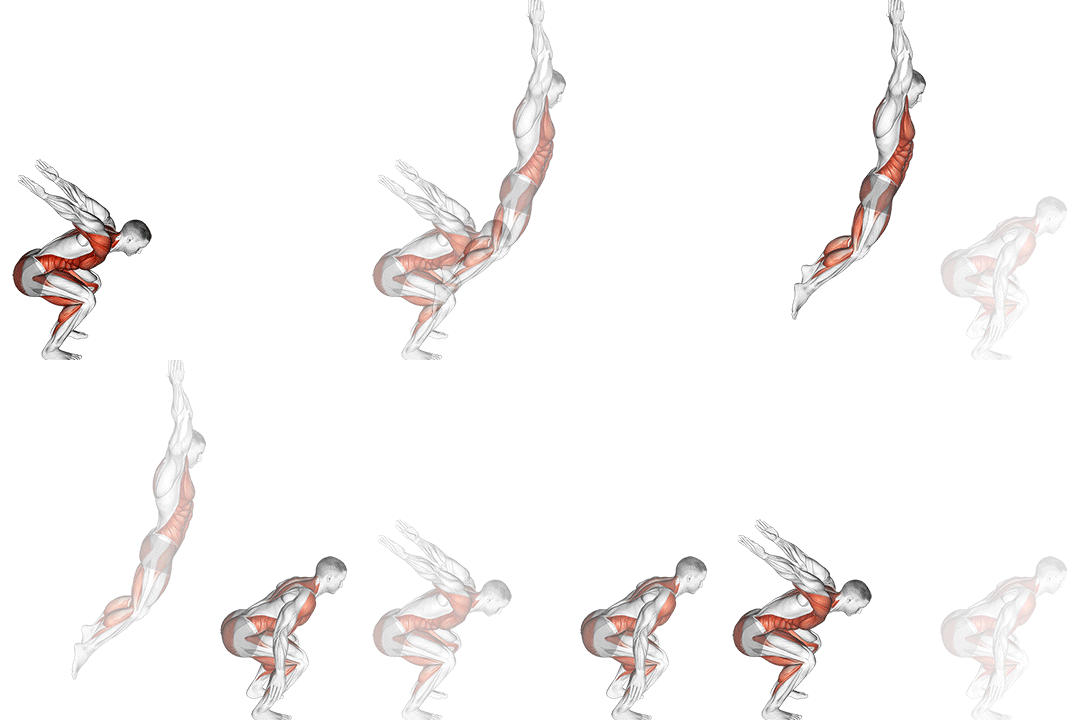
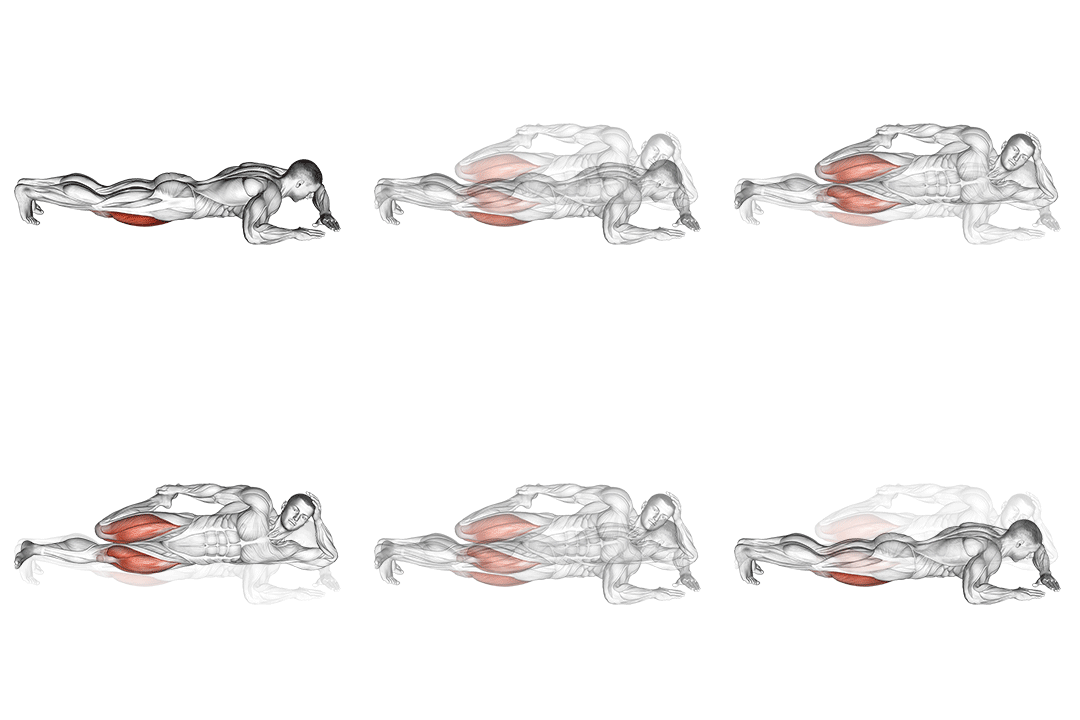
Forward Jump
Head-to-Head Comparison
| Attribute | Balance Board | Forward Jump |
|---|---|---|
| Target Muscle |
Quads
|
Quads
|
| Body Part |
Upper-legs
|
Upper-legs
|
| Equipment |
Body-weight
|
Body-weight
|
| Difficulty |
Intermediate
|
Intermediate
|
| Movement Type |
Compound
|
Compound
|
| Secondary Muscles |
3
|
3
|
Secondary Muscles Activated
Balance Board
Forward Jump
Visual Comparison
Overview
Balance Board vs Forward Jump puts two quads-focused, bodyweight compound movements side-by-side so you can pick the right tool for your goals. I'll walk you through primary and secondary muscle recruitment, technique cues, biomechanics like force vectors and the stretch–shortening cycle, progression options, and injury risk. Read this if you want clear guidance—rep ranges, joint angles, and when to prioritize stability versus explosive power. By the end you'll know which exercise to use for muscle growth, strength, balance training, or home programming.
Key Differences
- Both exercises target the Quads using Body-weight. The main differences are in their movement patterns and muscle activation angles.
Pros & Cons
Balance Board
+ Pros
- Builds ankle and knee stability through sustained isometric control
- Improves proprioception and balance transfer to single-leg tasks
- Low-impact—no high ground-reaction forces on joints
- Good for rehab and motor control training with 30–60s holds
− Cons
- Limited ability to produce high concentric power for strength gains
- Requires purchase of a balance board and safe surface
- Progressions for pure hypertrophy or maximal force are limited
Forward Jump
+ Pros
- Develops explosive concentric strength via the stretch–shortening cycle
- Easily scalable (distance, single-leg, depth jumps, weighted vests)
- High transfer to sports that require sprinting and jumping
- No special equipment required—can do 3–5 sets of 6–10 reps
− Cons
- Higher impact on knees and ankles—landing must be coached
- Greater acute injury risk if technique or surface is poor
- Less emphasis on fine ankle proprioception and long-duration stability
When Each Exercise Wins
Balance Board provides sustained quad time-under-tension and allows controlled tempo reps (3–4 second eccentrics or 30–60s holds) that favor metabolic stress and hypertrophy-specific pathways when paired with higher rep ranges.
Forward Jump produces high peak forces and power via the stretch–shortening cycle; progressing to weighted or depth jumps increases concentric force output and neural drive needed for strength and rate-of-force development.
Balance Board lets you train motor control and joint alignment with low-impact loading; beginners can start with 20–30s two-foot holds and progress safely before attempting explosive work.
Forward Jump needs minimal equipment and space, so you can perform effective quad-focused sessions at home using bodyweight progressions and simple rep schemes like 3–5 sets of 6–10 reps.
Frequently Asked Questions
Can I do both Balance Board and Forward Jump in the same workout?
Yes. Start with Balance Board drills to prime stability and neuromuscular control, then progress to Forward Jumps when you’re warmed up. Sequence: 2–3 balance exercises (30–60s) followed by 3–5 sets of jumps, keeping total jump reps under 30 to manage impact.
Which exercise is better for beginners?
Balance Board is better for most beginners because it develops proprioception and correct movement patterns with low impact. Begin with two-foot holds and progress to single-leg holds before introducing explosive jumps.
How do the muscle activation patterns differ?
Balance Board creates sustained, moderate quad and stabilizer activation with isometric control and co-contraction of hamstrings and calves. Forward Jump uses rapid eccentric preloading followed by high-amplitude concentric contractions via the stretch–shortening cycle, producing higher peak activations for short durations.
Can Forward Jump replace Balance Board?
Not fully. Forward Jump can replace Balance Board for power and strength goals but won’t train ankle proprioception and sustained stability as effectively. If your goal includes joint control or rehab, keep Balance Board work in the program.
Expert Verdict
Use Balance Board when your priority is stability, proprioception, and controlled quad activation—it’s ideal for rehab, joint health, and building a steady base with 30–60s holds or slow single-leg progressions. Choose Forward Jump when you want to develop explosive strength, power, and sport-specific transfer; program 3–5 sets of 6–10 reps with attention to soft landings (30–45° knee flexion) and hip hinge mechanics. For balanced development, start with Balance Board work to reinforce knee alignment, then layer in Forward Jumps once landing mechanics and ankle control reach a reliable baseline.
Also Compare
More comparisons with Balance Board
Compare More Exercises
Use our free comparison tool to analyze any two exercises head-to-head.
Compare Exercises