

Balance Board vs Lying (side) Quads Stretch: Complete Comparison Guide
Balance Board vs Lying (side) Quads Stretch — two bodyweight ways to target your quadriceps that serve very different needs. You’ll get a clear breakdown of muscle activation, secondary recruitment, equipment needs, difficulty, and practical cues so you can pick the one that fits your goals. I’ll show technique pointers (how to set knee angle, posture, and loading), recommended sets/reps or hold times, and quick progression options. Read on to learn which exercise gives you dynamic compound loading and stability work versus focused quad length-tension and mobility.
Exercise Comparison
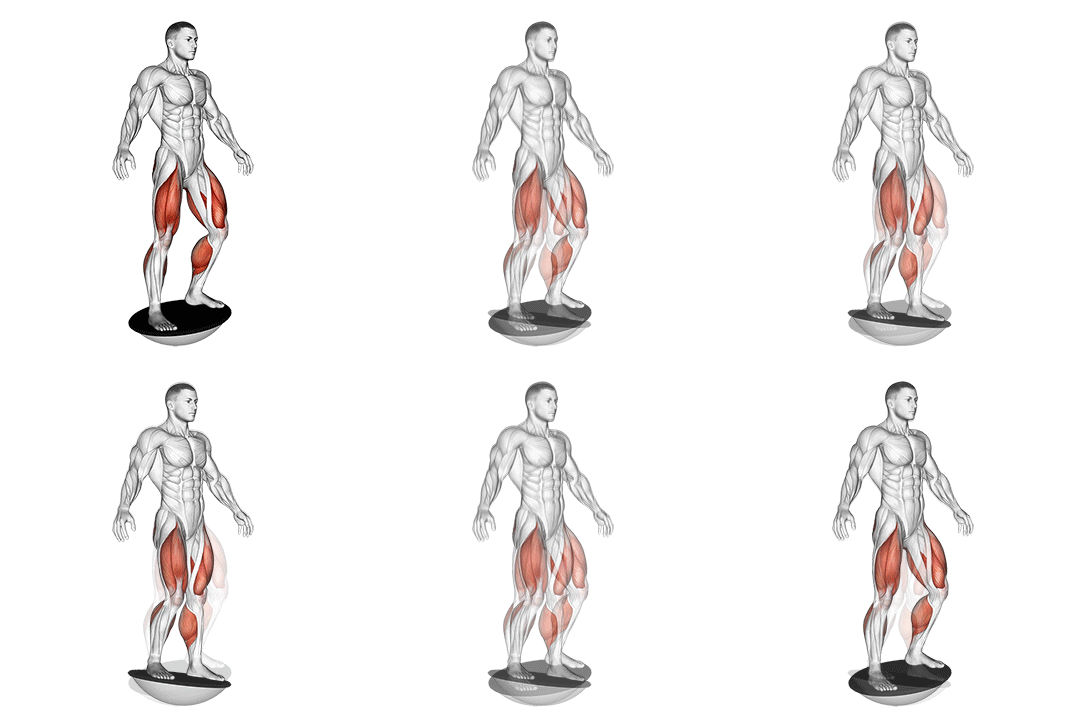
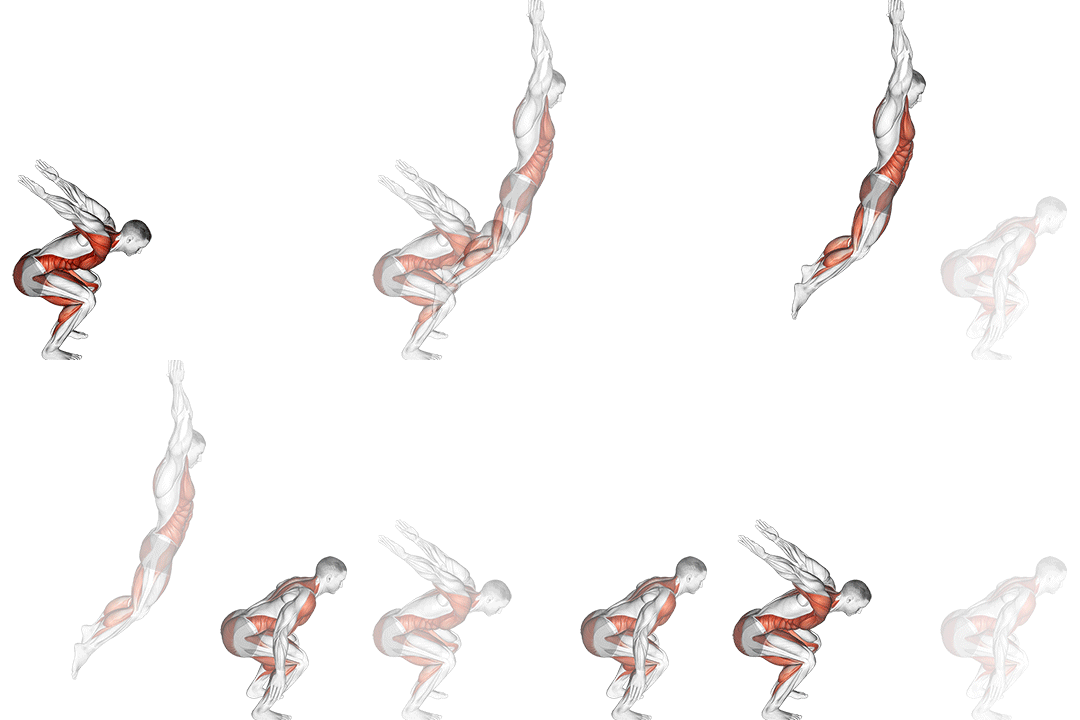
Balance Board
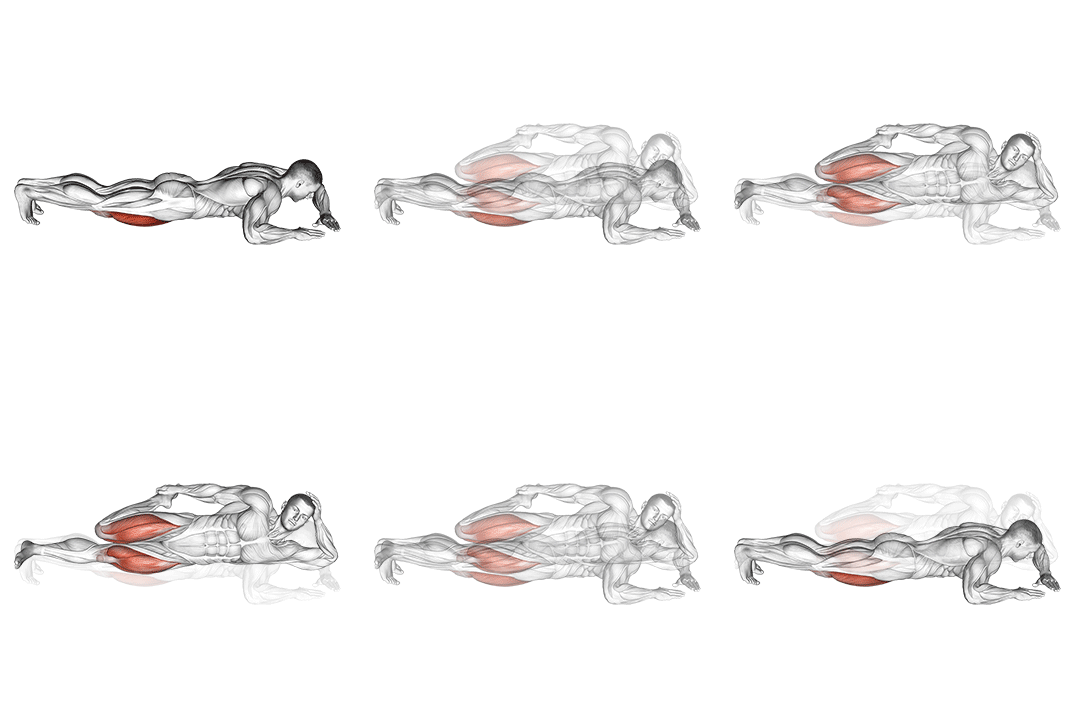
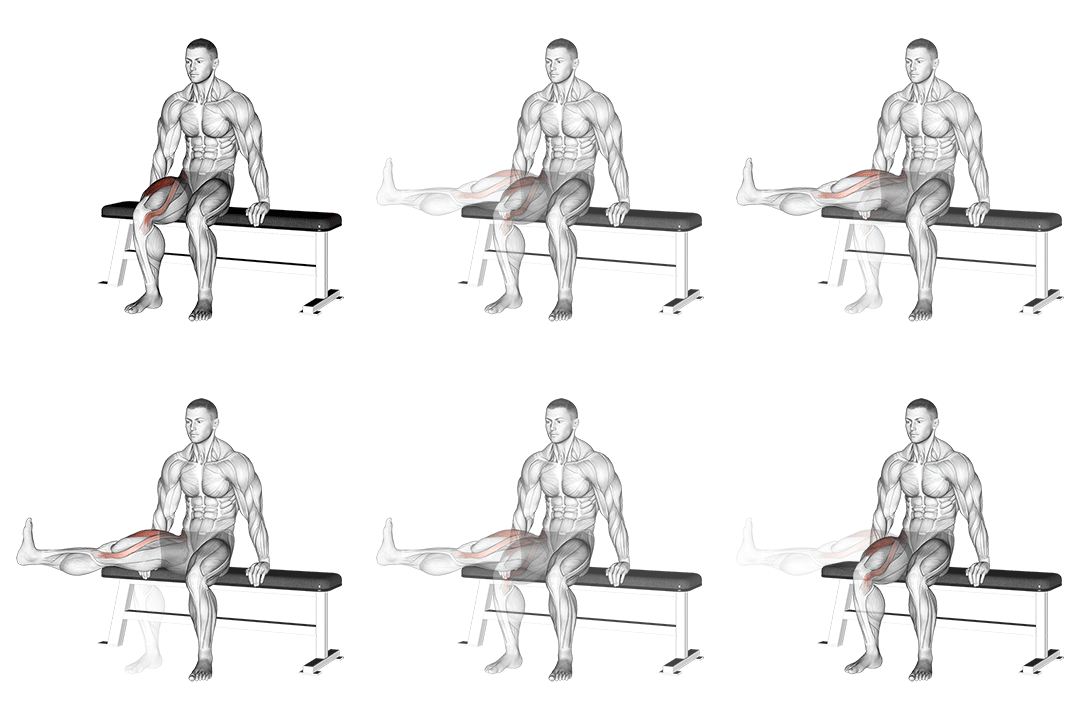
Lying (side) Quads Stretch
Head-to-Head Comparison
| Attribute | Balance Board | Lying (side) Quads Stretch |
|---|---|---|
| Target Muscle |
Quads
|
Quads
|
| Body Part |
Upper-legs
|
Upper-legs
|
| Equipment |
Body-weight
|
Body-weight
|
| Difficulty |
Intermediate
|
Beginner
|
| Movement Type |
Compound
|
Isolation
|
| Secondary Muscles |
3
|
1
|
Secondary Muscles Activated
Balance Board
Lying (side) Quads Stretch
Visual Comparison
Overview
Balance Board vs Lying (side) Quads Stretch — two bodyweight ways to target your quadriceps that serve very different needs. You’ll get a clear breakdown of muscle activation, secondary recruitment, equipment needs, difficulty, and practical cues so you can pick the one that fits your goals. I’ll show technique pointers (how to set knee angle, posture, and loading), recommended sets/reps or hold times, and quick progression options. Read on to learn which exercise gives you dynamic compound loading and stability work versus focused quad length-tension and mobility.
Key Differences
- Balance Board is a compound movement, while Lying (side) Quads Stretch is an isolation exercise.
- Difficulty levels differ: Balance Board is intermediate, while Lying (side) Quads Stretch is beginner.
- Both exercises target the Quads using Body-weight. The main differences are in their movement patterns and muscle activation angles.
Pros & Cons
Balance Board
+ Pros
- Builds active quad strength through concentric/eccentric work and isometric stabilization
- Engages calves, hamstrings, and glutes for functional, compound recruitment
- Easy to progress with single-leg work, added range, tempo changes, or light loading
- Improves balance and proprioception in addition to muscle work
− Cons
- Requires a balance board and space
- Higher learning curve and greater risk of ankle/knee mishaps
- Limited maximal hypertrophy compared to weighted exercises without added load
Lying (side) Quads Stretch
+ Pros
- Very accessible—no equipment and minimal skill required
- Targets quad length-tension and improves knee flexion mobility
- Low acute injury risk when done gently
- Can be used as part of a warm-up, cooldown, or mobility session
− Cons
- Passive stretch yields minimal force production and little strength stimulus
- Limited progression for strength or hypertrophy without additional loading
- Can aggravate the knee joint or quads if performed with excessive force or poor knee positioning
When Each Exercise Wins
Balance Board produces active concentric/eccentric and isometric loading across the quad through 10–90° of knee flexion, giving a stronger muscle-growth stimulus than a passive stretch. Use 3×8–15 reps or add external load for progressive overload.
Strength requires active force production and neural adaptation; the Balance Board’s dynamic and single-leg progressions train force output and stabilizer co-contraction better than a passive stretch.
The lying side stretch is low-skill, low-risk, and improves quad flexibility and knee comfort immediately, making it ideal for newcomers who lack balance or baseline strength.
No equipment, no setup, and minimal space make the lying side stretch the most accessible home option; use the Balance Board only if you own one and can perform it safely.
Frequently Asked Questions
Can I do both Balance Board and Lying (side) Quads Stretch in the same workout?
Yes. Do the Balance Board work earlier in the session as your primary quad strength/stability stimulus (3×8–15 reps or 3×30–60s), then use the lying side stretch as a cooldown or mobility drill with 2–3×30–90s holds to restore length-tension and reduce soreness.
Which exercise is better for beginners?
Lying (side) Quads Stretch is better for beginners because it requires no balance skill and low effort while improving quad flexibility. Start there before introducing Balance Board drills once you have baseline ankle and knee stability.
How do the muscle activation patterns differ?
Balance Board produces active, phasic and isometric quad activation with co-contraction of calves and glutes for joint stability; the lying side stretch mostly creates passive tension in the quads, shifting muscle length toward the long end of the length–tension curve and reducing voluntary force output.
Can Lying (side) Quads Stretch replace Balance Board?
No, not if your goal is active strength, stability, or functional quad development — the stretch does not produce the concentric/eccentric loading or neuromuscular challenge of a Balance Board. It can complement the Balance Board as a mobility tool, but it won’t substitute for strength stimulus.
Expert Verdict
Use the Balance Board when your goal is active quad development, balance, and multi-joint coordination — it gives concentric, eccentric, and stabilizing stimuli, especially when you progress to single-leg or added-load variations. Prioritize sets of 3×8–15 reps or 3×30–60s holds for isometric work, and keep knee alignment over toes to protect the joint. Choose the Lying (side) Quads Stretch when you need targeted quad length-tension, improved knee flexion range, or a safe, beginner-friendly option — hold 30–90s, avoid forcing the knee, and use straps to maintain neutral hips. In short: Balance Board for active strength and stability; lying stretch for mobility and recovery.
Also Compare
More comparisons with Balance Board
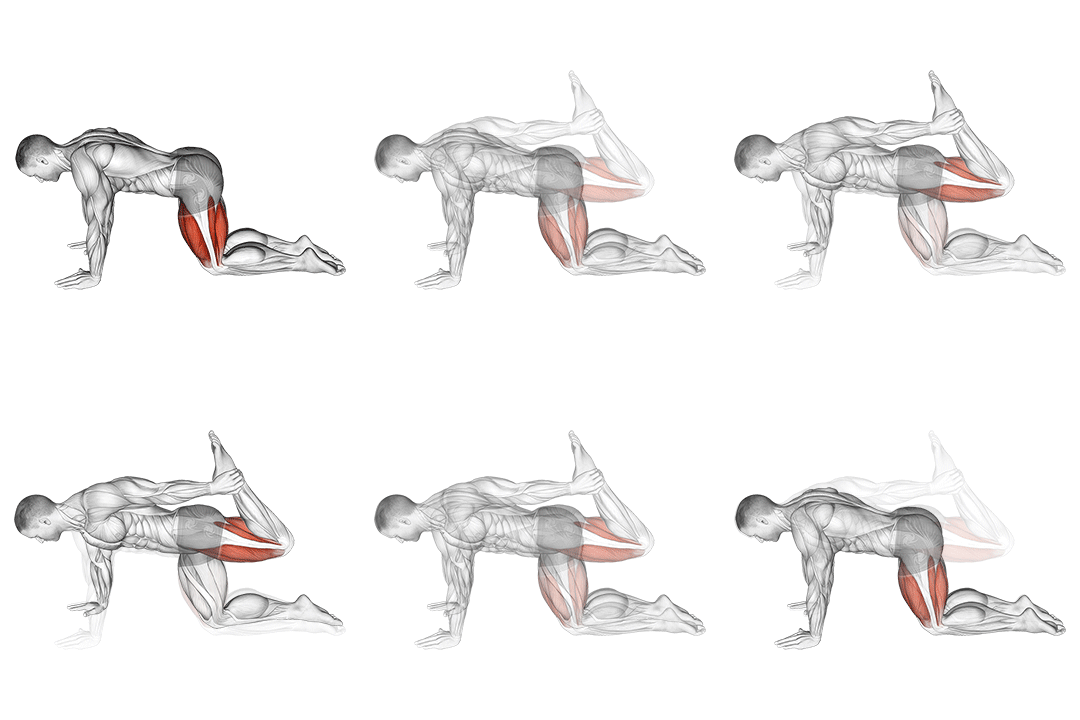
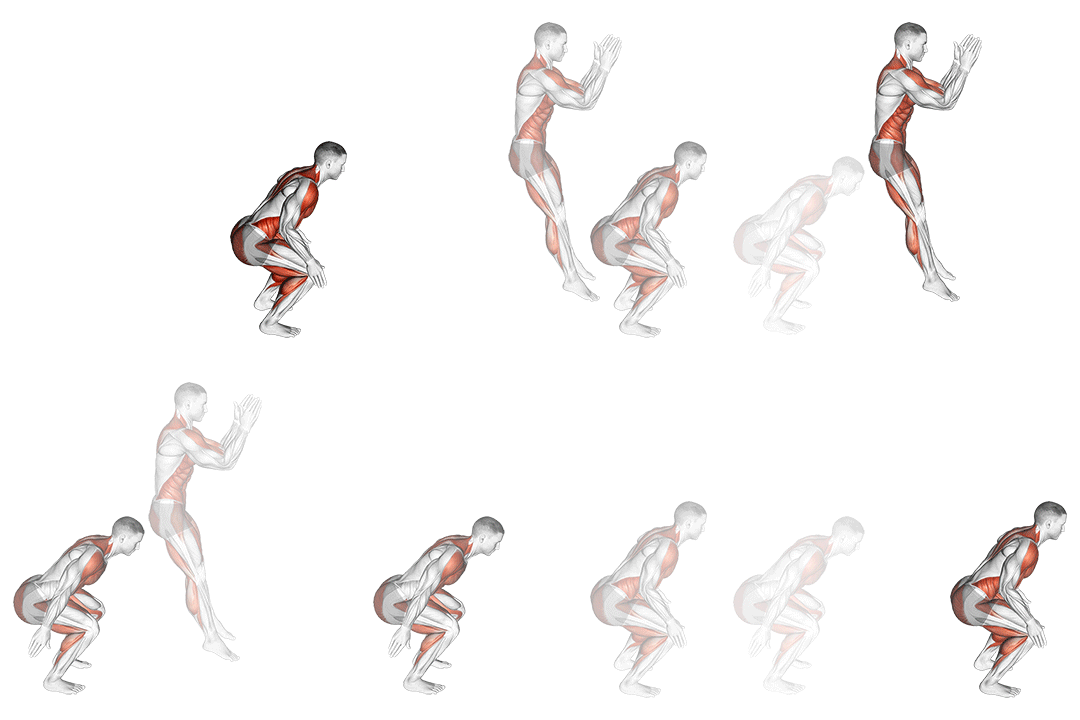
More comparisons with Lying (side) Quads Stretch
Compare More Exercises
Use our free comparison tool to analyze any two exercises head-to-head.
Compare Exercises