

Balance Board vs Quads: Complete Comparison Guide
Balance Board vs Quads is a practical matchup if you want stronger, more resilient upper legs. You’ll read a direct comparison of how each movement taxes the quadriceps, which secondary muscles activate, what equipment you need, and the best ways to program them into your training. I’ll cover biomechanics (knee angles, force vectors, length-tension), clear technique cues you can use right away, rep and set ranges, and which option fits specific goals like hypertrophy, strength, or balance training.
Exercise Comparison
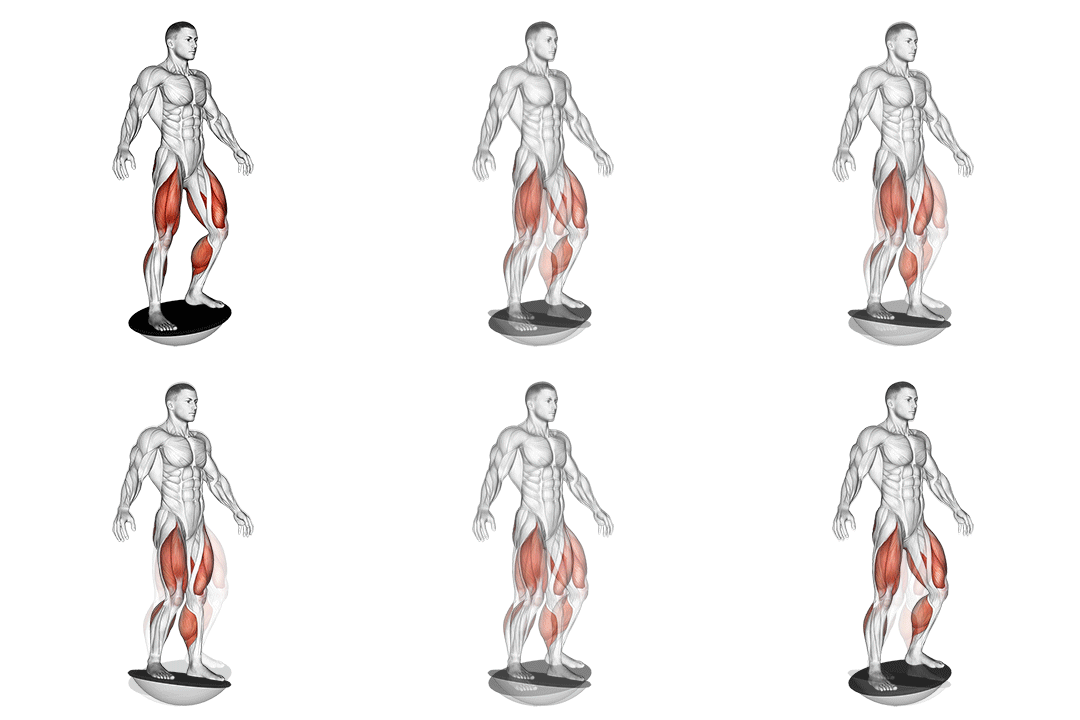
Balance Board
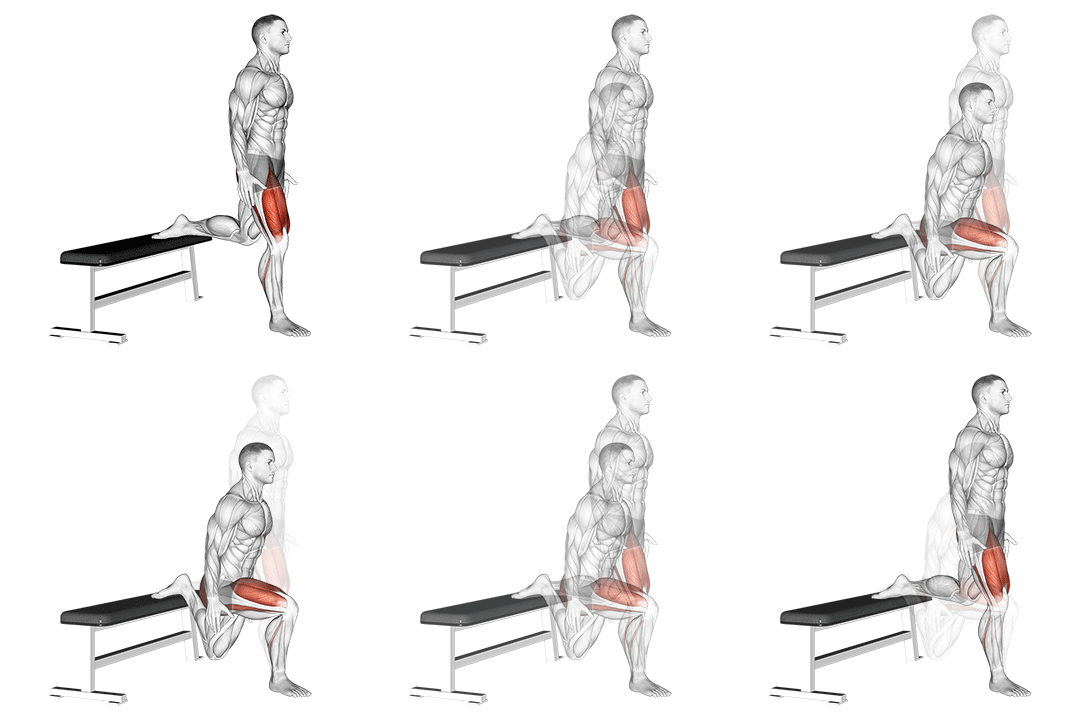
Quads
Head-to-Head Comparison
| Attribute | Balance Board | Quads |
|---|---|---|
| Target Muscle |
Quads
|
Quads
|
| Body Part |
Upper-legs
|
Upper-legs
|
| Equipment |
Body-weight
|
Body-weight
|
| Difficulty |
Intermediate
|
Beginner
|
| Movement Type |
Compound
|
Compound
|
| Secondary Muscles |
3
|
2
|
Secondary Muscles Activated
Balance Board
Quads
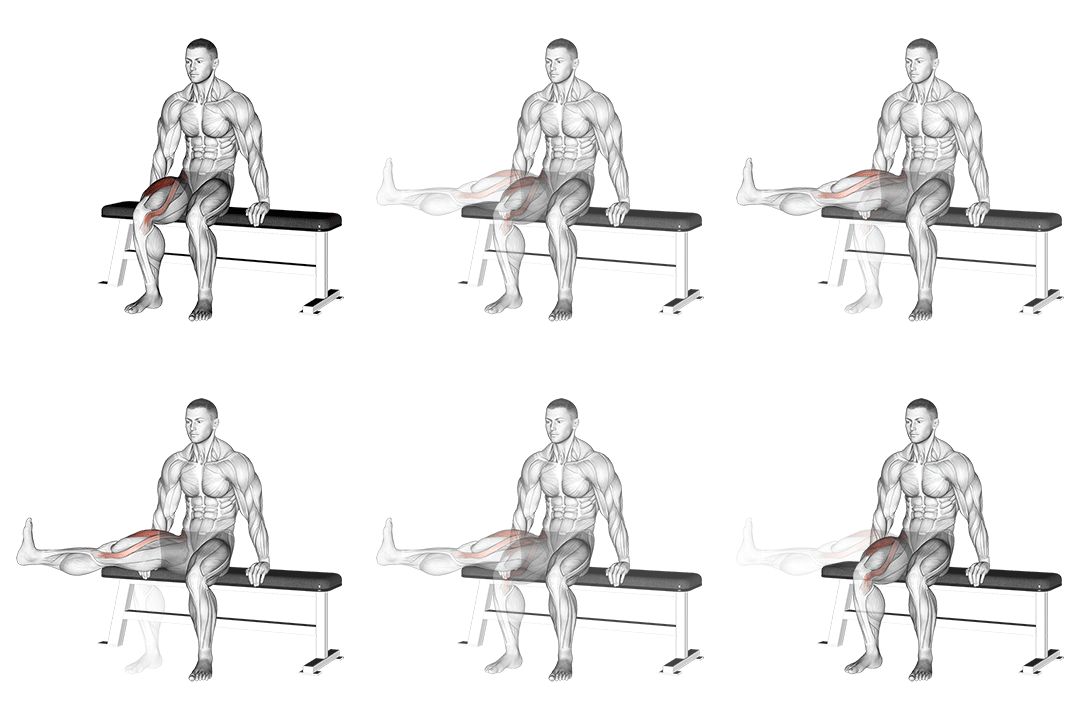
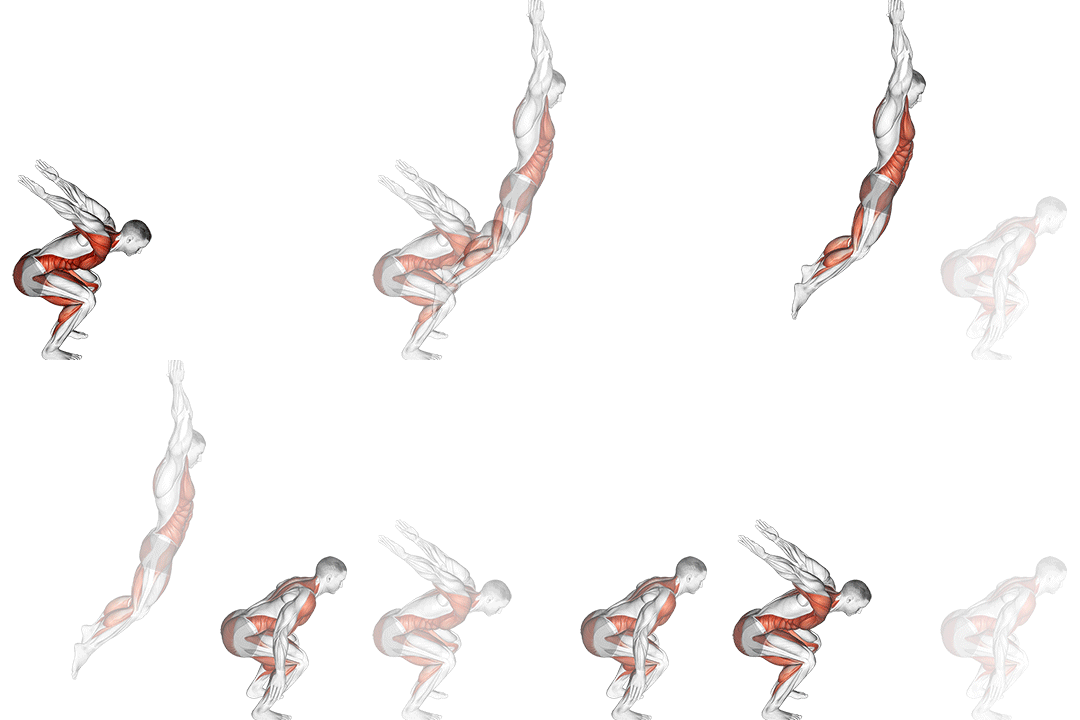
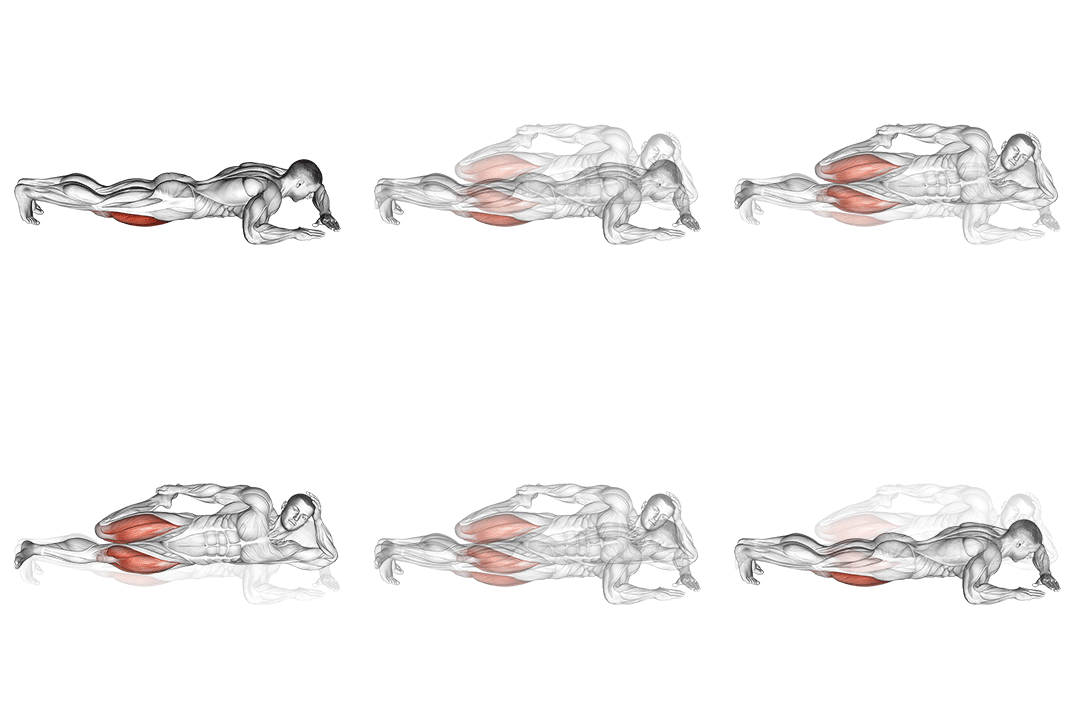
Visual Comparison
Overview
Balance Board vs Quads is a practical matchup if you want stronger, more resilient upper legs. You’ll read a direct comparison of how each movement taxes the quadriceps, which secondary muscles activate, what equipment you need, and the best ways to program them into your training. I’ll cover biomechanics (knee angles, force vectors, length-tension), clear technique cues you can use right away, rep and set ranges, and which option fits specific goals like hypertrophy, strength, or balance training.
Key Differences
- Difficulty levels differ: Balance Board is intermediate, while Quads is beginner.
- Both exercises target the Quads using Body-weight. The main differences are in their movement patterns and muscle activation angles.
Pros & Cons
Balance Board
+ Pros
- Improves proprioception, ankle stability, and balance control
- Increases quadriceps time-under-tension through isometric and micro-adjustments
- Useful for sport-specific balance and injury-rehab progressions
- Adds neuromuscular complexity without heavy external load
− Cons
- Limits peak force output—less ideal for maximal hypertrophy or strength
- Higher fall and ankle-injury risk without progressions or supports
- Requires purchase of a board and safe practice space
Quads
+ Pros
- Highly accessible—no equipment required
- Easier to overload progressively for strength and muscle growth
- Lower acute fall risk when performed with proper form
- Wide variety of regressions and progressions (tempo, unilateral, load)
− Cons
- Less specific to balance and ankle proprioception
- Can place compressive load on knee joint if form breaks (deep flexion with valgus)
- May become easy without external load—needs creative progressions
When Each Exercise Wins
Quads-focused bodyweight work allows higher peak concentric-eccentric loading and clearer progressive overload (sets of 6–15, or 3–5 sets to near technical failure). That produces higher mechanical tension and greater hypertrophy stimulus than the reduced peak force seen on unstable surfaces.
Strength depends on maximal force production and progressive overload. Stable, knee-dominant bodyweight exercises let you add load, increase time under tension, and train heavy force angles—balancing work cannot match that peak force capacity.
Quads bodyweight movements have a gentler learning curve and lower fall risk. Start with shallow squats (0–45° knee flexion), 2–3 sets of 8–12 reps, and focus on knees tracking toes and chest up before adding complexity.
Quads exercises require no purchase and fit any small space, letting you progress with tempo, unilateral moves, or household load. Balance boards are useful at home but add cost and safety considerations.
Frequently Asked Questions
Can I do both Balance Board and Quads in the same workout?
Yes. Pair Quads-focused sets early in the session when you want high force and mechanical tension, then finish with Balance Board work for 2–4 sets of 30–60s to overload proprioception and endurance without heavy load.
Which exercise is better for beginners?
Quads bodyweight movements are better for most beginners because they’re easier to learn and safer. Start with shallow squats, perfect form for 2–3 weeks, then add balance-board drills once basic motor patterns are stable.
How do the muscle activation patterns differ?
Balance Board work increases co-contraction and isometric activation across quads, calves, and hip stabilizers to control sway, while Quads bodyweight exercises produce larger concentric-eccentric cycles and higher peak activation of the quadriceps during knee extension.
Can Quads replace Balance Board?
For strength and hypertrophy, yes—Quads can replace balance work. For sport-specific balance, ankle rehab, or proprioceptive training you should keep balance-board drills because they train neural control and ankle strategies that plain Quads work does not.
Expert Verdict
Choose Quads bodyweight work if your priorities are hypertrophy, strength, accessibility, and straightforward progression. Use clear cues—feet hip-width, knees tracking toes, push through the mid-foot—and program 3–5 sets of 6–15 reps, adding tempo or unilateral variants to drive progressive overload. Pick the Balance Board when your goal is ankle resilience, sport-specific balance, and neuromuscular control: train 3–4 sets of 30–60s holds or 8–20 controlled reps focused on minimizing sway. In short, Quads wins for mechanical tension and progression; Balance Board wins for proprioception and stability training. Combine them strategically: prioritize Quads for strength cycles and add balance-board sets for preseason or rehab phases.
Also Compare
More comparisons with Balance Board
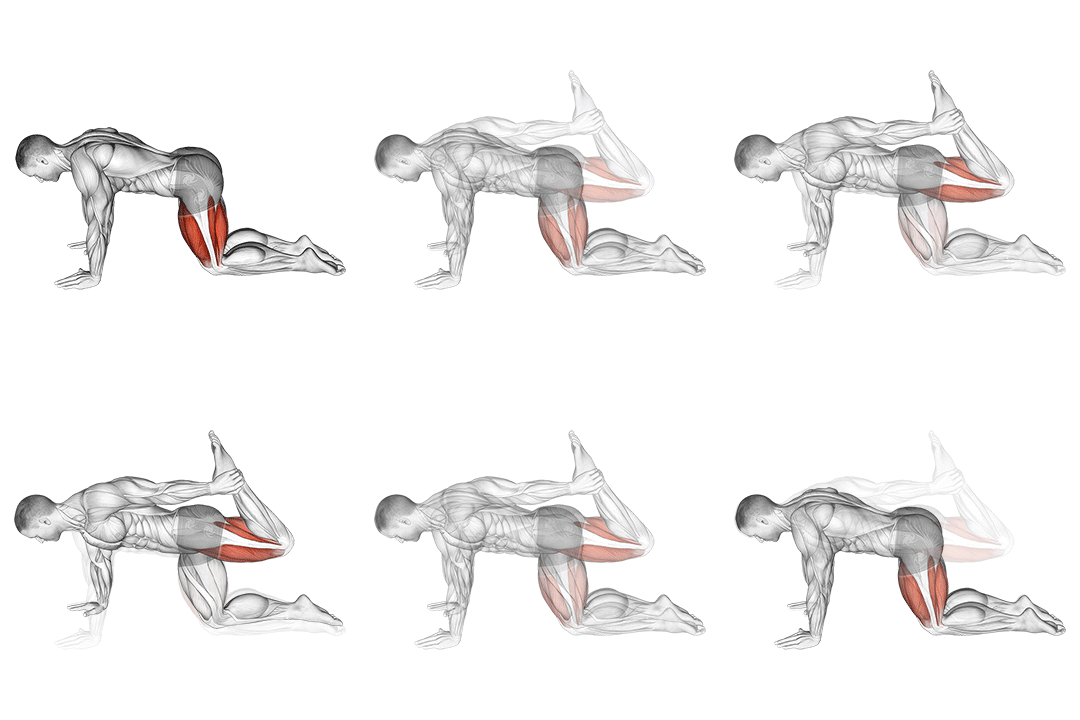
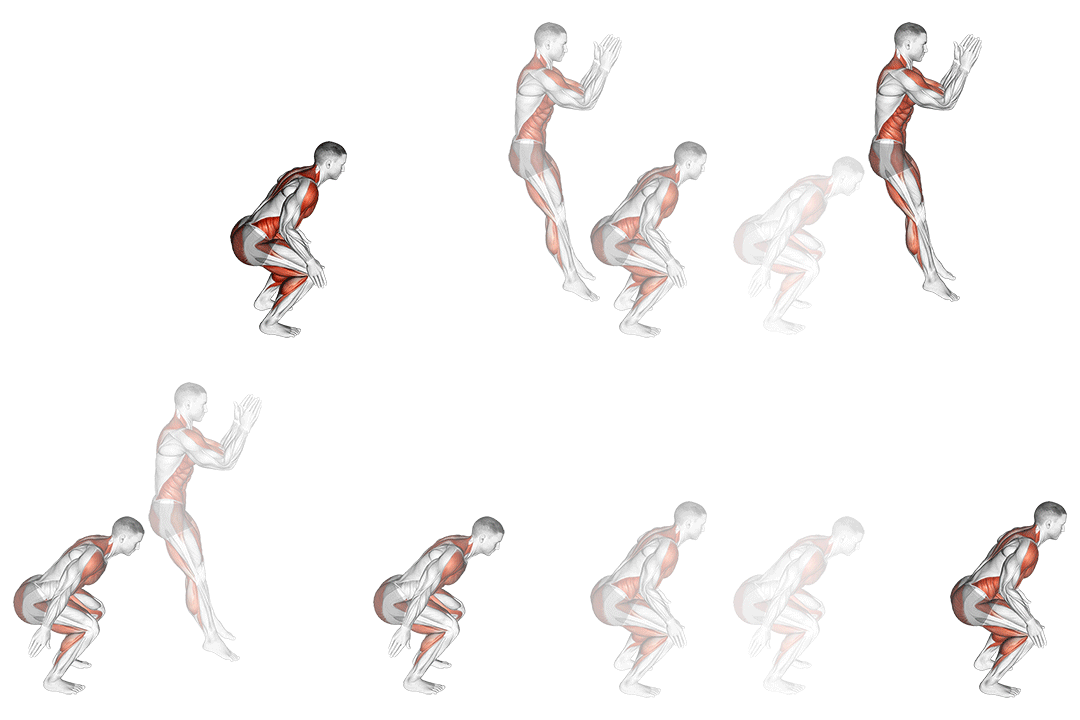
Compare More Exercises
Use our free comparison tool to analyze any two exercises head-to-head.
Compare Exercises