

Band Bent-over Hip Extension vs Band Stiff Leg Deadlift: Complete Comparison Guide
Band Bent-over Hip Extension vs Band Stiff Leg Deadlift — you want glute work that fits your goals and setup, and this comparison helps you pick. I’ll show movement differences, muscle activation patterns, equipment needs, safety cues, and specific rep and set ranges so you can program either exercise into your routine. Read this if you want clear technique cues (hip angles, spine position), biomechanics explanations (length-tension, force vectors), and practical recommendations for hypertrophy, strength, or beginner training.
Exercise Comparison
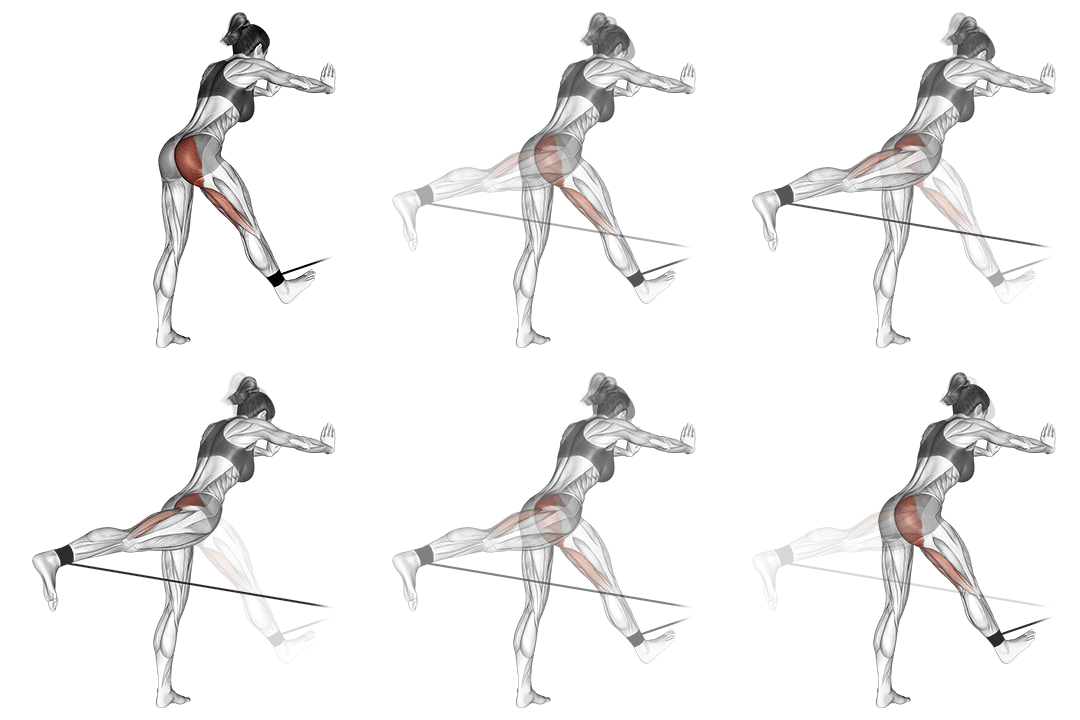
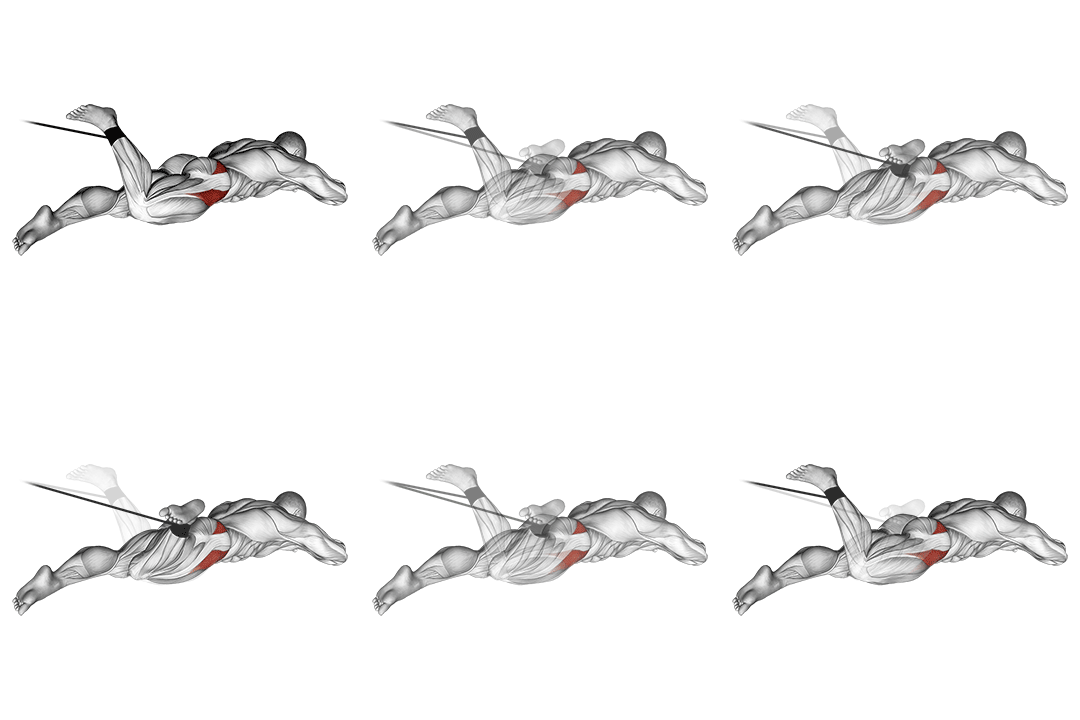
Band Bent-over Hip Extension
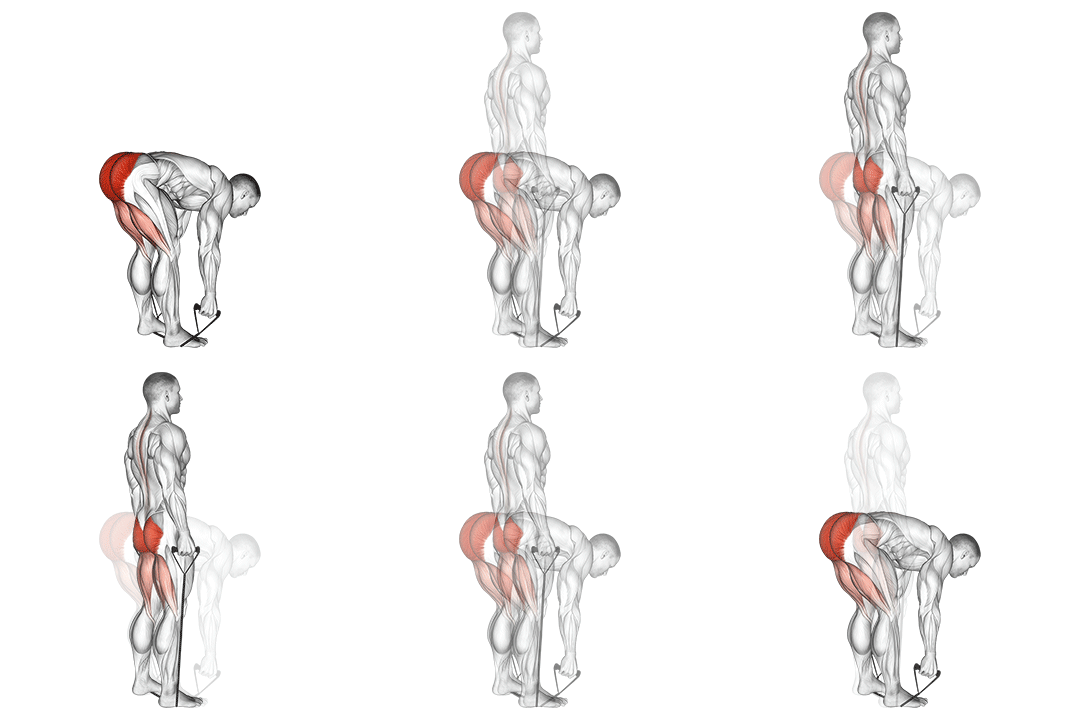
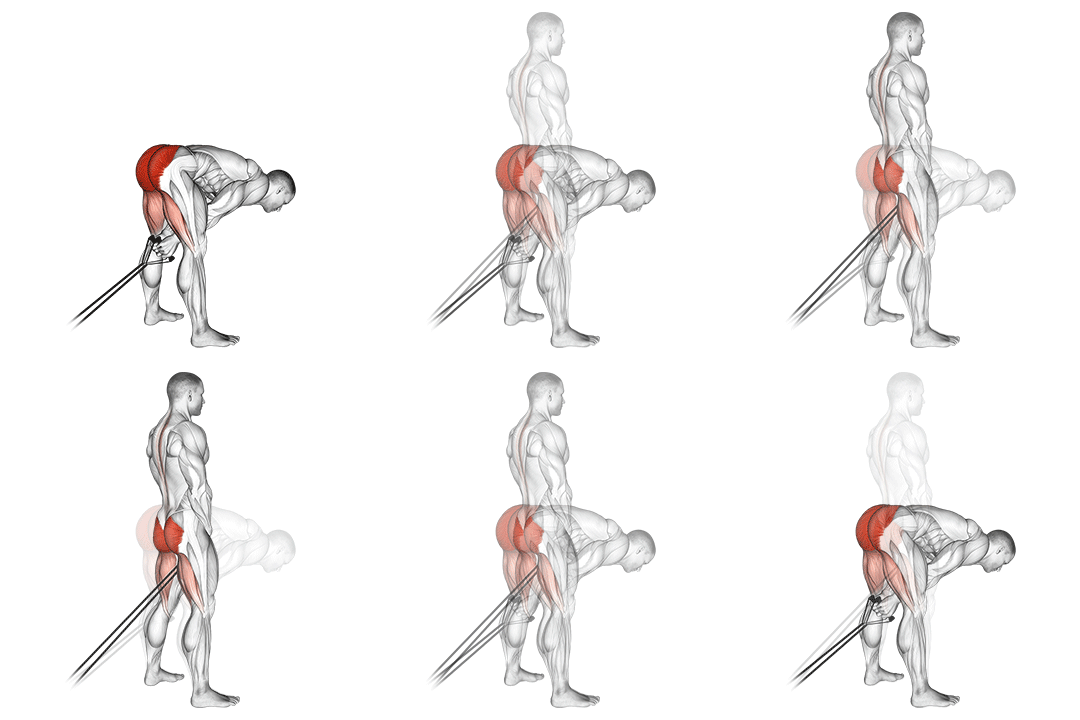
Band Stiff Leg Deadlift
Head-to-Head Comparison
| Attribute | Band Bent-over Hip Extension | Band Stiff Leg Deadlift |
|---|---|---|
| Target Muscle |
Glutes
|
Glutes
|
| Body Part |
Upper-legs
|
Upper-legs
|
| Equipment |
Band
|
Band
|
| Difficulty |
Beginner
|
Intermediate
|
| Movement Type |
Isolation
|
Compound
|
| Secondary Muscles |
2
|
2
|
Secondary Muscles Activated
Band Bent-over Hip Extension
Band Stiff Leg Deadlift
Visual Comparison
Overview
Band Bent-over Hip Extension vs Band Stiff Leg Deadlift — you want glute work that fits your goals and setup, and this comparison helps you pick. I’ll show movement differences, muscle activation patterns, equipment needs, safety cues, and specific rep and set ranges so you can program either exercise into your routine. Read this if you want clear technique cues (hip angles, spine position), biomechanics explanations (length-tension, force vectors), and practical recommendations for hypertrophy, strength, or beginner training.
Key Differences
- Band Bent-over Hip Extension is an isolation exercise, while Band Stiff Leg Deadlift is a compound movement.
- Difficulty levels differ: Band Bent-over Hip Extension is beginner, while Band Stiff Leg Deadlift is intermediate.
- Both exercises target the Glutes using Band. The main differences are in their movement patterns and muscle activation angles.
Pros & Cons
Band Bent-over Hip Extension
+ Pros
- Strong isolation of glute max with reliable end-range contraction
- Easy setup and minimal mobility required
- Lower technical demand — quick to teach and cue
- Great for high-rep hypertrophy work (8–20 reps, 3–4 sets)
− Cons
- Limited total-body loading compared to compound lifts
- Less hamstring eccentric stretch, so weaker stimulus for hamstring lengthening
- Progression relies on band tension and volume rather than heavy external load
Band Stiff Leg Deadlift
+ Pros
- Compound pattern loads the whole posterior chain for greater systemic strength
- Provides strong eccentric hamstring stimulus and length-tension challenge
- Easier to scale mechanical tension by using thicker or multiple bands
- Translates well to bilateral barbell hinge variations for strength progression
− Cons
- Higher technical demand—requires solid hip hinge and neutral spine control
- Greater risk to lower back and hamstrings if form breaks
- Needs more ankle/hamstring mobility and space for full ROM
When Each Exercise Wins
The bent-over hip extension isolates the glute max and lets you produce high peak tension at end-range—ideal for muscle growth. Use 8–20 reps across 3–4 sets, focus on a 1–2s concentric squeeze and 2–3s eccentric return to maximize time under tension.
The stiff-leg deadlift is a compound hip-hinge that recruits more muscle mass and allows heavier progressive overload with bands, improving overall posterior-chain strength. Train in the 4–8 rep zone with heavier bands and controlled eccentrics to build force production.
Beginners can learn hip extension and build glute-mind connection with simpler mechanics and lower injury risk. Start with light bands, a slightly bent knee (10–20°), and focus on neutral spine and full glute contraction.
It requires minimal bandwidth and less mobility, so you can set up quickly at home with one band. The exercise delivers focused glute work without needing heavy resistance or complex setup.
Frequently Asked Questions
Can I do both Band Bent-over Hip Extension and Band Stiff Leg Deadlift in the same workout?
Yes. Pair them by ordering the compound stiff-leg deadlift first for strength (3–5 sets of 4–8 reps), then use the bent-over hip extension as a finisher for hypertrophy (3–4 sets of 10–20 reps) to pre-exhaust and isolate the glutes.
Which exercise is better for beginners?
Band Bent-over Hip Extension is better for beginners because it has simpler mechanics and lower hamstring and lumbar demand. Focus on neutral spine, a slight knee bend (10–20°), and mastering the glute squeeze first.
How do the muscle activation patterns differ?
The bent-over hip extension peaks glute activation at terminal hip extension with a concentric bias, while the stiff-leg deadlift produces high eccentric hamstring tension during descent and a sustained concentric drive through a longer lever, shifting load across hamstrings, glutes, and erectors.
Can Band Stiff Leg Deadlift replace Band Bent-over Hip Extension?
It can replace it for general posterior-chain work, but not for targeted glute isolation. If your goal is maximal glute hypertrophy and end-range contraction, include bent-over hip extensions; use stiff-leg deadlifts when you need compound strength and hamstring development.
Expert Verdict
Use the Band Bent-over Hip Extension when your priority is targeted glute development, low technical demand, or quick home sessions—program 3–4 sets of 8–20 reps and emphasize end-range squeezes. Choose the Band Stiff Leg Deadlift when you want to build posterior-chain strength, improve eccentric hamstring capacity, and train a compound hip-hinge under greater tension—use heavier bands, 3–5 sets of 4–12 reps, and control the descent. For balanced programming, alternate them: use bent-over hip extensions for volume-focused weeks and stiff-leg deadlifts for strength- or performance-oriented blocks.
Also Compare
More comparisons with Band Bent-over Hip Extension
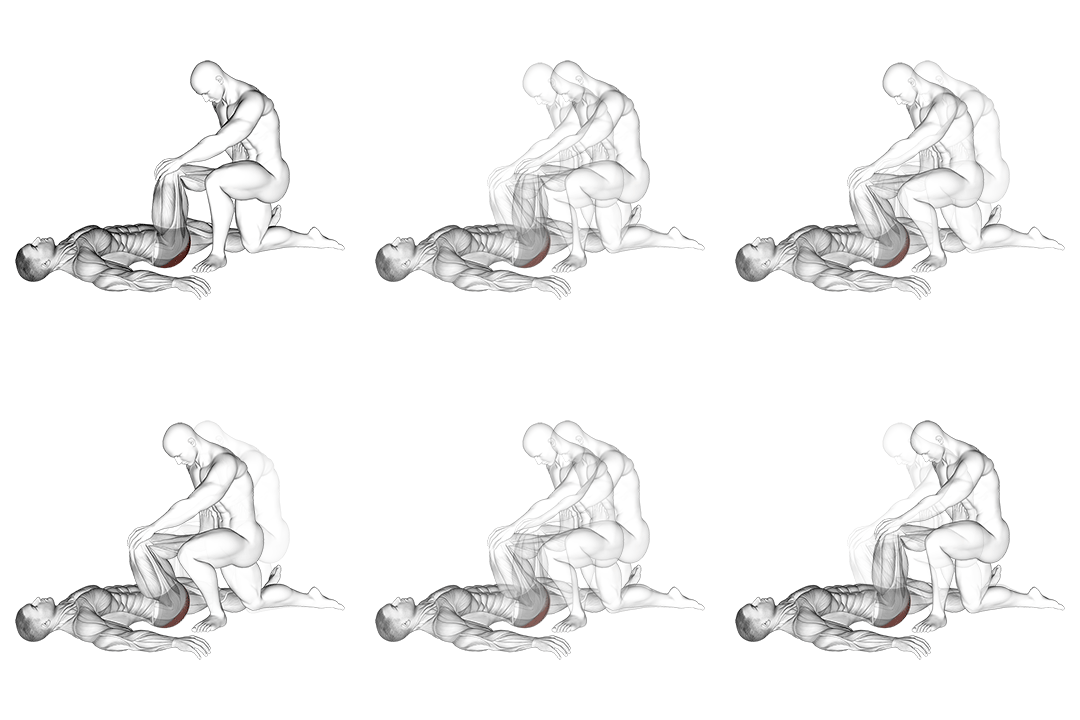
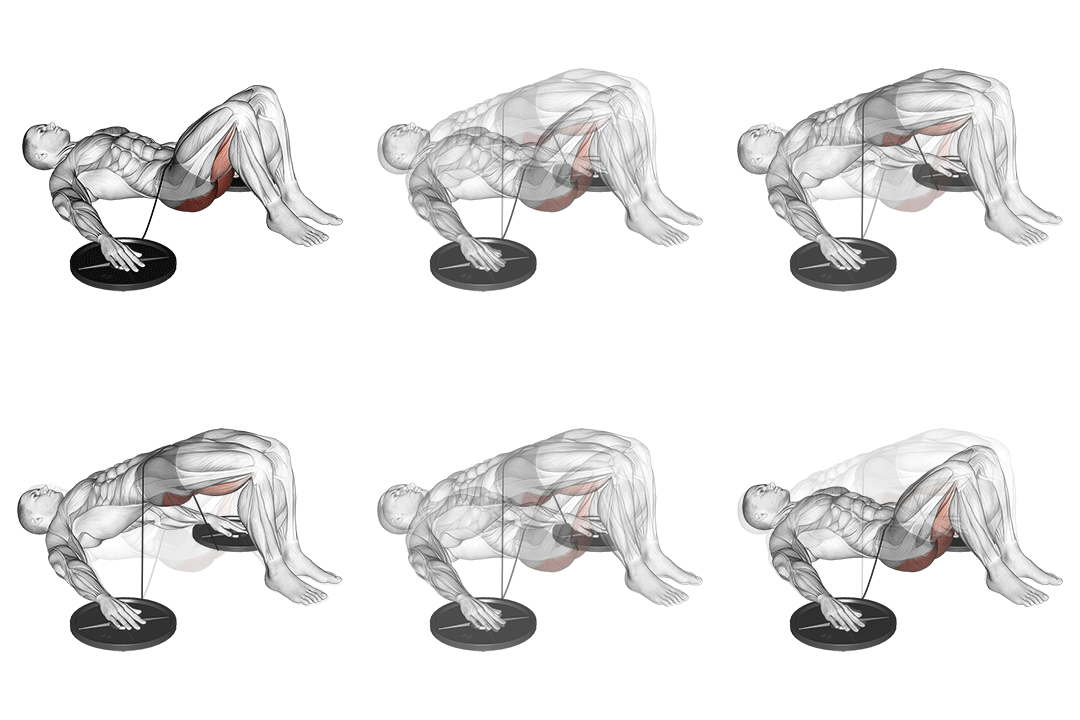
More comparisons with Band Stiff Leg Deadlift
Compare More Exercises
Use our free comparison tool to analyze any two exercises head-to-head.
Compare Exercises