

Band Bent-over Hip Extension vs Box Jump (Multiple Response): Complete Comparison Guide
Band Bent-over Hip Extension vs Box Jump (Multiple Response) — if you want clearer direction on which move to use, you’re in the right place. I’ll break down how each exercise loads the glutes, which secondary muscles light up, the equipment you need, and practical rep ranges and technique cues you can use today. You’ll get biomechanics-based reasons for choosing one over the other, progression options (sets/reps and intensity), and safety pointers so you can pick the right tool for muscle growth, power, or a beginner-friendly routine.
Exercise Comparison
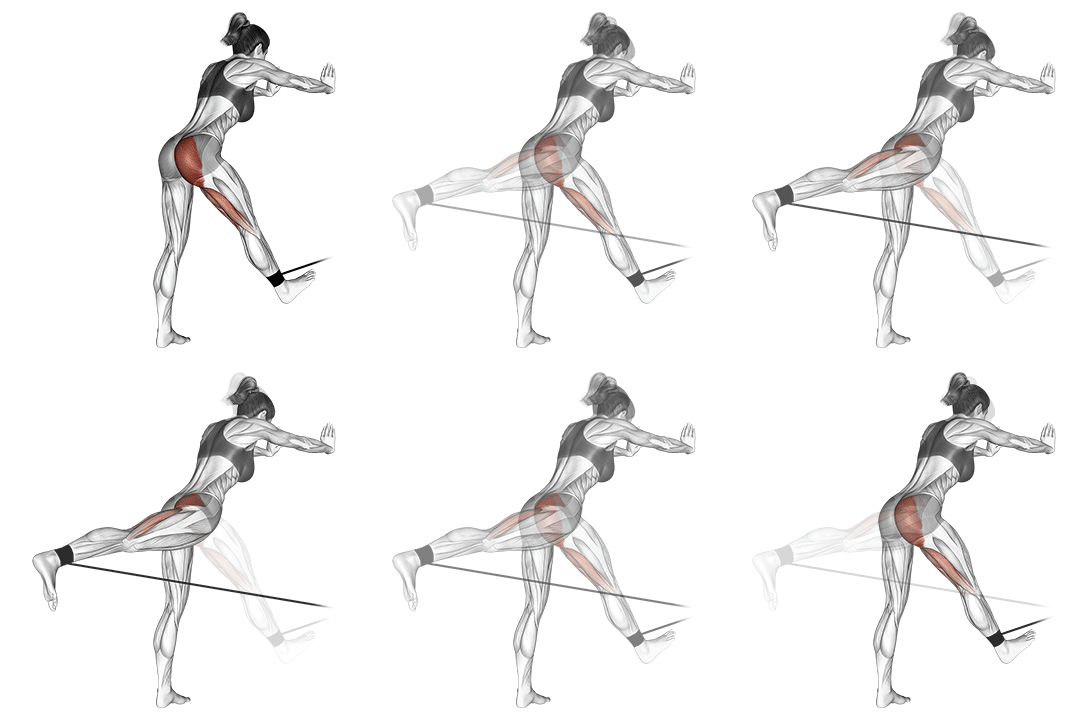
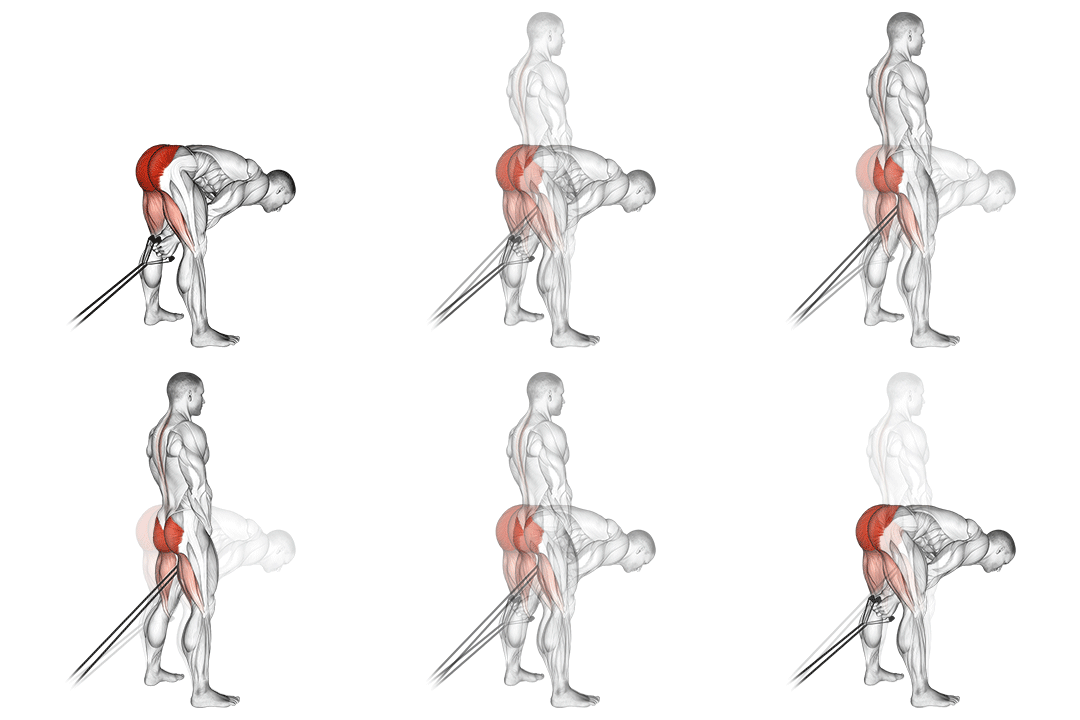
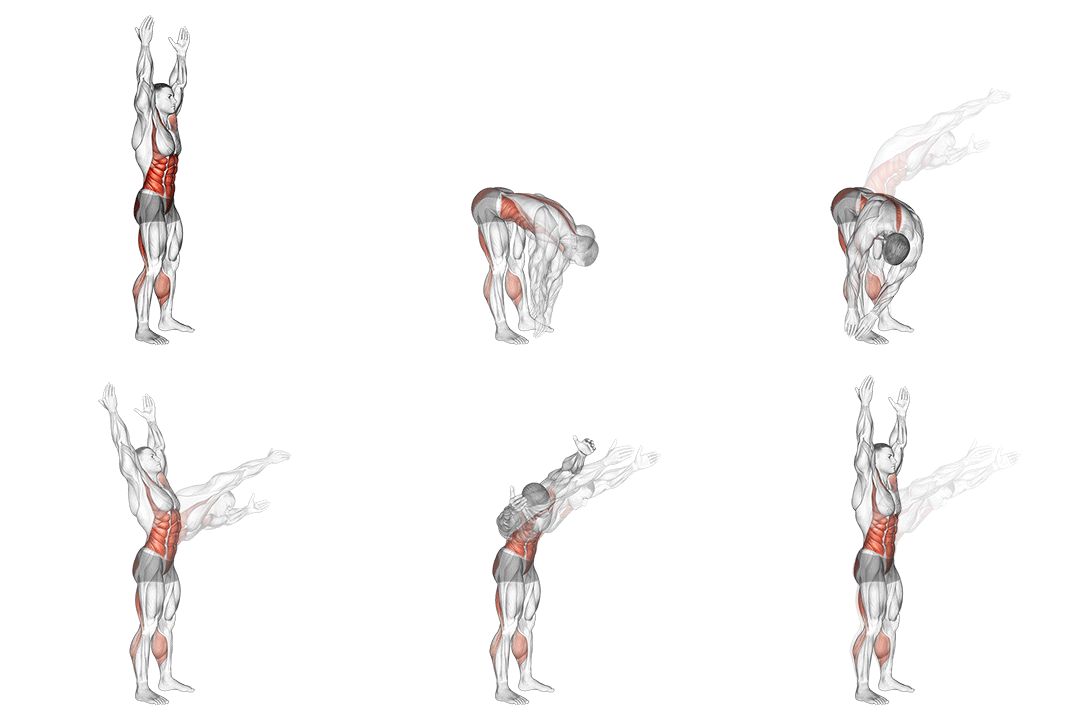
Band Bent-over Hip Extension

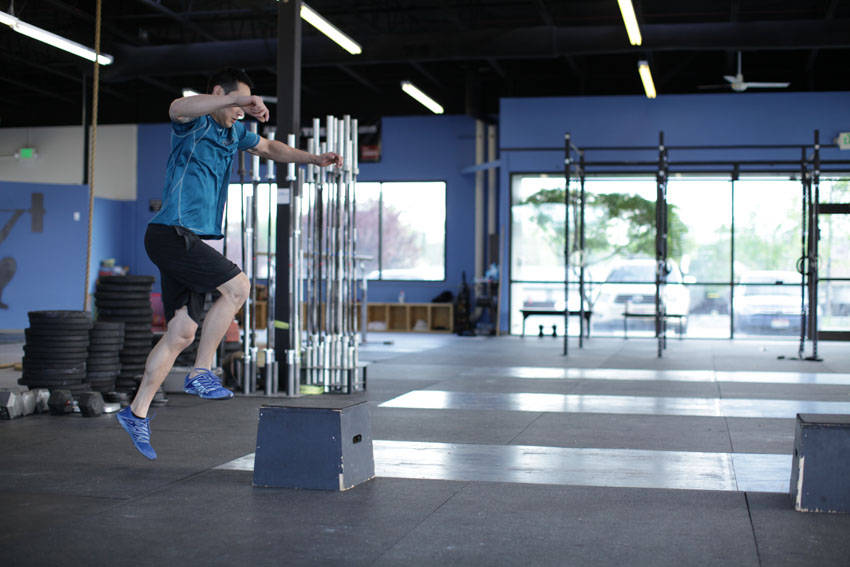
Box Jump (multiple Response)
Head-to-Head Comparison
| Attribute | Band Bent-over Hip Extension | Box Jump (multiple Response) |
|---|---|---|
| Target Muscle |
Glutes
|
Glutes
|
| Body Part |
Upper-legs
|
Upper-legs
|
| Equipment |
Band
|
Other
|
| Difficulty |
Beginner
|
Intermediate
|
| Movement Type |
Isolation
|
Compound
|
| Secondary Muscles |
2
|
5
|
Secondary Muscles Activated
Band Bent-over Hip Extension
Box Jump (multiple Response)
Visual Comparison
Overview
Band Bent-over Hip Extension vs Box Jump (Multiple Response) — if you want clearer direction on which move to use, you’re in the right place. I’ll break down how each exercise loads the glutes, which secondary muscles light up, the equipment you need, and practical rep ranges and technique cues you can use today. You’ll get biomechanics-based reasons for choosing one over the other, progression options (sets/reps and intensity), and safety pointers so you can pick the right tool for muscle growth, power, or a beginner-friendly routine.
Key Differences
- Equipment differs: Band Bent-over Hip Extension uses Band, while Box Jump (multiple Response) requires Other.
- Band Bent-over Hip Extension is an isolation exercise, while Box Jump (multiple Response) is a compound movement.
- Difficulty levels differ: Band Bent-over Hip Extension is beginner, while Box Jump (multiple Response) is intermediate.
Pros & Cons
Band Bent-over Hip Extension
+ Pros
- Direct glute isolation with long time under tension for hypertrophy (8–15+ reps)
- Minimal equipment and space — highly accessible
- Low-impact — easier on knees and ankles
- Simple technique: hinge at hips ~30°–45° trunk angle, neutral spine, drive hips back and then extend
− Cons
- Limited maximal force overload compared to heavy barbell or eccentric loading
- Less carryover to explosive power and RFD
- Requires strict hip-hinge control; poor form can load the lumbar spine
Box Jump (multiple Response)
+ Pros
- Develops explosive power and high-rate force production (RFD)
- Great transfer to athletic tasks that require jump ability and coordination
- Recruits quads, calves, and stabilizers for a full lower-body stimulus
- Easy to scale intensity via box height and approach speed
− Cons
- Higher impact and higher risk of ankle/knee injury on poor landings
- Requires a stable box/platform and open space
- Technique-demanding: poor timing or fatigue increases injury risk
When Each Exercise Wins
Isolation and controlled tempo let you accumulate time under tension (8–15+ reps, 2–3 sec eccentrics), which promotes glute hypertrophy through sustained mechanical tension and favorable length–tension positioning.
Box jumps develop explosive lower-body strength and rate of force development via triple extension; when combined with progressive overload (higher box heights, weighted vests), they drive neural adaptations that boost force output.
Easier motor pattern and lower impact let beginners learn hip extension and glute activation safely while building baseline strength and technique before adding plyometrics.
Requires only a band and minimal space, so you can load the glutes effectively at home without investing in plyo equipment or risking high-impact landings.
Frequently Asked Questions
What is the difference between Band Bent-over Hip Extension and Box Jump (multiple Response)?
Band Bent-over Hip Extension primarily targets the Glutes, while Box Jump (multiple Response) focuses on the Glutes. They also differ in equipment requirements: Band Bent-over Hip Extension uses Band, while Box Jump (multiple Response) requires Other.
Which is better: Band Bent-over Hip Extension or Box Jump (multiple Response)?
Neither exercise is universally better - it depends on your goals. Choose Band Bent-over Hip Extension to emphasize the Glutes. Choose Box Jump (multiple Response) for focus on the Glutes. Many training programs include both for balanced development.
Can I do Band Bent-over Hip Extension and Box Jump (multiple Response) in the same workout?
Yes, you can perform both exercises in the same workout. Since they target the same muscle group (Glutes), consider spacing them apart or doing them on different days for optimal recovery.
Which exercise is harder: Band Bent-over Hip Extension or Box Jump (multiple Response)?
Band Bent-over Hip Extension is rated as beginner difficulty, while Box Jump (multiple Response) is intermediate. Difficulty can vary based on your experience and the weight used.
Expert Verdict
Use the Band Bent-over Hip Extension when your goal is targeted glute development, low-impact training, or working within limited equipment—perform 3–4 sets of 8–15 reps with a controlled 2–3 second eccentric and a 1–2 second peak contraction. Choose Box Jump (Multiple Response) when you want to prioritize power, athleticism, and high-rate force production—do 3–6 sets of 3–6 explosive reps, focus on soft, absorptive landings (20°–40° knee flexion) and incremental height progression. For a balanced program, pair bands for hypertrophy and technique with plyometrics for power on alternate days.
Also Compare
More comparisons with Band Bent-over Hip Extension
More comparisons with Box Jump (multiple Response)
Compare More Exercises
Use our free comparison tool to analyze any two exercises head-to-head.
Compare Exercises