

Band Hip Lift vs Band Stiff Leg Deadlift: Complete Comparison Guide
Band Hip Lift vs Band Stiff Leg Deadlift — both use a band to load hip extension, but they load the glutes and hamstrings differently. You’ll get direct, practical guidance on which exercise to choose based on your goal (muscle growth, strength, or rehab), how the two differ biomechanically, exact technique cues to maximize glute activation, and rep ranges and progressions to use. Read on to learn when to pick the Band Hip Lift for targeted peak contraction and when to use the Band Stiff Leg Deadlift to build hinge strength and hamstring length tolerance.
Exercise Comparison
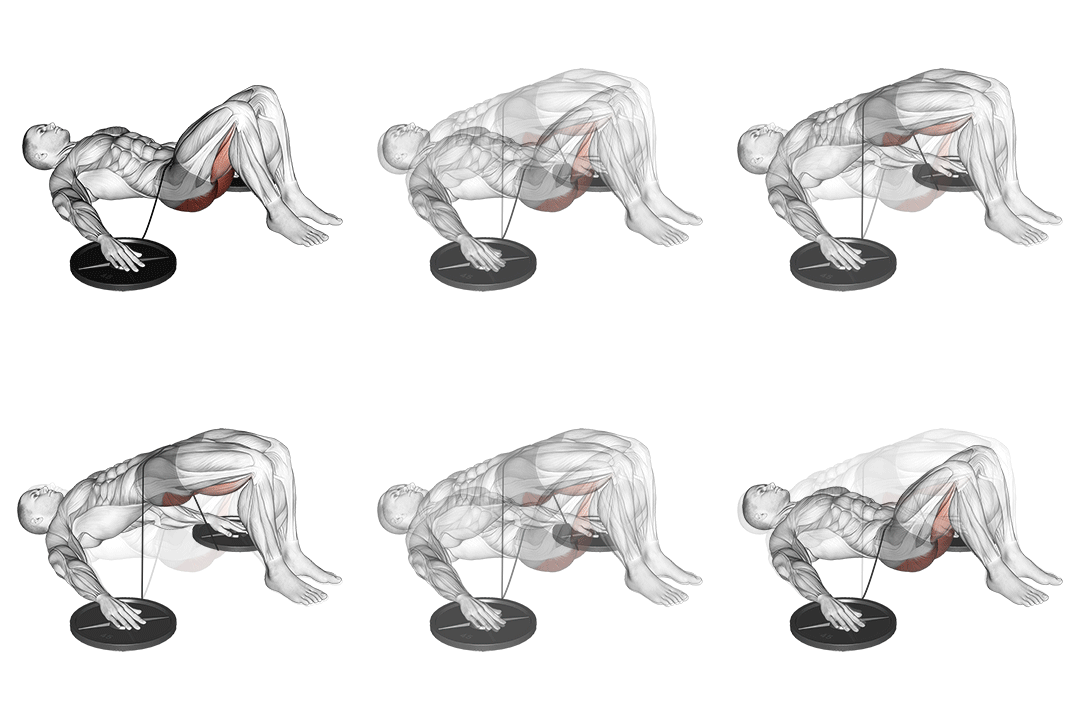
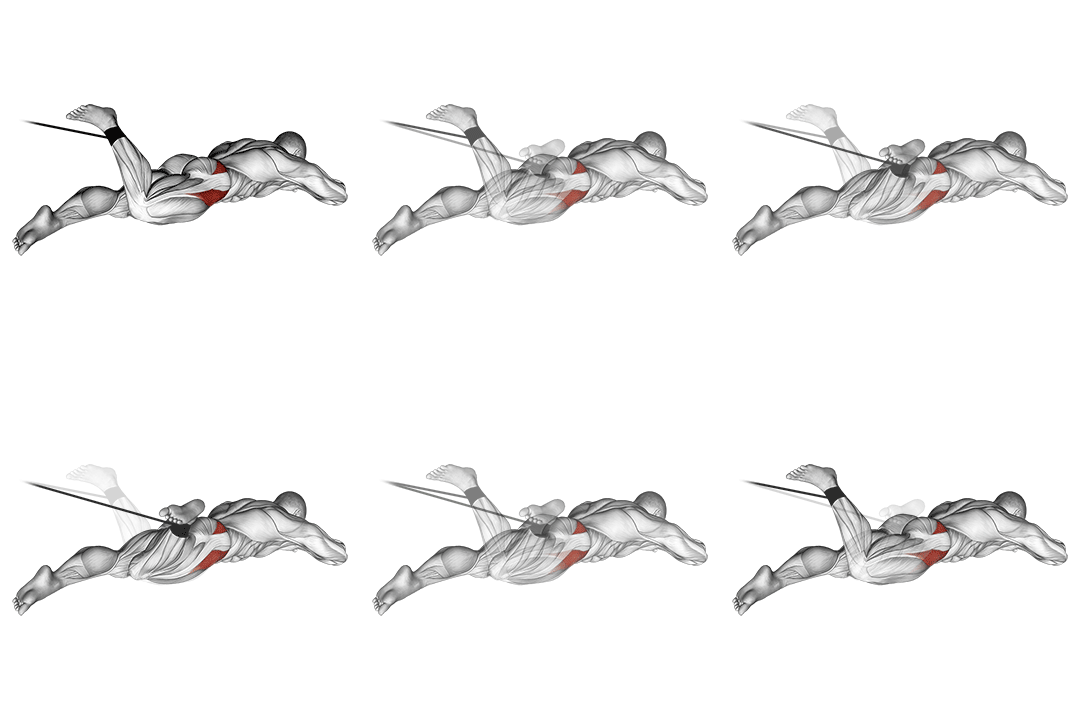
Band Hip Lift
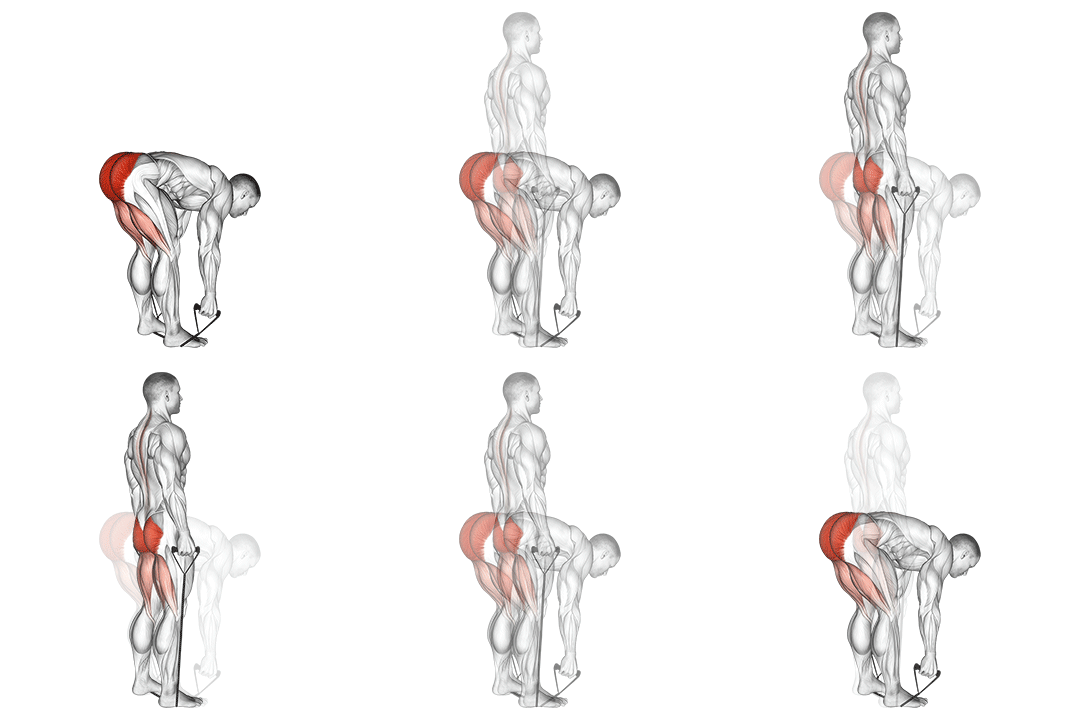
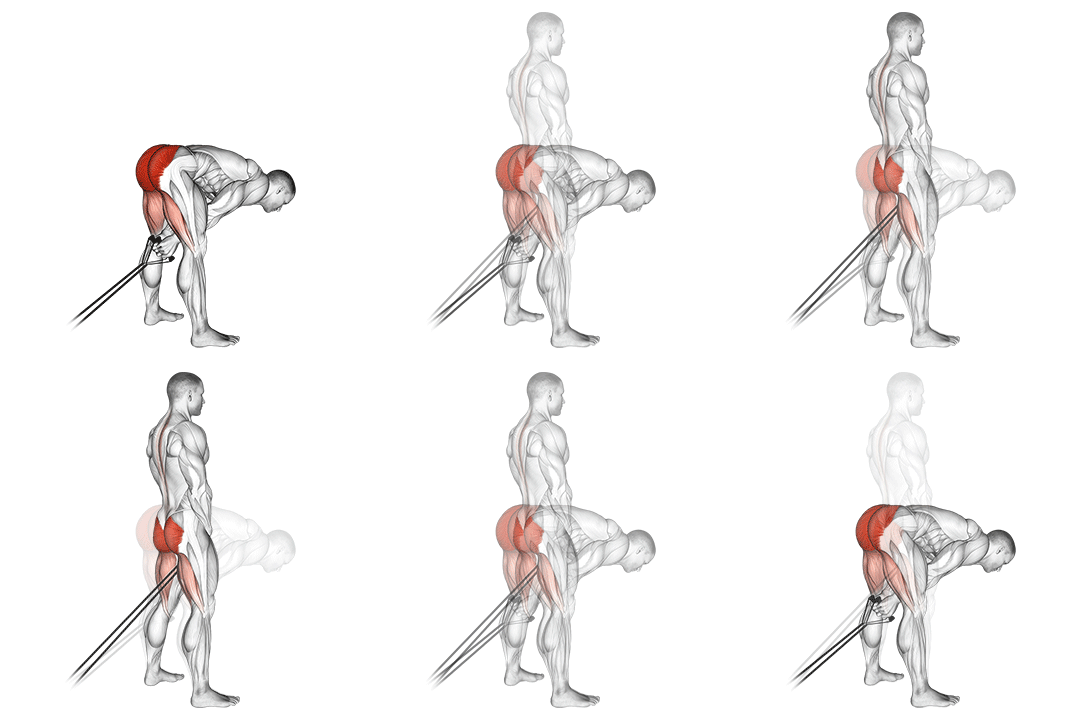
Band Stiff Leg Deadlift
Head-to-Head Comparison
| Attribute | Band Hip Lift | Band Stiff Leg Deadlift |
|---|---|---|
| Target Muscle |
Glutes
|
Glutes
|
| Body Part |
Upper-legs
|
Upper-legs
|
| Equipment |
Band
|
Band
|
| Difficulty |
Beginner
|
Intermediate
|
| Movement Type |
Compound
|
Compound
|
| Secondary Muscles |
2
|
2
|
Secondary Muscles Activated
Band Hip Lift
Band Stiff Leg Deadlift
Visual Comparison
Overview
Band Hip Lift vs Band Stiff Leg Deadlift — both use a band to load hip extension, but they load the glutes and hamstrings differently. You’ll get direct, practical guidance on which exercise to choose based on your goal (muscle growth, strength, or rehab), how the two differ biomechanically, exact technique cues to maximize glute activation, and rep ranges and progressions to use. Read on to learn when to pick the Band Hip Lift for targeted peak contraction and when to use the Band Stiff Leg Deadlift to build hinge strength and hamstring length tolerance.
Key Differences
- Difficulty levels differ: Band Hip Lift is beginner, while Band Stiff Leg Deadlift is intermediate.
- Both exercises target the Glutes using Band. The main differences are in their movement patterns and muscle activation angles.
Pros & Cons
Band Hip Lift
+ Pros
- Direct peak glute activation at end-range for strong muscle contraction
- Low spinal loading—safer for clients with lower-back sensitivity
- Very easy to set up and scale (band tension, single-leg progressions)
- Clear, simple technique cues: push through heels, squeeze glutes at top
− Cons
- Less hamstring eccentric overload compared with hinges
- Limited carryover to heavy hinge strength or deadlift performance
- Band tension peaks at top—less constant load through full hip range
Band Stiff Leg Deadlift
+ Pros
- Builds hinge mechanics and posterior chain strength transferable to deadlifts
- Greater hamstring eccentric loading—good for length-tension adaptations
- Provides continuous tension across the hip’s range of motion
- Easy to manipulate tempo (slow eccentric for hypertrophy and tendon resilience)
− Cons
- Higher demand on lumbar erectors—greater injury risk if form breaks down
- Requires better hip-hinge motor control (harder for beginners)
- Less focused peak glute contraction compared with hip thrust-style moves
When Each Exercise Wins
Choose the Band Hip Lift when you want focused glute hypertrophy. Its end-range peak contraction produces strong mechanical tension at the glute’s optimal length for growth, and you can manipulate reps (8–20) and time under tension to maximize muscle-building stimulus.
The Band Stiff Leg Deadlift wins for posterior chain strength because it trains the hip hinge under continuous tension and loads hamstrings eccentrically. It transfers better to heavier deadlift patterns and improves force production across a larger range of motion.
Beginners get faster, safer results with the Band Hip Lift due to its simple setup, low spinal demand, and easy tactile cues (squeeze glutes, tuck pelvis). You can build glute strength before adding hinge complexity.
At home, minimal space and a single loop band let you perform high-volume, effective glute work with the Band Hip Lift. It needs less setup and lower technical coaching compared to mastering a safe stiff-leg hinge.
Frequently Asked Questions
Can I do both Band Hip Lift and Band Stiff Leg Deadlift in the same workout?
Yes. Pair them strategically: do Band Stiff Leg Deadlifts early to train hinge strength and eccentrics (3–5 sets of 6–12 with controlled eccentrics), then use Band Hip Lifts as finishers for focused glute contraction (2–4 sets of 12–20). Monitor fatigue to protect the lower back.
Which exercise is better for beginners?
Band Hip Lift is better for beginners because it has simpler motor demands, lower lumbar loading, and clear cues for glute activation. Start with that to build baseline glute strength before introducing hinge-heavy SLDs.
How do the muscle activation patterns differ?
The Hip Lift emphasizes concentric peak glute activation at end-range when the band is most stretched, while the Stiff Leg Deadlift stresses hamstrings eccentrically at longer muscle lengths and requires continuous glute and erector engagement through the hinge. That means different length-tension and force-vector demands.
Can Band Stiff Leg Deadlift replace Band Hip Lift?
Only if your goal is hinge strength and hamstring development. The Stiff Leg Deadlift doesn’t produce the same focused end-range glute contraction as the Hip Lift, so it won’t fully replace hip lifts when your aim is maximal peak glute activation or minimizing spinal load.
Expert Verdict
If your priority is targeted glute development, low spinal loading, and an exercise that’s simple to coach, the Band Hip Lift is the go-to choice. Use it for high-rep work, single-leg variations, or as a finisher (8–20 reps, 2–4 sets). If you want to build posterior chain strength, improve hinge mechanics, and load hamstrings eccentrically, the Band Stiff Leg Deadlift is superior—progress by increasing band tension, slowing the eccentric (3–5 seconds), and keeping a slight knee bend (about 10–20°). For balanced programming, include both: use hip lifts for peak contraction and SLDs to train length-tension and spinal control.
Also Compare
More comparisons with Band Hip Lift
More comparisons with Band Stiff Leg Deadlift
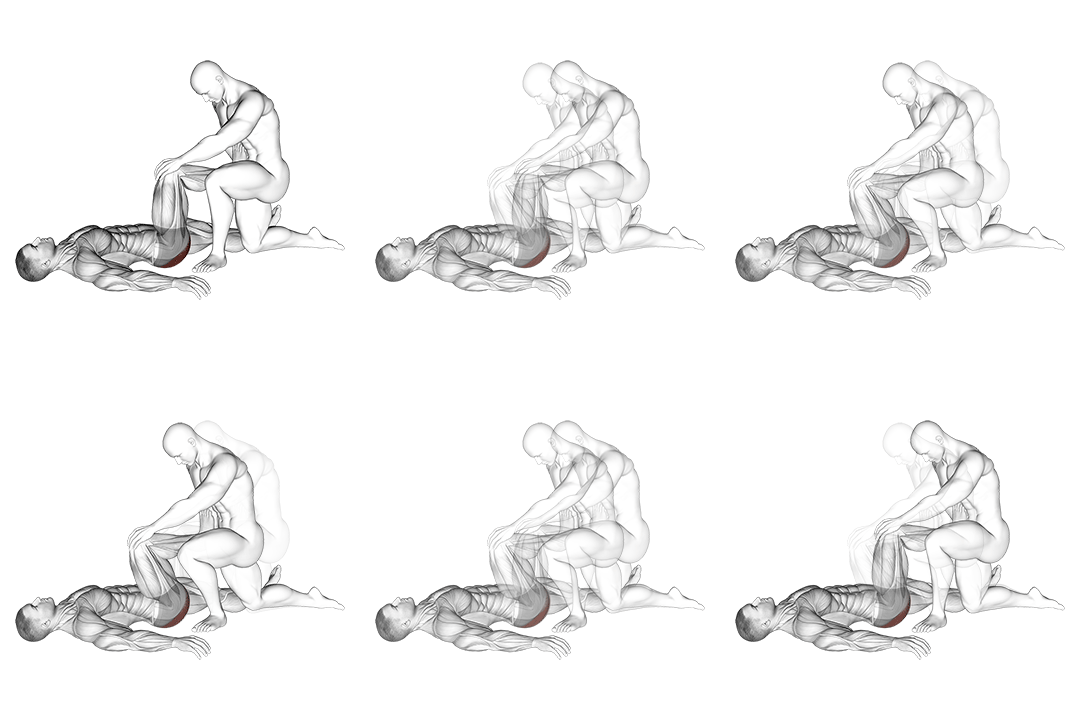
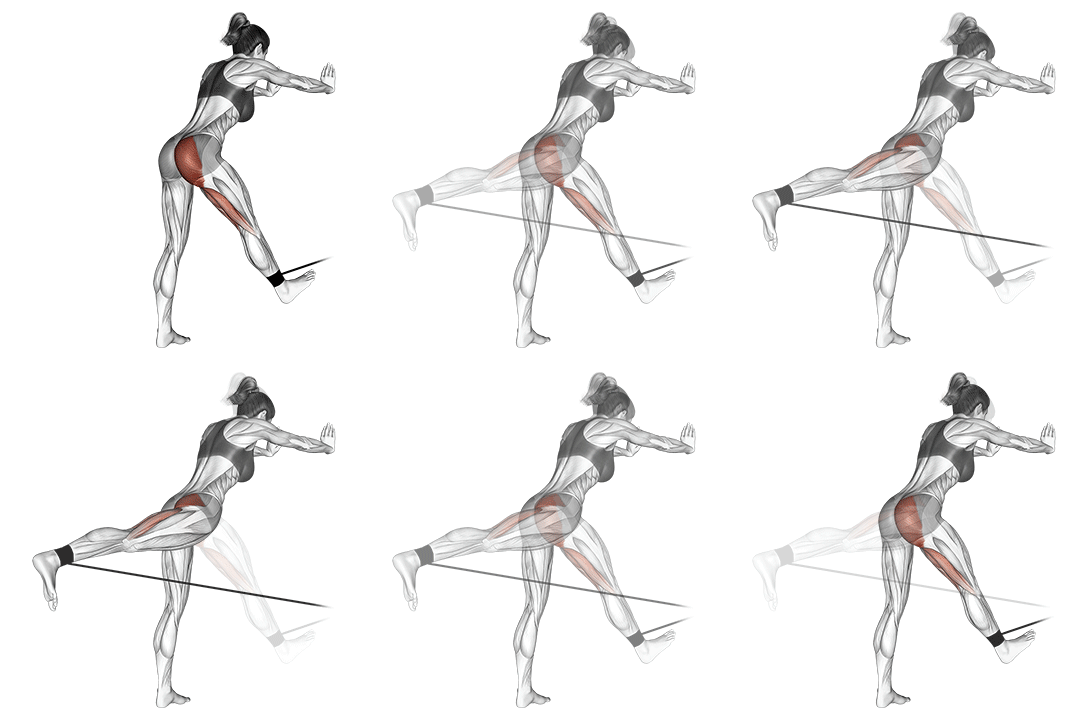
Compare More Exercises
Use our free comparison tool to analyze any two exercises head-to-head.
Compare Exercises