

Band Lying Hip Internal Rotation vs Band Squat: Complete Comparison Guide
Band Lying Hip Internal Rotation vs Band Squat — two banded glute builders that serve very different jobs. You’ll learn how each targets the glutes, which muscle heads they emphasize, the biomechanics behind their force vectors, and how to program them for activation, hypertrophy, or strength. I’ll cover technique cues (angles, rep ranges, tempo), equipment needs, progression options, and practical recommendations so you can pick the right move for your goals or stack them intelligently in one session.
Exercise Comparison
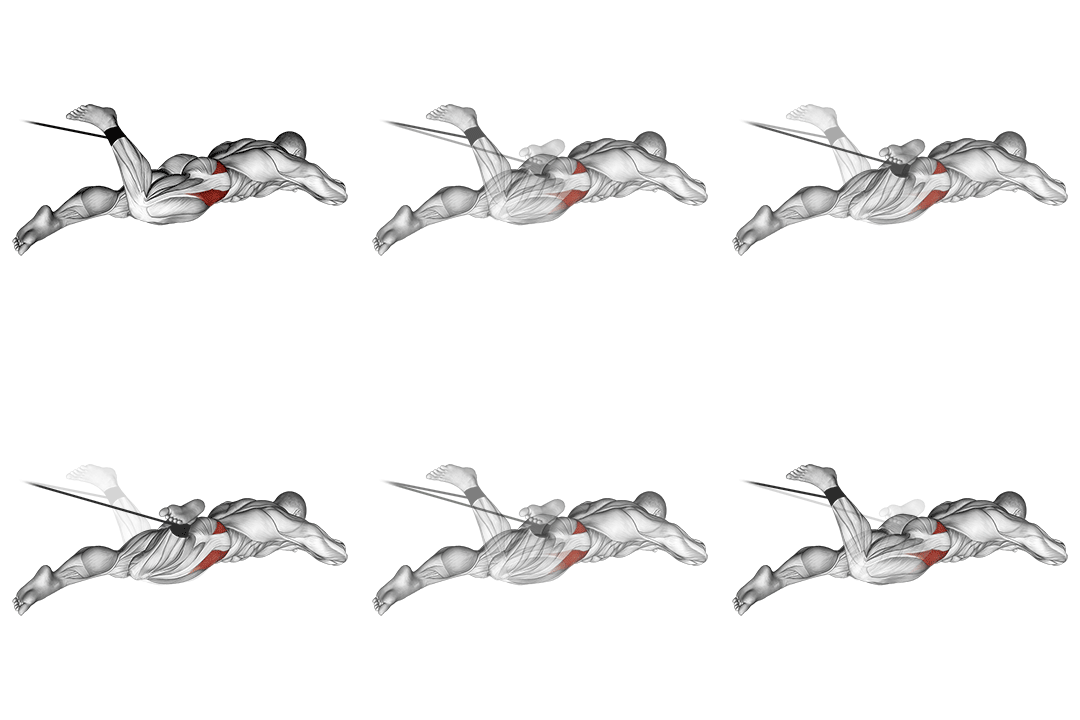
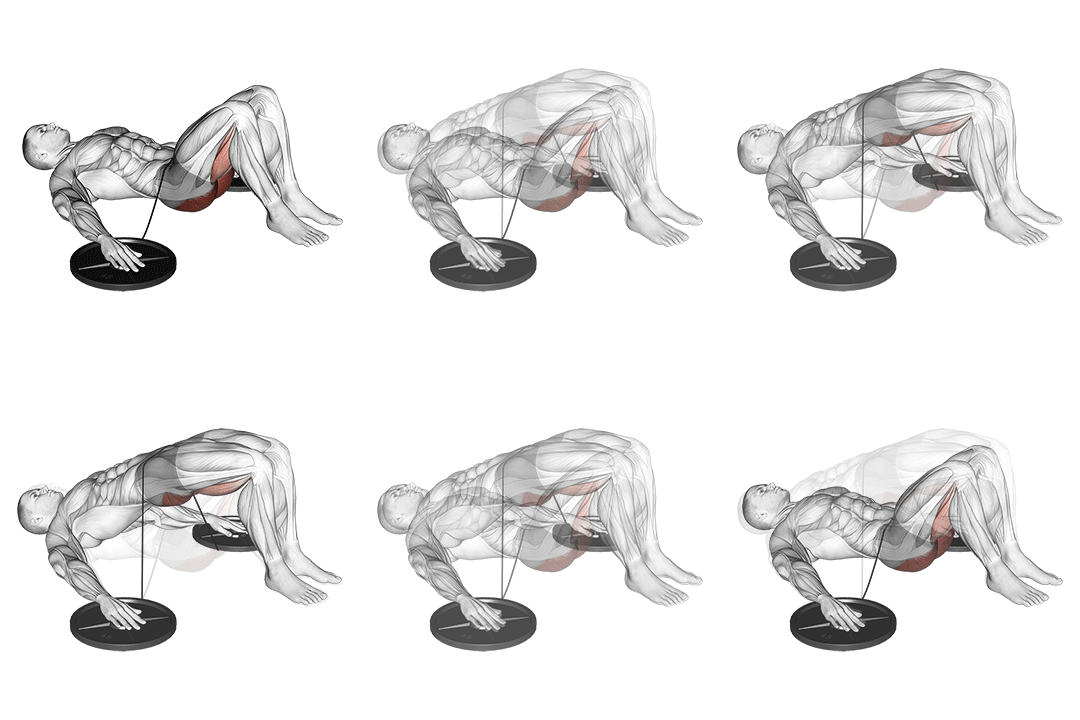
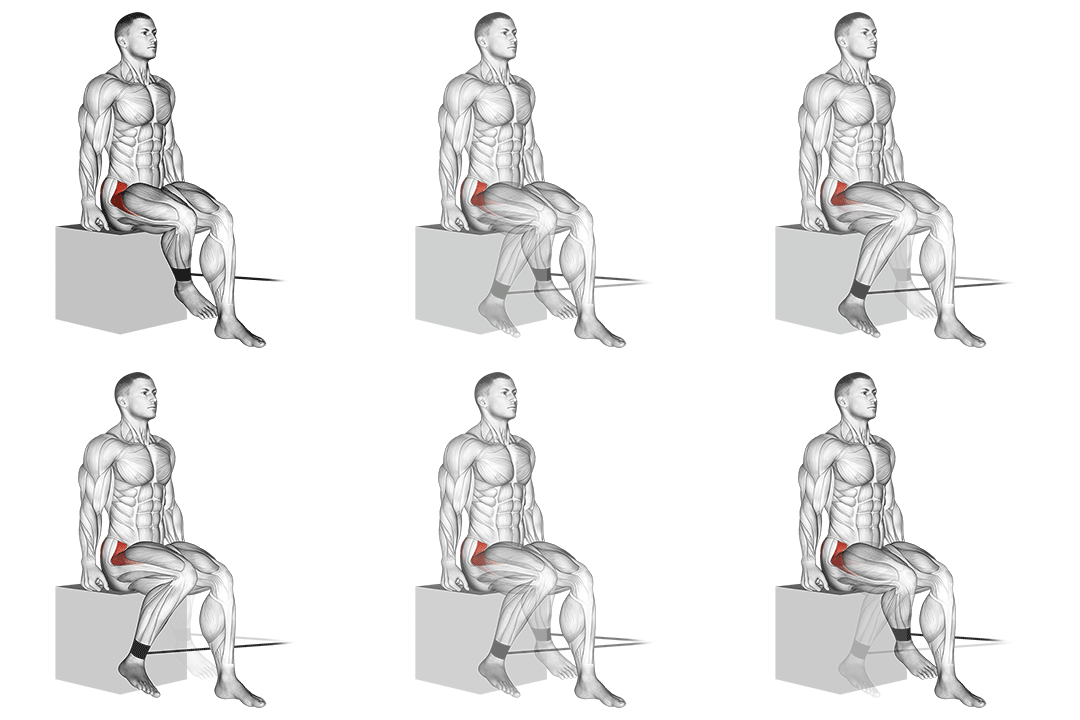
Band Lying Hip Internal Rotation
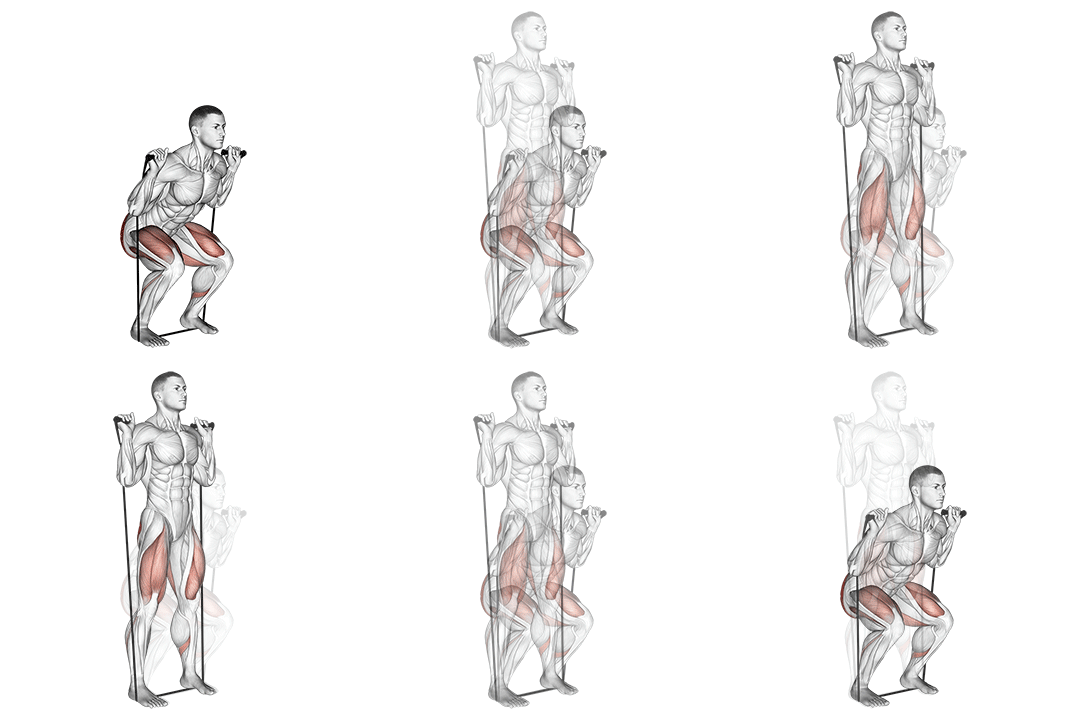
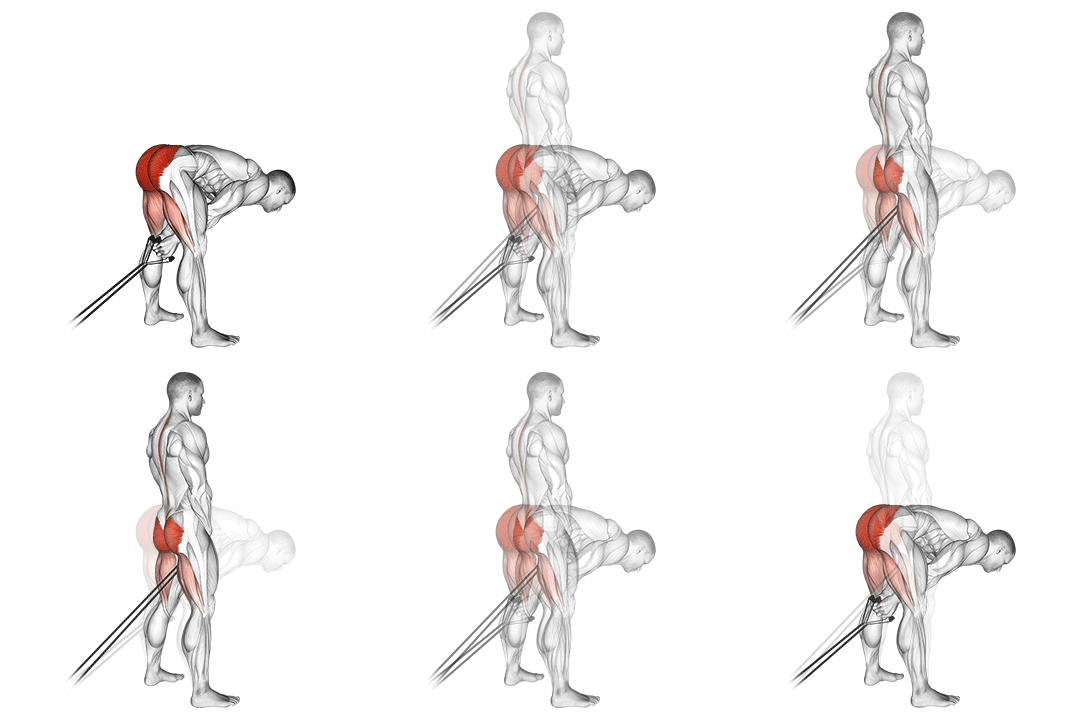
Band Squat
Head-to-Head Comparison
| Attribute | Band Lying Hip Internal Rotation | Band Squat |
|---|---|---|
| Target Muscle |
Glutes
|
Glutes
|
| Body Part |
Upper-legs
|
Upper-legs
|
| Equipment |
Band
|
Band
|
| Difficulty |
Beginner
|
Intermediate
|
| Movement Type |
Isolation
|
Compound
|
| Secondary Muscles |
2
|
3
|
Secondary Muscles Activated
Band Lying Hip Internal Rotation
Band Squat
Visual Comparison
Overview
Band Lying Hip Internal Rotation vs Band Squat — two banded glute builders that serve very different jobs. You’ll learn how each targets the glutes, which muscle heads they emphasize, the biomechanics behind their force vectors, and how to program them for activation, hypertrophy, or strength. I’ll cover technique cues (angles, rep ranges, tempo), equipment needs, progression options, and practical recommendations so you can pick the right move for your goals or stack them intelligently in one session.
Key Differences
- Band Lying Hip Internal Rotation is an isolation exercise, while Band Squat is a compound movement.
- Difficulty levels differ: Band Lying Hip Internal Rotation is beginner, while Band Squat is intermediate.
- Both exercises target the Glutes using Band. The main differences are in their movement patterns and muscle activation angles.
Pros & Cons
Band Lying Hip Internal Rotation
+ Pros
- Directly targets glute medius/minimus and hip internal rotators for improved pelvic stability
- Minimal equipment and space required — perfect for warm-ups and rehab
- Low spinal and knee loading reduces injury risk
- Great for correcting hip drop and improving single-leg mechanics
− Cons
- Low overall mechanical tension — limited for maximal hypertrophy of glute max
- Small ROM (~10–40°) means limited metabolic stress compared to compound lifts
- Harder to progressively overload with the same precision as squats
Band Squat
+ Pros
- High mechanical tension across hip extensors — strong stimulus for glute max hypertrophy
- Also trains quads, hamstrings, and calves for functional lower-body strength
- Many progression options (band stacking, tempo, unilateral variations)
- Transfers well to real-world movements and loaded barbell exercises
− Cons
- Requires stronger bands and more space; setup can be fiddly
- Higher technical demand — poor form increases knee and low-back stress
- Can be difficult to achieve sufficient overload with light bands
When Each Exercise Wins
Band Squat produces greater mechanical tension on the gluteus maximus and allows progressive overload with heavier bands and lower rep ranges (6–12 reps). The compound nature recruits more muscle mass, increasing overall anabolic stimulus.
Strength depends on high force output and neural adaptation; band squats create larger hip-extension and knee-extension moments and can be trained with heavier resistance, tempos, and overload strategies suited for 3–6 rep strength work.
Its single-joint, low-load pattern is simpler to learn, imposes minimal spinal stress, and is ideal for teaching hip control and activating the glute medius before progressing to compound squats.
It needs only a light band and a small footprint, so you can perform high-rep activation sets (12–20 reps) anywhere. Band squats are doable at home but require heavier bands to match gym-level tension.
Frequently Asked Questions
Can I do both Band Lying Hip Internal Rotation and Band Squat in the same workout?
Yes — perform lying hip internal rotations first as an activation drill (2–3 sets of 12–20 reps) to prime the glute medius, then follow with band squats for heavier, compound loading (3–5 sets of 6–12 reps). Activation improves motor recruitment and reduces compensatory patterns during squats.
Which exercise is better for beginners?
Band Lying Hip Internal Rotation is better for absolute beginners because it isolates hip rotators and requires minimal coordination. It builds pelvic control and reduces spinal loading before progressing to multi-joint squats.
How do the muscle activation patterns differ?
Band Lying Hip Internal Rotation creates a transverse-plane moment that preferentially activates gluteus medius/minimus and TFL at shorter muscle lengths. Band Squat generates sagittal-plane hip-extension torque, recruiting gluteus maximus, quadriceps, and hamstrings through a larger length-tension curve and higher ground-reaction forces.
Can Band Squat replace Band Lying Hip Internal Rotation?
Not entirely — band squats can’t reliably isolate the glute medius internal-rotation function. If your goal is pelvic stability, gait correction, or specific rotator activation, keep the lying internal rotation; use squats for overall mass and strength.
Expert Verdict
Use Band Lying Hip Internal Rotation when your goal is targeted glute medius/minimus activation, prehab/rehab, or improving single-leg stability — program 2–4 sets of 12–20 reps, and emphasize controlled rotation and pelvis alignment. Use Band Squat when you want systemic lower-body development and gluteus maximus hypertrophy or strength — aim for 3–5 sets of 6–12 reps with heavier bands, controlled descent (2–4 seconds) and an explosive concentric. For smart programming, pair them: start with 2–3 activation sets of internal rotations to improve motor control, then perform band squats for high-tension work. That combo optimizes recruitment, joint alignment, and transfer to loaded lifts.
Also Compare
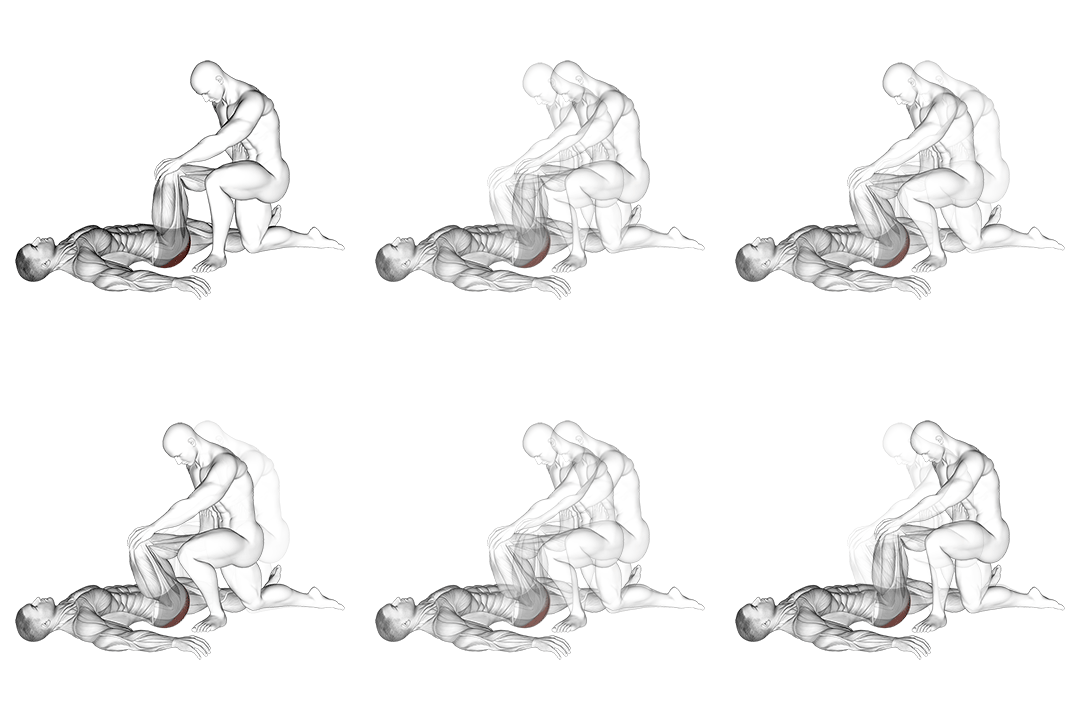
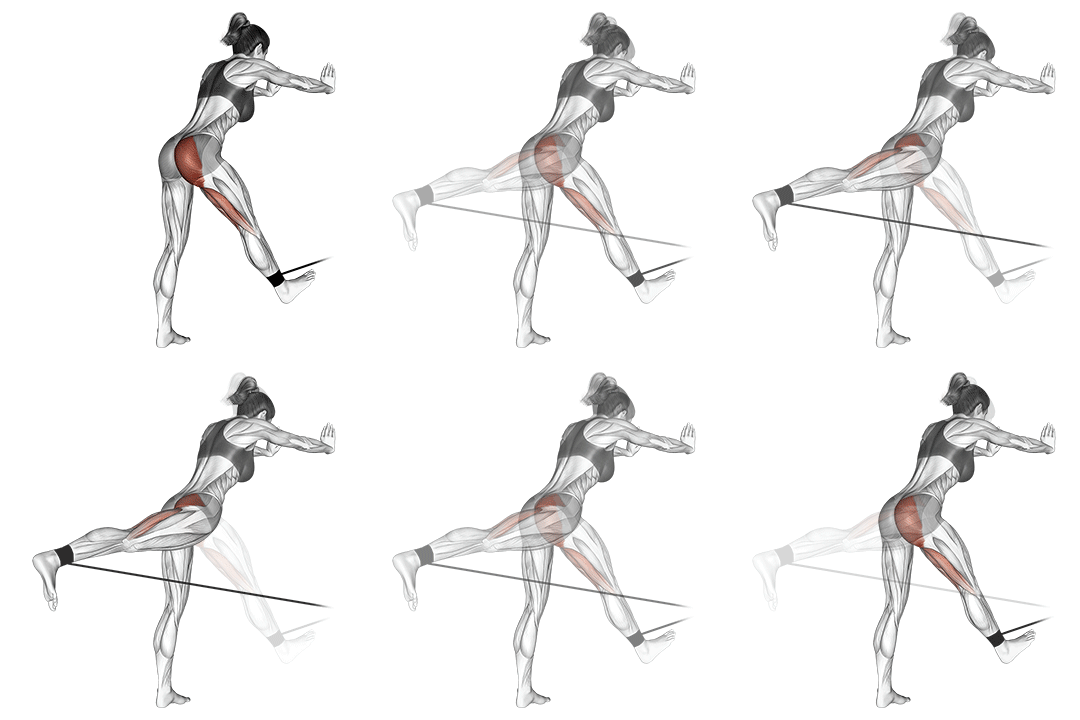
More comparisons with Band Lying Hip Internal Rotation
Compare More Exercises
Use our free comparison tool to analyze any two exercises head-to-head.
Compare Exercises