

Band Lying Hip Internal Rotation vs Band Stiff Leg Deadlift: Complete Comparison Guide
Band Lying Hip Internal Rotation vs Band Stiff Leg Deadlift — this side-by-side will help you choose the best band exercise for your glutes. I’ll break down which fibers each move targets, how the force vectors and hip angles change muscle activation, technique cues to protect your lower back and knees, and clear rep ranges for hypertrophy and strength. You’ll get practical progressions and a decisive recommendation based on whether you want isolation, transverse-plane control, or heavy hip-hinge work for posterior chain development.
Exercise Comparison
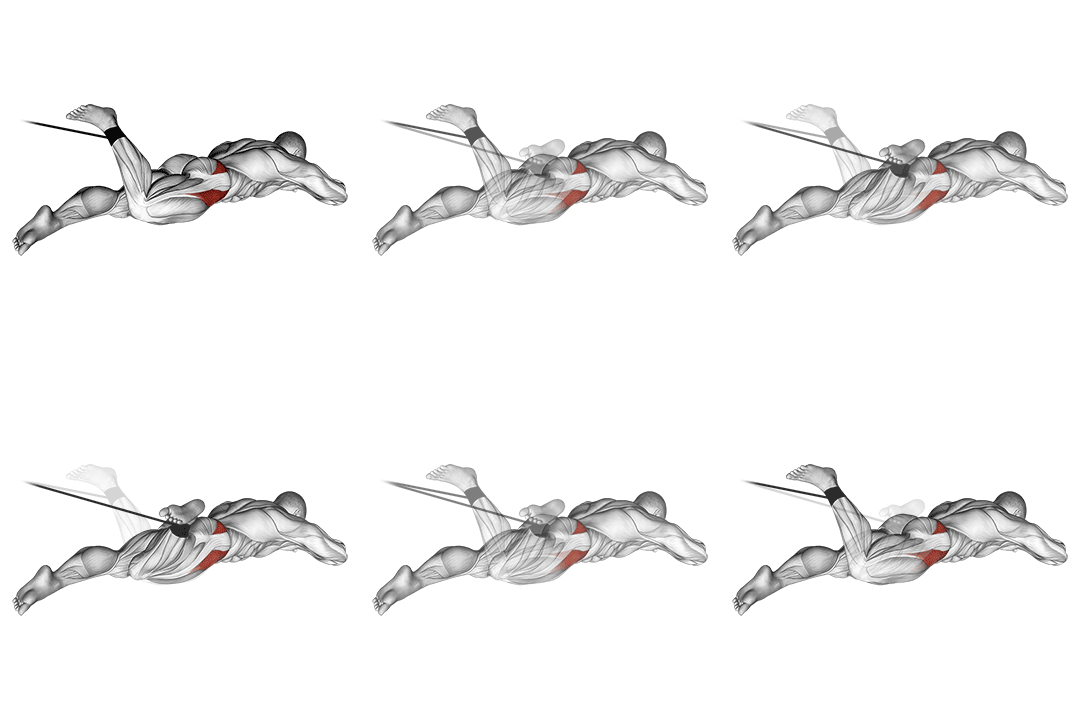
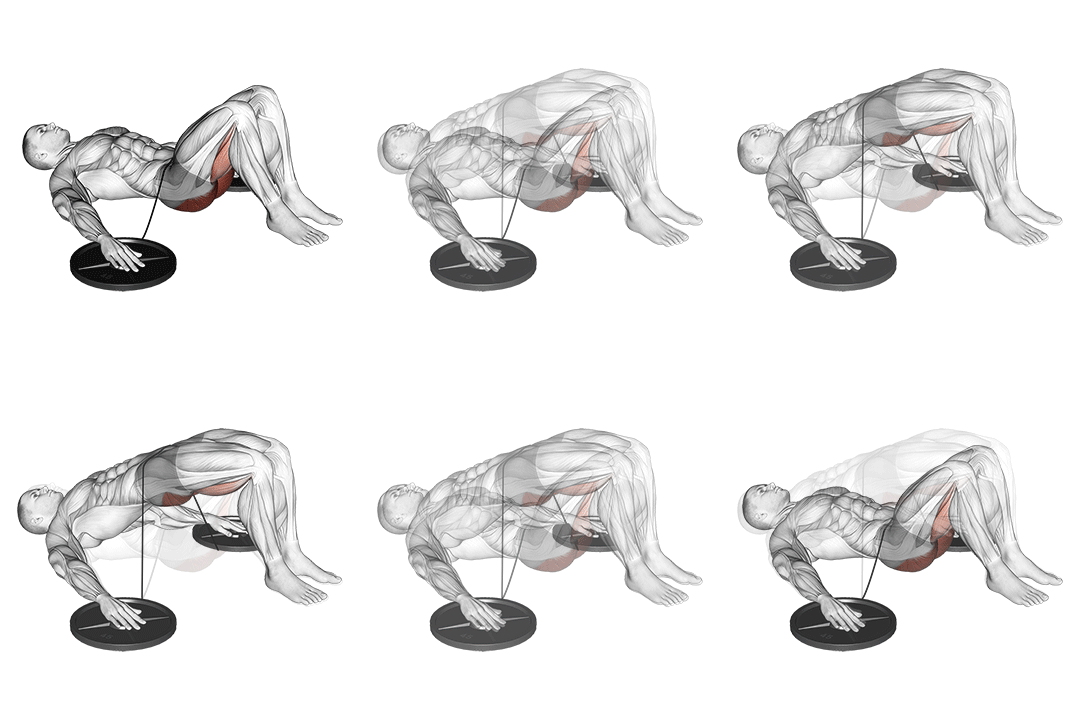
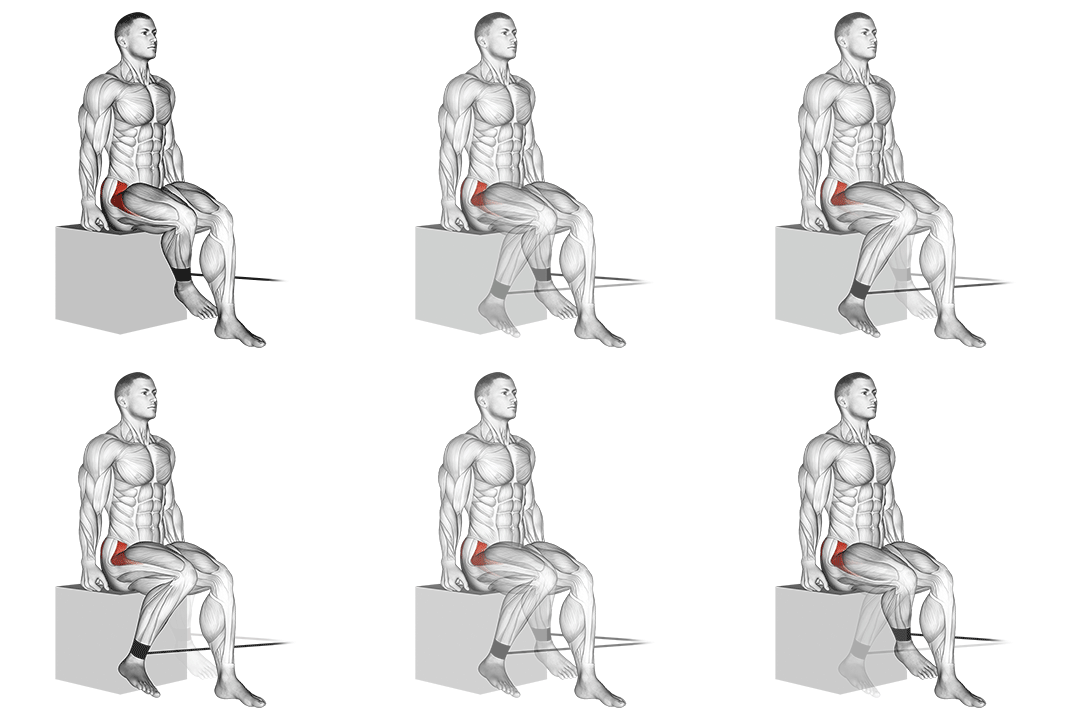
Band Lying Hip Internal Rotation
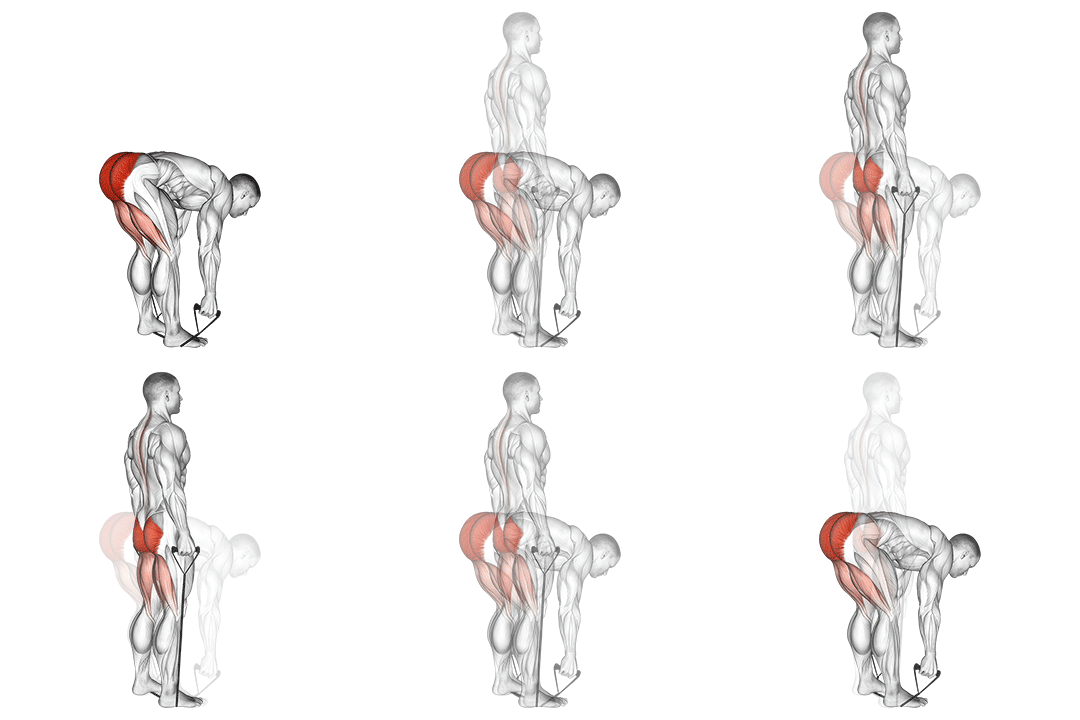
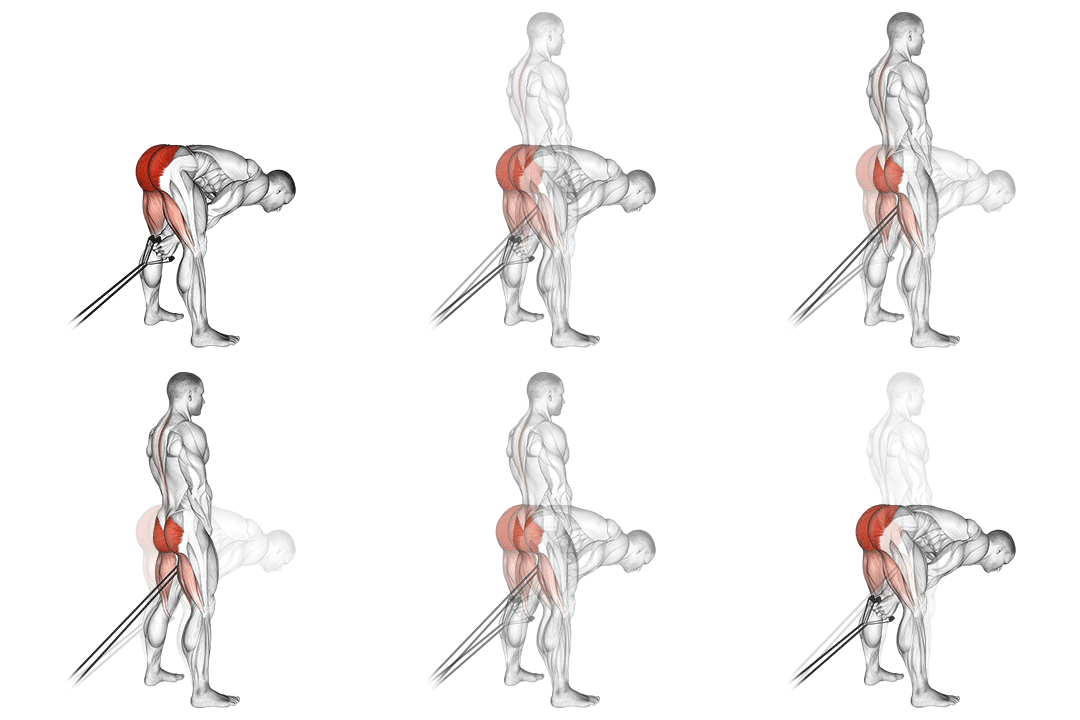
Band Stiff Leg Deadlift
Head-to-Head Comparison
| Attribute | Band Lying Hip Internal Rotation | Band Stiff Leg Deadlift |
|---|---|---|
| Target Muscle |
Glutes
|
Glutes
|
| Body Part |
Upper-legs
|
Upper-legs
|
| Equipment |
Band
|
Band
|
| Difficulty |
Beginner
|
Intermediate
|
| Movement Type |
Isolation
|
Compound
|
| Secondary Muscles |
2
|
2
|
Secondary Muscles Activated
Band Lying Hip Internal Rotation
Band Stiff Leg Deadlift
Visual Comparison
Overview
Band Lying Hip Internal Rotation vs Band Stiff Leg Deadlift — this side-by-side will help you choose the best band exercise for your glutes. I’ll break down which fibers each move targets, how the force vectors and hip angles change muscle activation, technique cues to protect your lower back and knees, and clear rep ranges for hypertrophy and strength. You’ll get practical progressions and a decisive recommendation based on whether you want isolation, transverse-plane control, or heavy hip-hinge work for posterior chain development.
Key Differences
- Band Lying Hip Internal Rotation is an isolation exercise, while Band Stiff Leg Deadlift is a compound movement.
- Difficulty levels differ: Band Lying Hip Internal Rotation is beginner, while Band Stiff Leg Deadlift is intermediate.
- Both exercises target the Glutes using Band. The main differences are in their movement patterns and muscle activation angles.
Pros & Cons
Band Lying Hip Internal Rotation
+ Pros
- Directly targets transverse-plane glute stabilizers (glute medius/minimus)
- Low spinal load—safe for those with lower‑back sensitivity
- Minimal equipment and quick setup on a mat
- Great for improving hip control, gait mechanics, and single‑leg transfers
− Cons
- Limited overall load — not ideal for max muscle growth of gluteus maximus
- Narrow movement plane; less carryover to heavy hip extension
- Progression is mostly via reps or band thickness, which has a lower ceiling
Band Stiff Leg Deadlift
+ Pros
- Strong posterior-chain developer — targets gluteus maximus and hamstrings
- High progression potential by increasing band tension and reps
- Teaches hip-hinge mechanics transferable to other lifts
- Variable band tension increases resistance through range of motion
− Cons
- Higher spinal loading — requires strict bracing and technique
- Greater technical demand and risk for hamstring strain if overloaded
- Requires thicker bands or stacked bands for meaningful resistance
When Each Exercise Wins
The stiff-leg deadlift produces more sagittal-plane torque and higher gluteus maximus and hamstring recruitment, making it better for overall posterior-chain muscle growth. Use 6–12 reps with heavy band tension and controlled 2–3 second eccentrics to maximize mechanical tension.
Strength requires high force output and progressive overload; the band deadlift lets you stack resistance and teach force production in a hip hinge. Focus on 4–6 heavy reps or tempo sets with full hip extension to develop measurable strength improvements.
The lying internal rotation is single-joint, low-load, and easier to cue, which helps beginners build hip control and correct movement patterns. Start with 12–20 reps to train motor control before progressing to more complex hip-hinge movements.
It requires only a light band and minimal space, and poses less risk to the lower back than a heavy band deadlift. You can do multiple sets with high reps to maintain glute activation without stacking thick bands.
Frequently Asked Questions
Can I do both Band Lying Hip Internal Rotation and Band Stiff Leg Deadlift in the same workout?
Yes — pairing them is effective. Do internal rotation as an activation or prehab exercise (2–3 sets of 12–20 reps) before heavy deadlifts, then perform deadlifts for strength or hypertrophy (3–5 sets of 4–12 reps) to take advantage of improved motor control.
Which exercise is better for beginners?
Band Lying Hip Internal Rotation is better for beginners because it isolates hip rotators with low spinal load, making it easier to learn movement quality. After 4–8 weeks of stability work, add band deadlifts as you learn hip-hinge mechanics and bracing.
How do the muscle activation patterns differ?
Internal rotation uses transverse-plane torque to target glute medius/minimus and anterior fibers, peaking with the hip flexed ~45–90°. The stiff-leg deadlift uses sagittal-plane hip extension, recruiting gluteus maximus and hamstrings with peak tension near full extension due to band stretch and length‑tension properties.
Can Band Stiff Leg Deadlift replace Band Lying Hip Internal Rotation?
Not completely — the deadlift hits the glute max and hamstrings more, but it won’t isolate transverse-plane stabilizers as effectively. If your goal is pelvic stability or to correct gait asymmetry, keep the lying internal rotation; for pure strength and hypertrophy prioritize the deadlift.
Expert Verdict
Use Band Lying Hip Internal Rotation when your goal is to improve hip control, transverse-plane stability, and targeted activation of the glute medius/minimus — it’s a low-risk, high-transfer accessory for runners and lifters who need better pelvic stability. Choose Band Stiff Leg Deadlift when you want to load the posterior chain for muscle growth and strength; it drives gluteus maximus and hamstring development through a loaded hip hinge. Program both: start beginners with the lying rotation for control, then add deadlifts for load and progressive overload once technique and bracing are solid.
Also Compare
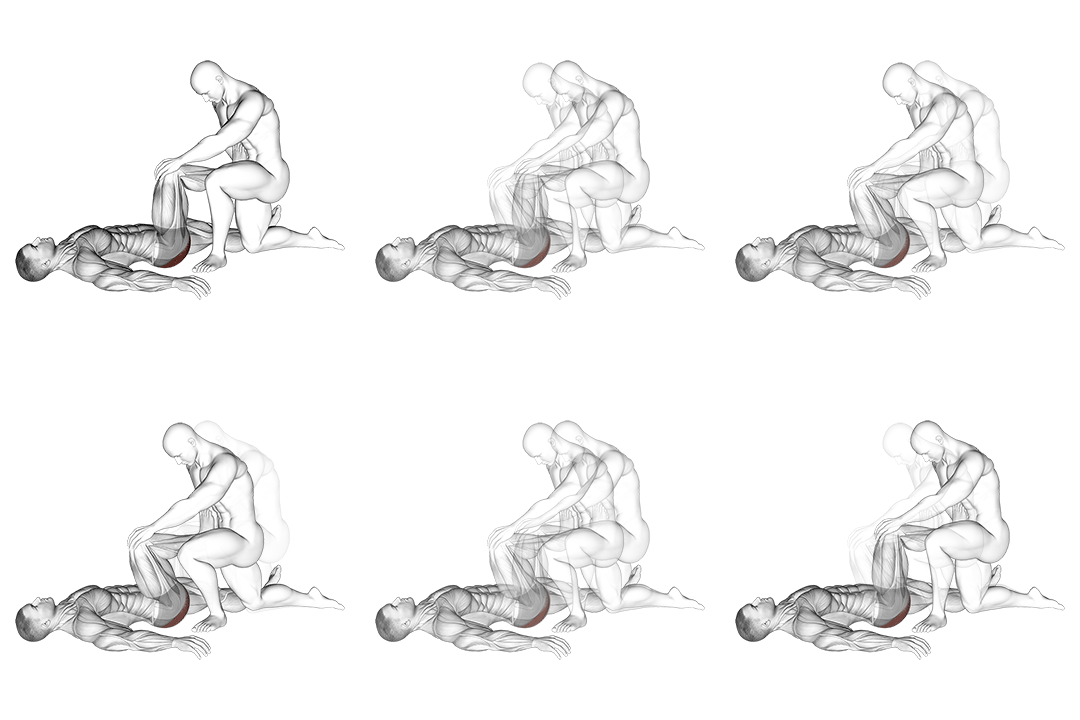
More comparisons with Band Lying Hip Internal Rotation
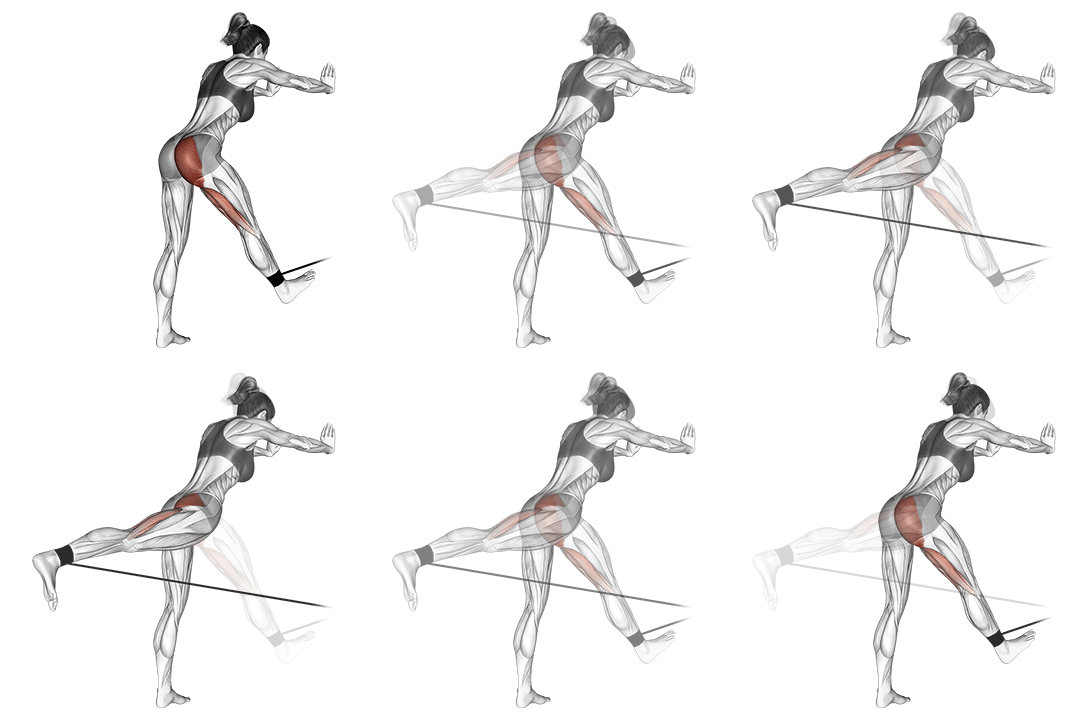
More comparisons with Band Stiff Leg Deadlift
Compare More Exercises
Use our free comparison tool to analyze any two exercises head-to-head.
Compare Exercises