

Band Pull Through vs Band Stiff Leg Deadlift: Complete Comparison Guide
Band Pull Through vs Band Stiff Leg Deadlift — two banded hip-hinge moves that both target the glutes. If you want clearer guidance on which to use for glute hypertrophy, posterior-chain strength, or home programming, you’re in the right place. I’ll break down how each movement loads the glutes, hamstrings, and lower back, give specific technique cues (band placement, hip angles, rep ranges), compare injury risk and progression options, and recommend which to pick based on your goals and equipment.
Exercise Comparison
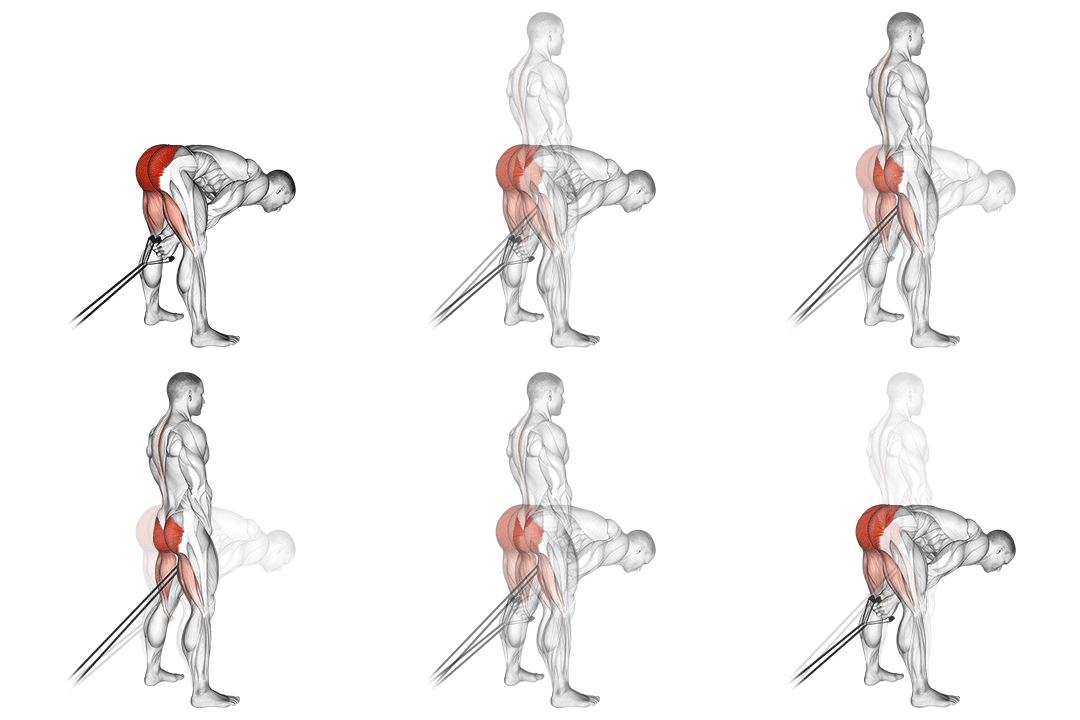
Band Pull Through
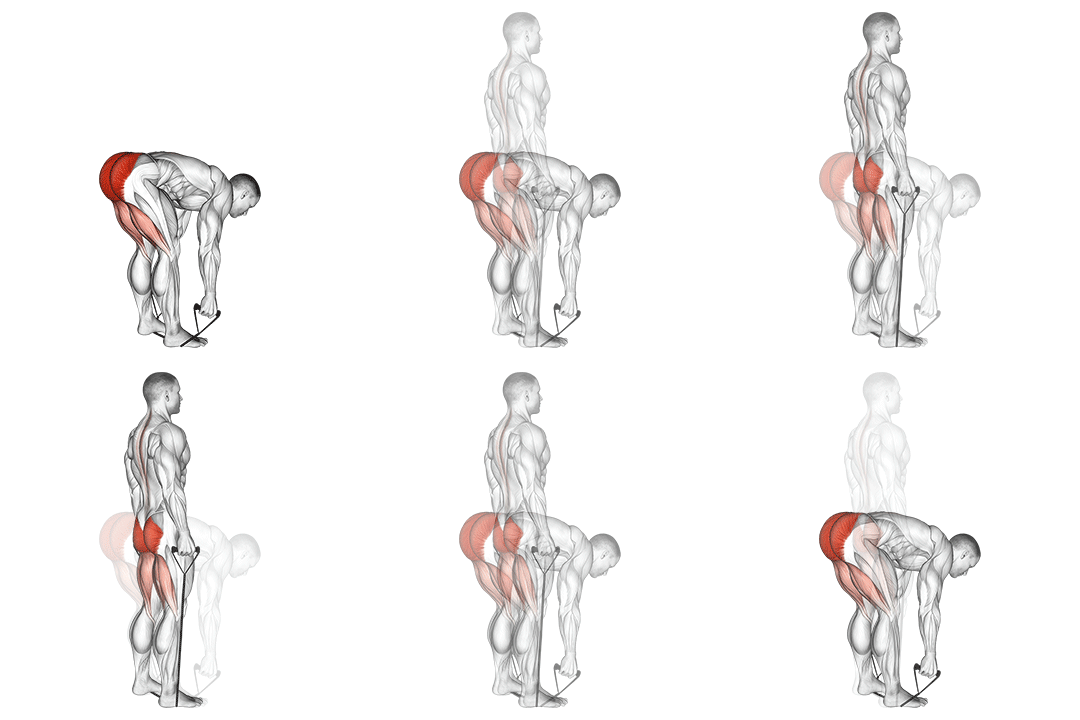
Band Stiff Leg Deadlift
Head-to-Head Comparison
| Attribute | Band Pull Through | Band Stiff Leg Deadlift |
|---|---|---|
| Target Muscle |
Glutes
|
Glutes
|
| Body Part |
Upper-legs
|
Upper-legs
|
| Equipment |
Band
|
Band
|
| Difficulty |
Intermediate
|
Intermediate
|
| Movement Type |
Compound
|
Compound
|
| Secondary Muscles |
2
|
2
|
Secondary Muscles Activated
Band Pull Through
Band Stiff Leg Deadlift
Visual Comparison
Overview
Band Pull Through vs Band Stiff Leg Deadlift — two banded hip-hinge moves that both target the glutes. If you want clearer guidance on which to use for glute hypertrophy, posterior-chain strength, or home programming, you’re in the right place. I’ll break down how each movement loads the glutes, hamstrings, and lower back, give specific technique cues (band placement, hip angles, rep ranges), compare injury risk and progression options, and recommend which to pick based on your goals and equipment.
Key Differences
- Both exercises target the Glutes using Band. The main differences are in their movement patterns and muscle activation angles.
Pros & Cons
Band Pull Through
+ Pros
- Strong glute peak contraction at lockout (ideal for muscle growth in 0–30° of hip extension)
- Teaches powerful hip drive and posterior force vector without heavy spinal load
- Good for high-rep metabolic work (12–20 reps) and glute isolation
- Easier to maintain a neutral spine for many lifters
− Cons
- Requires anchor or partner if you don’t have a long loop band
- Less eccentric hamstring loading compared to stiff-leg variants
- Can encourage hip hyperextension if you thrust too aggressively
Band Stiff Leg Deadlift
+ Pros
- Consistent tension across the range produces strong eccentric hamstring stimulus
- No anchor needed — band underfoot makes it very portable
- Translates well to traditional deadlift patterns for strength carryover
- Easily manipulated with tempo (slow eccentrics) for progression
− Cons
- Higher demand on hamstring length-tension; requires good mobility to preserve neutral spine
- Can lead to lumbar rounding if hips are taken too far past knee line
- Slightly harder to target pure glute peak contraction without cueing
When Each Exercise Wins
The pull through concentrates force at the final 0–30° of hip extension where the glute maximally shortens, making it ideal for hypertrophy sets of 8–15 reps or higher-volume 12–20 rep work. Use band tension that challenges you in those rep ranges and add 1–2s peak contractions.
Stiff-leg deadlifts provide greater eccentric hamstring loading and a force curve that closely mimics conventional deadlifts, aiding posterior-chain strength. Use heavier bands, 4–6 reps, and slower eccentrics (3–4s) for maximal strength transfer.
Pull throughs are more forgiving on hip mobility and make it simpler to learn the hip-hinge and glute squeeze without excessive lumbar flexion. Start with light to medium bands and 10–15 reps while focusing on a neutral spine and soft knee bend.
Because it only requires a band under your feet, the stiff-leg deadlift is the easiest to set up in tight spaces or when traveling. You can scale tension by changing band placement or doubling bands for heavier resistance.
Frequently Asked Questions
Can I do both Band Pull Through and Band Stiff Leg Deadlift in the same workout?
Yes. Pair them strategically: use the stiff-leg deadlift early for 3–5 sets of 4–8 heavy or tempo-controlled reps to capitalize on eccentric strength, then finish with 2–3 sets of 10–15 pull throughs for glute hypertrophy and peak contraction work.
Which exercise is better for beginners?
Band Pull Through is generally better for beginners because it enforces a hip-driven movement and is easier to cue for a neutral spine. Start with light bands, focus on hinging from the hips, and limit range until mobility improves.
How do the muscle activation patterns differ?
Pull throughs emphasize concentric glute activation at the end range (shortened muscle lengths), while stiff-leg deadlifts increase eccentric hamstring tension during hip flexion and longer muscle lengths. The band line of pull creates different torque vectors, shifting emphasis between final hip extension and lengthened-hamstring control.
Can Band Stiff Leg Deadlift replace Band Pull Through?
It can replace pull throughs if your goal is posterior-chain strength and hamstring development, but not if you need targeted glute peak contraction. For pure glute hypertrophy include pull throughs or add pauses at lockout to the stiff-leg deadlift to bias the glutes.
Expert Verdict
Choose Band Pull Through when your priority is targeted glute development, high-rep metabolic work, or teaching explosive hip extension with minimal spinal load. Use cues: hinge from the hips, keep knees soft, and drive the hips forward while pausing 1–2s at peak contraction. Pick Band Stiff Leg Deadlift when you want greater eccentric hamstring stress and a closer carryover to conventional deadlift strength; keep a neutral spine, limit hip flexion to about 45–70°, and use slower eccentrics (3–4s). Both are valuable: program pull throughs for glute emphasis and stiff-leg deadlifts for hamstring-heavy strength work and home setups.
Also Compare
More comparisons with Band Pull Through
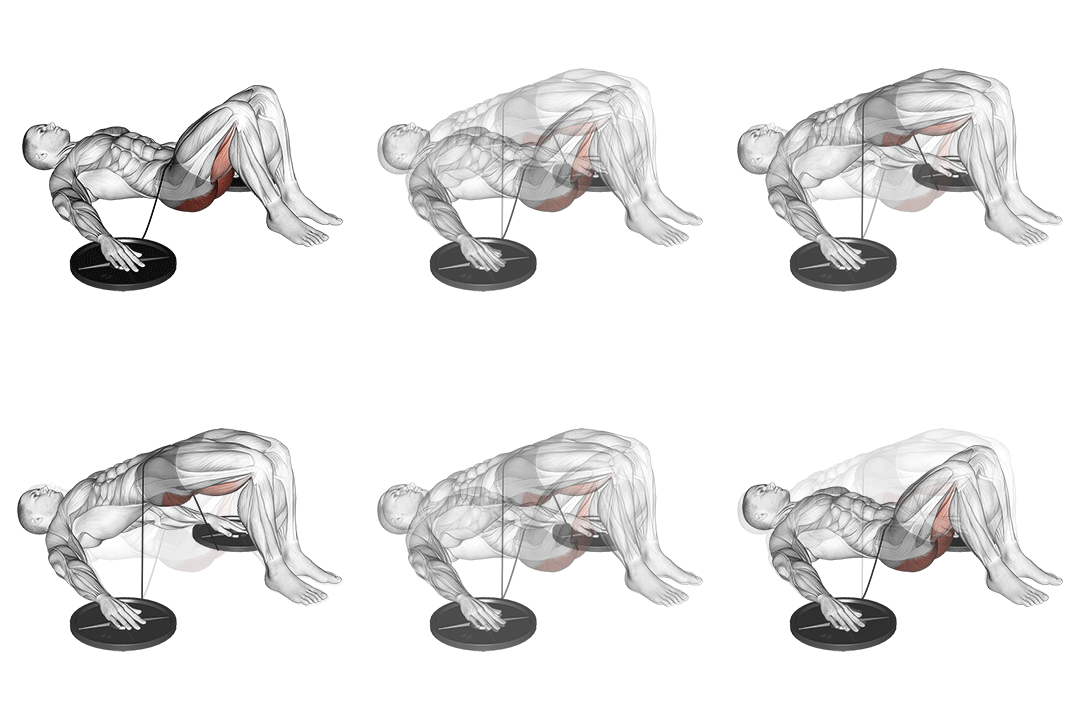
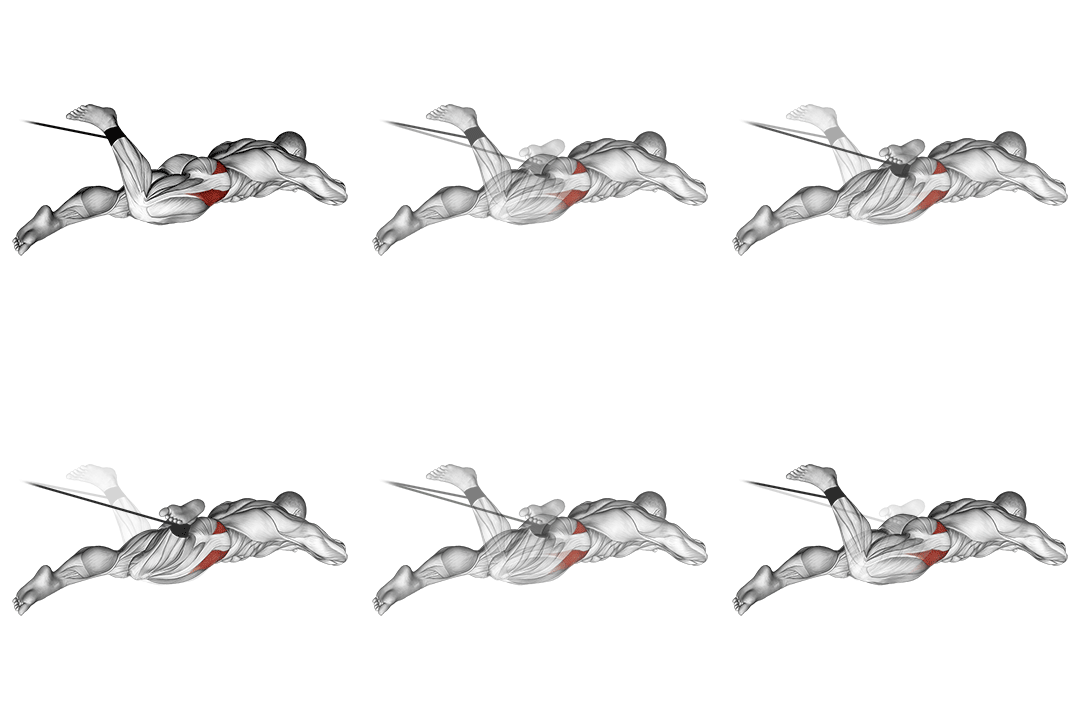
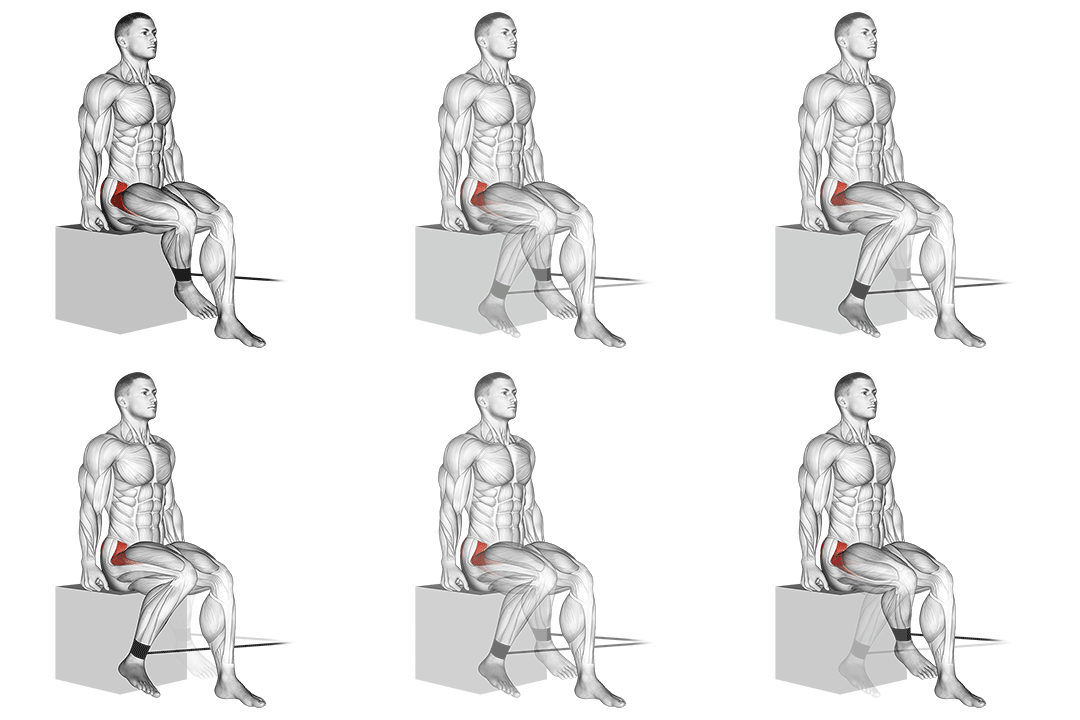
More comparisons with Band Stiff Leg Deadlift
Compare More Exercises
Use our free comparison tool to analyze any two exercises head-to-head.
Compare Exercises