

Band Seated Hip Internal Rotation vs Band Squat: Complete Comparison Guide
Band Seated Hip Internal Rotation vs Band Squat — two band-based moves that both chase stronger, more capable glutes but do it very differently. You’ll get a clear breakdown of which exercise drives muscle growth, which challenges movement patterns, and which fits rehab, strength, or home training. I’ll cover muscle activation, biomechanics (hip torque, length–tension, force vectors), specific technique cues, rep ranges to use (3–6 for strength, 6–12 for hypertrophy, 12–20 for control), and when to pick one over the other based on your goals.
Exercise Comparison
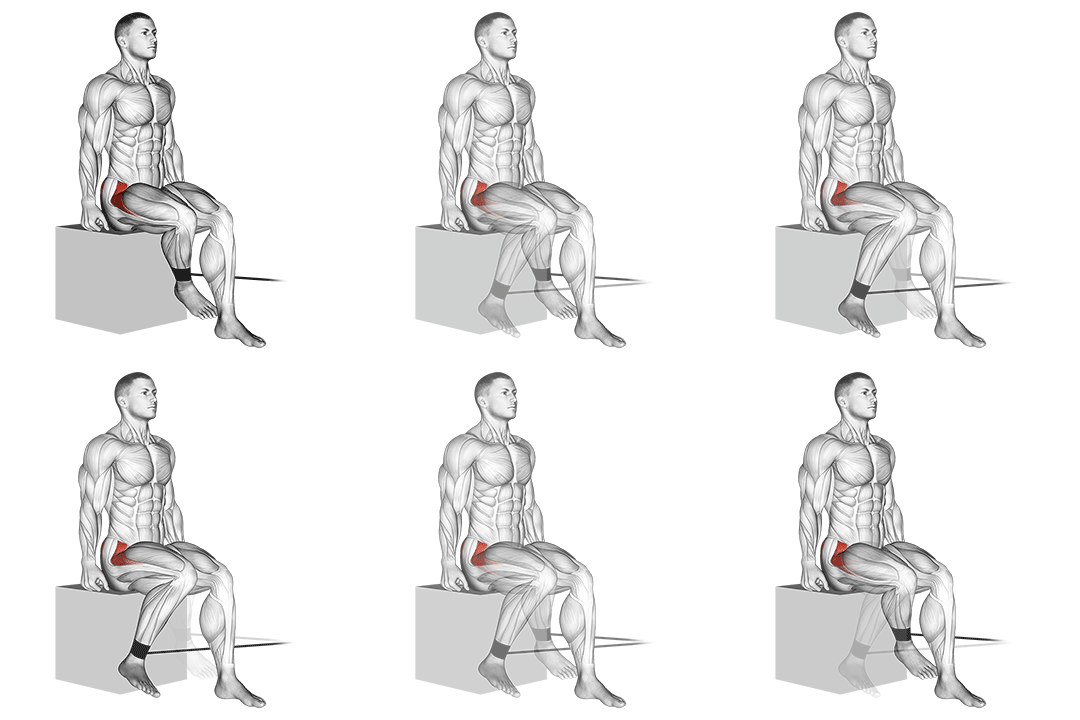
Band Seated Hip Internal Rotation
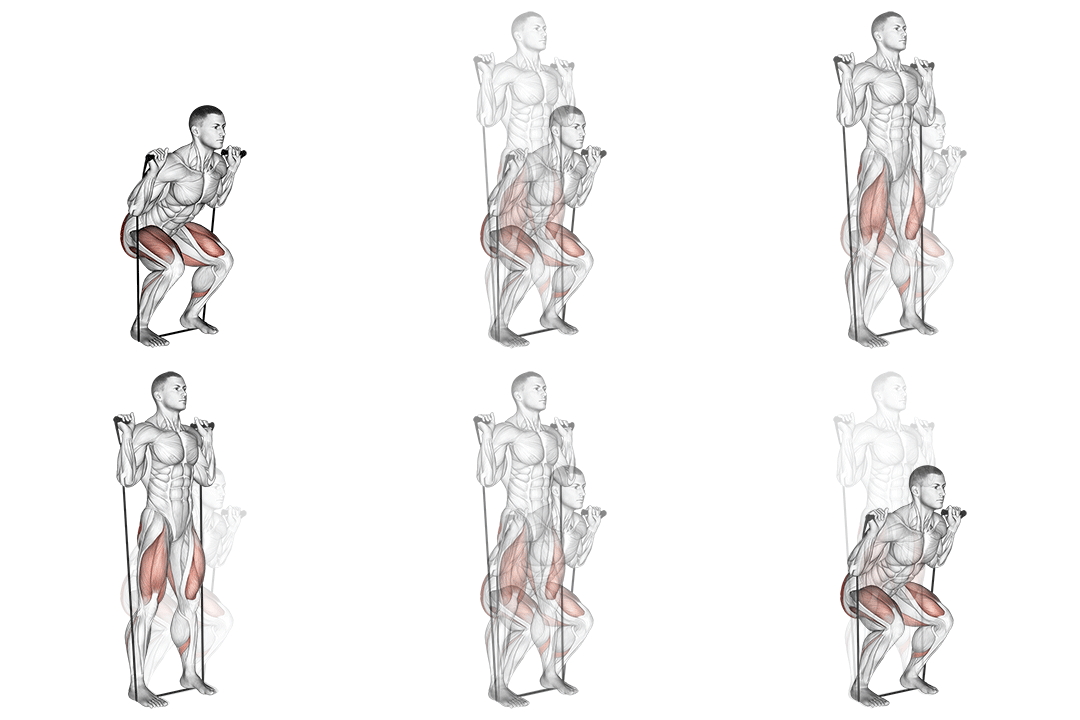
Band Squat
Head-to-Head Comparison
| Attribute | Band Seated Hip Internal Rotation | Band Squat |
|---|---|---|
| Target Muscle |
Glutes
|
Glutes
|
| Body Part |
Upper-legs
|
Upper-legs
|
| Equipment |
Band
|
Band
|
| Difficulty |
Beginner
|
Intermediate
|
| Movement Type |
Isolation
|
Compound
|
| Secondary Muscles |
2
|
3
|
Secondary Muscles Activated
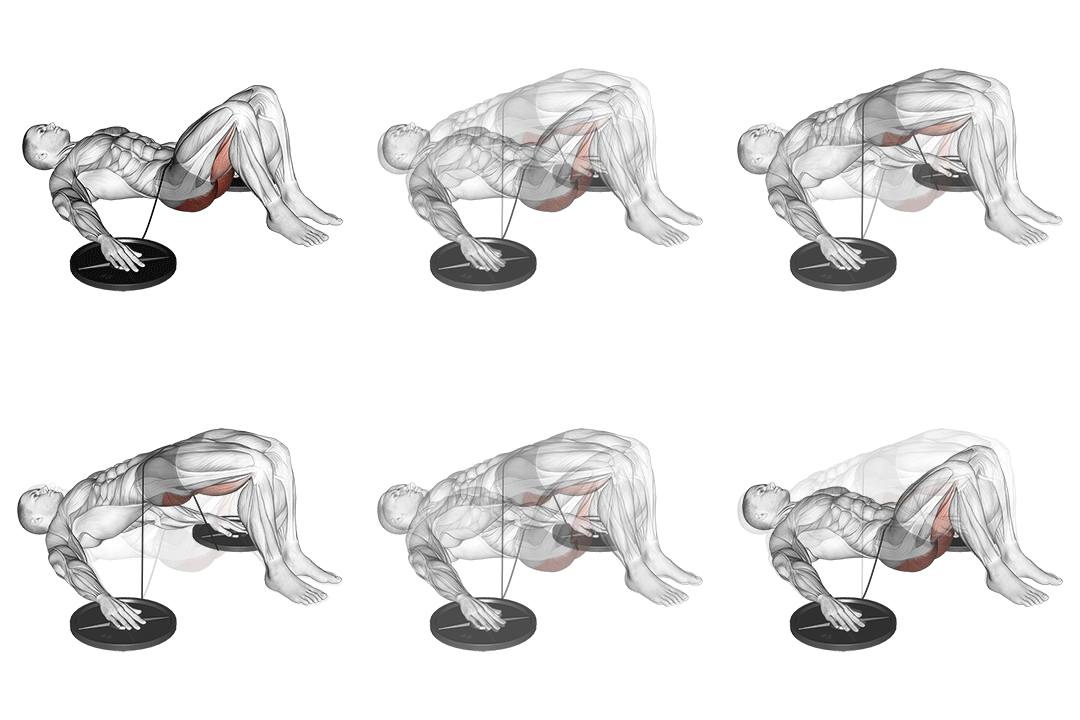
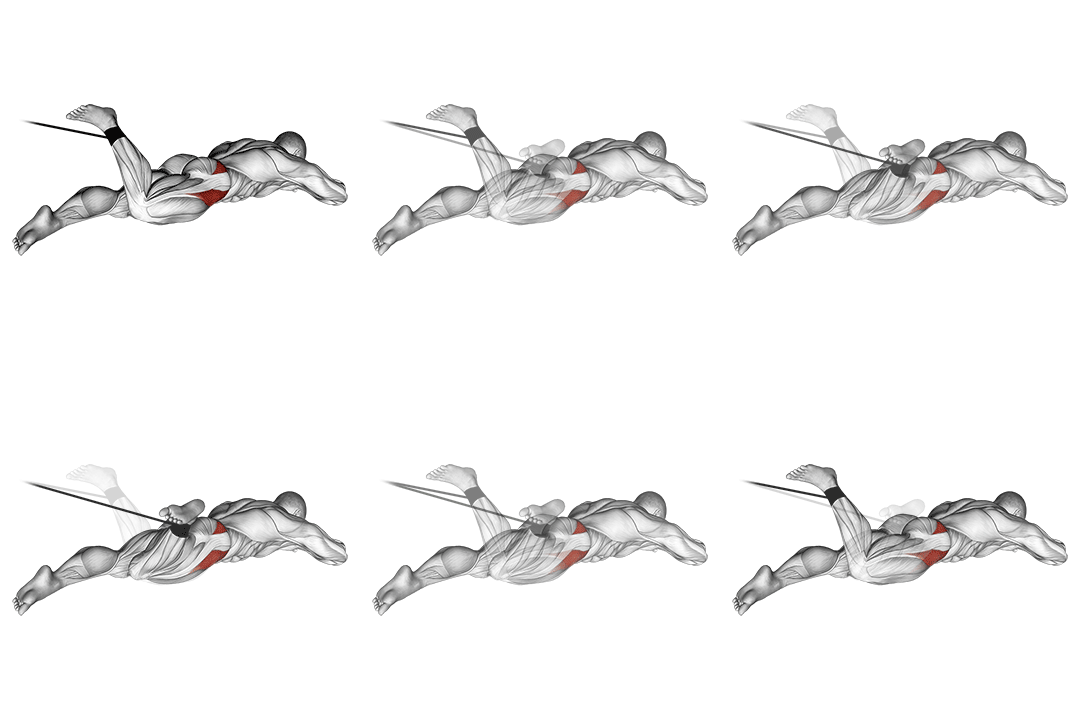
Band Seated Hip Internal Rotation
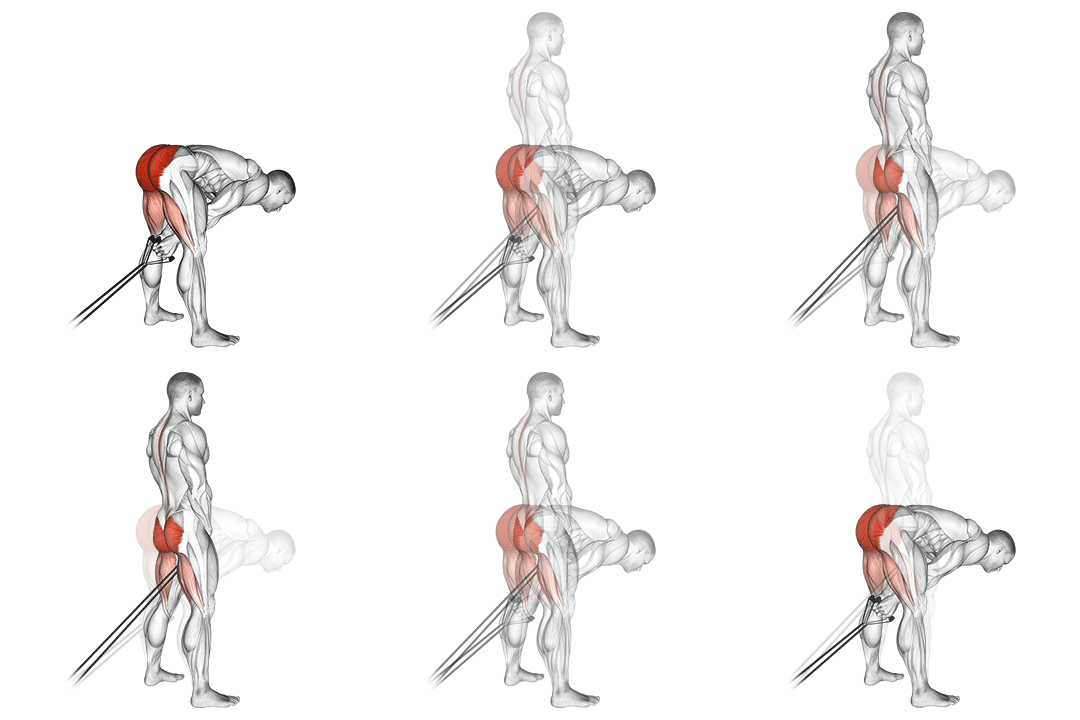
Band Squat
Visual Comparison
Overview
Band Seated Hip Internal Rotation vs Band Squat — two band-based moves that both chase stronger, more capable glutes but do it very differently. You’ll get a clear breakdown of which exercise drives muscle growth, which challenges movement patterns, and which fits rehab, strength, or home training. I’ll cover muscle activation, biomechanics (hip torque, length–tension, force vectors), specific technique cues, rep ranges to use (3–6 for strength, 6–12 for hypertrophy, 12–20 for control), and when to pick one over the other based on your goals.
Key Differences
- Band Seated Hip Internal Rotation is an isolation exercise, while Band Squat is a compound movement.
- Difficulty levels differ: Band Seated Hip Internal Rotation is beginner, while Band Squat is intermediate.
- Both exercises target the Glutes using Band. The main differences are in their movement patterns and muscle activation angles.
Pros & Cons
Band Seated Hip Internal Rotation
+ Pros
- Isolates hip internal rotators and glute medius for improved hip stability
- Minimal equipment and space required—one light-to-medium band and a chair
- Low injury risk; useful for rehab and motor control work
- Easy to cue: sit tall, knee at 90°, rotate foot inward 20–40° against band
− Cons
- Limited capacity for heavy progressive overload
- Primarily single-plane isolation—less carryover to multi-joint strength
- Less metabolic and systemic stimulus compared to compound lifts
Band Squat
+ Pros
- Loads glute max, quads, and hamstrings simultaneously for efficient muscle growth
- High progression potential by increasing band tension, reps, or tempo
- Develops force production and vertical ground reaction—good for strength and power
- Improves functional movement patterns (sit-to-stand, jumping) through triple extension
− Cons
- Requires more coaching to nail depth, knee tracking, and hip hinge
- Higher mechanical stress on knees and low back if technique breaks down
- Needs heavier bands or added resistance to approach true strength overload
When Each Exercise Wins
Band Squat lets you load the hip extensors and quads over a larger range of motion and higher total tension, which supports hypertrophy with rep ranges of 6–12 and progressive overload. The compound pattern creates greater metabolic stress and mechanical tension than a small isolation rotation.
Strength requires high torque and multi-joint force production; band squats let you develop hip and knee extension strength and transfer to loaded lifts. Use heavier bands, low reps (3–6), and slow eccentrics to build concentric power.
Beginners benefit from low-complexity, low-load control work to establish neuromuscular patterns and hip stability. The seated rotation teaches internal/external control (20–40° ROM) without demanding simultaneous hip hinge and knee coordination.
It needs minimal space and only a light band and a chair, so you can do 12–20 controlled reps anywhere. If you want compound stimulus at home, pair seated rotations with bodyweight or band squats when you have a heavier band.
Frequently Asked Questions
Can I do both Band Seated Hip Internal Rotation and Band Squat in the same workout?
Yes. Pair them smartly: use seated internal rotations as an activation/primer (2–3 sets of 12–20) before squats to improve glute recruitment, then perform band squats for strength or hypertrophy sets. That order leverages motor-control improvements into higher-force compound work.
Which exercise is better for beginners?
Band Seated Hip Internal Rotation is better for absolute beginners because it teaches transverse-plane control and hip stability with minimal coordination demands. Once basic control and range are established, add band squats to develop multi-joint strength.
How do the muscle activation patterns differ?
Seated internal rotation emphasizes glute medius/minimus activation in the transverse plane with low concentric force and sustained isometric control. Band squats produce peak glute max activation during concentric hip extension and rely heavily on quadriceps during knee extension, producing higher overall torque and power.
Can Band Squat replace Band Seated Hip Internal Rotation?
Not entirely. Band squats can build strength and size but don’t isolate the transverse-plane rotators the way seated internal rotations do. If your goal is motor control, hip stability, or correcting internal rotation weakness, keep the seated rotation in your program in addition to squats.
Expert Verdict
Use Band Seated Hip Internal Rotation when your goal is to improve hip stability, correct movement asymmetries, or work on rotator control during rehab—aim for 12–20 reps, 2–3 sets, focusing on a 20–40° internal rotation and strong isometric control. Choose Band Squat when you want to drive muscle growth and strength: load the hips and knees with medium-to-heavy bands, train in 3–12 rep ranges depending on whether you prioritize strength (3–6) or hypertrophy (6–12), and emphasize a solid hip hinge and knee tracking. For most trainees, combine both: use seated rotations to reinforce motor control and squats to produce progressive overload and overall muscle development.
Also Compare
More comparisons with Band Seated Hip Internal Rotation
Compare More Exercises
Use our free comparison tool to analyze any two exercises head-to-head.
Compare Exercises