

Band Seated Hip Internal Rotation vs Band Stiff Leg Deadlift: Complete Comparison Guide
Band Seated Hip Internal Rotation vs Band Stiff Leg Deadlift is a head-to-head you need if you want smarter glute training. You’ll learn which move isolates the hip rotators and which builds posterior chain strength, plus technique cues, recommended rep ranges, biomechanics, and progression tips. I’ll show you how each exercise loads the glutes differently, how to read force vectors and length-tension relationships, and when to pick the isolation move over the compound lift depending on your goals and training experience.
Exercise Comparison
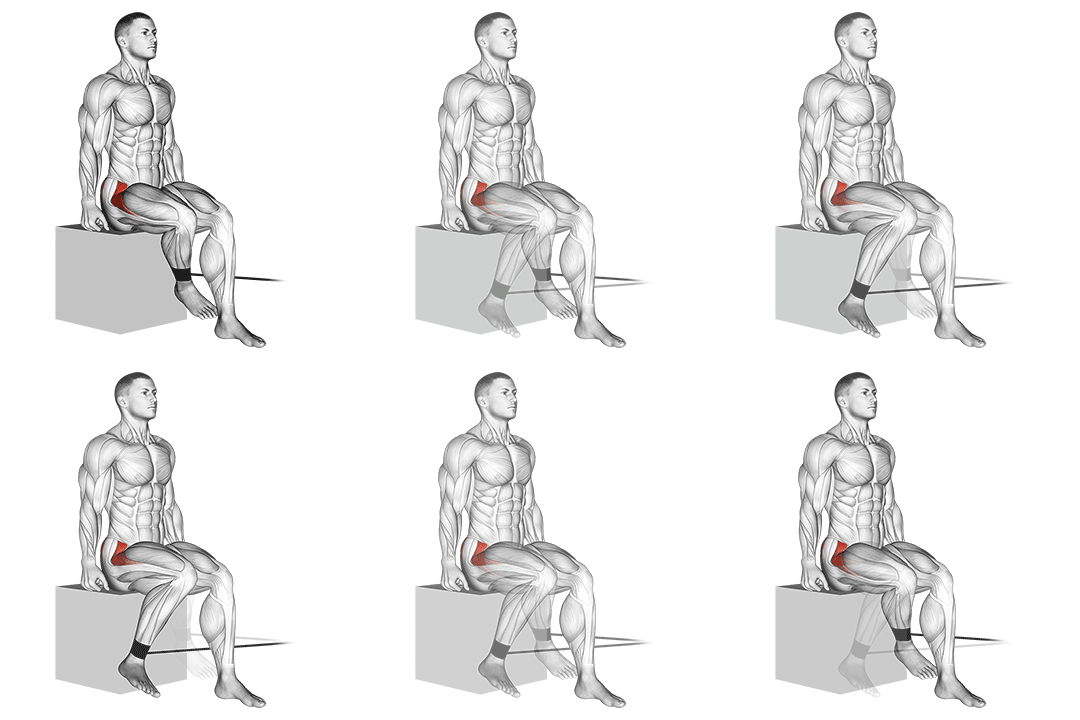
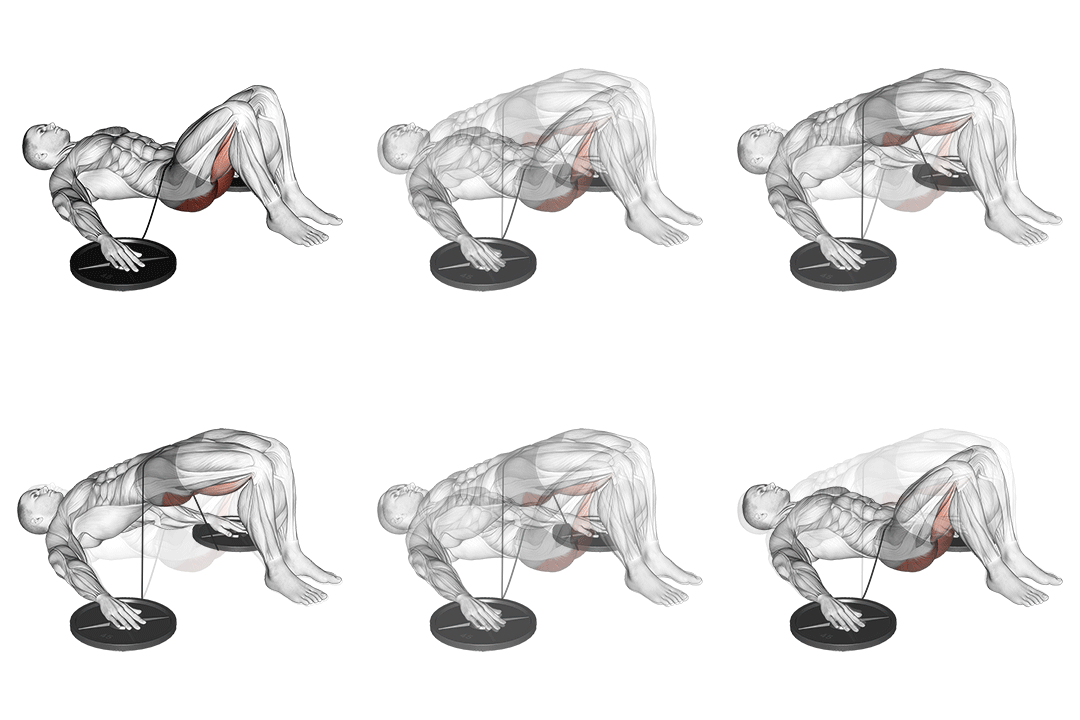
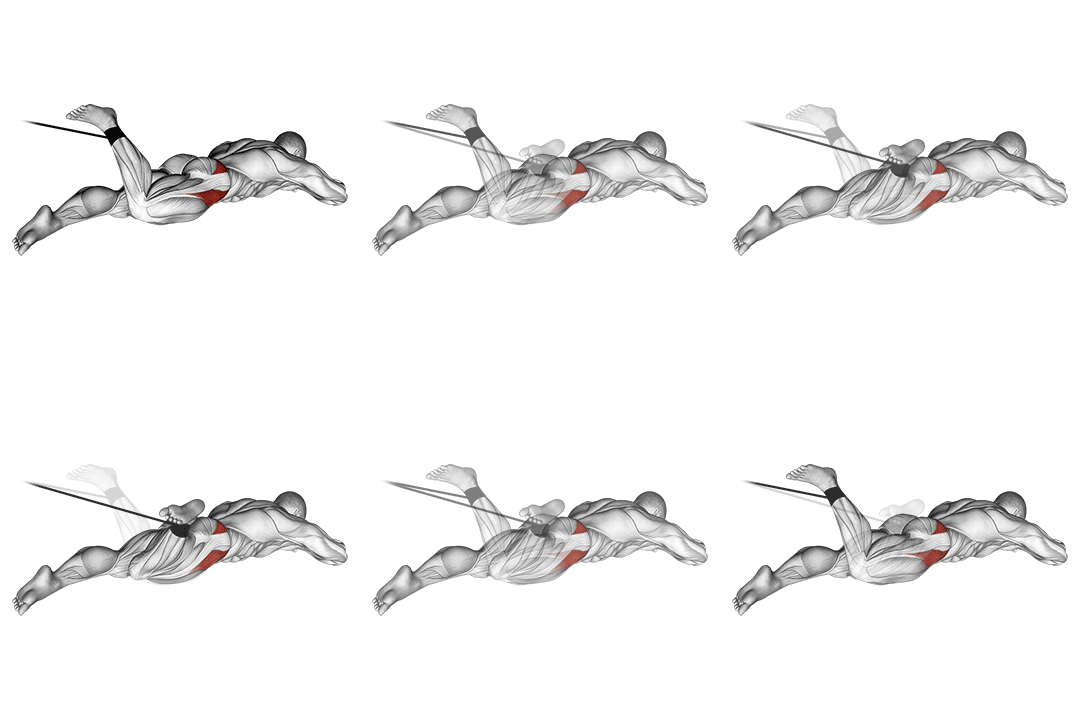
Band Seated Hip Internal Rotation
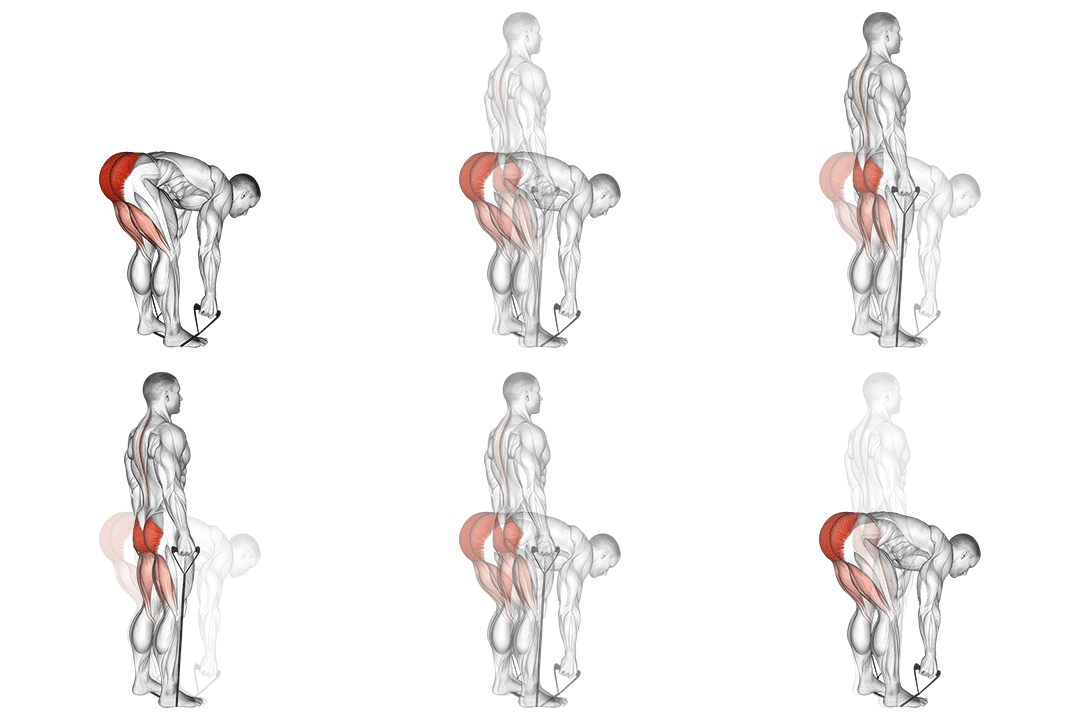
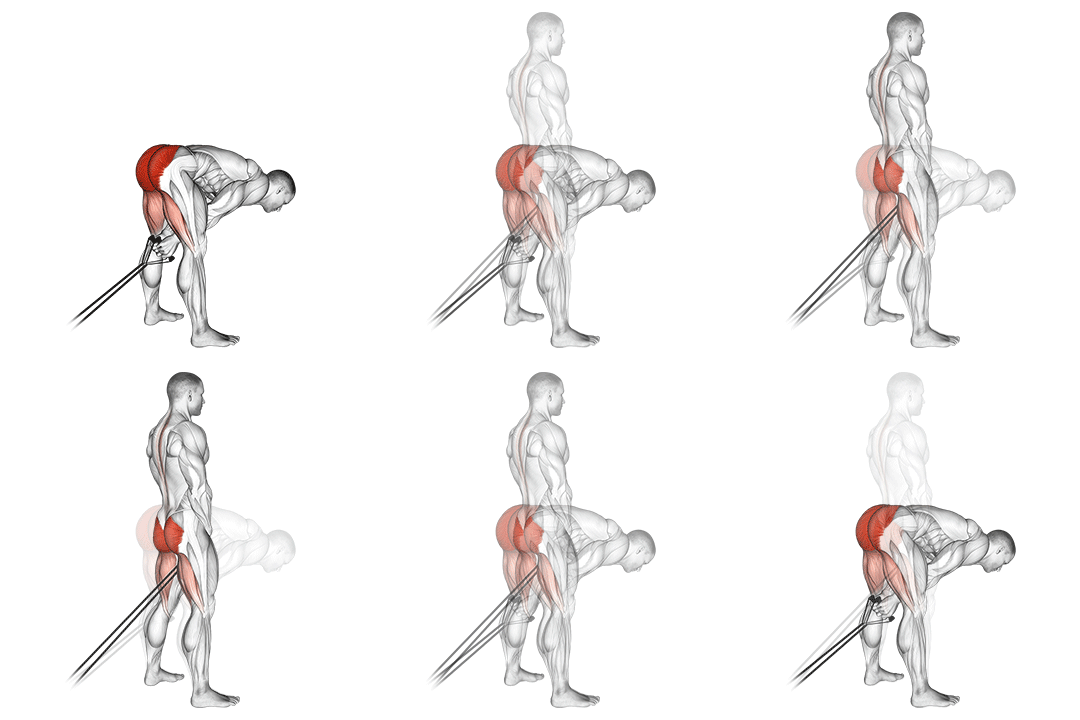
Band Stiff Leg Deadlift
Head-to-Head Comparison
| Attribute | Band Seated Hip Internal Rotation | Band Stiff Leg Deadlift |
|---|---|---|
| Target Muscle |
Glutes
|
Glutes
|
| Body Part |
Upper-legs
|
Upper-legs
|
| Equipment |
Band
|
Band
|
| Difficulty |
Beginner
|
Intermediate
|
| Movement Type |
Isolation
|
Compound
|
| Secondary Muscles |
2
|
2
|
Secondary Muscles Activated
Band Seated Hip Internal Rotation
Band Stiff Leg Deadlift
Visual Comparison
Overview
Band Seated Hip Internal Rotation vs Band Stiff Leg Deadlift is a head-to-head you need if you want smarter glute training. You’ll learn which move isolates the hip rotators and which builds posterior chain strength, plus technique cues, recommended rep ranges, biomechanics, and progression tips. I’ll show you how each exercise loads the glutes differently, how to read force vectors and length-tension relationships, and when to pick the isolation move over the compound lift depending on your goals and training experience.
Key Differences
- Band Seated Hip Internal Rotation is an isolation exercise, while Band Stiff Leg Deadlift is a compound movement.
- Difficulty levels differ: Band Seated Hip Internal Rotation is beginner, while Band Stiff Leg Deadlift is intermediate.
- Both exercises target the Glutes using Band. The main differences are in their movement patterns and muscle activation angles.
Pros & Cons
Band Seated Hip Internal Rotation
+ Pros
- High isolation of glute medius/minimus and anterior glute fibers
- Minimal spinal loading—good for rehab and mobility focus
- Requires little space and basic band equipment
- Easy to cue and scale for beginners (12–30+ reps)
− Cons
- Limited ability to build maximal hip extension strength
- Lower overall metabolic and systemic stimulus
- Less transfer to heavy compound hip-hinge tasks
Band Stiff Leg Deadlift
+ Pros
- Strong posterior chain stimulus—targets gluteus maximus and hamstrings
- Higher potential for strength and muscle growth with progressive overload
- Improves hip-hinge mechanics and force transfer
- Efficient compound movement that recruits multiple joints
− Cons
- Greater technical demand—requires strict hip hinge and neutral spine
- Higher lumbar loading if form degrades
- Needs heavier band tension or setup to sufficiently challenge stronger trainees
When Each Exercise Wins
The stiff-leg deadlift produces larger hip extension torque and longer time-under-tension across the gluteus maximus and hamstrings, making it better for progressive overload and hypertrophy in the 6–15 rep range. Use heavier band tension and controlled eccentrics (2–4 second lower) to maximize muscle growth.
Strength benefits come from producing high force through a long moment arm; the band stiff leg deadlift trains the hip hinge and maximal force output and can be overloaded more effectively than an isolation rotation pattern.
Beginners benefit from the simple setup, small ROM, and low spinal demands of the seated internal rotation, which teaches hip awareness and rotator activation before progressing to compound hinge patterns.
It needs minimal equipment and space and allows effective glute targeting without heavy bands or complex anchoring, making it ideal for limited-equipment home sessions.
Frequently Asked Questions
Can I do both Band Seated Hip Internal Rotation and Band Stiff Leg Deadlift in the same workout?
Yes. Use the seated internal rotation as an activation or warm-up (2–3 sets of 12–20+) to prime rotators, then perform band stiff leg deadlifts for strength (3–5 sets of 6–12). This order leverages pre-activation and better force production during the compound sets.
Which exercise is better for beginners?
Band Seated Hip Internal Rotation is better for beginners because it has a simpler movement pattern, lower spinal load, and clearer proprioceptive feedback. It teaches hip control before adding the technical demands of a hip hinge.
How do the muscle activation patterns differ?
The seated internal rotation emphasizes transverse-plane rotators (glute medius/minimus) with short lever arms and localized activation, whereas the stiff-leg deadlift emphasizes sagittal-plane hip extensors (gluteus maximus and hamstrings) with greater eccentric loading and larger moment arms, producing peak tension near full hip extension.
Can Band Stiff Leg Deadlift replace Band Seated Hip Internal Rotation?
Not fully. The stiff-leg deadlift develops hip extension strength but doesn’t isolate internal rotators or correct transverse-plane weaknesses; include seated internal rotations for targeted rehab, motor control, or when reducing lumbar loading is necessary.
Expert Verdict
Use Band Seated Hip Internal Rotation when your priority is isolating hip rotators, improving hip motor control, correcting frontal/transverse plane imbalances, or working around low-back issues. Aim for higher reps (12–30+) and focus on a controlled 20–40° internal rotation while maintaining neutral pelvis position. Choose the Band Stiff Leg Deadlift when you want posterior chain strength, greater gluteus maximus loading, and functional hip-hinge transfer—work in 6–15 rep ranges with a slight knee bend (10–30°) and a neutral spine. Pair both in a program: start with isolation for activation, then move to the compound for load and progress.
Also Compare
More comparisons with Band Seated Hip Internal Rotation
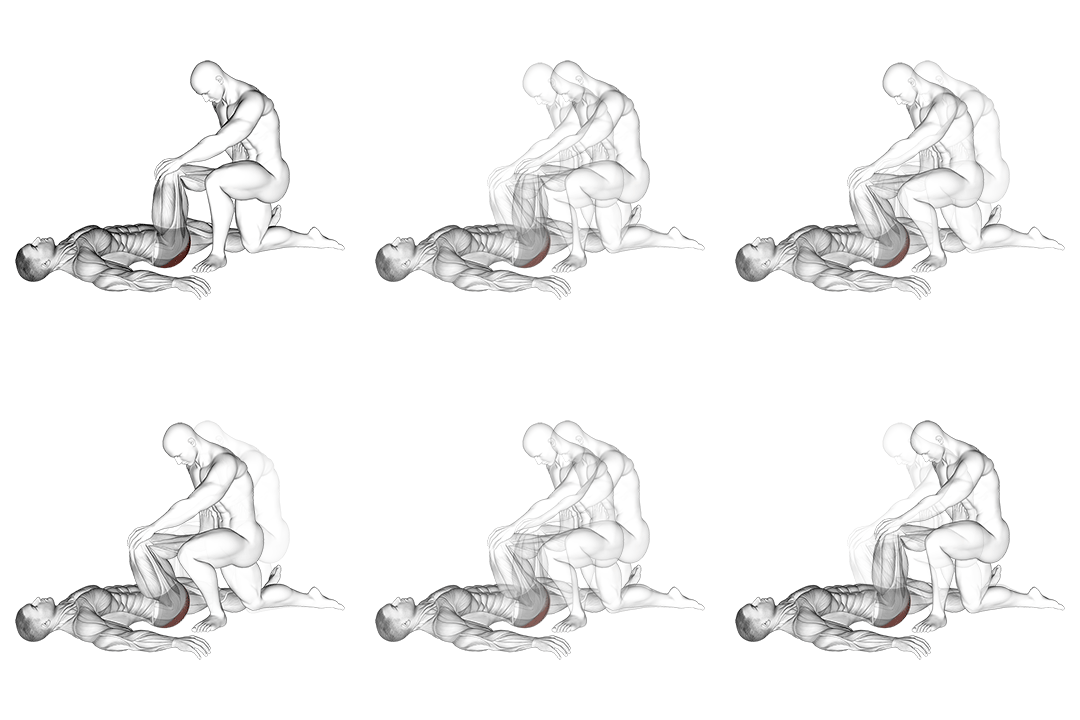
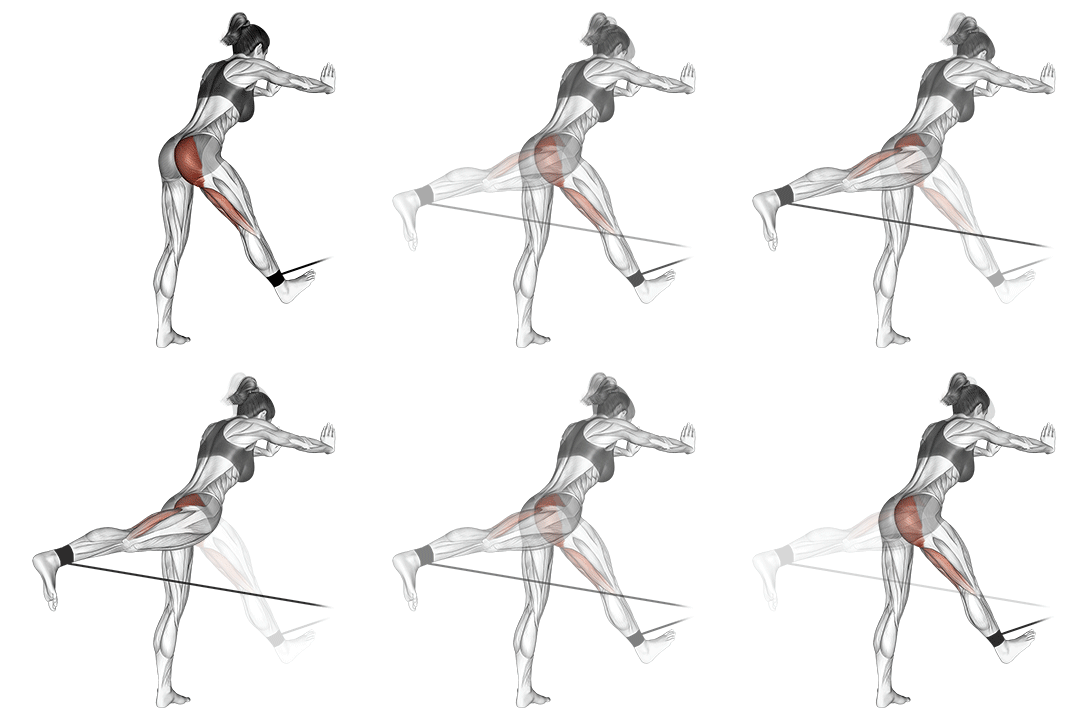
More comparisons with Band Stiff Leg Deadlift
Compare More Exercises
Use our free comparison tool to analyze any two exercises head-to-head.
Compare Exercises