

Band Single Leg Calf Raise vs Band Single Leg Reverse Calf Raise: Complete Comparison Guide
Band Single Leg Calf Raise vs Band Single Leg Reverse Calf Raise — you’re deciding which single-leg band move deserves a spot in your routine. I’ll walk you through what each exercise targets, how the muscle activation differs, exact technique cues (foot position, tempo, ROM), and clear recommendations for hypertrophy, strength, beginners, and home workouts. You’ll get rep ranges, progression ideas, and simple coaching tips so you can pick the right variation based on your goals and movement patterns.
Exercise Comparison
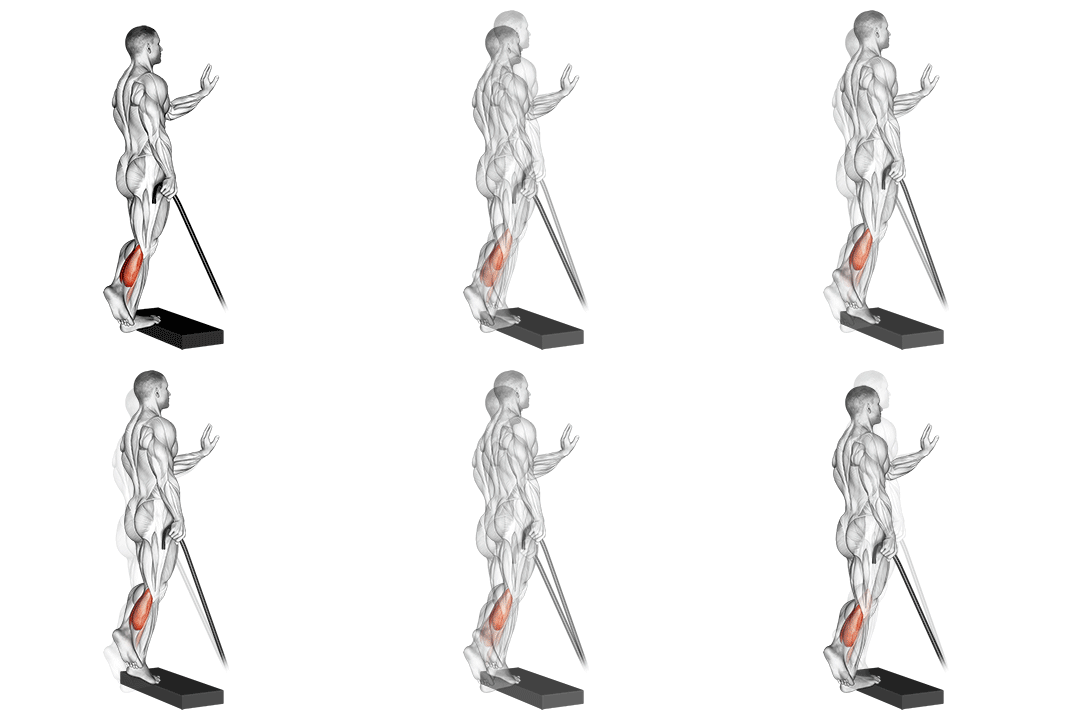
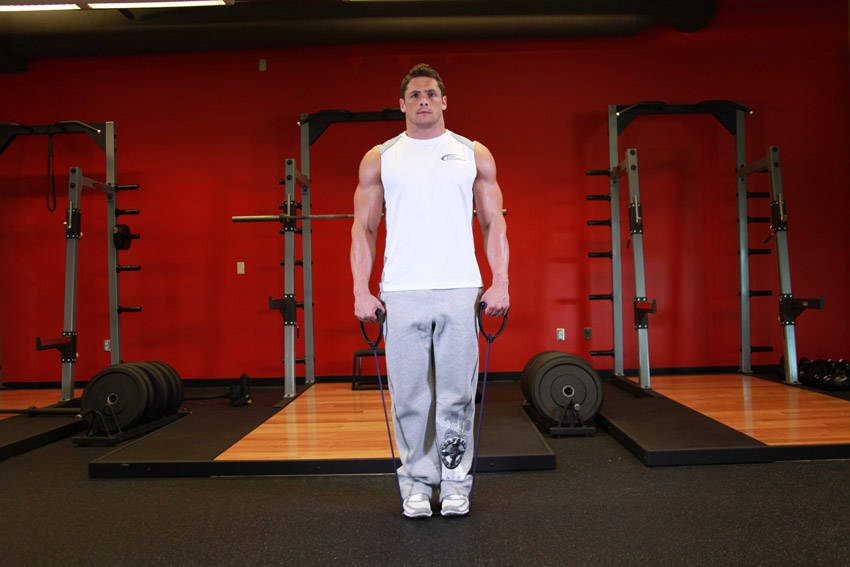
Band Single Leg Calf Raise
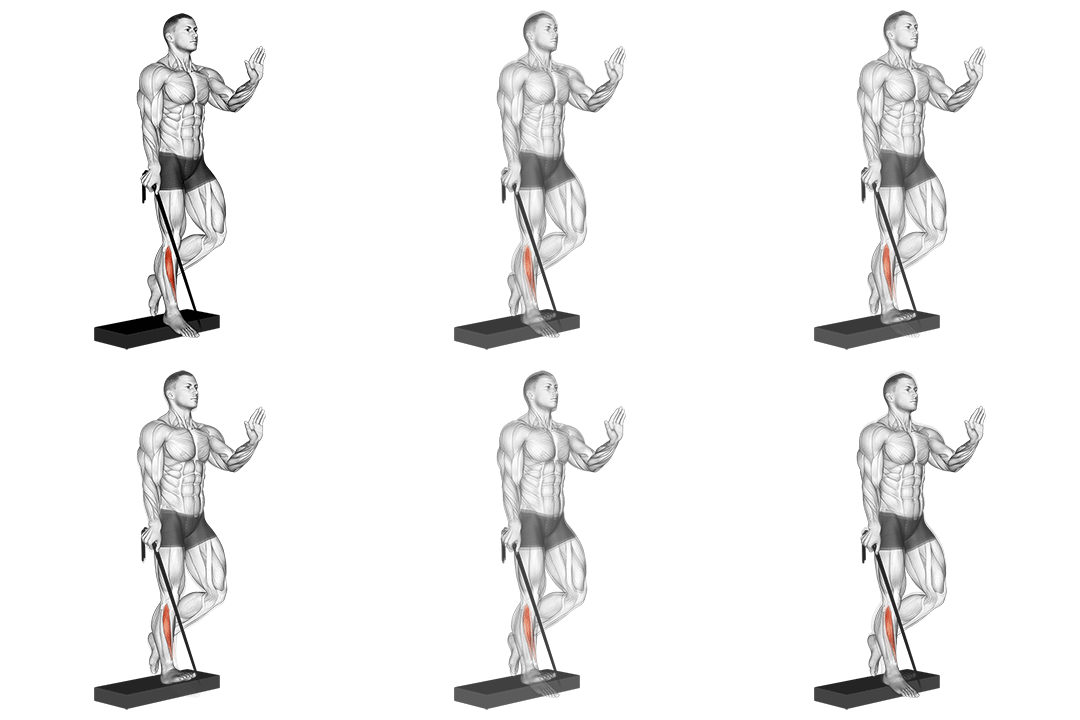
Band Single Leg Reverse Calf Raise
Head-to-Head Comparison
| Attribute | Band Single Leg Calf Raise | Band Single Leg Reverse Calf Raise |
|---|---|---|
| Target Muscle |
Calves
|
Calves
|
| Body Part |
Lower-legs
|
Lower-legs
|
| Equipment |
Band
|
Band
|
| Difficulty |
Beginner
|
Beginner
|
| Movement Type |
Isolation
|
Isolation
|
| Secondary Muscles |
2
|
2
|
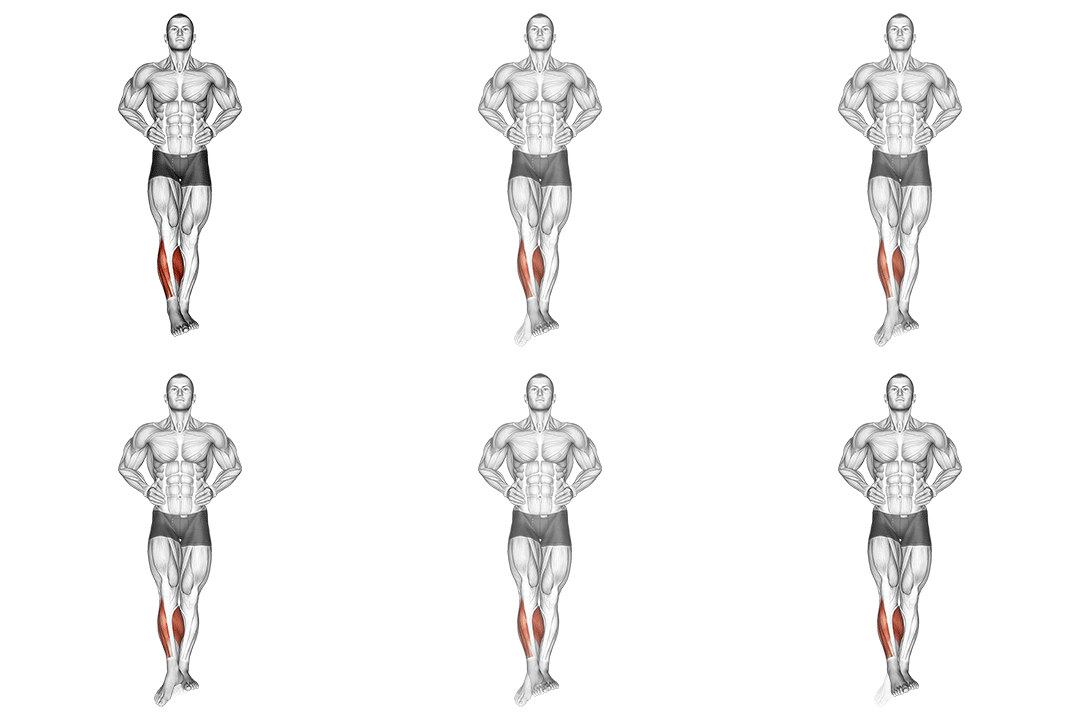
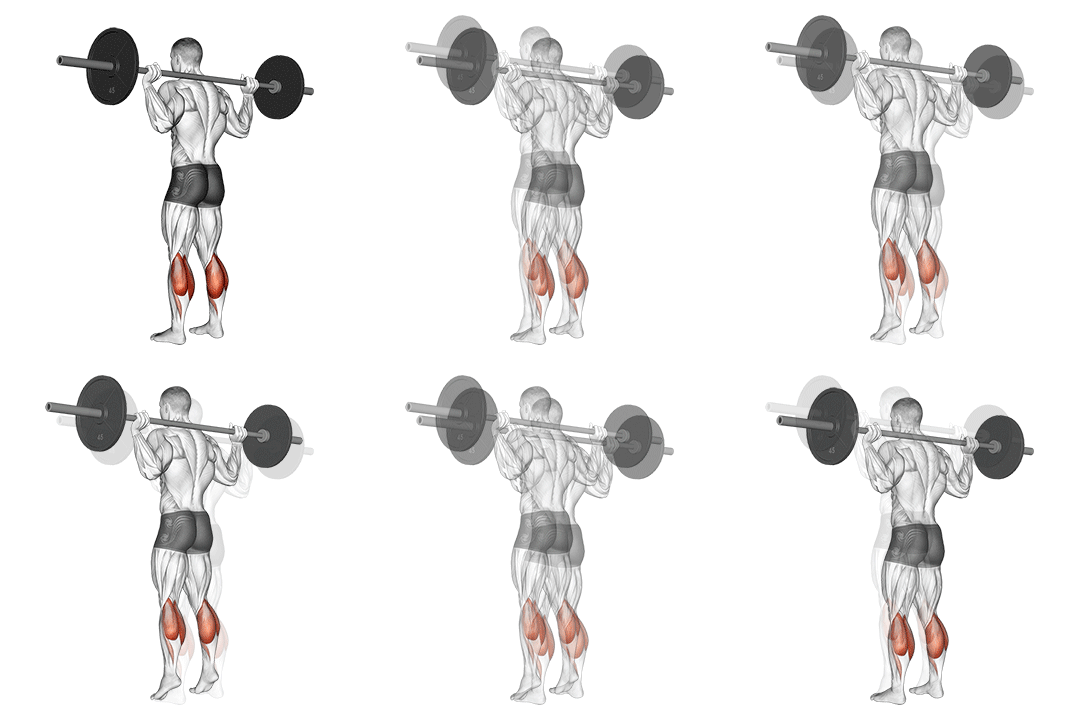
Secondary Muscles Activated
Band Single Leg Calf Raise
Band Single Leg Reverse Calf Raise
Visual Comparison
Overview
Band Single Leg Calf Raise vs Band Single Leg Reverse Calf Raise — you’re deciding which single-leg band move deserves a spot in your routine. I’ll walk you through what each exercise targets, how the muscle activation differs, exact technique cues (foot position, tempo, ROM), and clear recommendations for hypertrophy, strength, beginners, and home workouts. You’ll get rep ranges, progression ideas, and simple coaching tips so you can pick the right variation based on your goals and movement patterns.
Key Differences
- Both exercises target the Calves using Band. The main differences are in their movement patterns and muscle activation angles.
Pros & Cons
Band Single Leg Calf Raise
+ Pros
- Direct, high-load plantarflexion that targets the gastrocnemius and calves
- Simple band routing and minimal setup—easy to do at home
- Clear tempo cues: 1–2s concentric, 2–3s eccentric, optional 1–3s isometric at top
- Lower coordination demand; good for beginners focusing on ankle strength and balance
− Cons
- Limited posterior-chain recruitment—less carryover to hip-dominant movements
- Progression requires heavier bands or higher reps to overload
- Can overwork the Achilles if performed too quickly without eccentric control
Band Single Leg Reverse Calf Raise
+ Pros
- Adds hamstrings/glutes activation via posterior force vector for better posterior-chain carryover
- Challenges pelvic and hip stability in addition to ankle plantarflexion
- Versatile band angle lets you tune emphasis between calves and hip extensors
- Effective for athletes who need calf strength integrated with hip extension
− Cons
- Slightly more complex setup; band angle/anchor matters for correct loading
- Higher coordination demand — requires hip stability and neutral spine control
- If misrouted, can reduce calf emphasis and feel awkward or pull on the back
When Each Exercise Wins
The straightforward plantarflexion overload and ability to crank out higher rep ranges (8–20 for heavy hypertrophy, 12–25 for metabolic work) make the standard single-leg raise better for isolating the calf muscle and creating progressive mechanical tension.
When you need calf strength integrated with hip and posterior-chain stability, the reverse variant forces multi-segment control and higher net torque demands, which transfers better to complex, strength-focused movements.
It’s easier to learn, has a lower coordination requirement, and lets you build ankle control and calf endurance safely before adding hip-load complexity.
Requires the simplest setup (band under foot, support for balance) and still delivers strong calf stimulus without specialized anchors or advanced band routing.
Frequently Asked Questions
Can I do both Band Single Leg Calf Raise and Band Single Leg Reverse Calf Raise in the same workout?
Yes. Pairing them works well: do the standard single-leg raise first to fatigue the calves with focused sets (8–15 reps), then add 2–3 sets of the reverse version to reinforce posterior-chain stability. Keep total volume moderate (8–12 hard sets per week per leg).
Which exercise is better for beginners?
The Band Single Leg Calf Raise is better for beginners because it’s a single-joint movement with low coordination demands. It teaches ankle control and allows gradual load progression before adding the hip-stability challenge of the reverse variant.
How do the muscle activation patterns differ?
Both peak calf activation during concentric plantarflexion, but the reverse variant increases hamstring and glute activity due to a posterior force vector and added hip-extension demand. The standard raise keeps activation concentrated at the ankle with more ankle-stabilizer recruitment.
Can Band Single Leg Reverse Calf Raise replace Band Single Leg Calf Raise?
Not entirely. The reverse variant is a useful complement when you need posterior-chain integration, but it does not isolate the calf as cleanly. If your goal is pure calf hypertrophy, keep the standard raise as a foundational exercise.
Expert Verdict
Use the Band Single Leg Calf Raise when your priority is isolated calf development, simple setup, and steady progress through increased band tension, tempo control, or higher reps. Choose the Band Single Leg Reverse Calf Raise when you want calf work that also challenges hip extensors, hamstrings, and pelvic stability—this is the better pick for athletes needing posterior-chain integration. For most trainees, start with the standard single-leg raise for 4–6 sets of 8–20 reps, then introduce the reverse variation 1–2 times weekly to train coordination and posterior-chain carryover.
Also Compare
More comparisons with Band Single Leg Calf Raise
More comparisons with Band Single Leg Reverse Calf Raise
Compare More Exercises
Use our free comparison tool to analyze any two exercises head-to-head.
Compare Exercises