

Band Single Leg Calf Raise vs Band Two Legs Calf Raise - (band Under Both Legs) V. 2: Complete Compa
Band Single Leg Calf Raise vs Band Two Legs Calf Raise - (band Under Both Legs) V. 2 is a close matchup for sculpting your calves at home with a single resistance band. You’ll get clear, actionable advice on muscle activation, equipment setup, technique cues, and which version fits your goals — hypertrophy, strength, balance, or convenience. I’ll compare how each stresses the gastrocnemius and soleus, show rep ranges (4–6 strength, 8–15 hypertrophy, 15–30 endurance), and give specific cues so you can pick the one that gives you the most effective stimulus.
Exercise Comparison
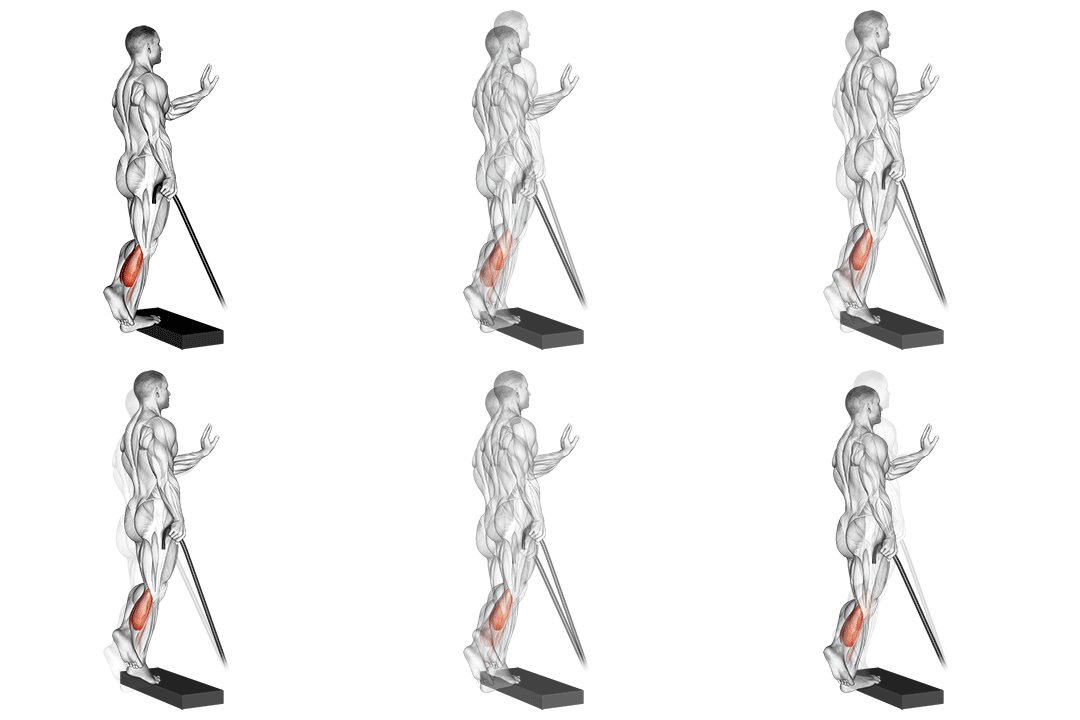
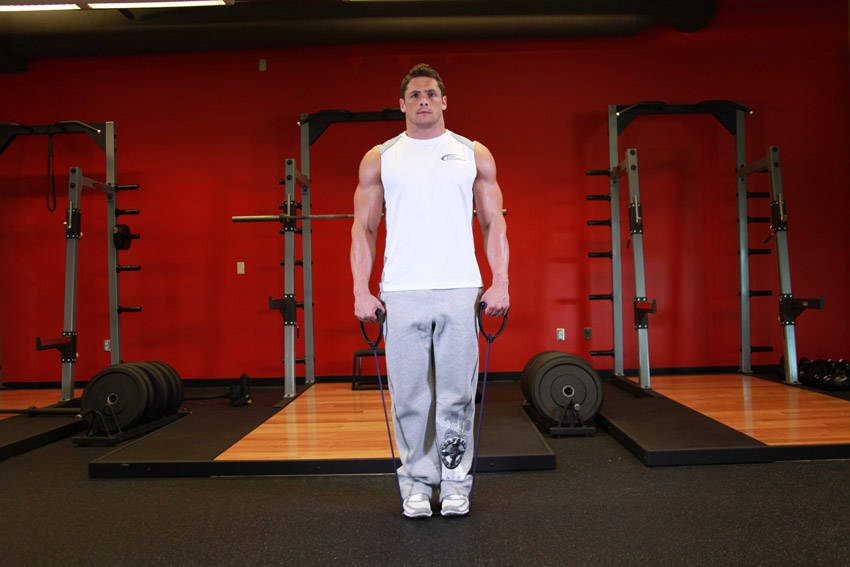
Band Single Leg Calf Raise
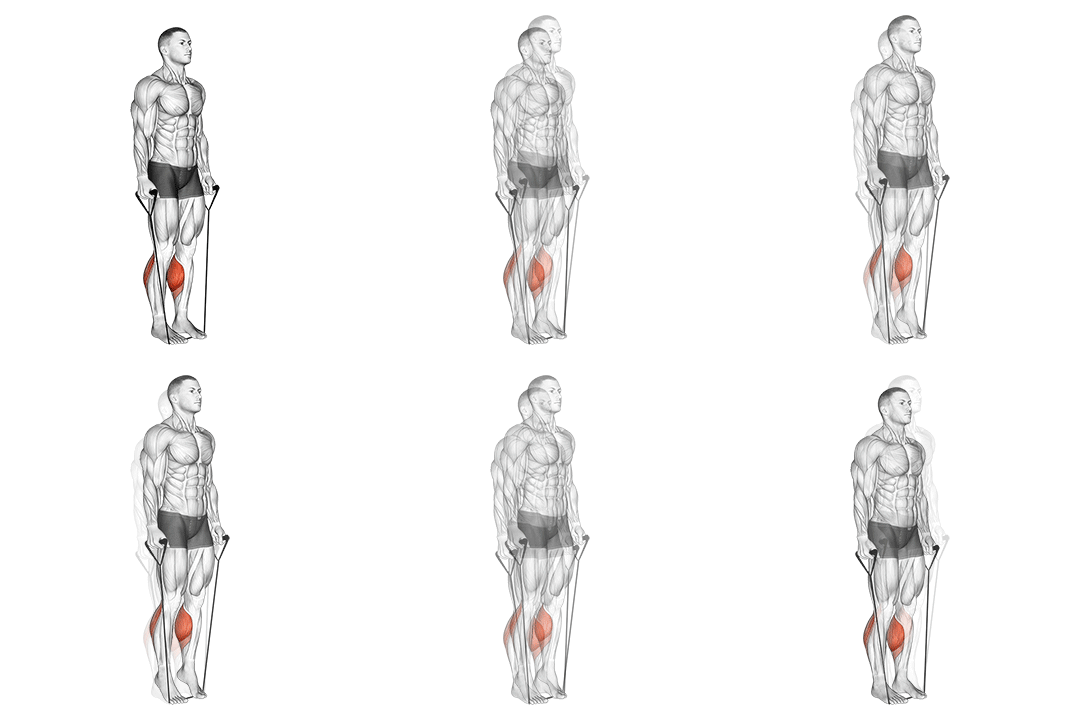
Band Two Legs Calf Raise - (band Under Both Legs) V. 2
Head-to-Head Comparison
| Attribute | Band Single Leg Calf Raise | Band Two Legs Calf Raise - (band Under Both Legs) V. 2 |
|---|---|---|
| Target Muscle |
Calves
|
Calves
|
| Body Part |
Lower-legs
|
Lower-legs
|
| Equipment |
Band
|
Band
|
| Difficulty |
Beginner
|
Beginner
|
| Movement Type |
Isolation
|
Isolation
|
| Secondary Muscles |
2
|
2
|
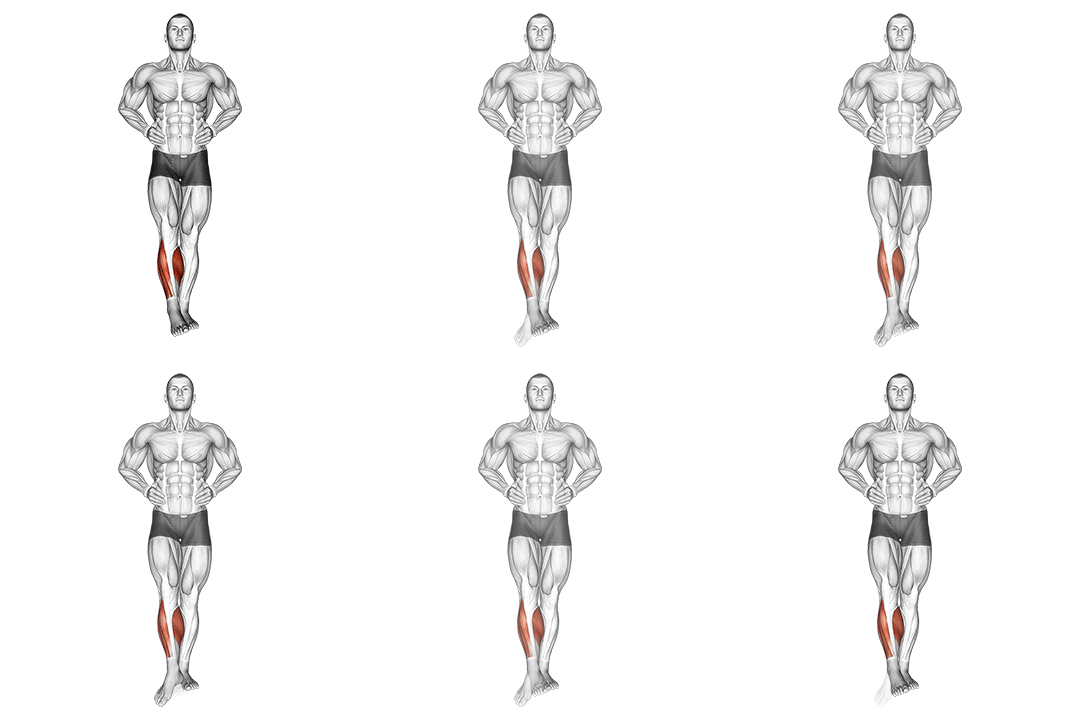
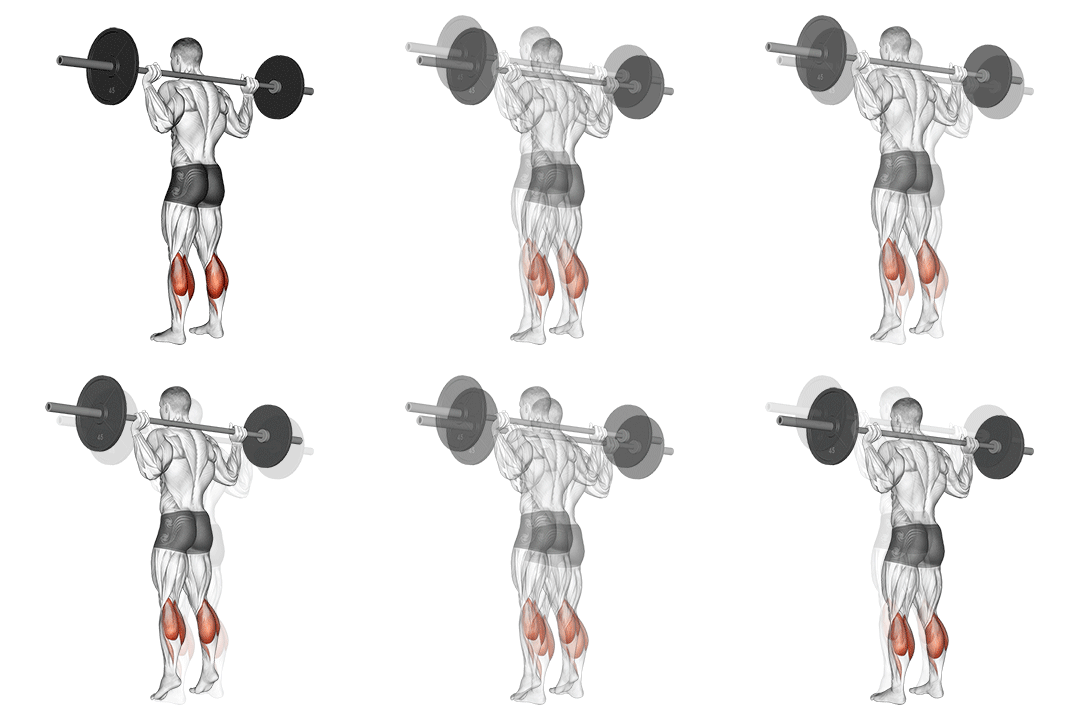
Secondary Muscles Activated
Band Single Leg Calf Raise
Band Two Legs Calf Raise - (band Under Both Legs) V. 2
Visual Comparison
Overview
Band Single Leg Calf Raise vs Band Two Legs Calf Raise - (band Under Both Legs) V. 2 is a close matchup for sculpting your calves at home with a single resistance band. You’ll get clear, actionable advice on muscle activation, equipment setup, technique cues, and which version fits your goals — hypertrophy, strength, balance, or convenience. I’ll compare how each stresses the gastrocnemius and soleus, show rep ranges (4–6 strength, 8–15 hypertrophy, 15–30 endurance), and give specific cues so you can pick the one that gives you the most effective stimulus.
Key Differences
- Both exercises target the Calves using Band. The main differences are in their movement patterns and muscle activation angles.
Pros & Cons
Band Single Leg Calf Raise
+ Pros
- Higher per-side muscle activation for gastrocnemius and soleus
- Excellent for correcting left-right imbalances and single-leg strength
- More options for unilateral overload and tempo manipulation
- Improves ankle stability and proprioception
− Cons
- Requires more balance and coordination
- Harder to keep strict form under fatigue (probable compensatory hip movement)
- May need a heavier or doubled band to reach sufficient absolute tension
Band Two Legs Calf Raise - (band Under Both Legs) V. 2
+ Pros
- Very beginner-friendly and stable
- Easy to accumulate high reps and volume safely
- Minimal setup — band under both feet works with light resistance
- Lower immediate balance demand reduces fall risk
− Cons
- Lower per-side peak activation, so unilateral weakness can persist
- Harder to achieve maximal tension on one calf without creative loading
- Can hide left-right asymmetries unless you test unilaterally
When Each Exercise Wins
Single-leg allows greater relative tension per calf and more focused time under tension (aim 8–15 reps, 2–3s eccentric). That higher unilateral load and stretch at end-range plantarflexion stimulates more local mechanical tension for muscle growth.
Strength benefits from greater per-limb force production and neural drive; single-leg work increases motor unit recruitment. Use low-rep schemes (4–6) with heavier bands or slow eccentrics to prioritize force development.
Two-leg raises cut the balance requirement and let you focus on clean plantarflexion mechanics. Start with 12–20 controlled reps and a slow 2s eccentric to build tolerance before progressing to unilateral work.
It requires the least setup, works with any light-to-medium band, and lets you accumulate volume quickly without a spotter. That makes it the most practical, especially in small spaces.
Frequently Asked Questions
Can I do both Band Single Leg Calf Raise and Band Two Legs Calf Raise - (band Under Both Legs) V. 2 in the same workout?
Yes. Start with two-leg sets to pre-fatigue and groove form (12–20 reps), then finish with single-leg work for focused overload (6–12 reps per side). That sequence uses neural freshness for bilateral volume and unilateral precision for extra stimulus.
Which exercise is better for beginners?
Band Two Legs Calf Raise - (band Under Both Legs) V. 2 is better for beginners because it reduces balance demand and lets you focus on clean ankle plantarflexion and eccentric control before attempting unilateral loading.
How do the muscle activation patterns differ?
Single-leg raises produce higher relative activation per calf and increased recruitment of ankle stabilizers and hip abductors for balance. Two-leg distributes load evenly, producing lower per-side peak activation but steadier overall output and control.
Can Band Two Legs Calf Raise - (band Under Both Legs) V. 2 replace Band Single Leg Calf Raise?
It can replace it for endurance and beginner strength, but it won’t replicate the unilateral overload and balance improvements of single-leg work. If your goal is to fix asymmetries or maximize per-side mechanical tension, keep single-leg in your program.
Expert Verdict
Use Band Two Legs Calf Raise - (band Under Both Legs) V. 2 when you want a safe, high-volume way to train calves at home, improve endurance, or introduce calf training with minimal setup. Aim for 12–30 reps with a controlled 2s eccentric and full plantarflexion (target ~30°–45°). Choose Band Single Leg Calf Raise when you need unilateral overload, to correct asymmetries, or to drive stronger neural stimulus and muscle growth — work in 6–15 rep ranges, use heavier band tension, and control balance by holding a support. Both belong in a well-rounded lower-leg program.
Also Compare
More comparisons with Band Single Leg Calf Raise
More comparisons with Band Two Legs Calf Raise - (band Under Both Legs) V. 2
Compare More Exercises
Use our free comparison tool to analyze any two exercises head-to-head.
Compare Exercises