

Band Single Leg Calf Raise vs Barbell Floor Calf Raise: Complete Comparison Guide
Band Single Leg Calf Raise vs Barbell Floor Calf Raise — which one should you add to your lower-leg work? You’ll get a direct comparison of muscle activation, required equipment, technical cues, and programming recommendations so you can pick the better option for hypertrophy, strength, or home training. I’ll cover how each exercise loads the gastrocnemius and soleus, how range of motion and force vectors change activation, and practical progressions and rep ranges you can use immediately.
Exercise Comparison
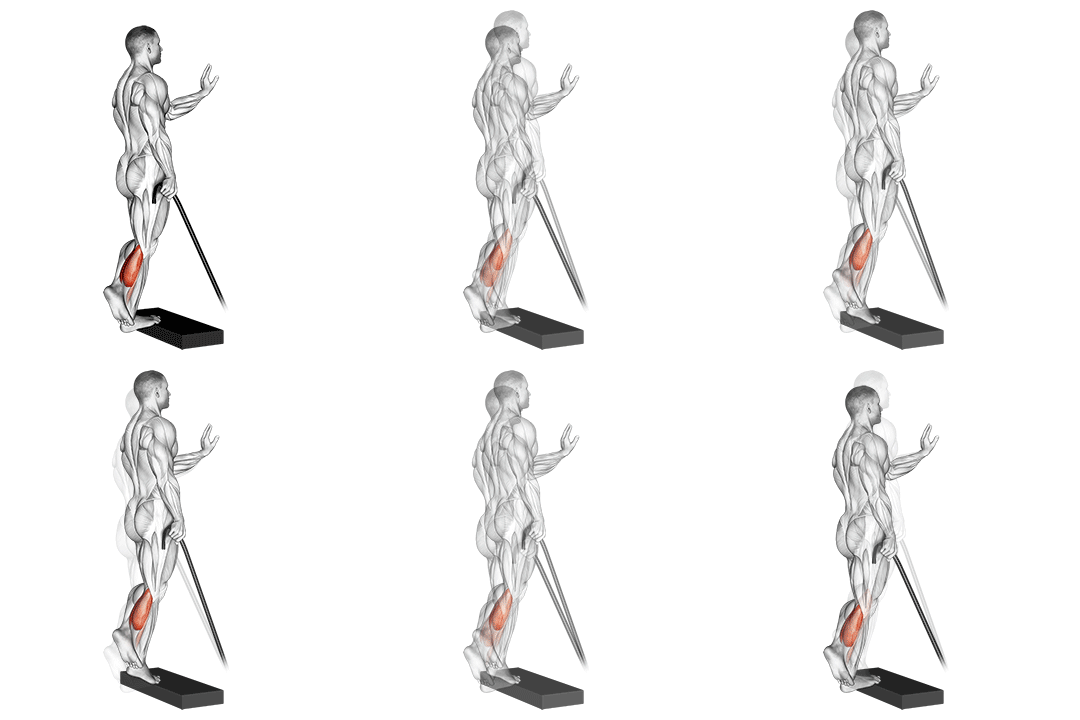
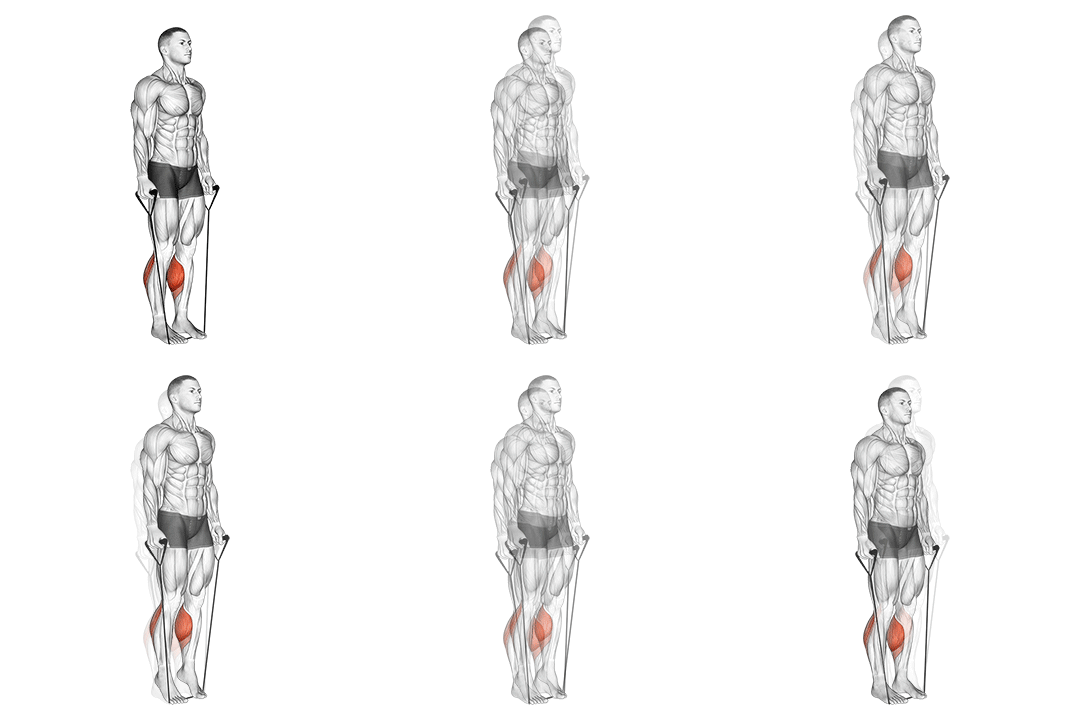
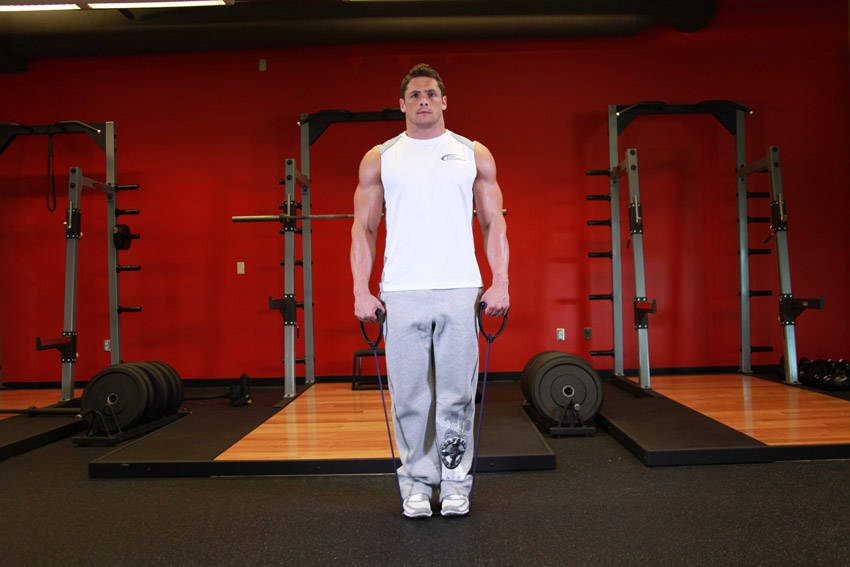
Band Single Leg Calf Raise
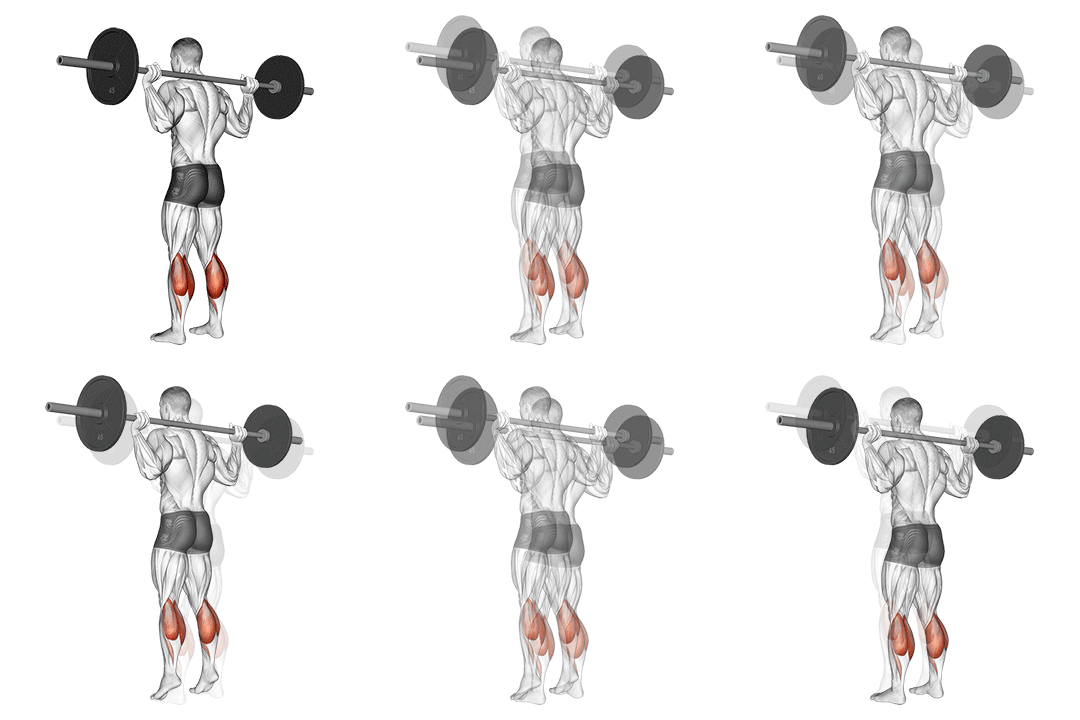
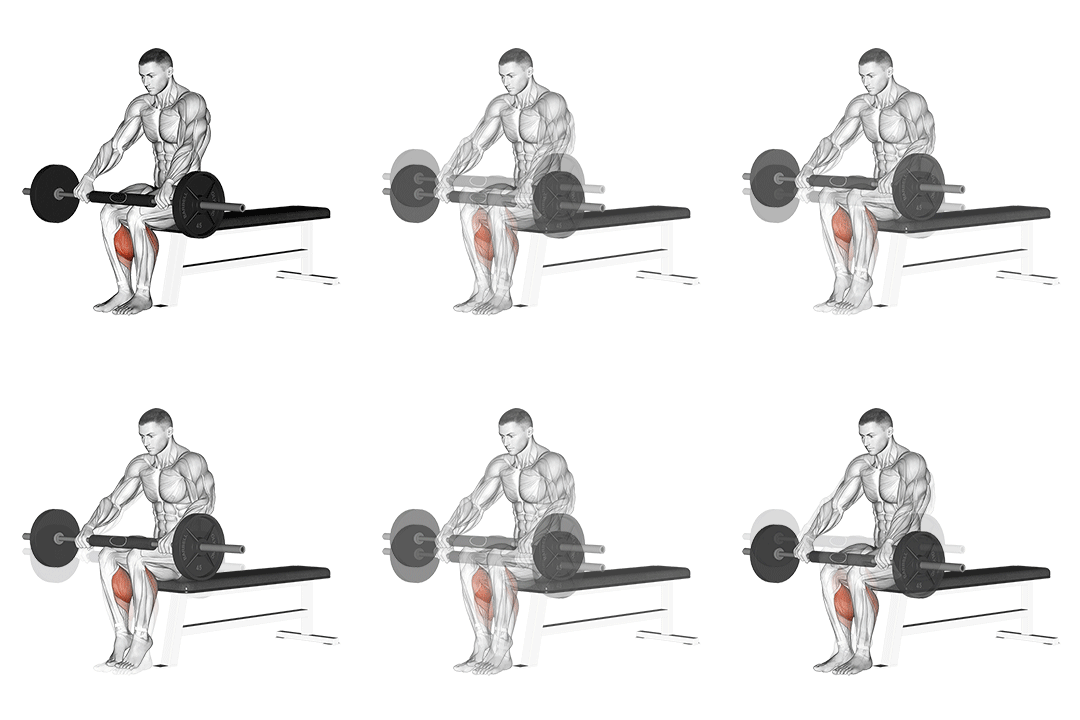
Barbell Floor Calf Raise
Head-to-Head Comparison
| Attribute | Band Single Leg Calf Raise | Barbell Floor Calf Raise |
|---|---|---|
| Target Muscle |
Calves
|
Calves
|
| Body Part |
Lower-legs
|
Lower-legs
|
| Equipment |
Band
|
Barbell
|
| Difficulty |
Beginner
|
Beginner
|
| Movement Type |
Isolation
|
Isolation
|
| Secondary Muscles |
2
|
1
|
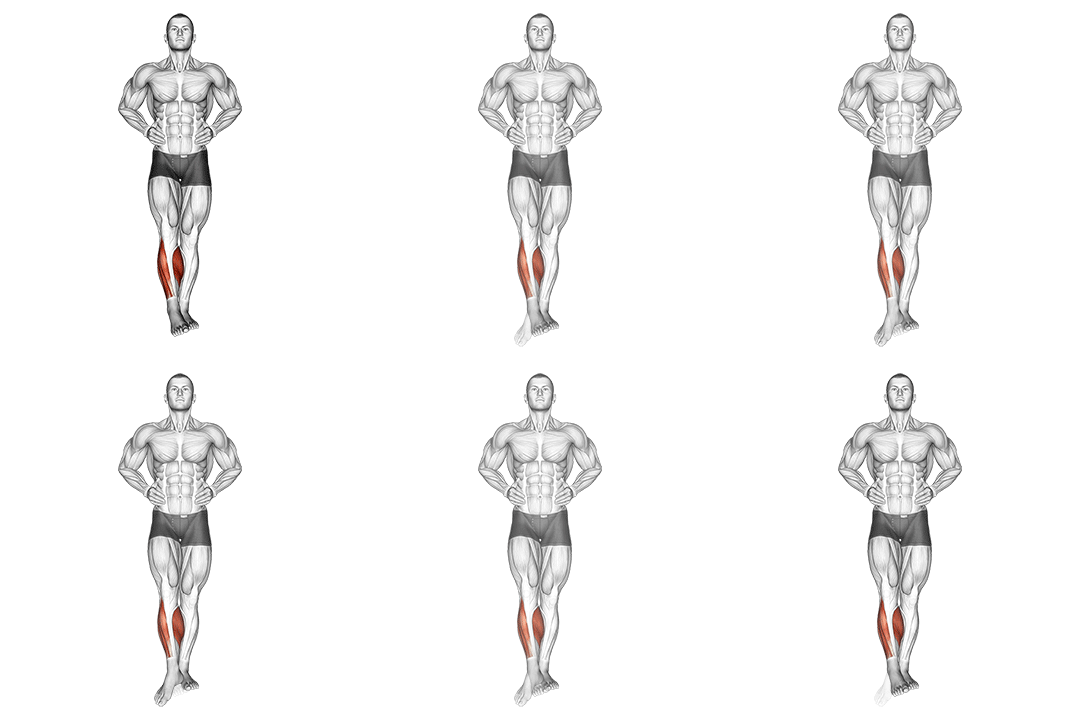
Secondary Muscles Activated
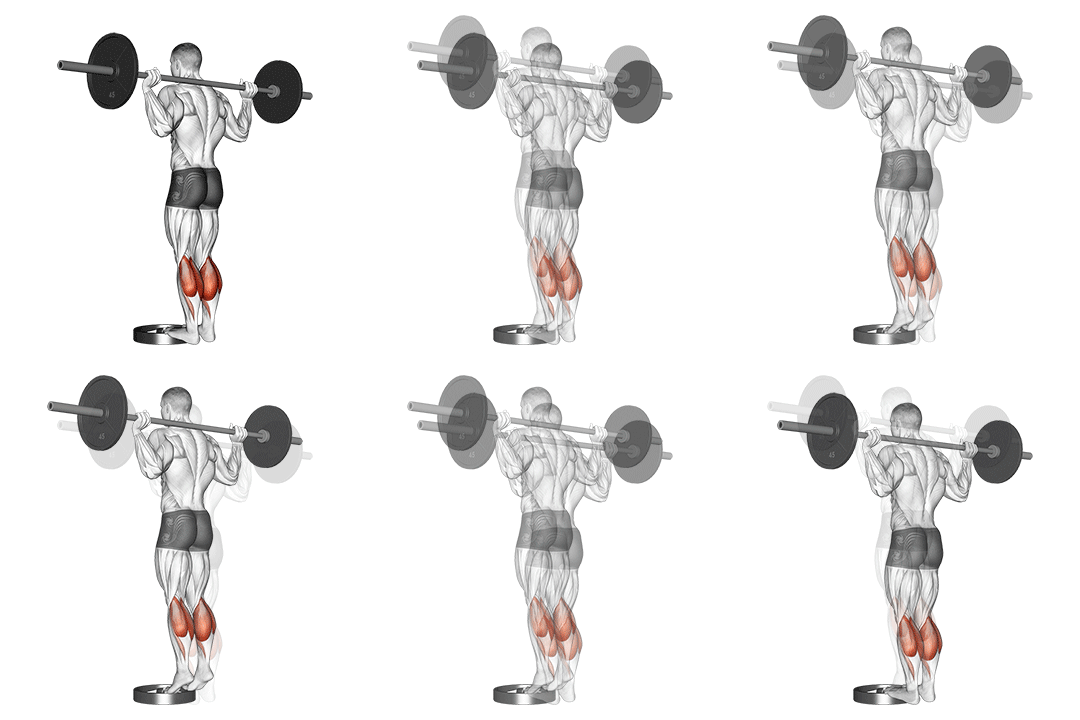
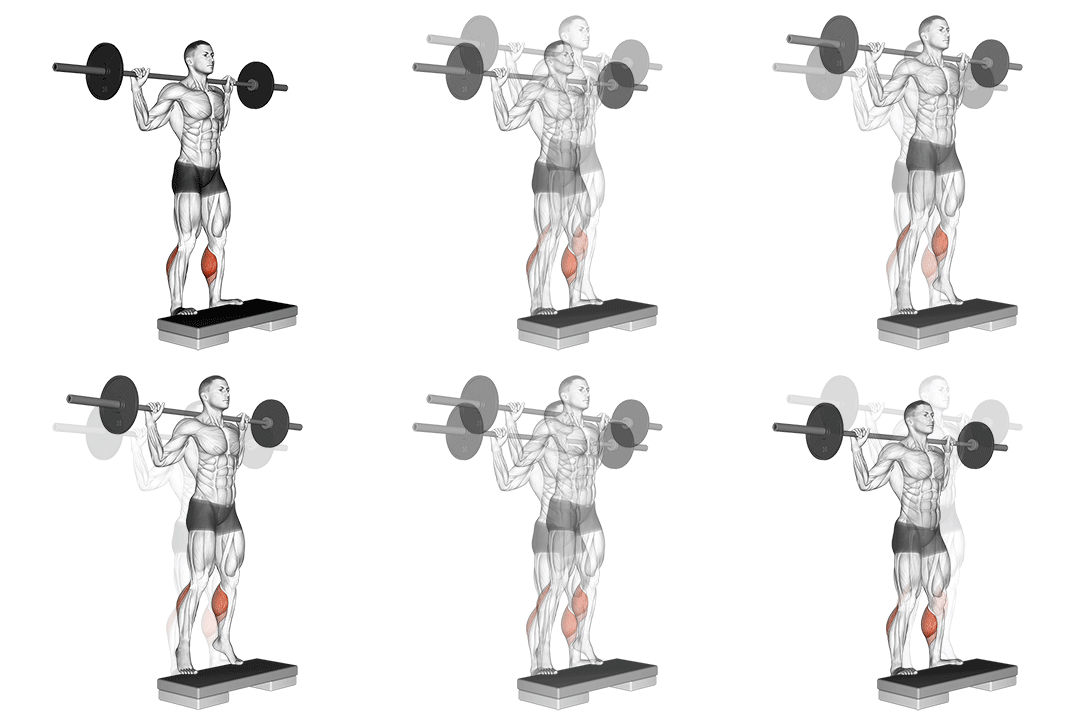
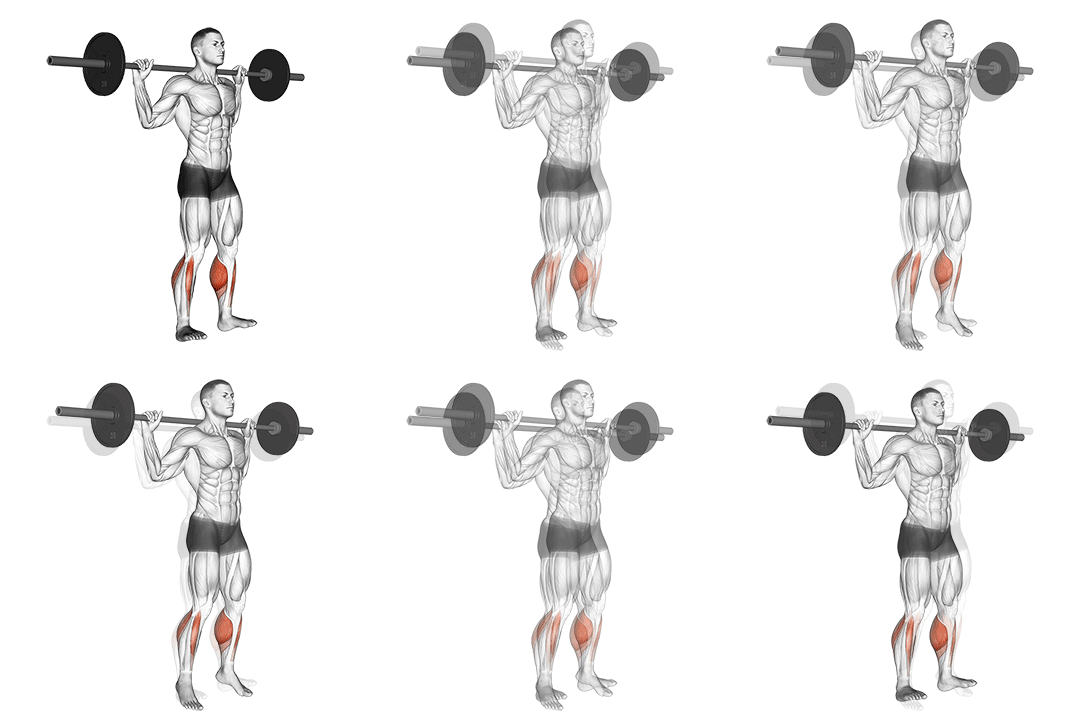
Band Single Leg Calf Raise
Barbell Floor Calf Raise
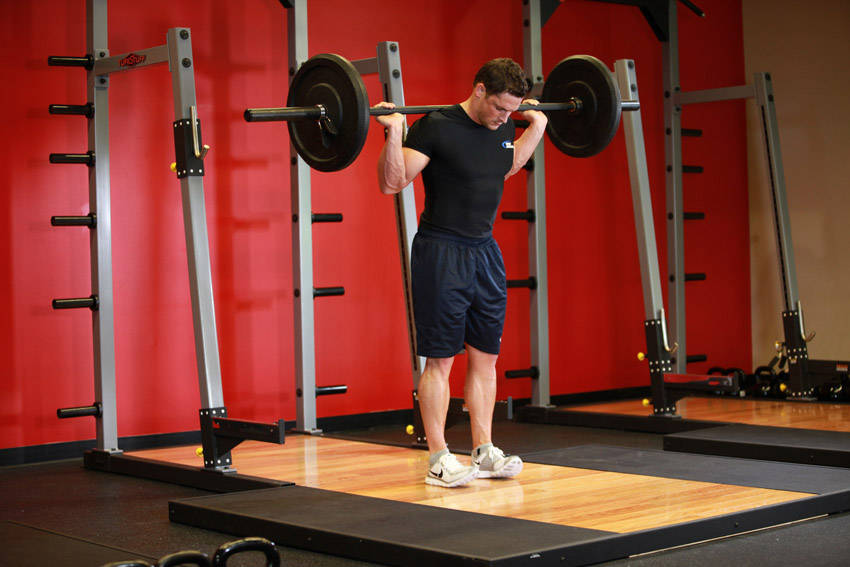
Visual Comparison
Overview
Band Single Leg Calf Raise vs Barbell Floor Calf Raise — which one should you add to your lower-leg work? You’ll get a direct comparison of muscle activation, required equipment, technical cues, and programming recommendations so you can pick the better option for hypertrophy, strength, or home training. I’ll cover how each exercise loads the gastrocnemius and soleus, how range of motion and force vectors change activation, and practical progressions and rep ranges you can use immediately.
Key Differences
- Equipment differs: Band Single Leg Calf Raise uses Band, while Barbell Floor Calf Raise requires Barbell.
Pros & Cons
Band Single Leg Calf Raise
+ Pros
- Minimal equipment—use a single band at home or while traveling
- Unilateral loading increases per-limb intensity and reduces strength imbalances
- Lower spinal load, safer for lifters with back issues
- Better ability to reach a deep stretch and control end-range for time under tension
− Cons
- Harder to achieve very high absolute load compared with barbell
- Requires single-leg balance and ankle stability
- Band tension curve can overload the top range and underload the bottom range if not set up properly
Barbell Floor Calf Raise
+ Pros
- Easier to apply large absolute loads for maximal mechanical tension
- Simple tempo-based progressions and clear plate increments
- Stable bilateral stance reduces balance requirements for heavy lifts
- Builds posterior chain tension through bracing, aiding overall lower-body strength
− Cons
- Requires barbell and loading equipment — less practical at home
- Increases axial spinal compression and setup demands
- Floor version limits ankle dorsiflexion compared with raised/step variants, reducing stretch at the bottom
When Each Exercise Wins
Band single-leg work allows a fuller individualized stretch, longer time under tension, and unilateral overload that reduces compensation. Use 8–20 reps per leg, 2–4 sets, controlled 2–3s eccentrics and a 1s squeeze at the top to maximize sarcomeric tension and hypertrophic stimulus.
Barbell loading allows much higher absolute force and progressive overload, which is key for increasing maximal plantarflexion strength. Program heavy sets of 3–6 reps or heavier doubles/triples with full bracing to build force output.
The band version is lower-risk for the spine and easy to regress or progress. Start with bodyweight or light band resistance, focus on balance and ankle control, and build up to full single-leg reps before adding complex barbell load.
You only need a band and a small footprint to train calves effectively at home. The exercise scales well with band strength and tempo manipulations, making it far more practical than moving a barbell and plates.
Frequently Asked Questions
Can I do both Band Single Leg Calf Raise and Barbell Floor Calf Raise in the same workout?
Yes. Sequence them so you do the heavy barbell sets first for strength (2–6 reps), then finish with higher-volume band single-leg sets (10–20 reps) to add metabolic stress and correct imbalances. That order preserves maximal force output while using the band work for extra time under tension.
Which exercise is better for beginners?
Band Single Leg Calf Raise is better for most beginners because it minimizes spinal load and equipment needs while improving ankle stability. Start with 2–3 sets of 10–15 reps per leg and emphasize controlled eccentrics and balance before progressing.
How do the muscle activation patterns differ?
Band single-leg lifts increase unilateral gastrocnemius and soleus activation per limb and demand more intrinsic foot and ankle stabilizer recruitment. Barbell floor raises distribute load bilaterally and enable higher absolute mechanical tension across calf fibers, with more posterior chain co-contraction due to axial loading and hip/trunk bracing.
Can Barbell Floor Calf Raise replace Band Single Leg Calf Raise?
It can replace it for strength-focused phases because the barbell allows heavier loading, but it won’t fully replace the unilateral balance, ankle stabilizer work, and stretch profile of the band single-leg variation. For best results rotate both across training cycles based on your goal.
Expert Verdict
Choose the Band Single Leg Calf Raise when you want low-equipment, unilateral stimulus, and a greater ankle stretch-to-contraction ratio—ideal for hypertrophy, balance work, and home training. Pick the Barbell Floor Calf Raise when your goal is to maximize absolute plantarflexion strength and progressive overload in the gym; its ability to handle heavier plates makes it the clear choice for strength-focused programming. For most lifters, alternating phases—8–12 weeks of unilateral band-based volume followed by 4–8 weeks of heavier barbell overload—combines the stretch and tension patterns needed for consistent calf muscle growth and strength development.
Also Compare
More comparisons with Band Single Leg Calf Raise
More comparisons with Barbell Floor Calf Raise
Compare More Exercises
Use our free comparison tool to analyze any two exercises head-to-head.
Compare Exercises