

Band Single Leg Calf Raise vs Calf Raises - With Bands: Complete Comparison Guide
Band Single Leg Calf Raise vs Calf Raises - With Bands — if you want stronger, fuller calves at home, you need to pick the right banded variation. I’ll walk you through muscle activation, biomechanics, technique cues, equipment needs, and when to choose each. You’ll learn rep ranges, joint angles for max tension, and simple progressions so you can train smarter and reduce injury risk.
Exercise Comparison
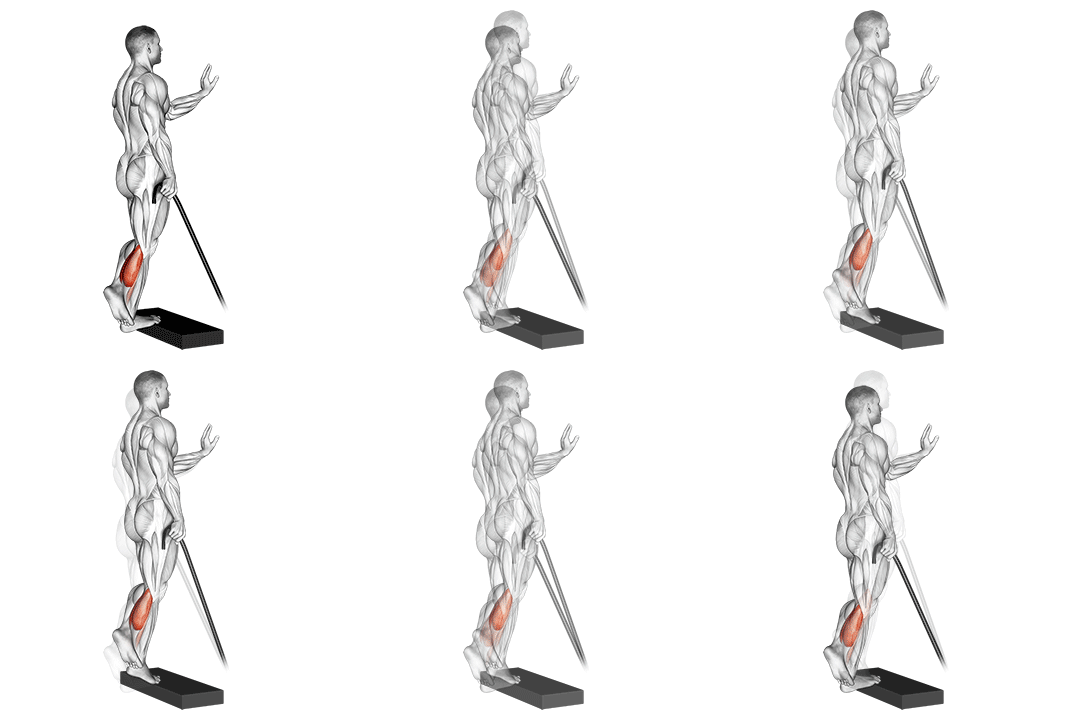
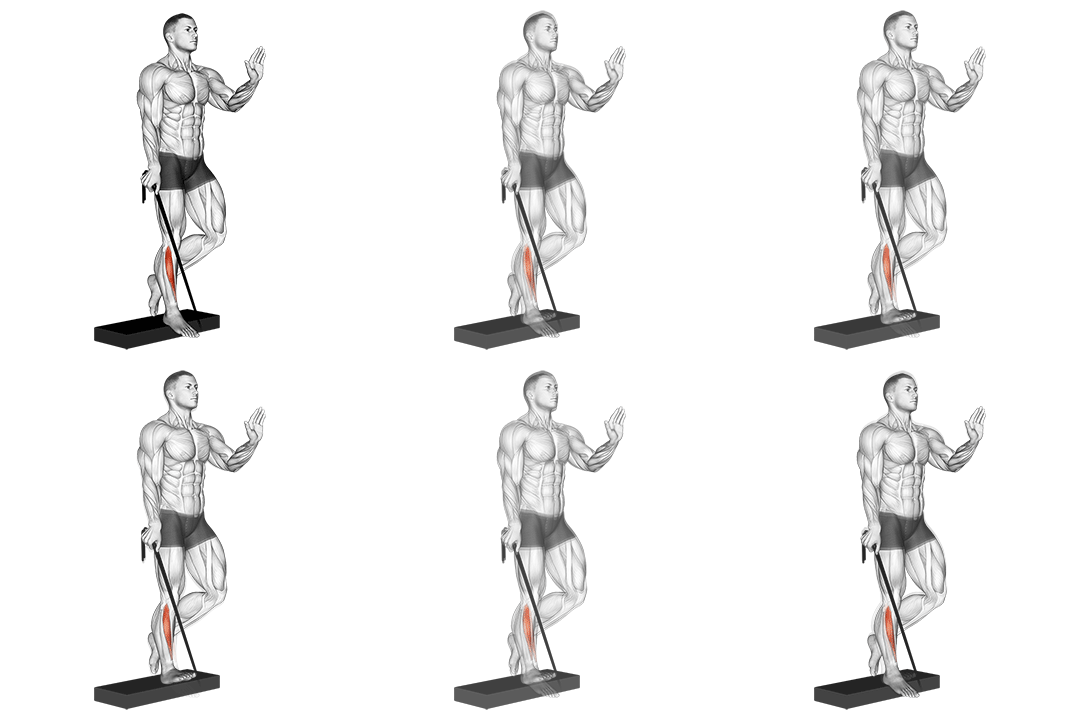
Band Single Leg Calf Raise

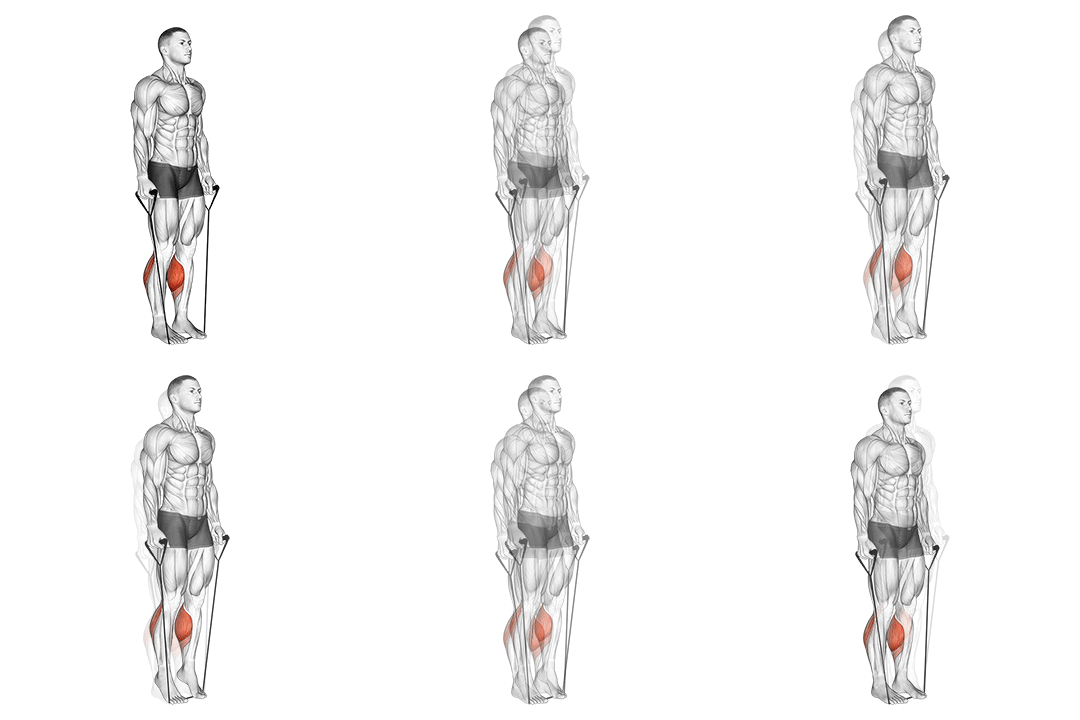
Calf Raises - With Bands
Head-to-Head Comparison
| Attribute | Band Single Leg Calf Raise | Calf Raises - With Bands |
|---|---|---|
| Target Muscle |
Calves
|
Calves
|
| Body Part |
Lower-legs
|
Lower-legs
|
| Equipment |
Band
|
Band
|
| Difficulty |
Beginner
|
Beginner
|
| Movement Type |
Isolation
|
Isolation
|
| Secondary Muscles |
2
|
0
|
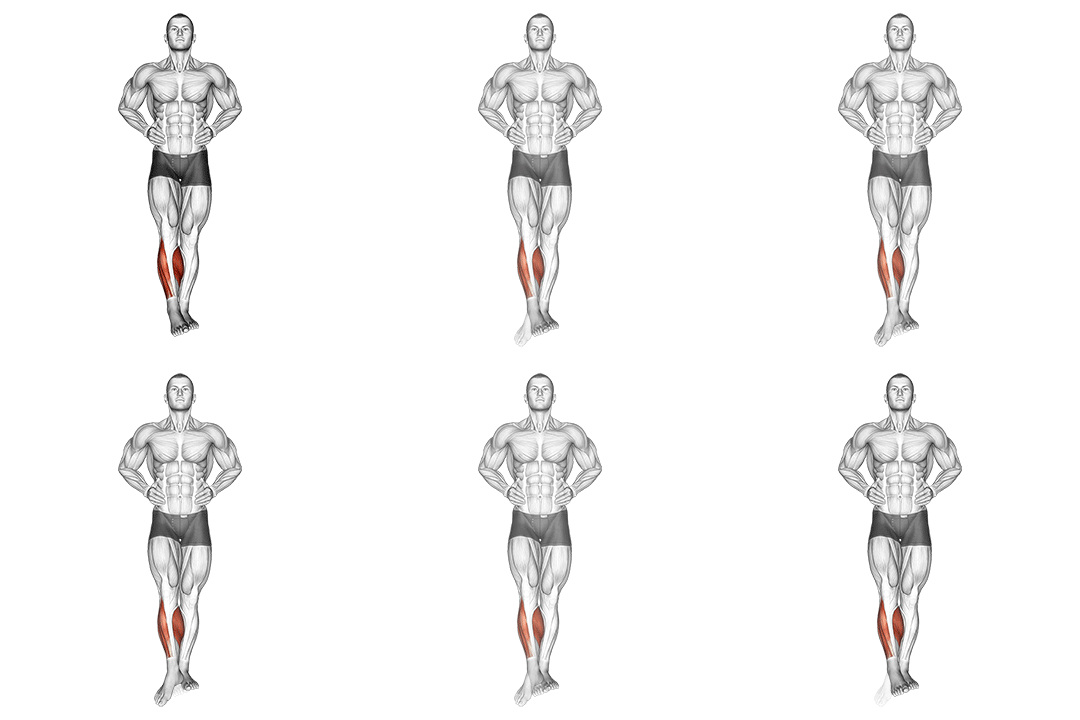
Secondary Muscles Activated
Band Single Leg Calf Raise
Calf Raises - With Bands
Visual Comparison
Overview
Band Single Leg Calf Raise vs Calf Raises - With Bands — if you want stronger, fuller calves at home, you need to pick the right banded variation. I’ll walk you through muscle activation, biomechanics, technique cues, equipment needs, and when to choose each. You’ll learn rep ranges, joint angles for max tension, and simple progressions so you can train smarter and reduce injury risk.
Key Differences
- Both exercises target the Calves using Band. The main differences are in their movement patterns and muscle activation angles.
Pros & Cons
Band Single Leg Calf Raise
+ Pros
- Higher per-calf load and peak contraction for stronger stimulus
- Improves unilateral strength and corrects side-to-side imbalances
- Engages ankle stabilizers and foot intrinsic muscles for function
- Easy to increase intensity via slower tempo, added reps, or heavier band
− Cons
- Requires better balance and ankle stability
- Higher Achilles and ankle strain risk with poor form
- Harder to use very heavy band tension without support
Calf Raises - With Bands
+ Pros
- Very accessible for beginners and rehab clients
- Easier to accumulate high training volume (12–30+ reps)
- Simple to scale by swapping band tension or stance width
- Lower balance demand means cleaner, repeatable reps
− Cons
- Lower peak activation per calf compared to single-leg work
- Can mask unilateral weakness and asymmetry
- Less carryover to single-leg sport-specific tasks
When Each Exercise Wins
Unilateral loading increases time under tension and peak contraction per calf, which promotes muscle fiber recruitment. Use 8–15 slow reps with a 2–3 second eccentric and a full plantarflexion finish to overload the gastrocnemius and soleus.
Single-leg raises let you apply higher relative load per limb and train through a full ROM; that increases plantarflexion torque and force production. Progress by increasing band tension or adding paused isometrics at peak contraction.
Two-legged banded raises minimize balance and coordination demands so you can focus purely on ankle mechanics and build a base. Start at 12–20 reps focusing on controlled eccentrics and neutral knee position.
They’re the most accessible with minimal setup and safer for quick, high-volume sessions at home. You can also shift stance or move to seated band raises to target soleus without extra equipment.
Frequently Asked Questions
Can I do both Band Single Leg Calf Raise and Calf Raises - With Bands in the same workout?
Yes. A practical approach is to use Calf Raises - With Bands for 2–3 sets of higher-volume work (12–25 reps) to build endurance and warm the Achilles, then follow with 2–4 sets per leg of Band Single Leg Calf Raises at 8–15 reps for focused overload.
Which exercise is better for beginners?
Calf Raises - With Bands are better for beginners because they reduce balance and stabilizer demands, letting you learn ankle mechanics and control. Begin with 3 sets of 12–20 reps, slow eccentrics, and a full plantarflexion finish.
How do the muscle activation patterns differ?
Single-leg raises produce higher peak activation during the concentric and greater eccentric stretch due to deeper heel drop (≈10–20°), increasing length-tension. Two-leg band raises give lower peak activation but allow greater total volume and steadier contractions.
Can Calf Raises - With Bands replace Band Single Leg Calf Raise?
They can replace them for volume and general conditioning, but not if your goal is unilateral strength or correcting asymmetry. If you need maximal per-calf overload, keep single-leg work in the program.
Expert Verdict
Use Calf Raises - With Bands when you need a safe, scalable, high-volume option for building endurance, rehabbing the ankle, or training at home with minimal balance demand. Choose Band Single Leg Calf Raise when you want more per-calf intensity, correct asymmetries, or emphasize maximal plantarflexion force and hypertrophy. For most lifters, program both: start sets of two-legged band raises for volume and ankle conditioning, then finish with 2–4 sets per leg of single-leg band raises at 8–15 reps or as slow, controlled AMRAPs to maximize muscle growth and unilateral strength.
Also Compare
More comparisons with Band Single Leg Calf Raise
More comparisons with Calf Raises - With Bands
Compare More Exercises
Use our free comparison tool to analyze any two exercises head-to-head.
Compare Exercises