

Band Single Leg Calf Raise vs Peroneals Stretch: Complete Comparison Guide
Band Single Leg Calf Raise vs Peroneals Stretch — which should you pick for stronger, more resilient lower legs? You’ll get a clear, practical comparison that covers muscle targets, biomechanics, equipment needs, technique cues, rep ranges, and injury risk. I’ll show when to use the banded single-leg raise for active loading and when the rope-based peroneals stretch is a better choice for tissue length and ankle mobility. Read on to learn exact cues, numbers (angles and reps), and a decisive recommendation for your goals.
Exercise Comparison
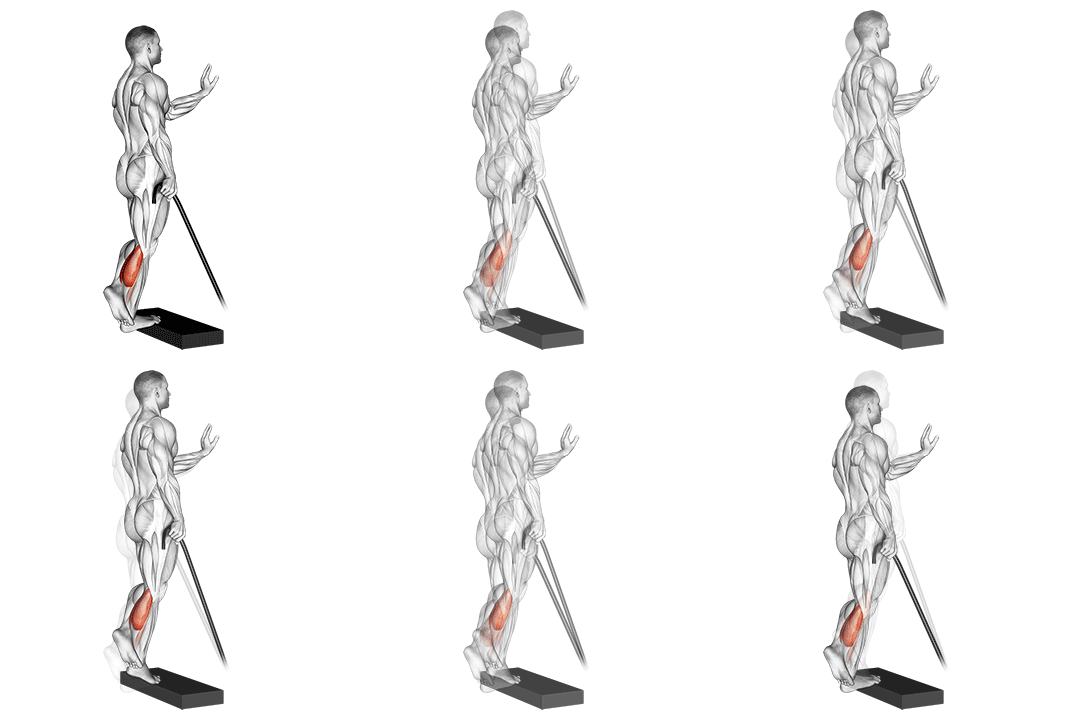
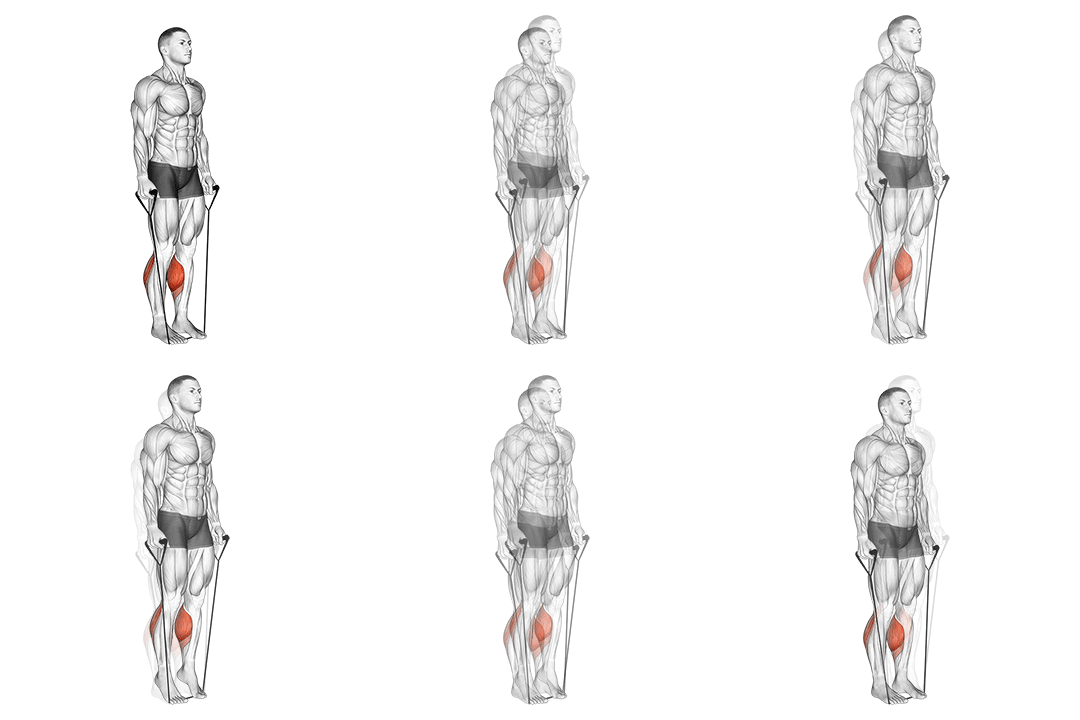
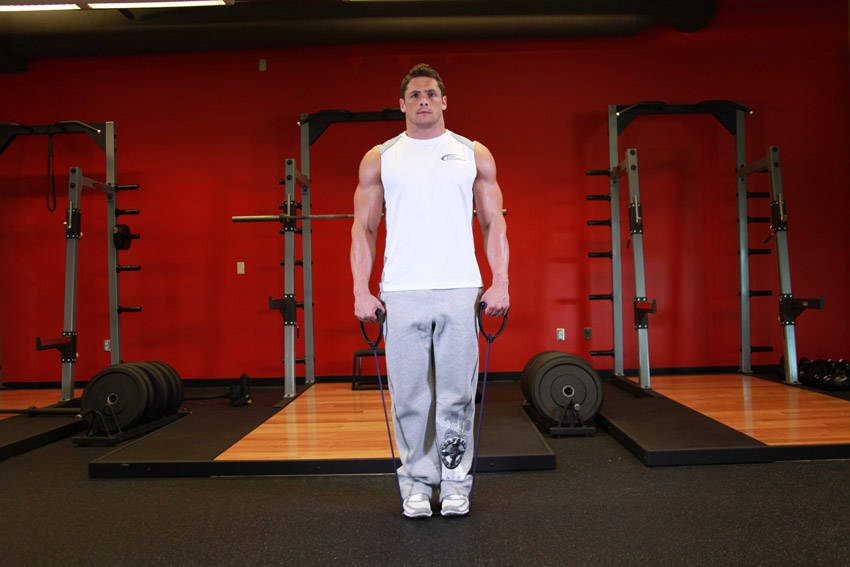
Band Single Leg Calf Raise
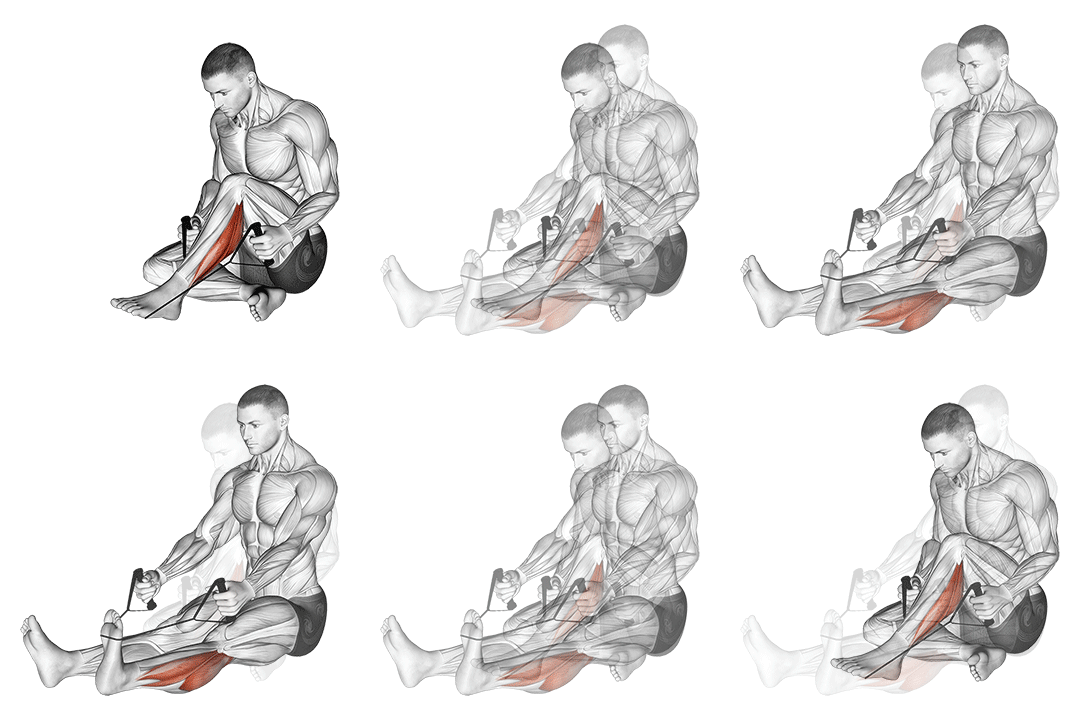
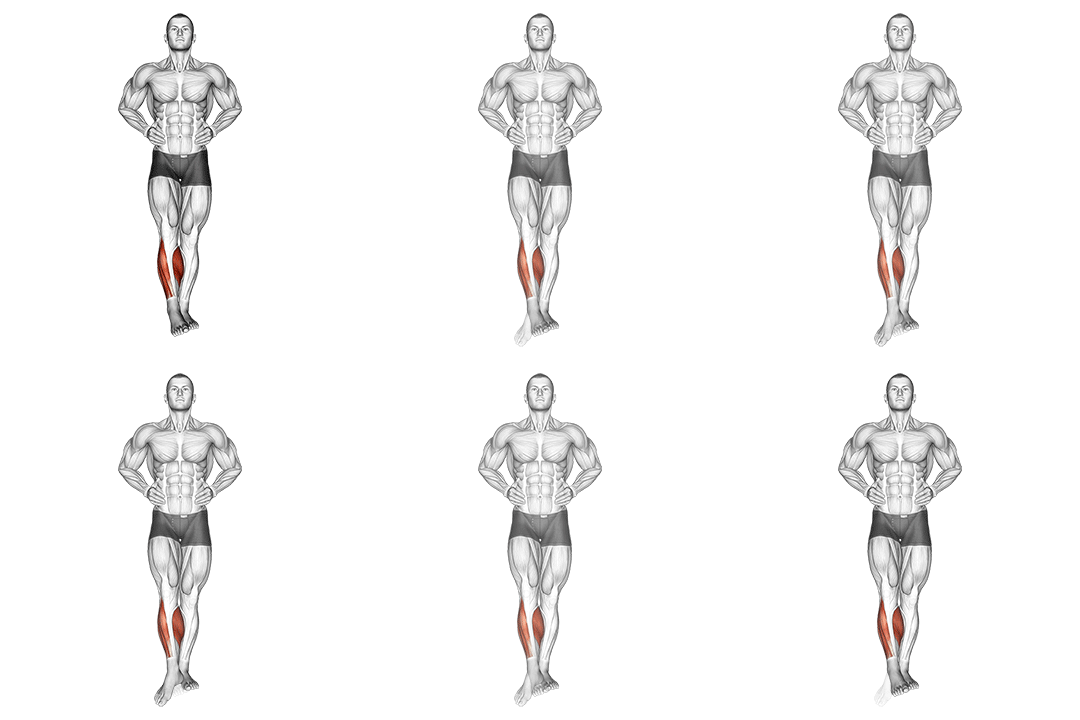
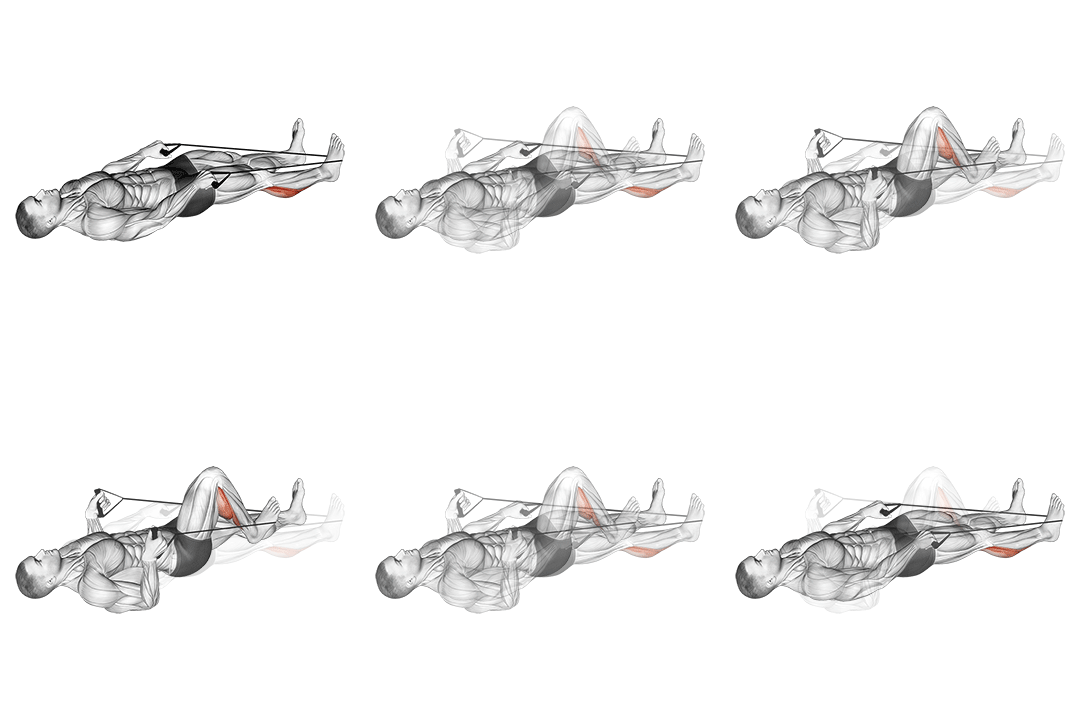
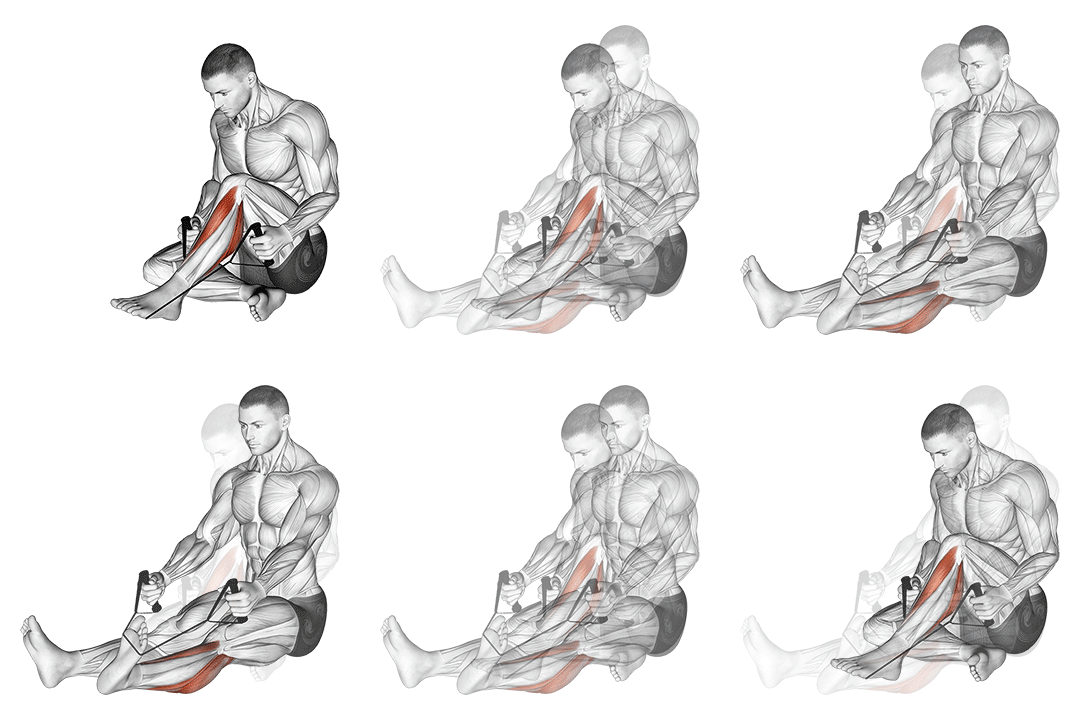
Peroneals Stretch
Head-to-Head Comparison
| Attribute | Band Single Leg Calf Raise | Peroneals Stretch |
|---|---|---|
| Target Muscle |
Calves
|
Calves
|
| Body Part |
Lower-legs
|
Lower-legs
|
| Equipment |
Band
|
Rope
|
| Difficulty |
Beginner
|
Beginner
|
| Movement Type |
Isolation
|
Isolation
|
| Secondary Muscles |
2
|
2
|
Secondary Muscles Activated
Band Single Leg Calf Raise
Peroneals Stretch
Visual Comparison
Overview
Band Single Leg Calf Raise vs Peroneals Stretch — which should you pick for stronger, more resilient lower legs? You’ll get a clear, practical comparison that covers muscle targets, biomechanics, equipment needs, technique cues, rep ranges, and injury risk. I’ll show when to use the banded single-leg raise for active loading and when the rope-based peroneals stretch is a better choice for tissue length and ankle mobility. Read on to learn exact cues, numbers (angles and reps), and a decisive recommendation for your goals.
Key Differences
- Equipment differs: Band Single Leg Calf Raise uses Band, while Peroneals Stretch requires Rope.
Pros & Cons
Band Single Leg Calf Raise
+ Pros
- Direct active loading of gastrocnemius and soleus for muscle growth and strength
- Easy to progressive overload by increasing band tension or reps
- Improves single-leg balance and ankle stabilizer recruitment
- Simple setup for home or gym with minimal equipment
− Cons
- Requires balance—may be challenging for those with poor ankle stability
- Can overstress Achilles if volume or load is increased too quickly
- Limited eccentric overload compared with weighted calf raise variants
Peroneals Stretch
+ Pros
- Targets lateral calf/peroneals and increases ankle eversion mobility
- Low-impact, suitable for restoring tissue length and reducing lateral tightness
- Useful as a prehab/rehab tool after ankle sprains when used carefully
- Doesn’t require heavy loading — low cardiovascular or metabolic demand
− Cons
- Minimal active force production — poor choice for strength or hypertrophy goals
- Requires an anchor and proper foot alignment to be effective
- Can irritate lateral tendons if end-range is forced too quickly
When Each Exercise Wins
The banded single-leg raise produces repeated concentric and eccentric loading, which drives muscle fiber recruitment and increases time under tension. Use 8–15 reps with a 2–3 s eccentric and progressive band tension to stimulate hypertrophy.
Active force production under load is required for strength; the single-leg raise lets you overload the plantarflexors and control eccentric stress. Increase resistance or add slow eccentrics (3–4 s) to build tendon and muscle capacity.
It’s straightforward to learn and directly improves ankle strength and balance, giving functional benefits. Start with two-legged raises progressing to single-leg, 2–3 sets of 8–12 reps.
Bands and a small step are common at home and the exercise scales easily without specialized anchors. You get strength and mobility benefits with minimal setup.
Frequently Asked Questions
Can I do both Band Single Leg Calf Raise and Peroneals Stretch in the same workout?
Yes. Do the Peroneals Stretch as part of your warm-up or cool-down (30–60 s holds) to improve ankle range, and perform banded single-leg raises in your main sets for active loading. Avoid forcing end-range stretches immediately before max-effort strength sets.
Which exercise is better for beginners?
The Band Single Leg Calf Raise is better for most beginners because it builds strength and balance with an intuitive movement pattern. Start two-legged and regress or use support if single-leg balance is limited.
How do the muscle activation patterns differ?
The banded raise produces high active activation of gastrocnemius and soleus during concentric and eccentric phases, while the peroneals stretch creates low active EMG but high passive tensile strain on lateral tissues. One loads force production; the other increases tissue length.
Can Peroneals Stretch replace Band Single Leg Calf Raise?
No — the stretch cannot replace the active loading needed for strength or hypertrophy. Use the Peroneals Stretch to improve mobility and reduce lateral tightness, and the banded raise to build muscle and functional ankle strength.
Expert Verdict
Use the Band Single Leg Calf Raise when your priority is active loading: strength, muscle growth, improved single-leg balance, and tendon resilience. Program it with 2–4 sets of 8–20 reps depending on load, emphasizing a controlled 2–3 second eccentric and a full 30°–40° plantarflexion range. Use the Peroneals Stretch when you need targeted lateral calf lengthening, to improve eversion/dorsiflexion range, or as part of rehab for lateral ankle tightness — hold 30–90 seconds and progress gently. Both tools complement each other: prioritize the banded raise for performance and the rope stretch for mobility and tissue prep.
Also Compare
More comparisons with Band Single Leg Calf Raise
Compare More Exercises
Use our free comparison tool to analyze any two exercises head-to-head.
Compare Exercises